 Save to Pinterest
 The first time I served this dish, a guest asked if I'd been holding out on them—and honestly, I had been, without realizing it. White asparagus, pale cheeses, and a whisper of truffle felt almost too simple, too quiet, until the first bite proved that restraint and quality speak louder than complexity. That moment taught me that elegance isn't about doing more; it's about letting each ingredient shine without apology.
I remember making this for my sister's birthday dinner when she mentioned she'd been craving something refined but light. Watching her face when that truffle scent hit—that moment when food becomes memory—I knew this recipe would stay in my rotation forever. There's something about serving white asparagus that feels like you're sharing something precious, almost ceremonial in its simplicity.
Ingredients
- White asparagus, 500 g trimmed and peeled: Unlike green asparagus, white asparagus is grown underground, making it milder and more delicate—you'll notice how tender it becomes without turning mushy, which is exactly what you want here.
- Burrata or buffalo mozzarella, 75 g drained: The creaminess here is non-negotiable; it needs to be fresh and just cold enough to hold its shape but soft enough to tear easily by hand.
- Aged Comté cheese, 75 g thinly shaved: This nutty, complex cheese adds depth that younger cheeses simply can't deliver; shave it with a vegetable peeler for those elegant, wispy curls.
- Parmigiano-Reggiano, 50 g finely grated: The salty backbone that ties everything together—use a microplane for fine, snowy texture that melts on your tongue.
- Fresh black truffle, 15 g or 1–2 tbsp high-quality truffle paste: If you've never used fresh truffle, you're in for a revelation; if paste is your option, choose wisely because quality varies wildly and there's no hiding subpar truffle flavor here.
- Extra-virgin olive oil, 2 tbsp: This is tasted raw, so use something you genuinely love; a peppery or herbaceous oil will sing here.
- Fresh lemon juice, 1 tbsp: The acid cuts through the richness and keeps everything from feeling heavy, so use fresh lemon, not bottled.
- Flaky sea salt, 1/2 tsp: Sea salt's mineral notes matter more than you'd think; it's the final seasoning whisper.
- Freshly ground white pepper, to taste: White pepper keeps the visual elegance intact while adding subtle heat without dark specks.
- Microgreens or chervil, optional: A gentle garnish that adds a peppery freshness if you want it; it's beautiful but entirely optional depending on your mood.
Tired of Takeout? 🥡
Get 10 meals you can make faster than delivery arrives. Seriously.
One email. No spam. Unsubscribe anytime.
Instructions
- Prep the asparagus with care:
- Bring salted water to a simmer—not a rolling boil, which can bruise the delicate spears. The asparagus should be tender but with just a bit of resistance when you bite it, about 8–10 minutes. The ice bath stops the cooking immediately, preserving that bright, fresh taste.
- Arrange like you're composing art:
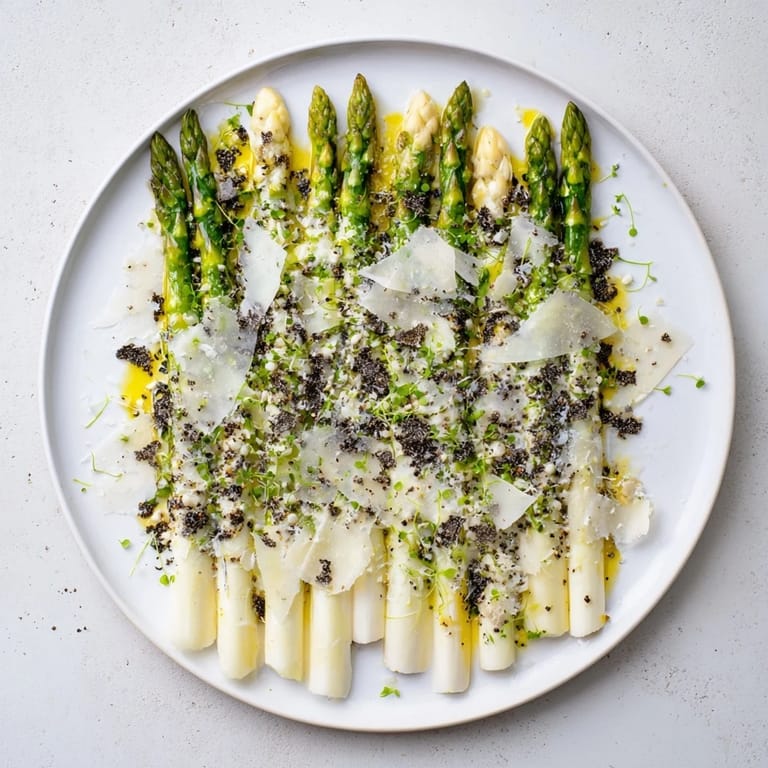
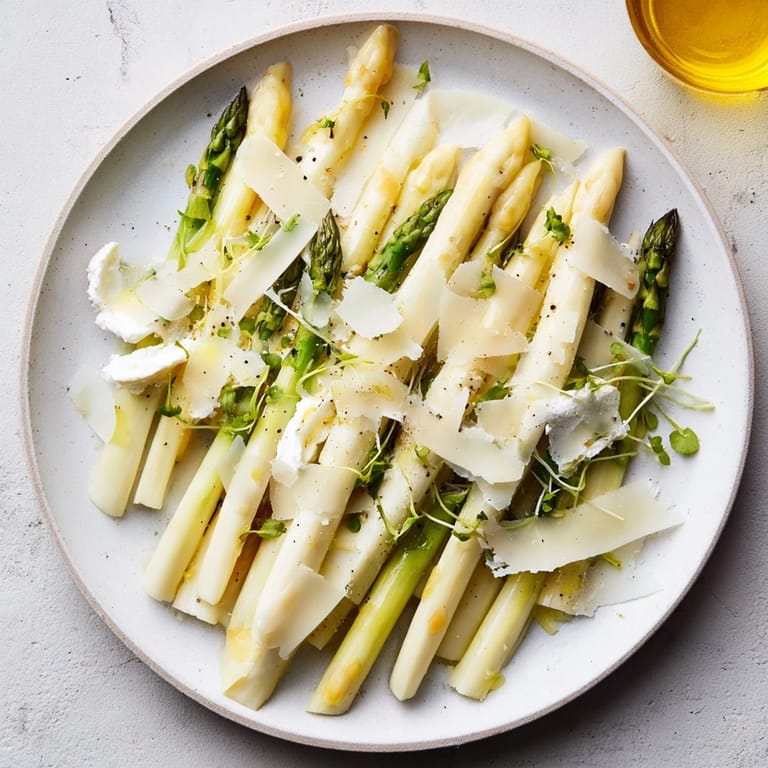
- Split each asparagus spear lengthwise and lay them parallel on chilled plates; this visual precision matters because your eye eats first. Cool plates keep the cheeses from softening too quickly.
- Layer the cheeses with intention:
- Tear the burrata by hand into irregular pieces—rough edges catch light and dressing beautifully. Scatter these first, then add Comté shavings, then finish with Parmigiano-Reggiano so each layer has its moment.
- Apply truffle with a light hand:
- If using fresh truffle, a truffle slicer creates those elegant stripes, but a sharp vegetable peeler works just as well; if using paste, thin drizzles are better than dollops. Less is genuinely more here because truffle's power is in subtlety and restraint.
- Create the dressing:
- Whisk oil, lemon juice, and salt together just before serving; the emulsion breaks down quickly, so timing is everything. White pepper goes in at the very end so it doesn't turn bitter from sitting in acid.
- Finish and serve immediately:
- The drizzle of dressing is the final move, and serving right away keeps everything at its intended temperature and texture. This dish waits for no one and is better for it.
 Save to Pinterest
 There was an evening when a friend who considers themselves a picky eater took one bite and looked genuinely surprised by how good it tasted. That's when I understood that this dish isn't about impressing through elaboration; it's about clarity and respect for ingredients. Sometimes the most generous thing you can do in the kitchen is restrain yourself.
Why White Asparagus Changes Everything
White asparagus has a completely different personality than the green kind—it's sweeter, more delicate, almost creamy in texture when cooked properly. Growing it underground keeps it pale and mild, which is exactly why it pairs so beautifully with creamy, nutty cheeses instead of fighting for dominance. Once you've had white asparagus done right, it spoils you for lesser preparations.
The Truffle Question
I've made this dish both ways, and here's the honest truth: fresh truffle is incredible, but good truffle paste gets you 85% of the way there and costs a fraction of the price. What matters most is that you choose something with a clean ingredient list and actual truffle, not truffle-flavored oil with filler. The difference between truffle and the smell of truffle is like the difference between singing and listening to someone describe music.
Building Your Cheese Board Moment
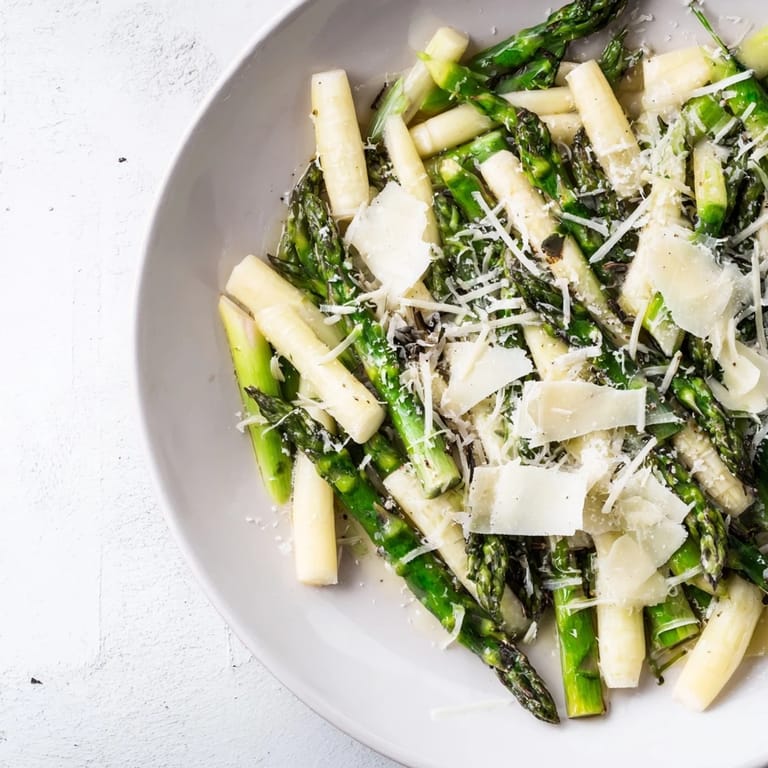
This dish is really an exercise in cheese appreciation, so treat your selection seriously. Burrata should be creamy but hold its shape, Comté should have that satisfying crystalline crunch and nutty depth, and Parmigiano-Reggiano should be aged at least 24 months to give you that savory backbone. Each cheese plays a different note, and together they create a chord that truffle simply amplifies without overwhelming.
- If Comté isn't available, aged Gruyère works beautifully and brings a slightly earthier note.
- Burrata should be purchased the day you're serving, ideally, or it loses its creamy heart.
- Always taste your cheese at room temperature during prep to understand its flavor before the cold plate tames it.
 Save to Pinterest
 This is the kind of dish that reminds you why you cook in the first place. Serve it and watch how quietly people slow down to really taste.
Common Recipe Questions
- → How should the white asparagus be cooked?
Simmer white asparagus in salted water for 8–10 minutes until tender but still firm. Immediately transfer to an ice bath to stop cooking and preserve texture.
- → What cheeses complement this dish best?
Burrata or buffalo mozzarella provide creaminess, Comté adds mild nuttiness, and Parmigiano-Reggiano offers a sharp, savory finish.
- → Can truffle paste be used instead of fresh truffle?
Yes, high-quality truffle paste can be drizzled in fine lines across the dish as a convenient alternative to fresh truffle shavings.
- → What dressing is recommended?
A simple dressing of extra-virgin olive oil, fresh lemon juice, flaky sea salt, and freshly ground white pepper enhances the flavors without overpowering them.
- → Are there suitable garnishes for this plate?
Microgreens or chervil add a fresh herbal note and visual appeal without competing with the main ingredients.