 Save to Pinterest
 My neighbor knocked on my door one evening with a warm baguette tucked under her arm, asking if I had any butter she could borrow. Instead, I invited her in and we ended up roasting a whole head of garlic together while her bread cooled on my counter. That spontaneous hour of chopping herbs and whipping butter turned into something neither of us expected, a spread so good she asked for the recipe before she left. Now whenever I make this, I think of how the simplest ingredients, when treated with a little attention and time, become something worth sharing.
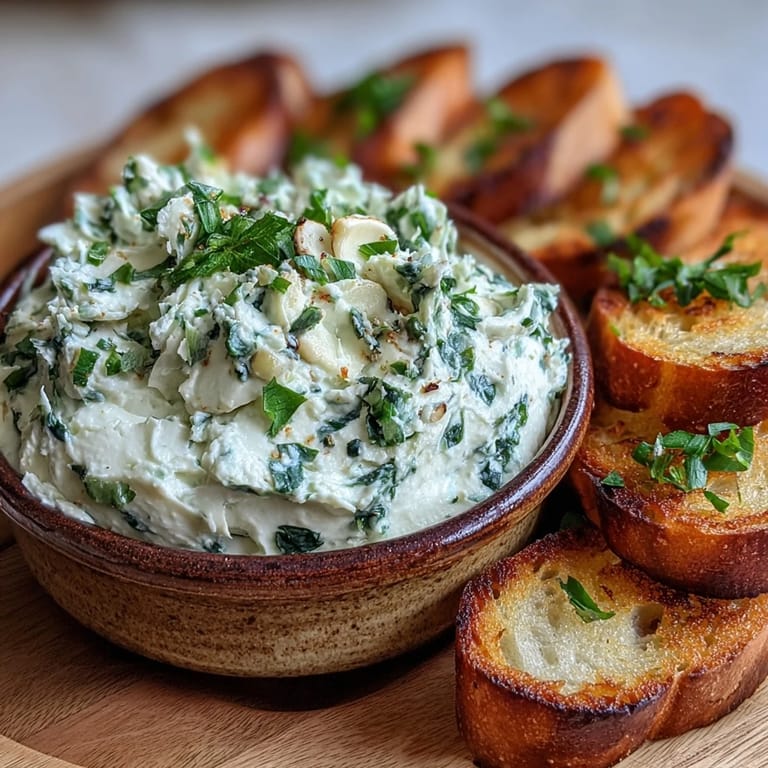
I made this for a small gathering once and placed the serving bowl in the center of the table almost as an afterthought. By the time dessert rolled around, people were still reaching for crostini, and someone had actually scraped the bowl clean with a knife. That's when I realized this spread isn't just an appetizer, it's the kind of thing that makes people linger longer at the table, talking and eating without really thinking about it.
Ingredients
- Unsalted butter, at room temperature: This is your foundation, and room temperature matters more than you'd think because it whips up lighter and fluffier, creating that cloud-like texture that makes the spread cling to each bite of crostini.
- Whole garlic bulb: Roasting transforms garlic from pungent to golden-sweet, and the slow heat mellows it into something almost nutty that spreads like silk once mashed.
- Olive oil: Just a drizzle helps the garlic roast evenly and adds a whisper of richness to the final spread.
- Fresh parsley: The mild, grassy backbone that lets the other flavors shine without overwhelming the delicate roasted garlic.
- Fresh chives: A gentle onion note that adds dimension without any sharpness, especially helpful if your garlic turned milder than expected.
- Fresh basil or tarragon: This is where you can play and make the spread your own, adding either bright Mediterranean notes or the subtle anise whisper that tarragon brings.
- Fine sea salt and freshly ground black pepper: These aren't just seasonings, they're the final adjustment that makes everything taste like itself, more vivid and true.
Tired of Takeout? 🥡
Get 10 meals you can make faster than delivery arrives. Seriously.
One email. No spam. Unsubscribe anytime.
Instructions
- Roast the garlic until it's sweet:
- Preheat your oven to 400°F, slice the top off your garlic bulb to expose the cloves, drizzle generously with olive oil, wrap the whole thing in foil, and let it roast for 35 to 40 minutes until the cloves are soft and golden brown. You'll know it's ready when a fork slides through the cloves like butter, and your kitchen smells like toasted garlic heaven.
- Mash the roasted garlic into a paste:
- Once the garlic cools just enough to handle, squeeze each golden clove right out of its papery skin into your mixing bowl and mash it with a fork until you have a smooth, creamy paste with no lumps. This is the moment you really taste how gentle and sweet it's become.
- Whip the softened butter until fluffy:
- Add your room-temperature butter to the garlic paste and use a hand mixer on medium speed or beat it by hand with a wooden spoon until it becomes pale, fluffy, and almost doubles in volume. This takes about 2 to 3 minutes, and you'll see the transformation from dense to airy happen right before your eyes.
- Fold in the fresh herbs with care:
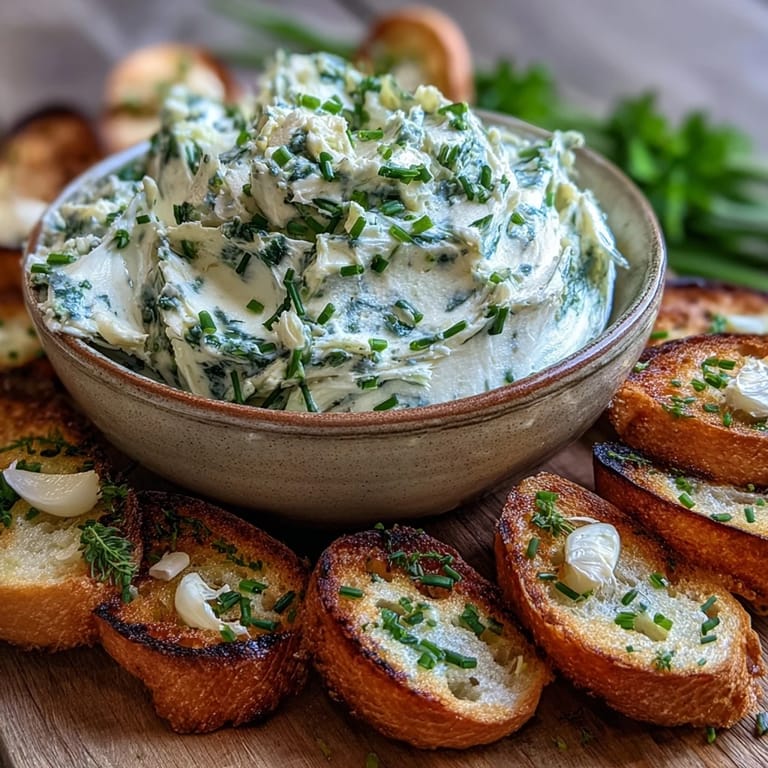
- Stir in your chopped parsley, chives, and basil along with the salt and pepper, mixing gently until the herbs are evenly distributed and the spread is flecked with green. Don't overmix or you'll bruise the herbs and lose their fresh brightness.
- Taste and adjust before serving:
- This is the moment to trust your palate, add a pinch more salt if needed, or even a crack more pepper if you want it to sing. Transfer to a serving bowl and serve slightly chilled or at room temperature, whichever mood strikes you.
 Save to Pinterest
 There's a quiet satisfaction in watching someone's face when they taste this for the first time, especially if they're expecting something ordinary. They slow down, take another crostini without thinking, and suddenly you're the person who made the thing they'll remember at the next dinner party.
The Magic of Room Temperature
I learned this the hard way once by pulling cold butter straight from the fridge, thinking I could speed things up. The mixer worked overtime, the butter stayed grainy and separated, and I ended up frustrated before I'd even started. Now I always let my butter sit on the counter for at least 30 minutes before I begin, and the difference is night and day, transforming a potential disaster into something effortless and forgiving.
Storing and Serving Thoughtfully
This spread keeps beautifully in an airtight container in the refrigerator for up to a week, though I rarely have any left that long. The flavor actually deepens a bit after a day, as the herbs settle in and the roasted garlic becomes even more mellow and complex. Just bring it to room temperature before serving so the herbs release their aroma and the spread softens back to that spreadable consistency.
Beyond the Obvious Uses
This spread is so much more flexible than just an appetizer, which is why it lives in my refrigerator like a secret weapon for weeknight dinners. A spoonful on top of a simple grilled chicken breast transforms it into something special, or melted on steamed vegetables it turns a basic side into something worth commenting on. It's also wonderful dolloped onto warm soup, stirred into softened cream cheese for an upgraded cracker spread, or honestly just eaten on toast when no one's looking.
- For a zesty brightness, add the zest of one lemon right before serving and watch how it lifts everything else.
- Don't be afraid to swap in your favorite herbs, like fresh thyme, dill, or even a small amount of tarragon if you're feeling adventurous.
- Make a double batch and freeze half in ice cube trays so you always have a perfect portion ready to thaw and use.
 Save to Pinterest
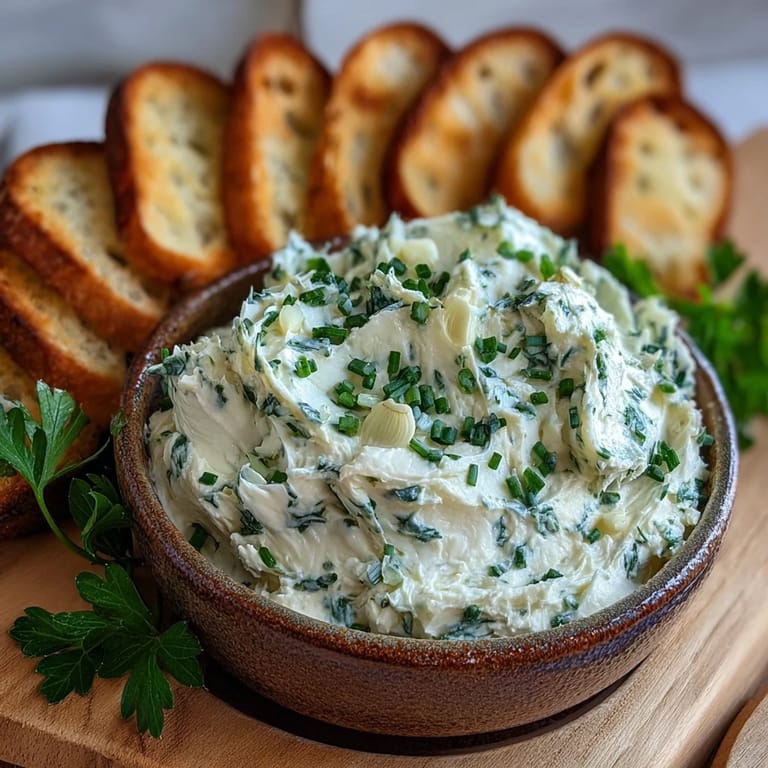
 This spread has quietly become one of those recipes that feels so simple I almost hesitate to share it, yet every single person who tastes it wants to know what makes it taste like that. That's the real magic here, not complicated techniques but just time and attention to the most basic ingredients.
Common Recipe Questions
- → How do I know when the garlic is properly roasted?
The garlic cloves should feel soft when gently squeezed through the foil wrapper, and the tops will be golden brown. You'll also notice a sweet, aromatic fragrance filling your kitchen. The cloves should easily squeeze out of their skins like a paste.
- → Can I make this spread ahead of time?
Absolutely. This spread actually improves after a day or two in the refrigerator as the garlic flavor melds with the butter. Store in an airtight container for up to one week. Bring to room temperature before serving to restore that spreadable consistency.
- → What other herbs work well in this butter?
Fresh rosemary, thyme, dill, or tarragon all pair beautifully with roasted garlic. You can also add lemon zest for brightness or a pinch of red pepper flakes for subtle heat. Use what you have on hand or what complements your planned serving menu.
- → Is there a faster way to prepare the garlic?
While roasting yields the sweetest, most mellow flavor, you can sauté minced garlic in olive oil until soft and golden. The texture will be slightly different but still delicious. Alternatively, garlic confit (slow-cooked cloves in oil) provides similar sweetness.
- → What else can I use this spread for besides bread?
This versatile butter works wonders melted over steamed vegetables, grilled fish, or seared steak. Spread it on roasted chicken during the last few minutes of cooking, or toss it with hot pasta and parmesan. It's also excellent for finishing baked potatoes or as a base for garlic bread.
- → My butter separated while whipping—what went wrong?
This usually happens if the butter was too cold or over-whipped. Ensure your butter is at proper room temperature—soft enough to press a finger into but not melted. Whip just until light and fluffy, stopping once combined. If separation occurs, briefly chill and re-whip gently.