 Save to Pinterest
 There's something about assembling a spring roll salad that feels like an act of defiance against gray afternoons. My neighbor mentioned she'd been craving the fresh snap of Vietnamese flavors but wanted something she could eat without wrestling with rice paper wrappers, and that's when this salad came together on my cutting board one Tuesday. The peanut dressing—nutty, bright, just slightly sweet—turned out to be the piece that made everything click into place, transforming ordinary vegetables into something that tasted like a celebration.
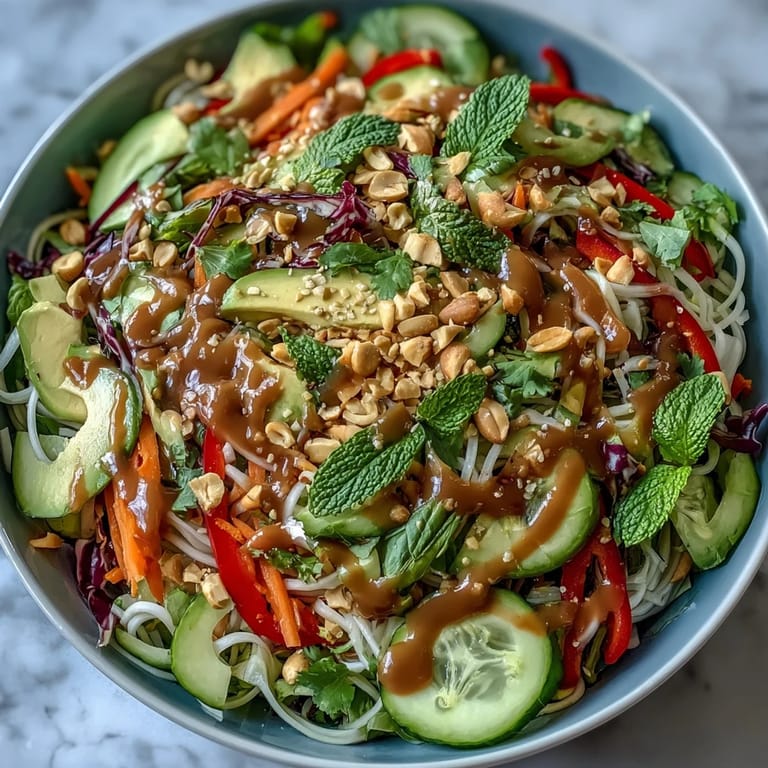
I made this for a potluck where I knew at least three people were eating plant-based, and watching someone who swears they don't like salad come back for seconds told me everything. The colors alone drew people in—that ruby cabbage, the golden carrots catching the light—but it was the creamy peanut dressing pooling at the bottom of the bowl that kept them coming back.
Ingredients
- Red cabbage: Buy it already shredded if you're short on time, but the whole head is cheaper and the knife work meditative if you need it to be.
- Carrots: A julienne peeler makes quick work of these, and the thinner strands drink up the dressing better than chunks.
- Cucumber: English cucumbers have fewer seeds and less water, so they stay crisp longer, but regular ones work just fine.
- Rice noodles: Cook them according to package directions, then run them under cold water and toss with a tiny bit of sesame oil so they don't clump into a sad tangle.
- Red bell pepper: The thinner you slice it, the more it plays nice with the dressing.
- Bean sprouts: If you find them slimy, a quick cold water rinse and spin dry revives them.
- Fresh mint, cilantro, and basil: These are not optional—they're what make this taste like something specific instead of just a pile of raw vegetables.
- Avocado: Add it just before serving or it turns that sad, grayish color that makes people hesitate.
- Roasted peanuts: The toasted ones taste deeper and more complex than the raw versions.
- Creamy peanut butter: The natural kind without stabilizers makes a dressing that tastes like actual peanuts.
- Lime juice: Fresh squeezed always tastes brighter than the bottled stuff hiding in the back of your fridge.
- Soy sauce or tamari: Tamari is the move if gluten bothers you, but low-sodium soy sauce prevents the dressing from turning into a salt bomb.
- Maple syrup: It dissolves into the warm water and balances the lime without tasting sweet, which is the whole trick.
- Toasted sesame oil: A little goes a long way—this stuff is flavor concentrate.
- Garlic and ginger: Minced fresh, not powdered, because powdered tastes like dust next to the real thing.
- Warm water: It helps everything emulsify into something pourable instead of clumpy.
Tired of Takeout? 🥡
Get 10 meals you can make faster than delivery arrives. Seriously.
One email. No spam. Unsubscribe anytime.
Instructions
- Prepare your vegetables like you're building something:
- Shred, slice, and chop everything into a large bowl, letting each vegetable land gently so you're not creating a bruised mess. The noodles go in here too if you're using them, and a light toss at this stage means everything gets to know each other a little.
- Arrange with intention:
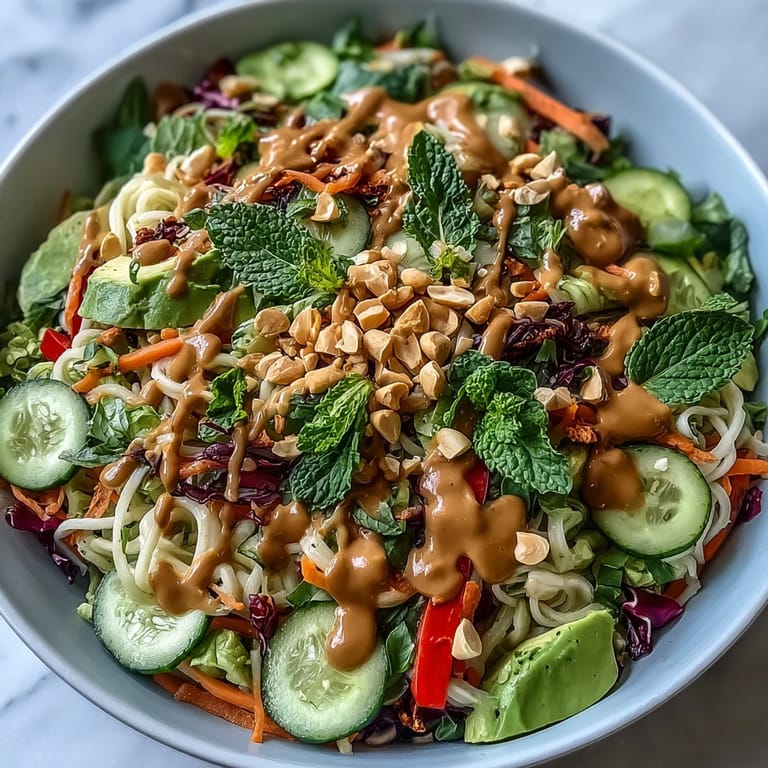
- Spread the salad on a platter or into bowls, then crown it with avocado slices and peanuts, which keep their crunch longer if they're not buried in dressing from the start. This step is half about eating and half about making people want to dive in.
- Whisk the dressing into existence:
- Combine the peanut butter, lime juice, soy sauce, maple syrup, sesame oil, garlic, and ginger in a small bowl, then add warm water one tablespoon at a time until you've got something that flows but still coats a spoon. The warm water is key—it helps everything emulsify instead of turning grainy.
- The final pour:
- Drizzle the dressing over the salad right before serving, or pass it on the side for people who like to control their own destiny. Either way, toss gently just before eating so everything gets dressed but nothing gets bruised.
 Save to Pinterest
 There's a specific moment when my six-year-old nephew tasted this and declared it "the best salad in the world," which felt like winning something. That moment mattered because it meant the vegetables weren't just texture and nutrition—they were delicious enough to make someone skip straight past the noodles and go hunting for more mint.
The Dressing as Everything
This dressing is genuinely worth memorizing because once you understand how these ingredients balance—the richness of peanut butter tempered by lime and ginger, the slight sweetness from maple syrup keeping everything from tasting aggressive—you can throw it on absolutely anything and it tastes intentional. Grilled tofu, roasted chickpeas, simple steamed broccoli, all of it transforms under this dressing's influence. I've started making a double batch just to keep in the fridge because it keeps for almost a week and makes meal prep feel less like a chore.
Building Layers of Flavor and Texture
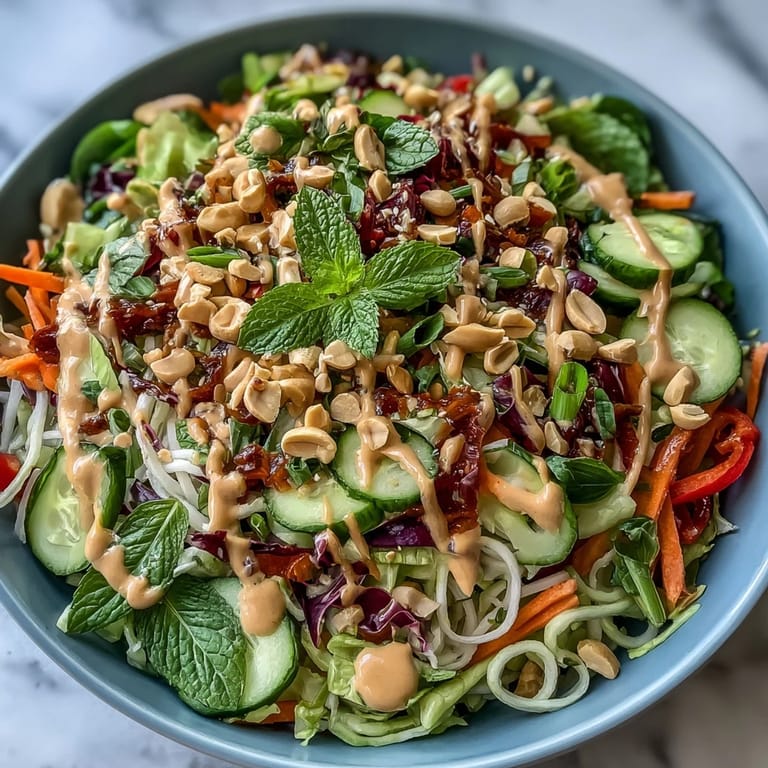
The real pleasure of this salad lives in the way nothing is soft except the avocado—everything else snaps and crackles under your teeth, and that resistance is part of what makes eating it feel like something rather than just consumption. The herbs do most of the flavor work; cilantro brings a strange brightness, mint cools things down, basil adds earthiness. If you skip the herbs thinking you're saving time, you'll end up with something that tastes like you didn't quite finish cooking.
Variations Worth Trying
This salad is built on a skeleton you can rearrange however you want depending on what's in your crisper drawer or what your body is craving that day. I've made it with shredded kohlrabi instead of cabbage, with crispy baked chickpeas scattered across the top, with thin slices of mango when stone fruit is in season. The dressing stays the same and everything tastes like it belongs here.
- Add thinly sliced radishes or sugar snap peas for extra crunch and a peppery edge.
- Substitute almond or sunflower seed butter for the peanut butter if that's what's in your pantry or if peanuts don't agree with you.
- Stir sriracha or a pinch of chili flakes into the dressing if you want heat, or leave it gentle if you're serving people who prefer their food calm.
 Save to Pinterest
 This salad has become my answer to the question "What's for lunch?" on days when I want something that tastes like effort but doesn't require much of it. It's the kind of food that makes you feel taken care of, even when you're the one doing the taking care.
Common Recipe Questions
- → Can I make this salad ahead of time?
You can prep all the vegetables and dressing up to a day in advance. Store the chopped vegetables in airtight containers and keep the dressing separate in the refrigerator. Toss everything together just before serving to maintain optimal crunch and freshness.
- → What can I substitute for peanut butter?
Almond butter, sunflower seed butter, or cashew butter all work beautifully as alternatives. Each brings a slightly different nutty profile while maintaining that rich, creamy texture. Just ensure whichever nut butter you choose is unsweetened for the best balance.
- → Is this salad filling enough for a main course?
With the optional rice noodles included, this makes a satisfying main dish. The combination of vegetables provides fiber and volume, while peanuts and peanut butter offer protein and healthy fats. You could also add baked tofu or edamame for extra protein if desired.
- → How long does the peanut dressing keep?
The dressing stays fresh in the refrigerator for up to one week when stored in a sealed container. You may need to add a splash of water when reheating, as it tends to thicken when chilled. Give it a good whisk before using.
- → Can I add protein to this salad?
Absolutely. Grilled shrimp, baked tofu, shredded chicken, or even crispy tempeh all complement these flavors wonderfully. Simply add your chosen protein on top or toss it in with the vegetables before dressing.