 Save to Pinterest
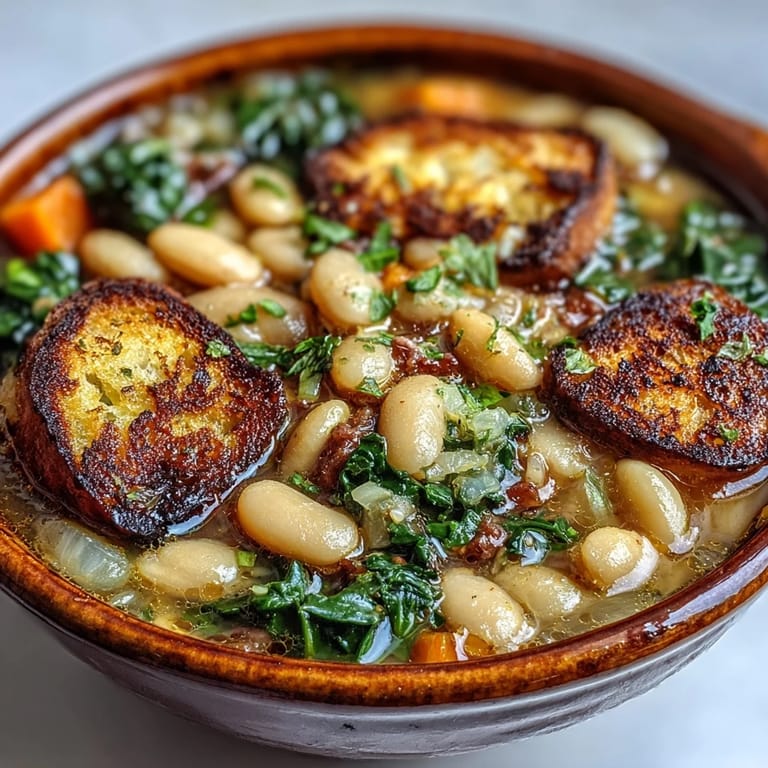
 There's something about the smell of sautéed soffritto filling your kitchen that makes you feel like you're cooking in Tuscany, even if you're nowhere near Italy. I discovered ribollita on a gray November afternoon when a friend texted me a photo of a bowl she'd eaten at a tiny trattoria in Florence, and I became obsessed with recreating it. The first time I made it, I underestimated how much the kale would soften, but by the time those crispy sourdough croutons hit the top, I understood why this soup has fed Italian families for generations. It's humble, it's honest, and somehow it tastes even better the next day.
I'll never forget watching my grandmother's face light up when I served her a bowl with perfectly golden croutons and a generous pour of green olive oil. She took one spoonful and said, 'This is what home tastes like,' which felt like the highest compliment a cook could receive. That moment taught me that ribollita isn't just sustenance—it's how you say 'I care' without having to speak.
Ingredients
- Extra-virgin olive oil: Don't skimp here—use the good stuff for drizzling at the end, as it's the final flourish that brings brightness to every spoonful.
- Yellow onion, carrots, and celery: This holy trinity (soffritto) is the flavor foundation; take your time letting them soften and caramelize slightly for deeper taste.
- Garlic cloves: Fresh, not jarred, and minced fine so they distribute evenly and mellow into the broth.
- Tuscan kale (cavolo nero): Its slightly bitter, mineral quality is essential to the dish's authenticity, but lacinato kale works beautifully as a substitute.
- Yukon gold potato: Waxy potatoes hold their shape better than russets and add subtle sweetness without turning to mush.
- Diced tomatoes: Keep the juice—it adds acidity and depth that elevates the entire soup.
- Cannellini beans: Drain and rinse canned beans well to remove the starchy liquid, or use freshly cooked beans if you have them on hand.
- Vegetable broth: Quality matters; a flavorful broth creates a soup worth savoring rather than merely filling.
- Bay leaf, thyme, and oregano: These dried herbs should smell fragrant when you open the containers—old spices make dull soup.
- Day-old sourdough bread: The slight staleness is crucial; it won't disintegrate when you toast it and will deliver that satisfying crunch.
- Parmigiano-Reggiano: A real block you can grate yourself tastes exponentially better than pre-shredded, and the rind can simmer in the pot for extra umami.
Tired of Takeout? 🥡
Get 10 meals you can make faster than delivery arrives. Seriously.
One email. No spam. Unsubscribe anytime.
Instructions
- Build Your Foundation:
- Heat olive oil in your Dutch oven over medium heat and add the diced onion, carrot, celery, and fennel if you're using it. Let them soften for 8 to 10 minutes, stirring occasionally—you're coaxing out their natural sweetness, not rushing them.
- Awaken the Aromatics:
- Stir in the minced garlic and cook for about a minute until the kitchen smells irresistible, then add your zucchini, potato, and chopped kale. This step takes just 3 to 4 minutes and wilts the kale down beautifully.
- Pour in the Soul:
- Add the canned tomatoes with their juices, the drained cannellini beans, vegetable broth, bay leaf, thyme, oregano, and red pepper flakes if you like a whisper of heat. Season generously with salt and pepper—taste the broth and season as if you're making tea you plan to drink.
- Let It All Come Together:
- Bring the soup to a boil, then lower the heat and simmer gently for 35 to 40 minutes, stirring occasionally. Toward the end, use the back of your wooden spoon to partially mash some of the beans and vegetables against the pot's side—this creates a creamy texture without pureeing.
- Toast the Croutons:
- While the soup simmers, preheat your oven to 400°F and toss the sourdough cubes with olive oil on a baking sheet. Bake for 10 to 12 minutes until golden and crispy, turning them halfway through for even browning.
- Finish with Garlic Perfume:
- The moment your croutons come out of the oven, while they're still warm, rub them with the cut sides of a halved garlic clove—the heat will release the garlic's oils and coat every crevice.
- Final Touches:
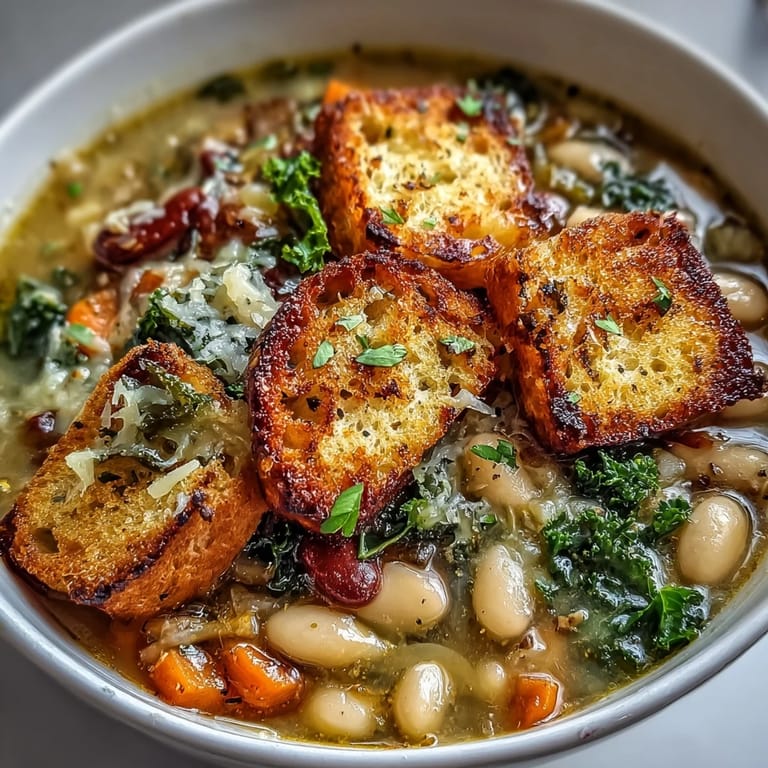
- Remove the bay leaf from your soup, taste it one more time, and adjust the seasoning if needed. Ladle into bowls and crown each one with a generous handful of croutons, a drizzle of your best olive oil, and freshly grated Parmigiano-Reggiano.
 Save to Pinterest
 I learned on a cold evening, when a friend ate three bowls in a row without speaking, that the best recipes are the ones that make people too focused on eating to chat. That kind of silence felt like the purest form of praise, and it's why I make ribollita whenever I want to nourish someone without fussing.
The Magic of Soaking in Broth
Ribollita has a secret that most people don't know: it genuinely tastes better the next day because the bread croutons you've already added will have softened slightly while the beans and vegetables continue melding their flavors together. If you're serving it immediately, the croutons stay crispy and provide contrast; if you're reheating leftovers, they'll have absorbed the broth and become almost risotto-like, which is its own kind of magic. I once made a huge batch thinking I'd have leftovers, and instead they vanished within two days because people kept sneaking bowls from the fridge.
Variations That Honor the Original
The beauty of ribollita is that it's flexible enough to welcome whatever vegetables you have on hand, as long as you respect the soup's essence. I've made versions with Swiss chard instead of kale, added white beans and lentils together for heartier texture, and even thrown in diced bell peppers when they were at their peak. The structure—soffritto base, beans, broth, slow simmer, and sourdough crown—remains constant, which is what makes it feel like home cooking rather than following rules.
Pairing and Serving Wisdom
This soup sings alongside a glass of Chianti or a rustic red wine that has enough body to match its earthiness. Serve it in wide bowls rather than narrow ones so the croutons have room to sit proudly on top without drowning, and always—always—drizzle with your finest olive oil at the table so each person can control how much richness they want. A side of crusty bread and a simple green salad complete the meal, though honestly, ribollita is so satisfying that you might not need anything else.
- Make the soup a day ahead and store it without the croutons; toast fresh ones just before serving for maximum crispness.
- A Parmigiano-Reggiano rind simmered in the pot from the beginning adds umami depth that elevates the entire dish.
- Leftovers freeze beautifully for up to three months, though I've never had them last that long.
 Save to Pinterest
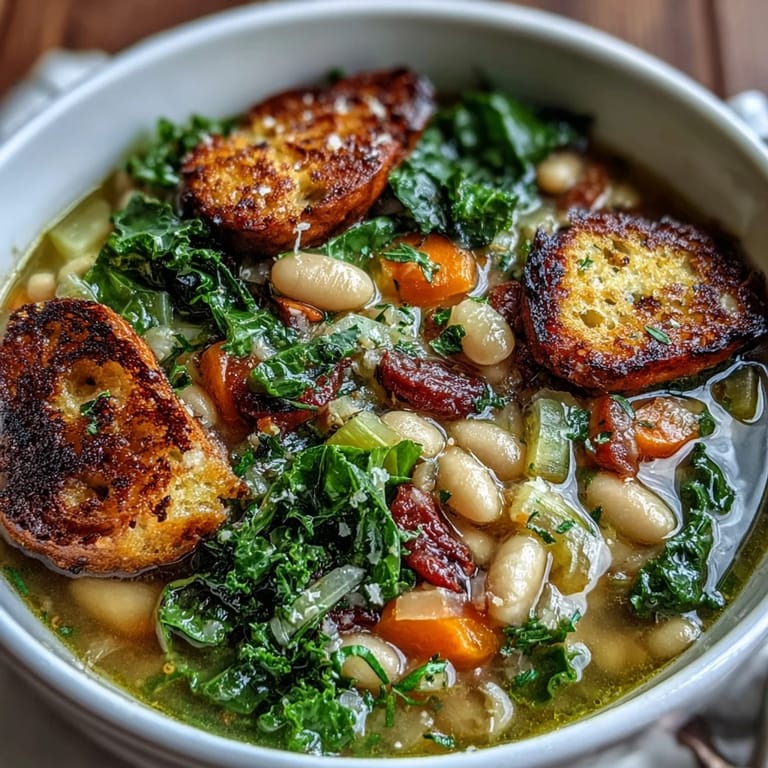
 Ribollita taught me that the most nourishing meals are the ones that ask you to slow down, to taste deeply, and to appreciate the simple alchemy of good ingredients treated with respect. Make this soup and watch it become a tradition.
Common Recipe Questions
- → What type of beans work best for this dish?
Cannellini beans, either canned or cooked from dry, provide the creamy texture and mild flavor essential for this soup’s hearty consistency.
- → Can I substitute the kale with other greens?
Yes, Swiss chard or spinach are excellent alternatives that soften nicely and maintain the soup’s vibrant texture and flavor.
- → How do I get the croutons crispy and flavorful?
Toss sourdough bread cubes with olive oil before baking until golden; rubbing them with garlic while warm enhances their aroma and taste.
- → What is the best way to thicken the soup naturally?
Mashing some of the beans and vegetables during simmering releases starches and creates a thicker, creamier broth without added thickeners.
- → Is it necessary to add cheese as a finishing touch?
Adding grated Parmigiano-Reggiano enriches the flavor, but it can be omitted or replaced with a vegan alternative for dietary preferences.
- → Can I prepare this dish vegan-friendly?
Absolutely. Simply omit the cheese or use a plant-based substitute to keep the dish entirely plant-based without sacrificing depth of flavor.