 Save to Pinterest
 The first snowfall had just started dusting the windowsills when I realized I had nothing warming ready for dinner. I scrambled through the pantry, found a tub of miso hiding behind the canned beans, and decided something simple and healing would have to do. That impulsive winter soup became the most requested recipe all season long.
My sister was visiting during the worst week of January, nursing a stubborn cold that refused to quit. I made this soup three times that week, watching her sink a little deeper into the couch with each bowl, until she finally asked for the recipe herself. Now she texts me every time she makes it, usually when the temperature drops below freezing.
Ingredients
- Low-sodium vegetable broth: Starting with a lighter base lets the miso shine without becoming overly salty
- Fresh ginger: Thin slices release their aromatic oils slowly into the broth, building layers of warmth
- Garlic: Thinly sliced rather than minced, it mellows beautifully during the simmer
- White or yellow miso paste: This fermented paste brings the deep umami foundation that makes everything taste deliberate
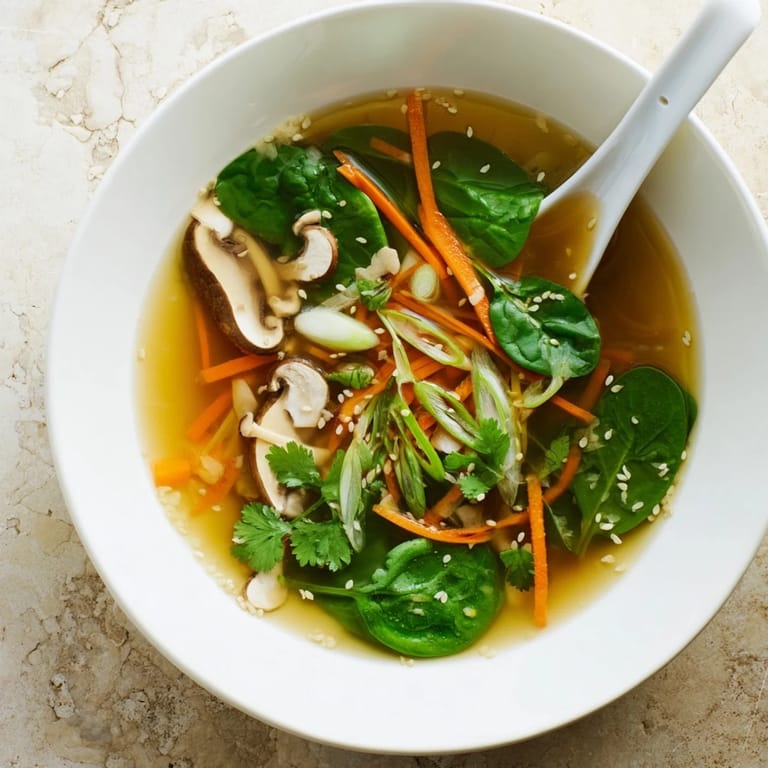
- Shiitake mushrooms: Their meaty texture holds up perfectly in the hot broth
- Baby spinach or bok choy: Greens wilt quickly but add a fresh contrast to the earthy base
- Carrot: Julienned into thin ribbons, they cook fast and bring subtle sweetness
- Green onions: Added last for a bright bite that cuts through the richness
- Toasted sesame seeds: These tiny crunches make every spoonful feel special
Tired of Takeout? 🥡
Get 10 meals you can make faster than delivery arrives. Seriously.
One email. No spam. Unsubscribe anytime.
Instructions
- Build the base:
- Bring the vegetable broth to a gentle bubble over medium heat and drop in the ginger and garlic slices. Let them swim together for 10 minutes, filling your kitchen with a scent that promises comfort.
- Add the vegetables:
- Toss in the mushrooms and carrot ribbons, giving them about 5 minutes to soften until theyre tender but still have something to say when you bite them.
- Temper the miso:
- Ladle out some hot broth into a small bowl and whisk the miso paste until it dissolves completely—this prevents clumps and protects those beneficial probiotics.
- Combine gently:
- Lower the heat and stir the miso mixture back into the pot, keeping everything below a boil to preserve the misos delicate qualities.
- Finish with greens:
- Drop in the spinach and green onions, watching them wilt just enough to look inviting, then taste and adjust with more miso if the broth needs more depth.
- Garnish generously:
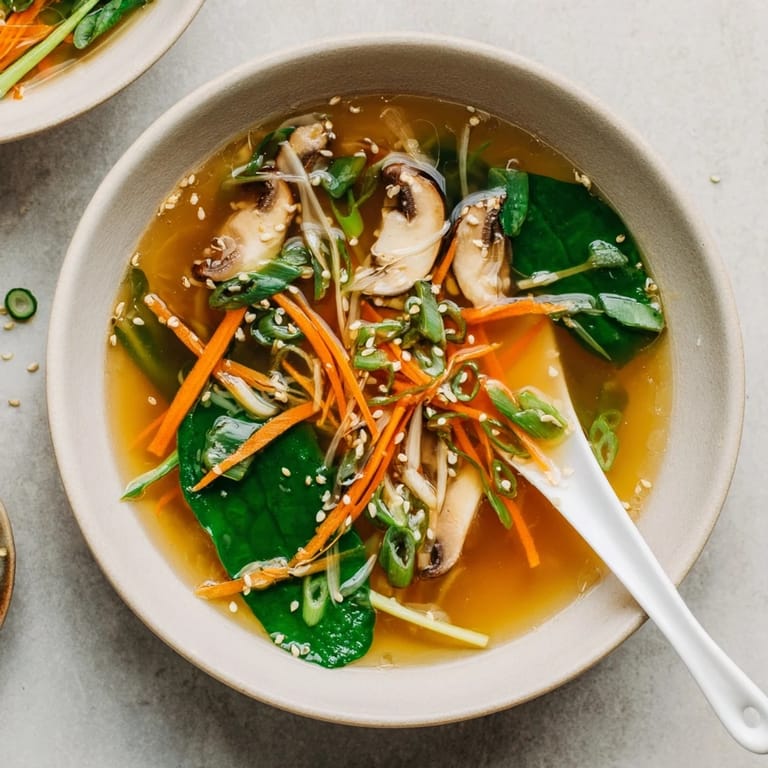
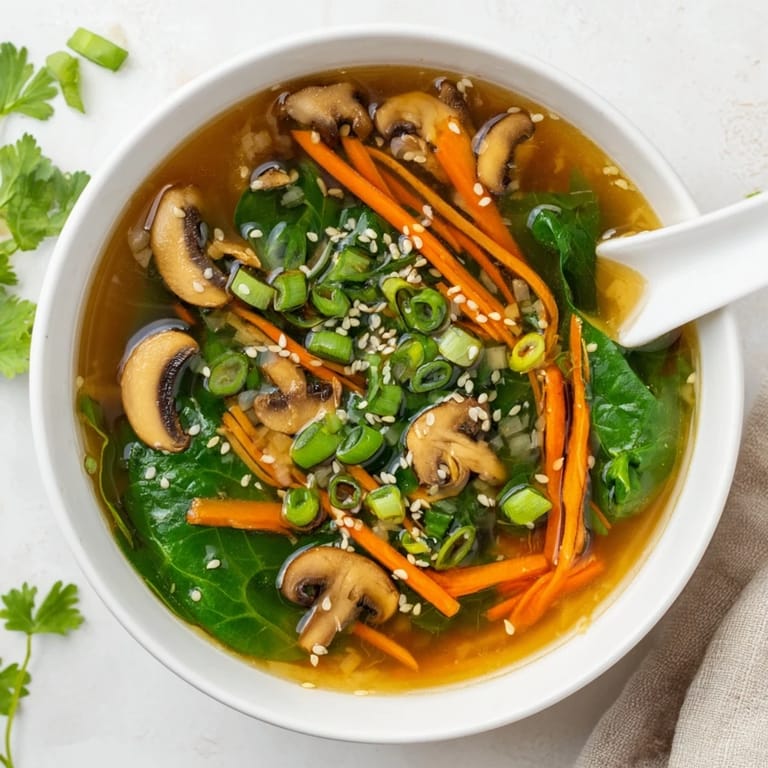
- Ladle into warmed bowls and scatter sesame seeds over the top, maybe some cilantro or chili oil if you are feeling bold.
 Save to Pinterest
 Last February, during a particularly brutal week, I made a double batch and took some to a neighbor recovering from surgery. She sent me a text two days later saying it was the first thing that actually tasted like something in a week. Sometimes soup is just soup, and sometimes it is exactly what someone needs to feel human again.
Making It Heartier
On nights when soup alone will not cut it, I have learned to add cubed silken tofu directly to the broth during the last few minutes. The tofu absorbs the miso flavor without falling apart, and suddenly a light restorative meal becomes something substantial enough to call dinner.
Noodle Options
Soba noodles or udon turn this into the kind of bowl that keeps you full for hours. Cook them separately and add them to individual bowls before ladling the hot broth over—this keeps the noodles from getting mushy if you have leftovers.
Make-Ahead Magic
The broth base freezes beautifully, but I always hold off on adding the miso and greens until I am ready to serve. This trick has saved me more than once when I need something nourishing but have zero energy to start from scratch.
- Prepare the ginger and garlic in advance and store them sliced in the refrigerator
- Miso paste keeps for months in the fridge, so do not be afraid to buy the larger tub
- Leftovers actually taste better the next day once the flavors have had time to really get to know each other
 Save to Pinterest
 This is the soup I make when nothing else sounds good, the one that somehow always works. I hope it finds you on a cold day and does the same for you.
Common Recipe Questions
- → Can I use red miso instead of white?
Yes, red miso works well and provides a deeper, more intense flavor. Just start with less since it's stronger than white miso.
- → Why shouldn't I boil the soup after adding miso?
High heat destroys the beneficial probiotics in miso. Always keep it at a gentle simmer after incorporating the paste.
- → Can I add noodles to make it more filling?
Absolutely. Soba or udon noodles cook quickly and turn this into a hearty meal. Cook them separately and add just before serving.
- → How long does this keep in the refrigerator?
Store in an airtight container for up to 3 days. Reheat gently over low heat without boiling to preserve the miso's benefits.
- → What other vegetables work in this soup?
Kale, Swiss chard, snap peas, or thinly sliced cabbage all work beautifully. Just adjust cooking time based on vegetable hardness.