 Save to Pinterest
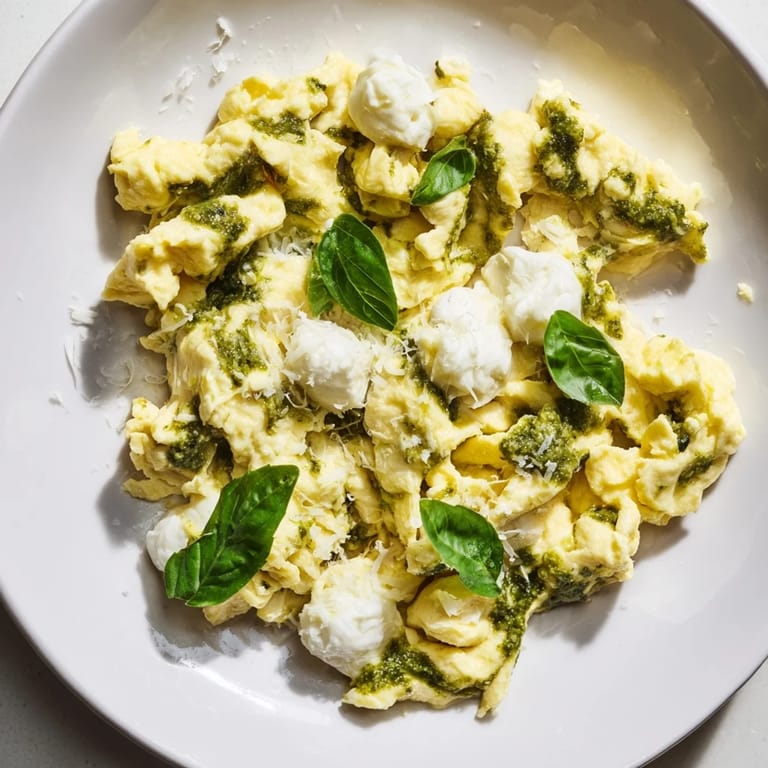
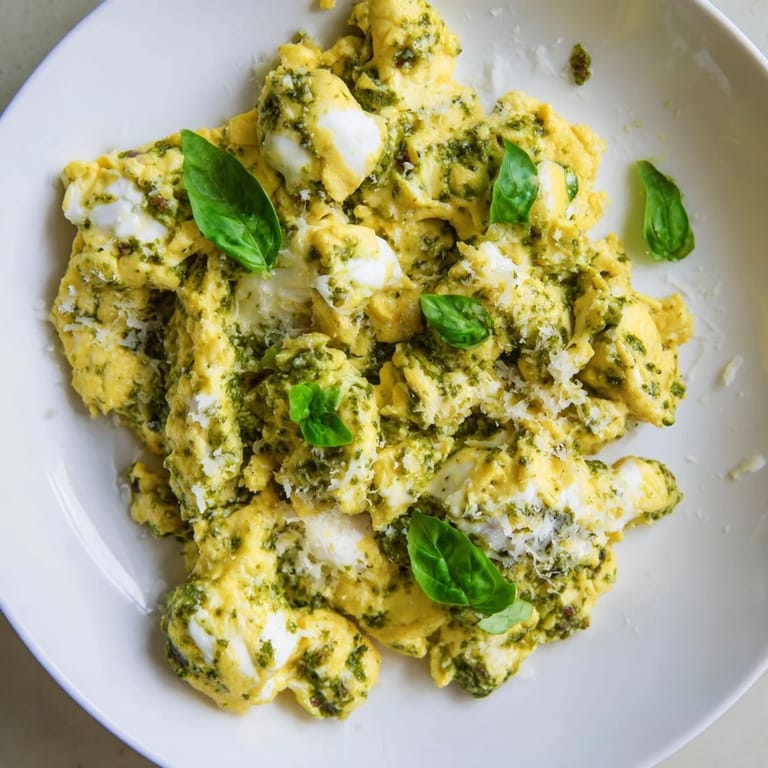
 There's something about the smell of basil hitting a hot pan that stops me mid-morning. I discovered this combination by accident one weekend when I had cottage cheese that needed using and fresh pesto from my garden taking over the fridge. The scrambled eggs that followed were so different from my usual breakfast—creamy, herb-forward, almost luxurious for 10 minutes of work. It became the thing I make when I want to feel like I'm actually cooking, not just feeding myself.
I made this for my sister last spring when she was visiting and complained about being bored with her usual eggs. She went quiet after the first bite, which is the highest compliment. Now whenever she shows up unannounced, she hints that her breakfast should involve pesto.
Ingredients
- 4 large eggs: The foundation here, and fresher is always better—they'll taste brighter and whip up fluffier when you whisk them.
- 2 tbsp milk or cream: This is optional but honestly it changes everything, adding tenderness that makes the final scramble feel silky rather than just soft.
- 1/2 cup cottage cheese: Full-fat creates that luxurious mouthfeel, but low-fat works if you're watching things; don't skip this, it's what makes the dish special.
- 2 tbsp basil pesto: Store-bought is completely fine, but if you have time, homemade pesto has this fresh intensity that transforms the entire plate.
- 1/4 tsp salt and 1/8 tsp black pepper: Taste as you go because the pesto and cheese already bring saltiness; you're just building balance here.
- Fresh basil, extra pesto, Parmesan, crusty bread: These garnishes aren't decoration—they're the final layer that makes people actually remember eating this.
Tired of Takeout? 🥡
Get 10 meals you can make faster than delivery arrives. Seriously.
One email. No spam. Unsubscribe anytime.
Instructions
- Whisk your base smooth:
- Crack eggs into a bowl with the milk and seasonings, whisking until the mixture is pale and uniform. Don't rush this; proper whisking traps air that becomes those tiny pockets of fluff.
- Warm the pesto gently:
- Heat your skillet over medium-low (this matters—too hot and you'll scramble everything into tight curds). Add the pesto and let it sit for just 30 seconds, letting the basil release its aroma and flavor into the pan.
- Add the eggs with patience:
- Pour in your whisked mixture and resist the urge to stir immediately. Let it sit undisturbed for 10 to 15 seconds so the bottom can set slightly, then push the cooked parts toward the center with your spatula in slow, deliberate strokes.
- Fold in the cottage cheese:
- When the eggs are still noticeably wet on top but beginning to hold their shape, scatter the cottage cheese over everything and fold it in gently, like you're trying not to deflate something. This takes maybe 15 to 20 seconds total.
- Stop cooking before you think you should:
- Remove the pan from heat while the eggs still look slightly underdone—they'll keep cooking from residual heat and you'll end up with that perfect barely-set, creamy texture instead of rubbery scramble.
- Plate and garnish:
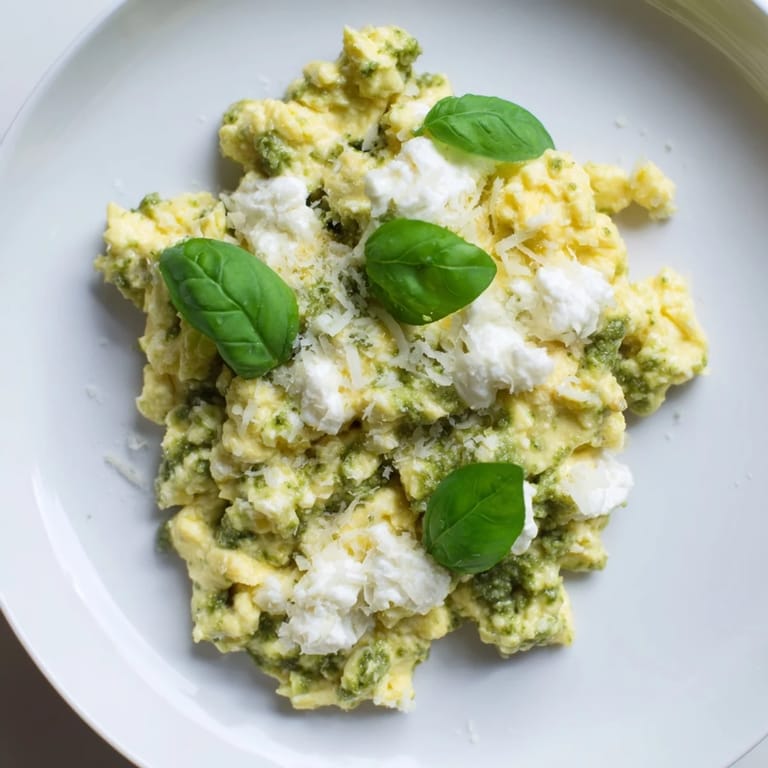
- Serve immediately on warm plates or crusty bread, topping with a drizzle of extra pesto, torn basil, and a scatter of Parmesan if you have it.
 Save to Pinterest
 What struck me most about this dish was watching someone who usually skips breakfast actually sit down to eat it slowly, asking what was in the eggs. That moment made me realize how much better food tastes when there's real flavor instead of just habit.
Why Cottage Cheese Changes Everything
Most people think cottage cheese is for salads or diet food, but scrambled into warm eggs it becomes something entirely different. The curds soften from the heat and create pockets of creaminess that you don't get from cream alone. It adds protein without making the dish feel heavy, and honestly, it's the reason people come back for seconds.
Making This Dish Your Own
The base formula here is flexible enough to play with. Sun-dried tomato pesto brings a darker, more intense flavor if you want drama for breakfast, or you could stir in sautéed spinach for earthiness. Ricotta works instead of cottage cheese if that's what you have, creating a slightly smoother texture. The point is that once you understand how pesto and cottage cheese react with eggs, you can build from there.
Breakfast That Actually Feels Special
There's a difference between eating something because it's quick and eating something because it's genuinely good. This dish falls into the second category, which is rare for something that takes 10 minutes total. The technique is simple enough that you'll nail it on the second try, but it feels considered, tastes vibrant, and turns a regular morning into something slightly better than usual.
- Make sure your pesto is at room temperature before you add the eggs, or cold pesto will cool the whole pan and slow cooking.
- If you're meal prepping, you can whisk the eggs the night before and store them in a container, but add the cottage cheese and pesto just before cooking.
- Leftovers work surprisingly well tucked into a sandwich with more fresh basil, though honestly this dish is best eaten warm straight from the pan.
 Save to Pinterest
 This is the kind of breakfast that reminds you why cooking at home matters. It's not complicated, but it's real.
Common Recipe Questions
- → Can I use ricotta instead of cottage cheese?
Yes, ricotta can be substituted for a smoother, creamier texture, though it will slightly alter the flavor and consistency.
- → How do I prevent the eggs from overcooking?
Cook eggs gently over medium-low heat and remove from the pan as soon as they are softly set to maintain creaminess.
- → Is it necessary to warm the pesto before adding eggs?
Warming the pesto briefly releases its aroma and enhances the dish’s flavor without cooking it fully.
- → Can milk or cream be omitted from the eggs?
Yes, milk or cream is optional and used for extra creaminess, but eggs will still be fluffy without it.
- → What can I serve this dish with?
Crusty bread or toast pairs well, adding texture and complementing the creamy eggs and pesto flavors.