 Save to Pinterest
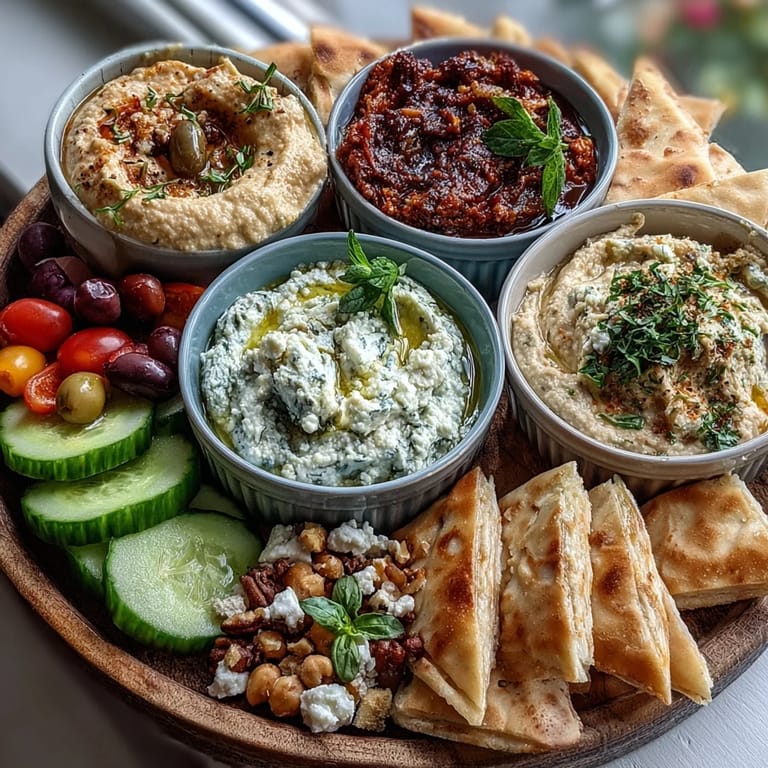
 Last spring, my sister texted me a photo of a sprawling Mediterranean board she'd seen at a café in Athens, and I became obsessed with recreating it at home. What started as a Pinterest rabbit hole turned into my solution for feeding a crowd without losing my mind in the kitchen. The beauty of this platter is that it looks like you spent hours planning when really, you're just arranging things that taste phenomenal together. Now whenever friends drop by for brunch, this is what they expect, and honestly, I've stopped apologizing for how easy it is.
I made this for my book club one August afternoon, and what I didn't expect was how the conversation just naturally slowed down as people built their own flavor combinations. Someone mixed the baba ganoush with feta, another person drizzled extra olive oil on everything, and suddenly everyone was tasting differently and talking about it. That's when I realized this board isn't really about the food, it's about giving people permission to play with their plate and enjoy the moment.
Ingredients
- Hummus: Chickpeas blended smooth with tahini create a base that feels indulgent but is basically just mashed beans, and making it yourself means you control the salt and lemon balance.
- Tzatziki sauce: Greek yogurt and grated cucumber make this cooling, herbaceous dip that tastes bright and tastes even better if you let it sit overnight and the flavors marry together.
- Baba ganoush: Roasted eggplant becomes silky and smoky, and this dip is where the real magic happens if you don't skip the roasting step.
- Fresh vegetables: Cucumber rounds, halved cherry tomatoes, and sliced bell peppers should be cut just before serving so they stay crisp and have that snappy texture.
- Olives: Both kalamata and green varieties bring different salinity and flavor, and the mix makes the board feel more abundant.
- Feta cheese: Crumbled feta adds tanginess and a salty contrast that keeps everything from tasting one-dimensional.
- Mixed nuts: Almonds, walnuts, and pistachios provide the textural surprise that makes people pause and appreciate the board's complexity.
- Pita and flatbreads: Cutting them into triangles or strips makes them easier to grab and dip, and toasting them lightly first adds a subtle crunch.
- Olive oil and fresh herbs: A final drizzle of good olive oil and a generous scatter of oregano or parsley finish the board with visual beauty and aromatic freshness.
Tired of Takeout? 🥡
Get 10 meals you can make faster than delivery arrives. Seriously.
One email. No spam. Unsubscribe anytime.
Instructions
- Blend the hummus:
- Drain and rinse your chickpeas, then add them to the food processor with tahini, lemon juice, minced garlic, and salt. Pulse until it becomes creamy and smooth, adding water a little at a time until you reach that perfectly spreadable consistency that feels luxurious on a spoon.
- Make the tzatziki:
- Grate your cucumber and squeeze it hard over a paper towel to remove excess moisture, because watery tzatziki is the enemy. Fold it gently into Greek yogurt along with minced garlic, olive oil, fresh dill, and a pinch of salt, then let it live in the fridge for at least an hour so the flavors get acquainted.
- Roast the eggplant:
- Pierce your eggplant with a fork, place it directly on the oven rack, and let it soften at 400°F for 30 to 35 minutes until it's completely yielding and the skin darkens slightly. Once it cools enough to handle, scoop out the silky flesh and blend it with tahini, olive oil, lemon juice, and salt until it becomes this smoky, creamy dream.
- Spoon dips into bowls:
- Transfer each dip into its own bowl or ramekin, smoothing the top with the back of a spoon if you're feeling fancy. This presentation step makes the whole board look intentional and inviting.
- Create your platter landscape:
- Use a large serving board and position your three dips as anchors around the board, leaving space between them for other components to breathe. Arrange vegetables, olives, and feta in clusters around the dips rather than randomly scattered, so the eye can follow the colors and textures naturally.
- Add texture and abundance:
- Fill small gaps with mixed nuts, making sure each section of the board has a mix of soft and crunchy elements. Nestle bread pieces around the perimeter where they're easy to grab and dip.
- Finish with intention:
- Drizzle a few streams of really good olive oil across the board, letting it pool slightly near the dips. Scatter fresh herbs generously, letting them fall where they may for a relaxed, abundance-filled look.
 Save to Pinterest
 My neighbor once sat at my kitchen counter and tasted each dip separately, then made her own combination on a flatbread, and said it reminded her of a trip she took to Greece thirty years ago. I realized that these boards do something special: they give people permission to slow down and taste deliberately, which feels increasingly rare. That moment became my reminder that the real gift isn't the ingredients, it's the invitation to linger.
The Art of Building a Beautiful Board
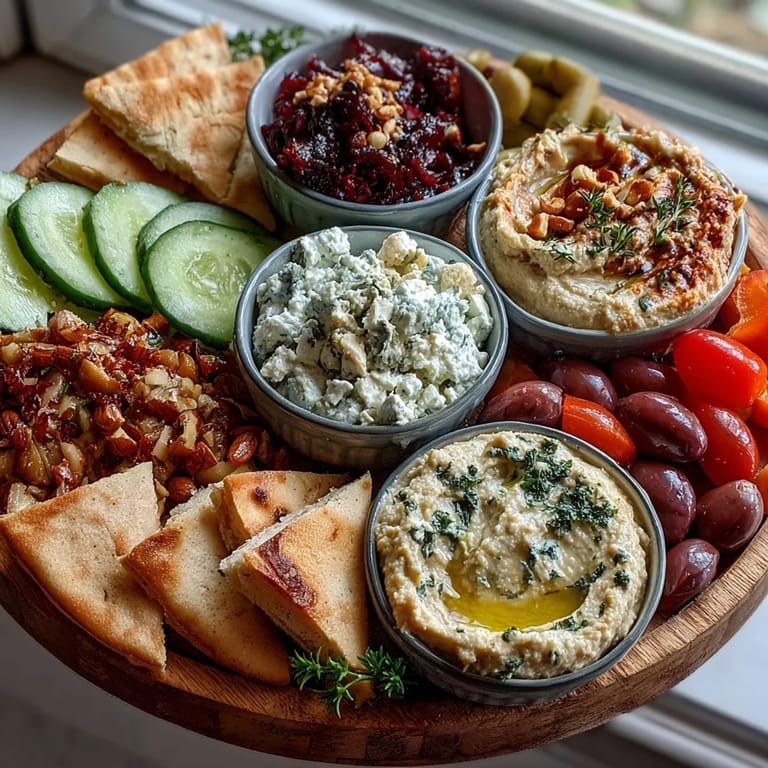
The secret to a board that looks effortlessly gorgeous is actually about intentional composition. Start by placing your three dips at different points on the board, like you're creating a triangle, then fill the negative space with vegetables, cheese, nuts, and bread in a way that feels balanced but not fussy. Colors matter more than perfection, so if your olives and tomatoes are clustered together, that's fine because they complement each other visually.
Making Your Dips Ahead
I've learned the hard way that preparing dips one to two days before your gathering actually improves everything. The hummus gets creamier as it rests, the tzatziki's flavors deepen and meld, and the baba ganoush develops this incredible smoky undertone that seems to come from nowhere. Store them in airtight containers in the fridge, and if they've dried out slightly on top, just stir in a splash of lemon juice or a drizzle of olive oil right before serving.
Variations and Personal Touches
This board is your canvas, and there are countless ways to make it your own without losing what makes it special. Add roasted red pepper dip for sweetness, include marinated artichokes or sun-dried tomatoes for a briny depth, or scatter pomegranate seeds for a tart pop of color. For a vegan gathering, swap feta for cashew cheese or simply omit it, and use store-bought vegan yogurt for the tzatziki base.
- Dust your dips with smoked paprika, ground cumin, or sumac for an extra layer of flavor that makes people ask what you did differently.
- Toast your flatbreads lightly in the oven before cutting them into strips, which adds a subtle crunch that keeps them from getting soggy.
- Let everything come to room temperature about fifteen minutes before serving so the flavors taste brighter and the textures feel less cold and more inviting.
 Save to Pinterest
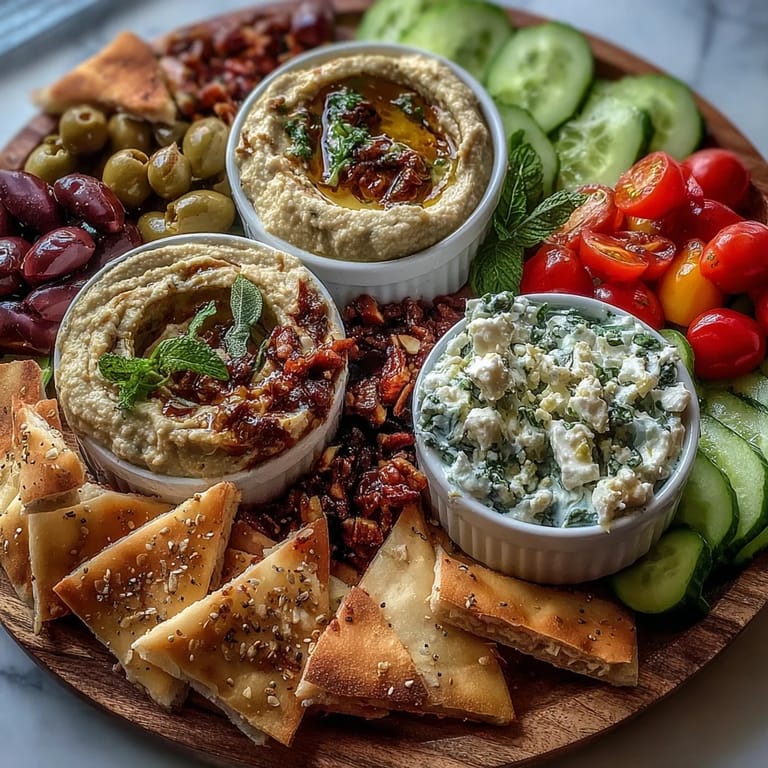
 This board has become my favorite way to welcome people into my home because it says nothing about impressing anyone and everything about sharing something delicious. When you set it down and step back, you've created an invitation for everyone to eat their own way.
Common Recipe Questions
- → Can I make the dips ahead of time?
Yes, all dips can be prepared up to 24 hours in advance. Store them covered in the refrigerator and bring to room temperature 30 minutes before serving for best flavor.
- → What can I substitute for feta cheese?
You can use goat cheese, halloumi, or plant-based cheese alternatives. For a vegan option, omit cheese entirely or use cashew-based feta.
- → How do I prevent the cucumber in tzatziki from making it watery?
After grating the cucumber, place it in a clean kitchen towel and squeeze firmly to remove excess moisture. The more water you remove, the thicker your tzatziki will be.
- → Can I use store-bought dips instead of homemade?
Absolutely. High-quality store-bought hummus, tzatziki, and baba ganoush work perfectly for this platter, saving significant preparation time while still delivering great flavor.
- → What other vegetables work well on this board?
Try adding radishes, carrot sticks, celery, blanched asparagus, roasted red peppers, or marinated artichoke hearts for additional color and variety.
- → How should I warm the flatbreads?
Wrap flatbreads in aluminum foil and warm in a 300°F oven for 10 minutes, or heat individually in a dry skillet for 30 seconds per side until soft and pliable.