 Save to Pinterest
 There's something about the smell of cumin hitting hot oil that immediately transports me to a small café in Tel Aviv, where I watched a cook assemble shakshuka with the efficiency of someone who'd done it a thousand times. The eggs arrived in a pool of deep red sauce, and I realized that this wasn't just breakfast or an appetizer—it was theater. Now, every time I make this at home, I'm chasing that same magic: the moment when the eggs settle into the sauce and the kitchen fills with that unmistakable, warming spice.
I learned this recipe the way many good things happen—by accident. A friend brought a jar of homemade harissa paste to my apartment one Sunday, insisting we had to make shakshuka right then. We didn't have cilantro, half the spices were containers with faded labels, and somehow that chaotic afternoon created the most memorable meal I've cooked at home. It turns out that constraints breed creativity, and now I make it this way deliberately, adjusting for whatever's in my pantry rather than waiting for a perfect list.
Ingredients
- Olive oil: Use a good quality one because you'll taste it in every bite, and it should carry those peppery, grassy notes that ground the whole dish.
- Yellow onion: The sweetness matters here; it's what balances the acidity of the tomatoes and prevents the sauce from tasting thin.
- Red bell pepper: More than just color, it adds a subtle sweetness and body to the sauce as it breaks down.
- Garlic: Fresh is non-negotiable, and mince it fine so it melts into the oil without burning.
- Red chili: Optional, but I never skip it because those tiny bits of heat thread through every spoonful in the best way.
- Crushed tomatoes: The backbone of the sauce; choose a brand you like eating plain because that's essentially what this is.
- Fresh tomatoes: They add brightness and texture that canned alone can't quite deliver.
- Tomato paste: A spoonful of this concentrates flavor and thickens the sauce so the eggs sit proudly instead of drowning.
- Ground cumin: This is the signature spice that makes people ask what's different about your version.
- Sweet paprika: It brings a gentle earthiness and a touch of color without heat.
- Cayenne pepper: Keep it optional in the recipe, but taste as you go and add what feels right for your heat tolerance.
- Ground coriander: The secret ingredient that no one expects but everyone notices when it's there.
- Eggs: Large ones matter because they need room to poach without crowding, and the yolk should be soft enough to break into the sauce.
- Fresh parsley and cilantro: Both feel essential at the end, adding brightness and a hint of freshness that cuts through the richness.
- Feta cheese: Crumbled on top, it's the salty, creamy finish that makes you want to keep eating.
Tired of Takeout? 🥡
Get 10 meals you can make faster than delivery arrives. Seriously.
One email. No spam. Unsubscribe anytime.
Instructions
- Warm the oil and soften the vegetables:
- Pour the olive oil into your pan and let it heat until you can feel the warmth rising from it, then add the onion and bell pepper. Let them sit undisturbed for a minute before stirring so they develop a gentle color at the edges, which brings out their natural sweetness.
- Build the aromatics:
- Once the vegetables have softened and turned translucent at the edges, add the garlic and chili, stirring constantly so you can catch the moment when the raw garlic smell transforms into something sweet and toasted. This takes about 60 seconds, and you'll feel the difference in how the sauce tastes.
- Add the tomatoes and tomato paste:
- Pour in both the canned and fresh tomatoes along with the tomato paste, stirring everything together so the paste dissolves into the liquid. The color will shift to a deep red, and the kitchen will smell like home.
- Season and simmer:
- Sprinkle in all the spices and a generous pinch of salt, then lower the heat so the sauce bubbles gently at the edges rather than rolling boiling. This is when patience becomes part of the recipe—let it simmer for 10 to 12 minutes, tasting and adjusting as you go, until the sauce thickens enough that a wooden spoon leaves a brief trail through it.
- Create wells for the eggs:
- Using the back of your spoon, make four shallow indentations in the sauce, spacing them so each egg has its own cozy pocket. The sauce should come partway up the sides of these wells but not overflow into them.
- Nestle in the eggs:
- Crack each egg directly into its well, being careful not to break the yolks. The whites will immediately begin to set, and you'll watch as they turn from clear to opaque as the heat from the sauce does its work.
- Cover and cook gently:
- Place a lid on the pan and lower the heat to medium-low, creating a gentle, steamy environment where the eggs can poach without the sauce boiling aggressively underneath. Check after 6 minutes to see how the whites are setting, knowing that the residual heat will continue cooking them for a minute or two after you remove the pan from the flame.
- Finish with freshness:
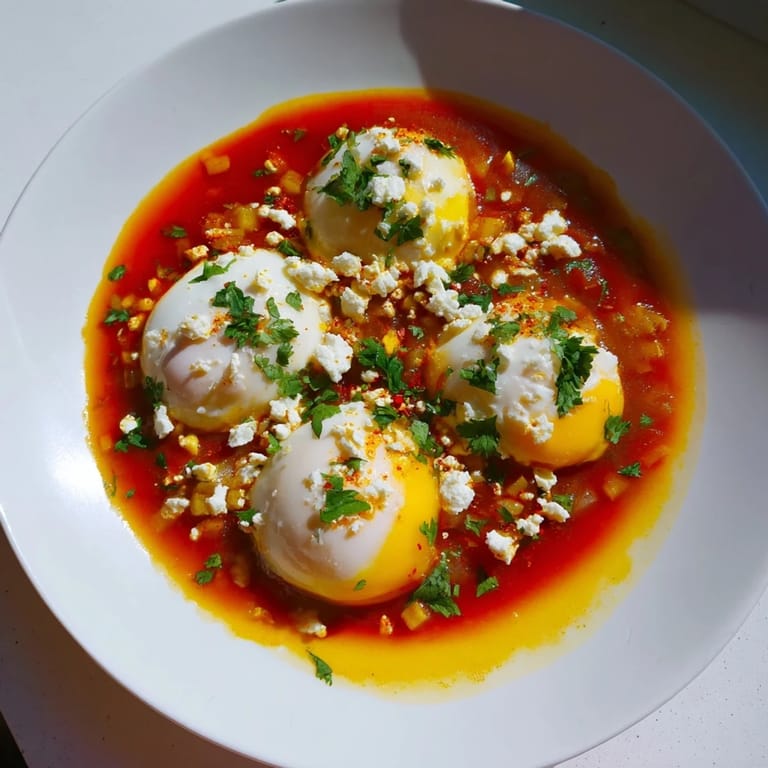
- Once the egg whites are set but the yolks still jiggle slightly when you tilt the pan, scatter the parsley and cilantro across the top, add feta if you'd like, and serve immediately with warm bread for dipping into that incredible sauce.
 Save to Pinterest
 Years ago, I made this for a friend who'd been having a rough week, and she literally teared up after the first bite—not because the food was perfect, but because it felt intentional and warm and made just for her. That's when I understood that shakshuka isn't really about technique or the exact spice blend; it's about the care you put into that sauce and the fact that you're offering someone something that feels like a hug on a plate.
The Sauce is Everything
This dish lives or dies by its sauce, so spend time tasting and adjusting as it simmers. The acidity of the tomatoes, the warmth of the spices, and the sweetness of the peppers need to balance each other like a chord rather than individual notes. I've learned that adding salt in stages rather than all at once lets you hear each layer of flavor as it develops, and by the time you crack the eggs into the pan, you should be tasting something that makes you pause and think, 'Yes, that's it.'
Variations Worth Trying
The beauty of shakshuka is that it becomes a different dish depending on what you add to the sauce. Sautéed spinach wilts into the sauce and adds an earthiness that pairs beautifully with the spices, while roasted or fried eggplant brings a silky texture and absorbs flavor like a sponge. I've also added sun-dried tomatoes for depth, crumbled chorizo for smokiness, or even crispy chickpeas for crunch. The core—the spiced tomato sauce and poached eggs—stays the same, but you're free to make it your own.
Serving and Storage
Shakshuka is best eaten warm, right from the pan, with crusty bread or pita for scooping. If you're making it for guests, you can prepare the sauce completely in advance and reheat it gently just before cracking in the eggs, which means the dramatic part of cooking happens while everyone's gathered around the kitchen. Leftover sauce (if there is any) keeps for three days in the fridge and reheats beautifully, though adding fresh eggs to warmed sauce is never quite the same magic as cooking them fresh.
- Serve with labneh or Greek yogurt on the side for cooling contrast and richness.
- A drizzle of good olive oil on top just before serving adds luxury without effort.
- Don't skip the fresh herbs at the end; they're what lift the dish from heavy to bright.
 Save to Pinterest
 This is the kind of dish that reminds you why people gather around food in the first place. Serve it with warmth, share it generously, and watch how a simple pan of eggs and sauce becomes a moment worth remembering.
Common Recipe Questions
- → What spices are essential for authentic shakshuka flavor?
Cumin, sweet paprika, ground coriander, and a touch of cayenne pepper create the signature warm and slightly spicy flavor.
- → How do you achieve perfectly poached eggs in the sauce?
Make small wells in the simmering sauce, crack the eggs carefully in, cover, and cook gently until whites set but yolks remain soft.
- → Can I adjust the heat level in this dish?
Yes, adding fresh chili or cayenne pepper controls the spice intensity according to your preference.
- → What garnishes pair well with shakshuka?
Fresh parsley, cilantro, and crumbled feta cheese enhance freshness and add creamy, tangy notes.
- → Is this dish suitable for vegetarians and gluten-free diets?
Yes, it contains eggs and vegetables without gluten, making it vegetarian and gluten-free friendly.
- → What can be served alongside for a complete meal?
Warm pita bread, crusty bread, or labneh complement the flavors and texture beautifully.