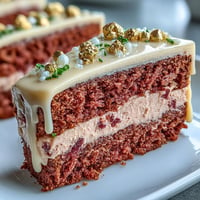
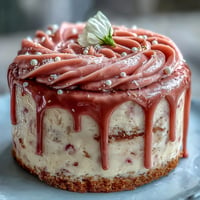
 Save to Pinterest
 My first attempt at hojicha butter cream cake happened on a quiet Tuesday afternoon when I stumbled upon a tin of roasted green tea at a Japanese market. The moment I opened it, that toasted, almost nutty aroma filled my kitchen and I knew I had to build something around it. What started as an experiment in infusing butter with that gentle roasted flavor turned into this elegant cake that somehow tastes like both comfort and sophistication. It's become my go-to when I want to impress without spending hours in the kitchen, and honestly, the look on people's faces when they taste it makes every careful step worthwhile.
I served this cake at my partner's birthday gathering last spring, and watching them close their eyes at the first taste felt like the whole afternoon of prep work had already paid off. Someone asked if I'd bought it from a fancy patisserie, which made me laugh because the truth is even simpler, it just comes from paying attention to good ingredients and taking your time with the mixing. That moment reminded me that food doesn't need to be complicated to feel genuinely luxurious.
Ingredients
- Cake flour: This fine, low-protein flour is what gives the cake its delicate, tender crumb that won't fight the creamy frosting.
- Eggs at room temperature: Cold eggs won't incorporate air as efficiently, so let them sit out for 20 minutes before you start mixing.
- Granulated sugar: Beating this with eggs creates the structure that keeps the cake airy rather than dense.
- Whole milk and melted butter: Adding these together at the end prevents them from deflating all that air you've just beaten in.
- Hojicha loose leaf tea: If you can't find hojicha, look in Asian markets or online, it's worth the search for its distinctive roasted flavor that no substitute quite captures.
- Unsalted butter for the buttercream: Room temperature butter whips into clouds, cold butter stays lumpy no matter how long you beat it.
- Powdered sugar sifted: The sifting step matters more than you'd think, it breaks up clumps and helps the buttercream become silky smooth.
- Dark chocolate 60–70% cocoa: This range keeps the ganache rich without being bitter, it balances the subtle sweetness of the hojicha beautifully.
- Heavy cream: Use the kind with at least 35% fat, lighter cream won't emulsify properly with the chocolate.
Tired of Takeout? 🥡
Get 10 meals you can make faster than delivery arrives. Seriously.
One email. No spam. Unsubscribe anytime.
Instructions
- Prepare your pans and preheat:
- Line two 18 cm round pans with parchment and set your oven to 175°C, this gives you time to get your mise en place together while the oven gently comes to temperature.
- Whip eggs and sugar until pale:
- This 5 to 7 minute beating is where the cake's lightness comes from, you're creating tiny bubbles that will expand in the oven. When the mixture falls from the beater, it should leave a ribbon on the surface that takes a few seconds to disappear.
- Fold in the flour gently:
- Adding it in three batches keeps you from over-mixing and toughening the batter, use a rubber spatula and fold from the bottom up in smooth, patient movements.
- Temper and fold in the wet ingredients:
- Mixing a bit of batter with the milk and butter mixture first prevents them from shocking the rest of the batter and deflating it. Then fold this lightened mixture back into the main batter in one smooth motion.
- Divide and bake:
- Evenly split the batter between pans and bake until a skewer comes out clean, about 20 to 22 minutes, the tops should spring back when you touch them gently.
- Cool with patience:
- Let them rest in the pans for 10 minutes so they firm up slightly, then turn them onto a wire rack, trying to turn them too early and they'll tear.
- Brew the hojicha infusion:
- Heat the milk until steaming, pour it over the hojicha and let it sit for 10 minutes, longer if you want a more intense flavor. Strain it carefully and let it cool to room temperature, warm hojicha milk will melt the buttercream.
- Beat the buttercream base:
- Butter and powdered sugar need 3 to 4 minutes of beating to become light and fluffy, this is where air gets incorporated and the buttercream becomes cloud-like. You'll know it's ready when it looks pale and airy.
- Combine into hojicha buttercream:
- Gradually add the cooled hojicha milk to the whipped butter mixture, beating on medium speed so it incorporates smoothly without breaking. If it looks grainy at first, keep beating, it will come together into something silky.
- Make the ganache:
- Heat cream until just steaming, pour it over your chopped chocolate and wait for 2 minutes before stirring, patience here means a glossy finish instead of a grainy one. Stir in smooth, deliberate circles until the chocolate dissolves completely, then let it cool to room temperature so it's thick enough to drape.
- Assemble with care:
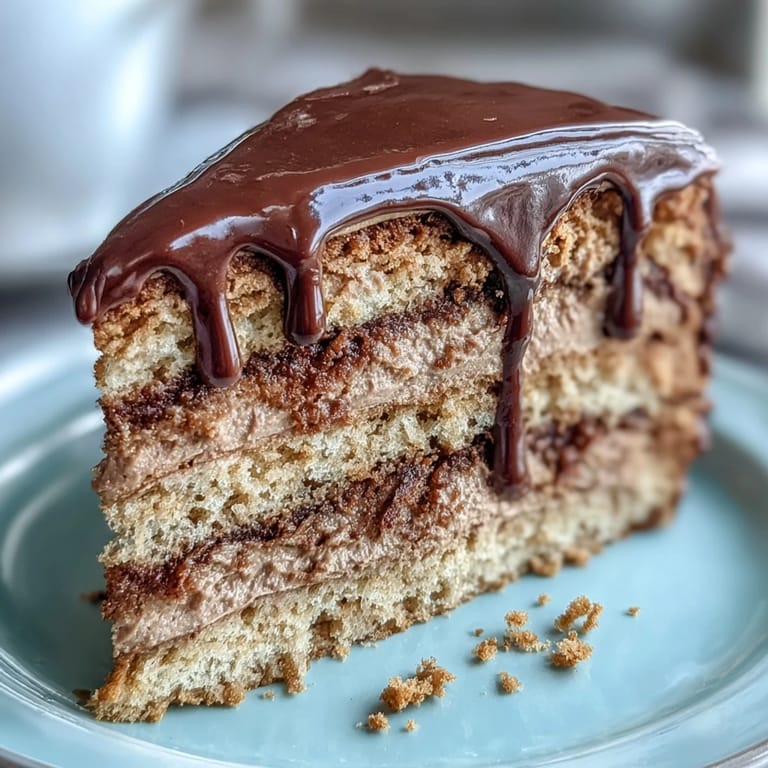
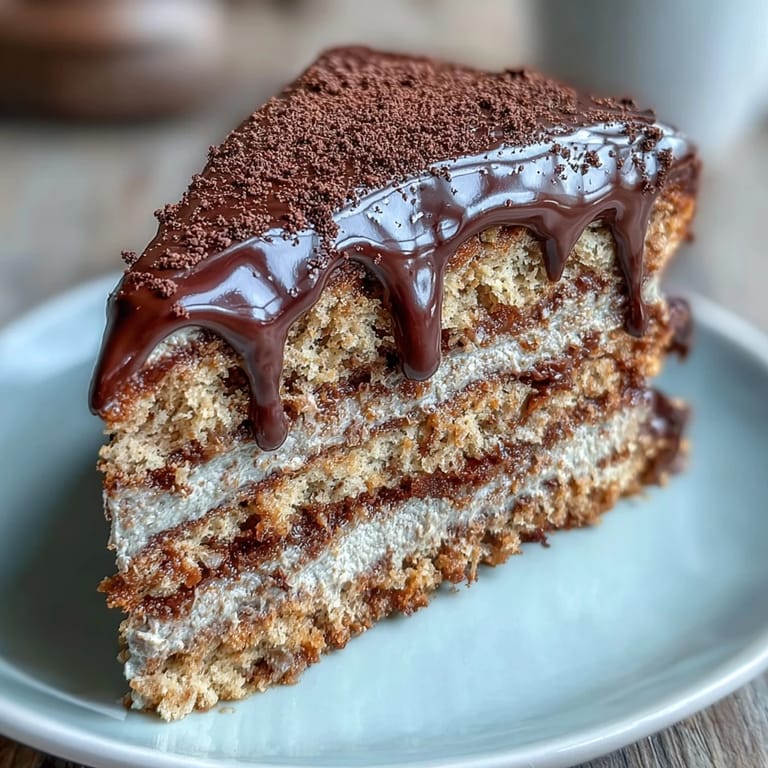
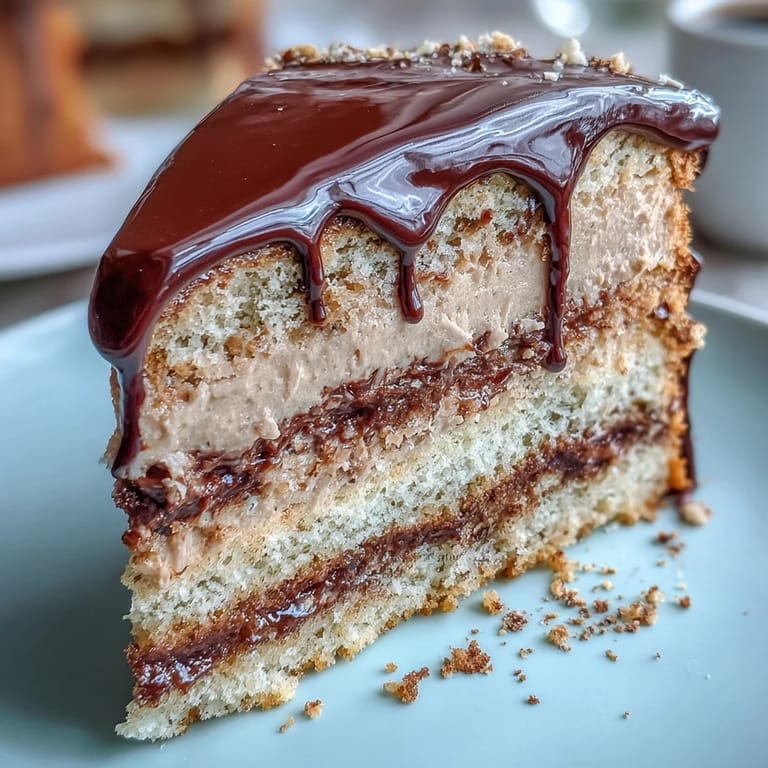
- Place the first cake layer on your serving plate and spread half the buttercream over it with an offset spatula, take your time leveling it slightly so the second layer sits flat. Top with the second layer, frost the top and sides with the remaining buttercream, then pour the ganache over the top and let it cascade down naturally.
- Chill before serving:
- The 30 minute chill sets everything and makes slicing clean, it also lets the flavors settle into each other, a fresh slice will have crisp layers instead of a warm, blurred crumb.
 Save to Pinterest
 The first person who really understood this cake was my neighbor who stopped by unannounced and caught me in the middle of frosting it. She watched me spread that hojicha buttercream and said it looked like I was painting something, which stuck with me, because in a way you are. Food becomes more interesting when you slow down enough to actually see what you're doing.
The Magic of Hojicha
Hojicha is roasted green tea, and that roasting transforms it into something entirely different from its raw form. It loses the grassy sharpness and becomes warm, almost caramel-like, with notes that remind you of toasted grain and gentle smoke. When you infuse butter with it, you're not adding a flavor that competes with sweetness, you're adding a flavor that makes sweetness feel more interesting and sophisticated. It's the reason people keep eating this cake even when they're full.
Texture and Balance
The beauty of this cake is how the three components support each other without overwhelming. The sponge is delicate and absorbent, the buttercream is rich but not heavy, and the ganache adds a moment of elegance without masking what came before. Each layer has a different mouthfeel, and together they create something that feels complete in a way that a simple vanilla cake never quite does. Getting that balance right is what transforms a good cake into one that people remember.
Storage and Serving Wisdom
This cake tastes best when served cold or at cool room temperature, the flavors are crisper and the frosting holds its shape better. You can make it a day ahead, wrap it loosely and store it in the refrigerator, in fact the flavors actually deepen overnight as they get to know each other.
- Slice with a sharp knife dipped in hot water and wiped clean between cuts, this prevents the ganache from cracking and the layers from tearing.
- If you want to garnish it, chocolate shavings curled with a vegetable peeler look elegant, or a light dust of extra hojicha powder echoes the flavor inside.
- Serve it with a cup of Japanese green tea or a floral oolong, the tea in your cup will have a conversation with the hojicha in your slice.
 Save to Pinterest
 Making this cake is an act of slowing down in a world that doesn't usually reward it. The reward comes when someone takes a bite and understands that you cared enough to get the small things right.
Common Recipe Questions
- → What does hojicha taste like?
Hojicha has a distinctive roasted, earthy flavor with notes of caramel and subtle smokiness. It's less bitter than other green teas, making it perfect for desserts.
- → Can I make this cake in advance?
Yes, you can bake the sponge cake layers a day ahead and store them wrapped in plastic. The assembled cake keeps well in the refrigerator for up to 3 days.
- → What can I substitute for hojicha?
If hojicha is unavailable, you can use roasted green tea powder or even matcha for a different flavor profile. The taste will be slightly different but still delicious.
- → Why did my sponge cake not rise properly?
Properly beating the eggs and sugar until thick and pale is crucial for creating air pockets. Also, avoid over-folding the flour and ensure your oven is fully preheated.
- → How do I store leftover cake?
Store in an airtight container in the refrigerator for up to 3 days. Bring to room temperature 20 minutes before serving for the best texture and flavor.
- → Can I freeze this cake?
You can freeze the unfilled sponge layers for up to a month. Once assembled with buttercream and ganache, freezing is not recommended as it affects the texture.