 Save to Pinterest
 I discovered the magic of charcuterie boards the moment a friend arranged one for my birthday, and I was mesmerized by how something so simple felt like edible art. Years later, I wanted to create something that captured that same enchantment, so I started experimenting with gold leaf and cheese cutouts in my own kitchen. The Gilded Acorn was born on a quiet Sunday afternoon when I realized that the most elegant gatherings don't require complicated cooking, just thoughtful presentation and quality ingredients gathered with intention.
I'll never forget the look on my sister's face when she saw this board at my dinner party last fall. She kept coming back to those tiny golden almonds, saying they looked like little treasures scattered across the platter. That's when I realized that sometimes the smallest details are what people remember most, not the main event itself.
Ingredients
- Whole almonds (1 cup): These are your foundation—they provide earthiness and a satisfying crunch that anchors the entire board.
- Pecans (1/2 cup): Slightly sweeter than almonds, they add complexity and visual interest with their darker color.
- Walnuts (1/2 cup): Their subtle bitterness balances the sweeter accompaniments like figs and dried apricots.
- Hazelnuts (1/2 cup): The rarest guest on the board, they bring a delicate nuttiness that catches people off guard in the best way.
- Additional whole almonds for gold-dusting (1/2 cup): Keep these separate so they stay pristine and dry before coating.
- Edible gold dust or gold leaf flakes (1/2 tsp): Use only food-grade gold—it's the difference between elegant and questionable at a glance.
- Sharp cheddar cheese block (8 oz): Its sharpness cuts through the richness and won't get lost among other flavors.
- Gouda cheese block (8 oz): Slightly smoky and nutty, it's the perfect partner for cheddar in those acorn cutouts.
- Brie or camembert (8 oz, optional): If you want creamy contrast, this is your secret weapon for texture variation.
- Dried apricots (1/2 cup): Their natural sweetness and chewy texture make them essential, not optional.
- Dried figs, halved (1/2 cup): They're what make people pause and ask where you got them from.
- Seedless red grapes (1/2 cup): Fresh and bright, they're your visual punctuation marks on the board.
- Fresh apple slices (1/2 cup): Toss these in a bit of lemon juice if you're prepping ahead, so they don't brown.
- Honey or fig jam (1/4 cup): This is your wild card—a small pot of it unlocks flavors people didn't know they were craving.
- Assorted crackers (1 cup): Mix shapes and textures, not just flavors, so every bite feels different.
- Small baguette, sliced: Toast the slices lightly if you want them to hold up longer on the board without getting soft.
Tired of Takeout? 🥡
Get 10 meals you can make faster than delivery arrives. Seriously.
One email. No spam. Unsubscribe anytime.
Instructions
- Create the golden almonds with care:
- Place the half cup of almonds in a shallow bowl and mist lightly with water using a spray bottle—your goal is just enough moisture to make the nuts sticky, not wet. Sprinkle the gold dust gradually while tossing gently, letting it catch the light as it settles. Set them aside on a clean plate to dry completely while you work on the rest.
- Cut your cheese into acorn shapes:
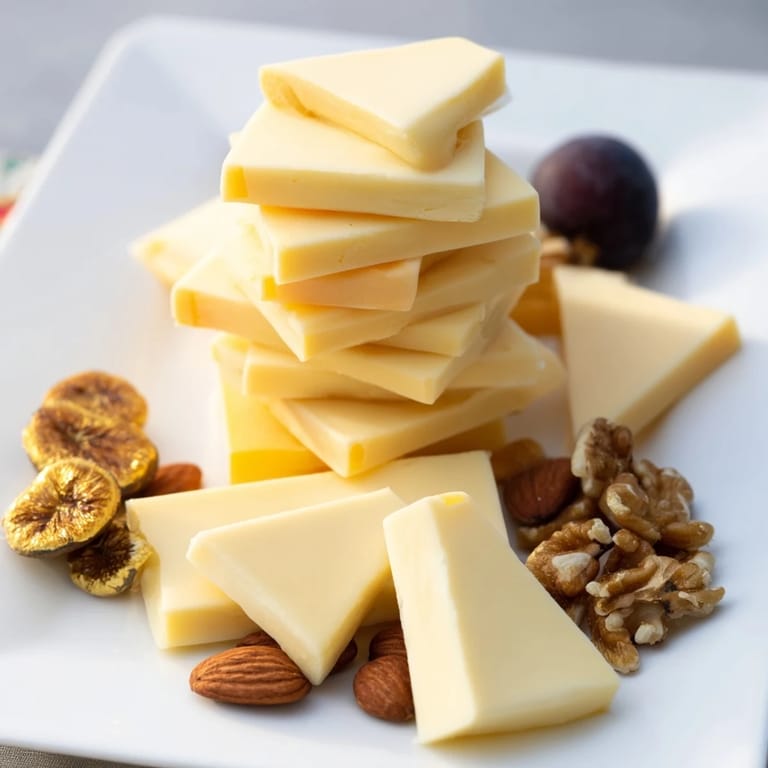
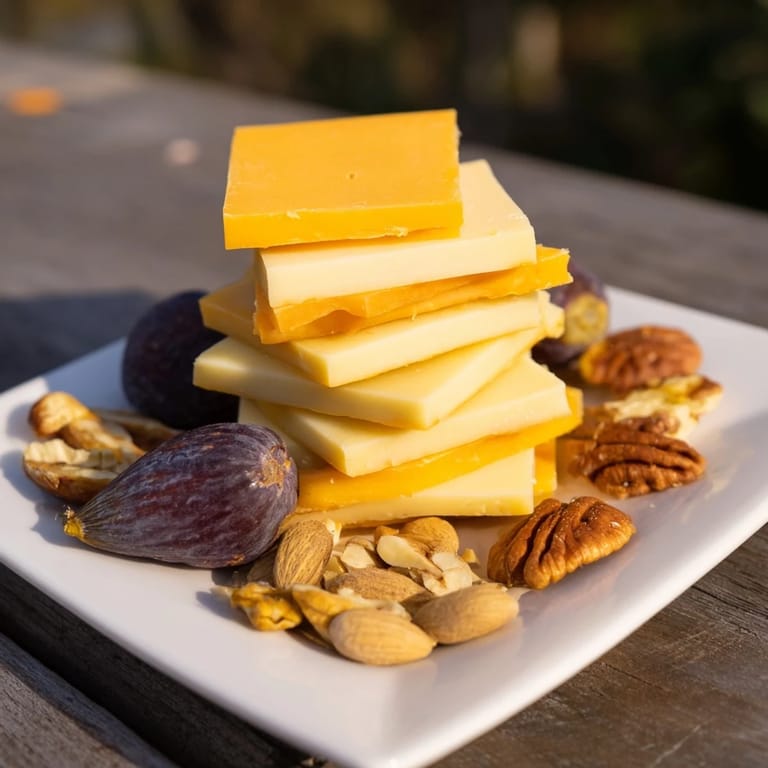
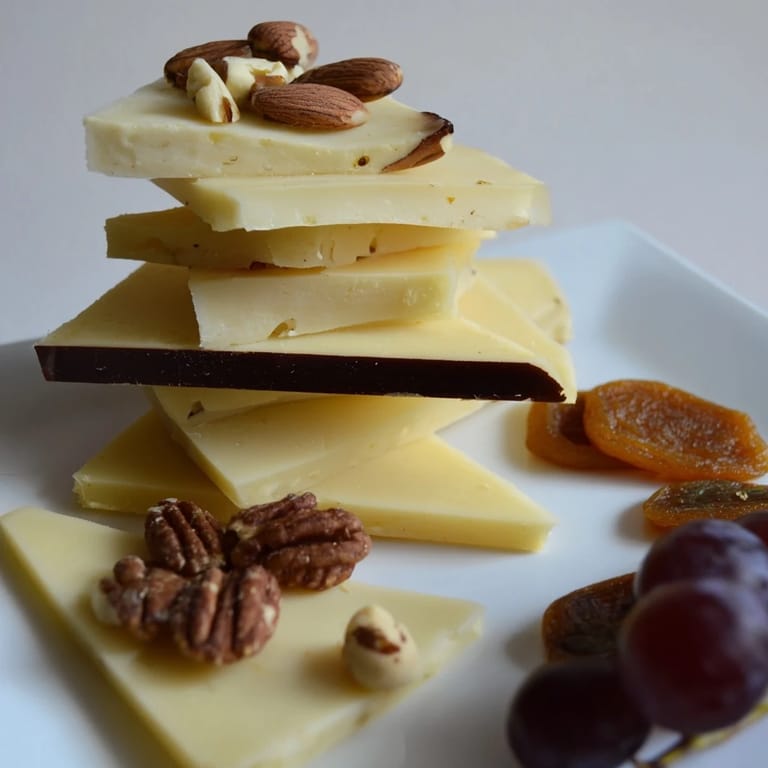
- Slice both the cheddar and gouda into quarter-inch thick slabs using a sharp knife, then press your acorn-shaped cookie cutter firmly through each slice. If you want extra elegance, stack a thin slice of gouda on top of cheddar to create a two-tone acorn effect that catches the eye.
- Build your nut foundation:
- Arrange all the nuts in small clusters or shallow bowls across your board, creating little mountains of texture and color. The golden almonds should go somewhere they'll be noticed immediately, maybe slightly elevated or in a cluster by themselves.
- Position your cheese artwork:
- Scatter the acorn-shaped cutouts around the board, leaving small gaps for other elements. Add wedges or cubes of brie or camembert between them, letting the creamy cheese peek out from between the harder cheeses.
- Layer in your dried and fresh fruits:
- Distribute the apricots, halved figs, grapes, and apple slices in small piles or fan shapes, thinking about color balance as you go. This is where your board gets its visual drama.
- Create a honey moment:
- Pour your honey or jam into a small serving dish and position it somewhere accessible with a spoon or honey dipper nearby. This becomes a flavor amplifier—people will drizzle it on cheese and crackers without even thinking about it.
- Fill the empty spaces:
- Arrange your crackers and baguette slices in the remaining gaps, mixing shapes and sizes so the board feels full but not overcrowded. Step back and look at the whole thing before you call it done.
- Serve with intention:
- If you're serving right away, you're done—let guests gather around and graze. If you need to prep ahead, cover the board loosely with plastic wrap and refrigerate for up to an hour.
 Save to Pinterest
 There's a quiet satisfaction in watching people's eyes light up when they approach a board you've arranged. My neighbor asked if I was a professional caterer after seeing one of these at my door, and I realized that presentation isn't vanity—it's generosity expressed on a platter.
The Art of Board Arrangement
I learned early on that a charcuterie board isn't about having the most expensive ingredients or the longest list. It's about creating balance and intrigue, making people want to explore every corner. The best boards have little surprises tucked in unexpected spots, so every angle feels fresh when guests circle around. Think of yourself as a curator, not just an assembler.
Timing and Prep Strategy
One evening I prepped a board hours in advance and panicked when I realized the cheese had warmed up and the board looked tired by party time. Now I do my prep work first thing in the afternoon, assemble it no more than an hour before guests arrive, and keep it lightly covered in the fridge until the last moment. Cold cheeses are happier cheeses, and they hold their shape better when people are actually eating from the board.
Creating Your Own Variations
The beauty of this board is that it's endlessly adaptable to your mood or what's in season. I've made versions with manchego and marcona almonds in winter, swapped in blue cheese for brie, and even added fresh berries when summer arrived. Your board should feel personal, not like you're following someone else's recipe. Let your favorite ingredients guide you, and don't be afraid to trust your instincts on what flavors belong together.
- Experiment with unusual nut varieties like macadamia nuts or pine nuts for a completely different energy.
- Fresh herb sprigs like rosemary or thyme can add aroma and visual height without taking up much space.
- Pair your board with a crisp Sauvignon Blanc or sparkling rosé to elevate the whole experience.
 Save to Pinterest
 These boards have become my favorite way to say thank you to friends or celebrate a quiet moment with family. There's something magical about slowing down enough to arrange ingredients with care, knowing that the real gift is permission to linger, taste, and enjoy each other's company.
Common Recipe Questions
- → How do I make the gold-dusted almonds stick?
Lightly mist or brush almonds with water before tossing them in edible gold dust to ensure an even, lasting coating.
- → Can I substitute the cheeses used here?
Yes, feel free to swap cheddar and gouda for cheeses like manchego, blue cheese, or camembert to suit your taste.
- → What type of crackers pair best with this board?
Assorted crackers work great, including gluten-free options to accommodate dietary needs and complement the nuts and cheeses.
- → How can I prepare the acorn-shaped cheese cutouts?
Slice cheddar and gouda into 1/4-inch slabs, then use an acorn-shaped cutter for uniform pieces. A paring knife adds detail or layered effects.
- → Are there recommended wine pairings for this board?
Crisp white wines like Sauvignon Blanc or sparkling rosé enhance the nutty and creamy flavors beautifully.