 Save to Pinterest
 My neighbor knocked on my kitchen window one Saturday morning, startling me so badly I nearly dropped a whisk into the sink. She was holding a bottle of olive oil and grinning, insisting I try baking a chocolate cake with it instead of butter. I was skeptical—olive oil in cake sounded like something you'd pretend to enjoy at a pretentious dinner party—but the moment that first slice hit the table, I understood. The crumb was impossibly tender, the chocolate flavor somehow deeper, and there was this subtle fruity note that made every bite feel like a secret.
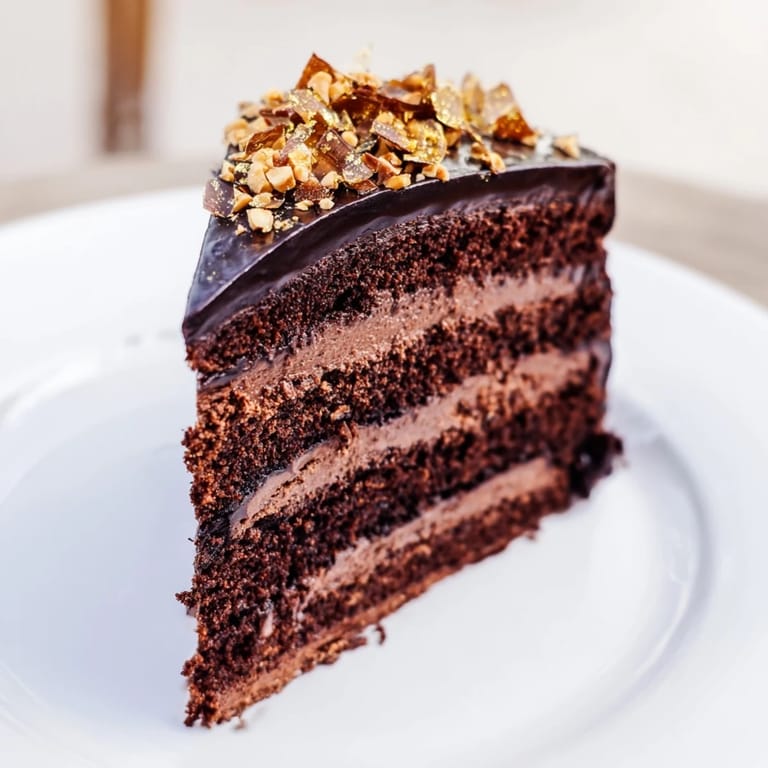
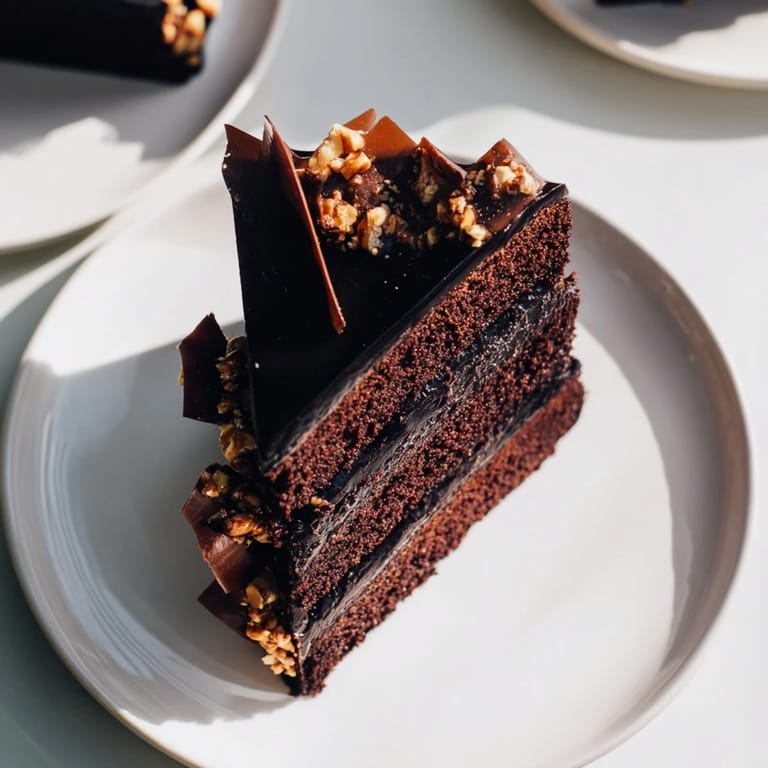
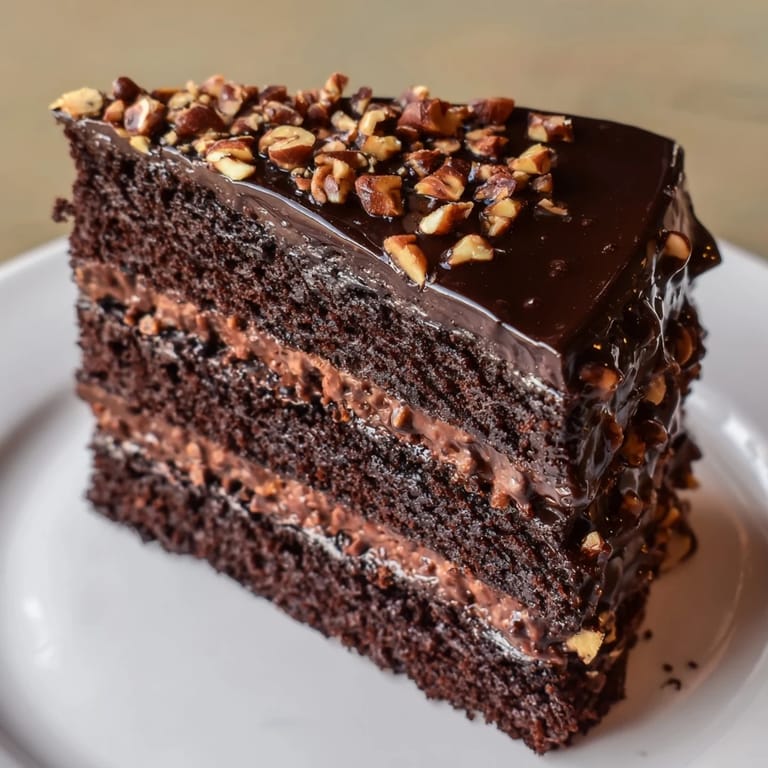
I made this cake for my brothers fortieth birthday, and he's the kind of person who pretends not to care about dessert but always eats two slices. The praline shards caught the candlelight, and everyone got quiet for a moment before diving in. Someone asked if I'd ordered it from a bakery, and I just smiled and said I'd had a little help from good olive oil. That night, the empty cake stand felt like the best compliment I could have received.
Ingredients
- All purpose flour: The backbone of the cake, giving it just enough structure without weighing down that silky olive oil crumb.
- Unsweetened cocoa powder: Go for Dutch processed if you can find it; the color will be darker and the flavor smoother, less sharp.
- Granulated sugar: Sweetens and tenderizes, and don't skimp or the cake will taste more bitter than bittersweet.
- Baking powder and baking soda: The dynamic duo that makes the batter rise beautifully and keeps the texture light despite all that chocolate.
- Fine sea salt: A small amount sharpens every other flavor, especially the chocolate.
- Extra virgin olive oil: Choose one that's fruity but not too peppery; you want it to support the chocolate, not compete with it.
- Whole milk: Room temperature is key so it blends smoothly and doesn't seize up the batter.
- Large eggs: Also at room temperature, they emulsify everything into a glossy, unified batter.
- Vanilla extract: Pure vanilla adds warmth and rounds out the chocolate without stealing the spotlight.
- Hot brewed coffee: This is the magic ingredient that blooms the cocoa and makes the cake taste more chocolate than chocolate itself.
- Bittersweet chocolate: For the ganache, chop it finely so it melts evenly and becomes impossibly smooth.
- Heavy cream: The richness that turns chopped chocolate into glossy, spreadable ganache.
- Unsalted butter: Just a touch in the ganache gives it a silky finish and a little extra shine.
- Toasted hazelnuts: Rubbing off the skins is a bit tedious, but it's worth it for that pure, sweet nuttiness.
- Granulated sugar for praline: It caramelizes into amber glass that shatters into the most satisfying shards.
Tired of Takeout? 🥡
Get 10 meals you can make faster than delivery arrives. Seriously.
One email. No spam. Unsubscribe anytime.
Instructions
- Prep your pans:
- Preheat the oven to 350 degrees F and grease two 9 inch round pans generously, then line the bottoms with parchment circles. This double insurance means your cakes will slide out cleanly, no matter what.
- Mix the dry ingredients:
- In a large bowl, whisk together the flour, cocoa powder, sugar, baking powder, baking soda, and salt until there are no lumps and everything looks evenly dusty brown. This step matters more than you think; uneven cocoa means streaky cake.
- Combine the wet ingredients:
- In another bowl, whisk the olive oil, milk, eggs, and vanilla until smooth and slightly frothy. Pour this into the dry mixture and stir gently until just combined, being careful not to overmix or the cake will turn tough.
- Add the hot coffee:
- Slowly pour in the hot coffee, whisking as you go, and watch the batter turn glossy and thin. Don't panic, this is exactly what you want; the liquid batter bakes up into the most tender crumb.
- Bake the cakes:
- Divide the batter evenly between your prepared pans and slide them into the oven. Bake for 35 to 40 minutes, until a toothpick inserted in the center comes out with just a few moist crumbs clinging to it.
- Cool completely:
- Let the cakes rest in their pans for 10 minutes, then turn them out onto wire racks. Patience here is essential; frosting a warm cake is a slippery, messy disaster.
- Make the ganache:
- Place the finely chopped chocolate in a heatproof bowl. Heat the cream in a small saucepan until it just begins to simmer, then pour it over the chocolate and let it sit undisturbed for 2 minutes. Add the butter, then stir slowly until everything melts into glossy perfection.
- Thicken the ganache:
- Let the ganache cool at room temperature, stirring occasionally, until it thickens to a spreadable consistency. If it gets too firm, warm it gently; if it's too loose, pop it in the fridge for a few minutes.
- Prepare the praline:
- Line a baking sheet with parchment and have your toasted hazelnuts ready. Heat the sugar in a small saucepan over medium heat, swirling the pan but not stirring, until it melts into a deep amber caramel.
- Finish the praline:
- Remove the caramel from the heat, quickly stir in the hazelnuts and a pinch of salt, then pour it onto the parchment. Let it cool completely until hard, then break it into shards or chop it into smaller pieces.
- Assemble the cake:
- Place one cake layer on your serving plate and spread about a third of the ganache over the top. Set the second layer on top, then cover the top and sides with the remaining ganache, smoothing it with an offset spatula.
- Decorate and serve:
- Press the hazelnut praline shards generously over the top and around the sides of the cake. Stand back and admire your work before slicing into it.
 Save to Pinterest
 The first time I served this cake, my friend who claims to hate anything too sweet finished her slice and quietly asked if she could take a piece home. She wrapped it in a napkin like it was treasure, and later texted me a photo of it sitting on her kitchen counter with the caption breakfast. That's when I knew this cake wasn't just good, it was the kind of good that makes people break their own rules.
How to Store and Serve
This cake keeps beautifully at room temperature for up to two days if covered loosely with foil or a cake dome. The olive oil keeps the crumb moist longer than butter would, so it actually improves slightly on day two. If you need to store it longer, refrigerate it for up to five days, but let it come to room temperature before serving so the ganache softens and the flavors open back up. For a truly elegant presentation, serve slices with a dollop of barely sweetened whipped cream or a handful of fresh raspberries on the side.
Swaps and Variations
If hazelnuts aren't your thing, swap them for toasted almonds or pecans in the praline. You can also skip the praline entirely and dust the top with cocoa powder and sea salt for a more minimalist look. For a gluten free version, use a 1 to 1 gluten free flour blend; I've tested it and the texture stays just as tender. If you want to make this ahead, bake the cakes, wrap them tightly in plastic wrap, and freeze them for up to a month; thaw completely before assembling.
Pairing Suggestions
This cake loves a strong espresso or a glass of tawny port, both of which echo the deep chocolate and caramel notes. If you're serving it at a dinner party, a small scoop of vanilla or salted caramel ice cream on the side turns it into an over the top dessert that still feels approachable. One guest once brought a bottle of dessert wine, and the combination of the sweet wine and crunchy praline made everyone slow down and savor every bite.
- A shot of espresso cuts through the richness and wakes up the chocolate flavor.
- Tawny port or a late harvest Riesling pairs beautifully with the caramel in the praline.
- Fresh raspberries or a handful of pomegranate seeds add a tart contrast that balances the sweetness.
 Save to Pinterest
 Every time I make this cake, I'm reminded that the best celebrations aren't always about perfection, they're about the moments when something tastes so good that everyone stops talking and just enjoys it. I hope this becomes one of those recipes for you, the one you reach for when you want to make someone feel truly special.
Common Recipe Questions
- → Can I make this cake ahead of time?
Yes, bake the cake layers 1-2 days ahead and store wrapped at room temperature. Prepare the ganache and hazelnut praline the day of serving. Assemble just before guests arrive to maintain the praline's crunch and the ganache's glossy finish.
- → What type of chocolate works best for the ganache?
Use bittersweet chocolate with 60-70% cocoa content for optimal depth and balanced sweetness. Higher-quality chocolate will yield a smoother, more luxurious ganache texture. Chop it finely to ensure even melting.
- → How do I prevent the ganache from becoming grainy?
Heat the cream until just simmering, not boiling, and pour it over finely chopped chocolate. Allow 2 minutes of rest before stirring to create a smooth emulsion. Stir gently until glossy, avoiding vigorous mixing that incorporates air bubbles.
- → Can I substitute hazelnuts with other nuts?
Absolutely. Toasted almonds, pecans, or walnuts work beautifully in the praline. Use the same quantity and follow identical caramelization steps. Each nut variety adds distinct flavor notes to the finished cake.
- → Is the coffee flavor noticeable in the final cake?
No. The hot coffee amplifies chocolate notes rather than adding a coffee taste. If you prefer to avoid coffee entirely, substitute with hot water—the cake will remain moist and chocolatey, though slightly less complex in flavor.
- → How should I store leftover cake?
Keep the assembled cake covered loosely at room temperature for up to 2 days. The ganache coating protects the cake from drying out. If storing longer, refrigerate covered for up to 4 days, bringing to room temperature before serving for best flavor and texture.