 Save to Pinterest
 The first blood oranges of the season showed up at the farmers market on a gray February morning, their deep crimson flesh almost glowing against the dull sky. I bought a whole bag without a plan, just captivated by their color. That night, I sliced one open and the juice stained my cutting board pink. I knew immediately they deserved something elegant, something that would let that vibrant tartness shine without getting lost in heavy cream or chocolate.
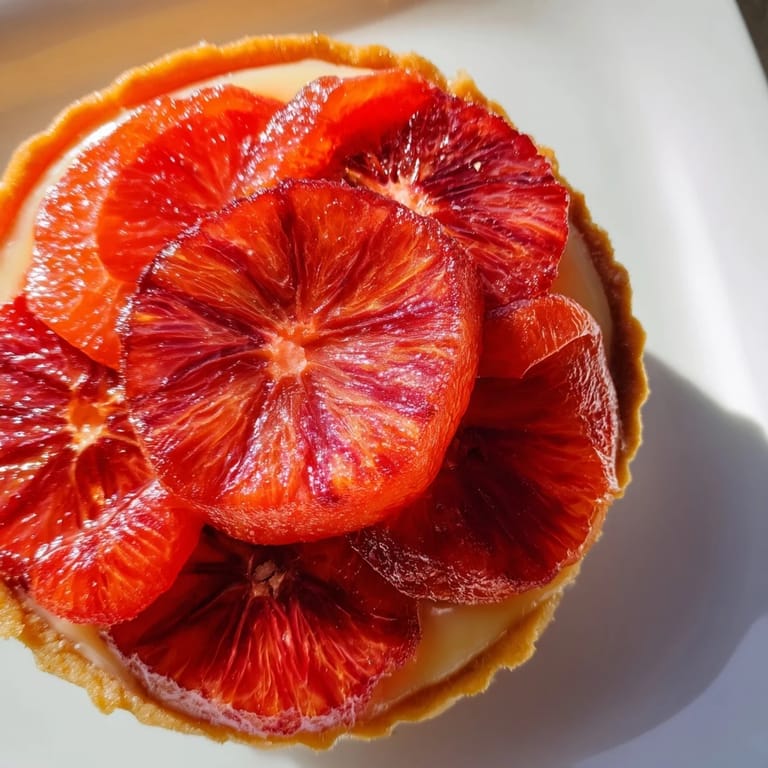
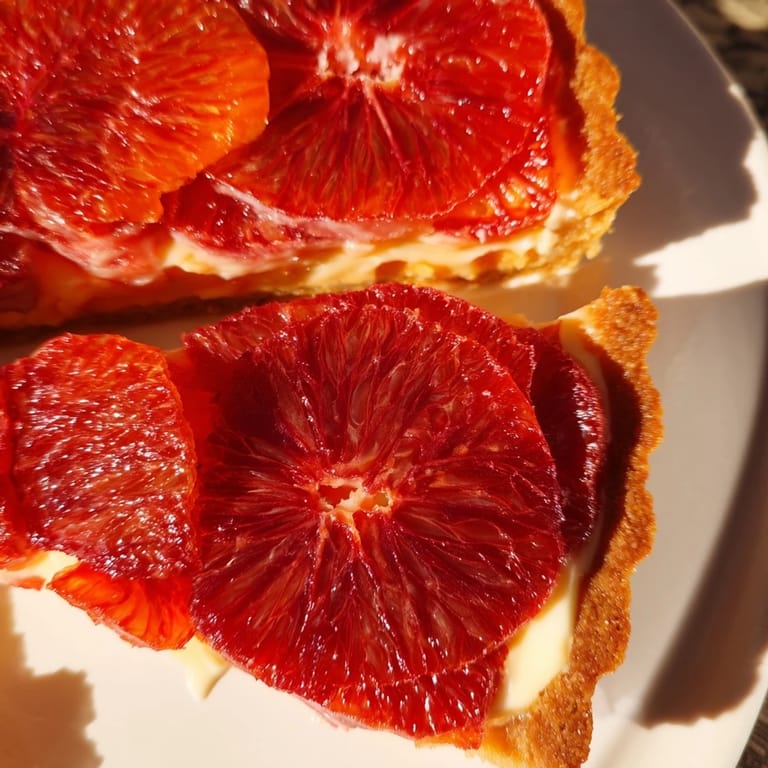
I made these for a winter dinner party where everything else on the menu was rich and warm. When I brought them out, the table went quiet for a second. The deep red and pale custard caught the candlelight, and someone said they looked too pretty to eat. Of course, that lasted about five seconds. The contrast between buttery crust, smooth vanilla, and tart citrus made everyone reach for seconds before I even sat back down.
Ingredients
- All-purpose flour: The base of your tart shell, I learned to weigh it for consistency after a batch came out too crumbly.
- Powdered sugar: Adds sweetness and tenderness to the dough without making it grainy.
- Unsalted butter, cold and cubed: Keeps the dough flaky, and cold is non-negotiable or it turns greasy.
- Egg yolk: Binds everything together and gives the crust that golden color.
- Ice water: Just enough to bring the dough together, add it slowly or you will overshoot.
- Whole milk: The custard needs the fat content, skim milk will taste thin and sad.
- Granulated sugar: Sweetens the custard just enough without overwhelming the blood oranges.
- Egg yolks: Three of them make the custard luscious and thick, no cornstarch alone can do that.
- Cornstarch: Stabilizes the custard so it holds its shape when you slice in.
- Pure vanilla extract: A teaspoon is all you need, but make sure its real vanilla, not imitation.
- Blood oranges: The whole reason for this dessert, their tartness and color are irreplaceable.
- Honey: Optional but the glaze makes them glisten like jewels and adds a hint of floral sweetness.
Tired of Takeout? 🥡
Get 10 meals you can make faster than delivery arrives. Seriously.
One email. No spam. Unsubscribe anytime.
Instructions
- Mix the dough:
- Pulse the flour, powdered sugar, and salt in your food processor, then add the cold butter cubes and pulse until it looks like wet sand. Add the egg yolk and drizzle in ice water until the dough just barely holds together when you pinch it.
- Chill and rest:
- Flatten the dough into a disk, wrap it tight in plastic, and let it chill for at least an hour. This step is not optional, warm dough will shrink and tear when you roll it.
- Roll and cut:
- On a floured surface, roll the dough thin, about an eighth of an inch, then cut circles big enough to fit your tart pans with a little overhang. Press gently into each pan and trim the edges with a knife.
- Blind bake:
- Chill the shells for twenty minutes, then line them with parchment and fill with pie weights or dried beans. Bake at 350 degrees for fifteen minutes, pull out the weights, and bake five more until golden.
- Make the custard:
- Heat the milk until steaming, then whisk your egg yolks with sugar and cornstarch until pale and thick. Slowly pour in the hot milk while whisking, then return everything to the pan and cook, stirring constantly, until it bubbles and thickens.
- Finish and cool:
- Stir in the vanilla and butter off the heat, then press plastic wrap directly onto the surface to prevent a skin. Let it cool to room temperature, then chill for at hour.
- Assemble:
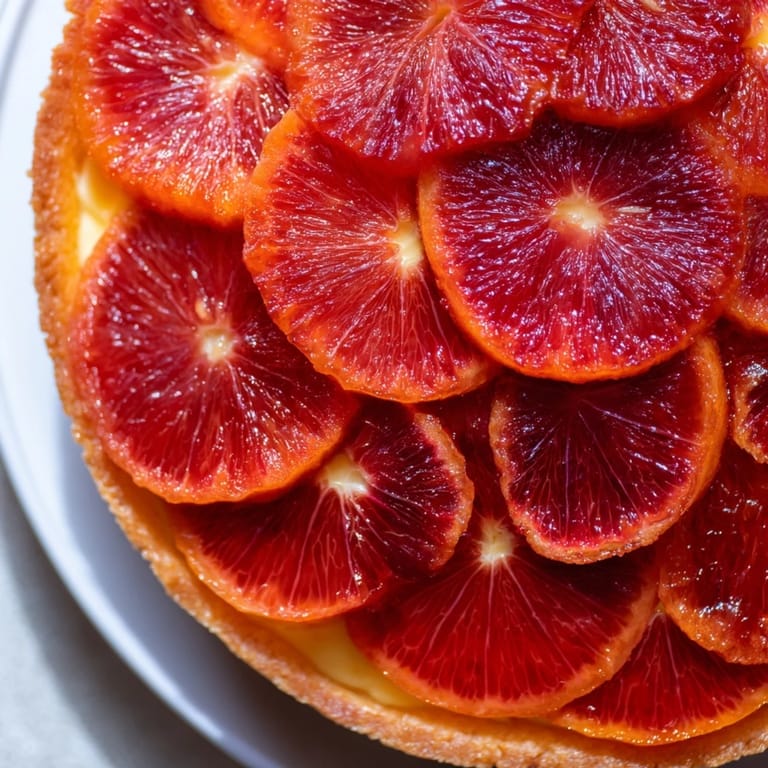
- Spoon the cold custard into your cooled tart shells, smoothing the tops. Arrange thin slices of blood orange in overlapping circles, covering the custard completely.
- Glaze and serve:
- Warm honey with a teaspoon of water and brush it lightly over the oranges for shine. Chill the tarts until you are ready to serve, they hold beautifully for a few hours.
 Save to Pinterest
 A friend once told me these tarts tasted like winter sunshine, which made no sense until I thought about it. Blood oranges only show up when the days are short and cold, but their color and brightness feel like a promise that spring is coming. Every time I make them now, I think about that, how food can hold a season and a feeling at the same time.
How to Get the Crispest Shells
The secret is in the double chill: once after you press the dough into the pans, and again after you have rolled it out. Cold dough holds its shape and bakes up flaky instead of tough. I also learned to bake the shells completely before filling them, even that extra five minutes without the weights makes a difference. If you are in a humid climate, you can brush the insides with a thin layer of melted white chocolate once they cool, it creates a moisture barrier.
Choosing and Preparing Blood Oranges
Not all blood oranges are created equal. Look for ones that feel heavy for their size and have a slight give when you press gently, those are the juiciest. The color can range from pale blush to deep burgundy, and both taste great, but the darker ones make a more dramatic presentation. I slice them as thin as I can with a sharp knife, a mandoline works too but watch your fingers. If you get a particularly seedy orange, just pick them out as you go, no big deal.
Make Ahead and Storage Tips
These tarts are ideal for entertaining because you can prep everything in stages. The shells keep in an airtight container for two days, the custard stays perfect in the fridge for three. I assemble them the morning of a dinner party and they hold beautifully until dessert time. If you need to store assembled tarts overnight, cover them loosely with plastic wrap and keep them cold, but honestly they are best within a few hours of assembly.
- Unbaked tart dough freezes beautifully for up to a month, just thaw in the fridge before rolling.
- Leftover custard is excellent stirred into morning coffee or layered with berries in a glass.
- Blood orange slices can be prepped a few hours ahead and kept covered in the fridge so they do not dry out.
 Save to Pinterest
 These tarts have become my go to when I want to impress without the stress. They are beautiful, balanced, and just unusual enough to feel special.
Common Recipe Questions
- → Can these tarts be assembled ahead of time?
Yes, you can prepare the tart shells and custard up to a day ahead. For best texture, assemble the tarts with the orange topping just before serving to prevent the shells from becoming soggy.
- → What's the best way to peel blood oranges?
Use a sharp knife to cut away the peel and white pith, working over a bowl to catch the juices. Alternatively, cut the oranges in half and use a citrus reamer or juicer to extract segments. Thin, even slices showcase the fruit beautifully on top.
- → Can I substitute regular oranges for blood oranges?
Absolutely. While blood oranges provide stunning color and deeper flavor, regular navel oranges work wonderfully as a substitute. You may want to add a squeeze of lemon juice to enhance the citrus brightness.
- → How do I prevent the custard from becoming lumpy?
Temper the egg yolks slowly by whisking in the hot milk gradually rather than all at once. This prevents the eggs from scrambling. Cook over medium heat while whisking constantly until the mixture thickens and just begins to bubble.
- → What wine pairs well with these tarts?
Sparkling rosé is an excellent choice, offering a refreshing contrast to the richness of the custard. Dessert wines with floral or citrus notes also complement the blood orange beautifully and enhance the elegant dining experience.
- → Can I make these tarts gluten-free?
Yes, substitute the all-purpose flour with a high-quality gluten-free flour blend. Ensure all other ingredients, including the food processor and tools, are free from cross-contamination to maintain gluten-free integrity.