 Save to Pinterest
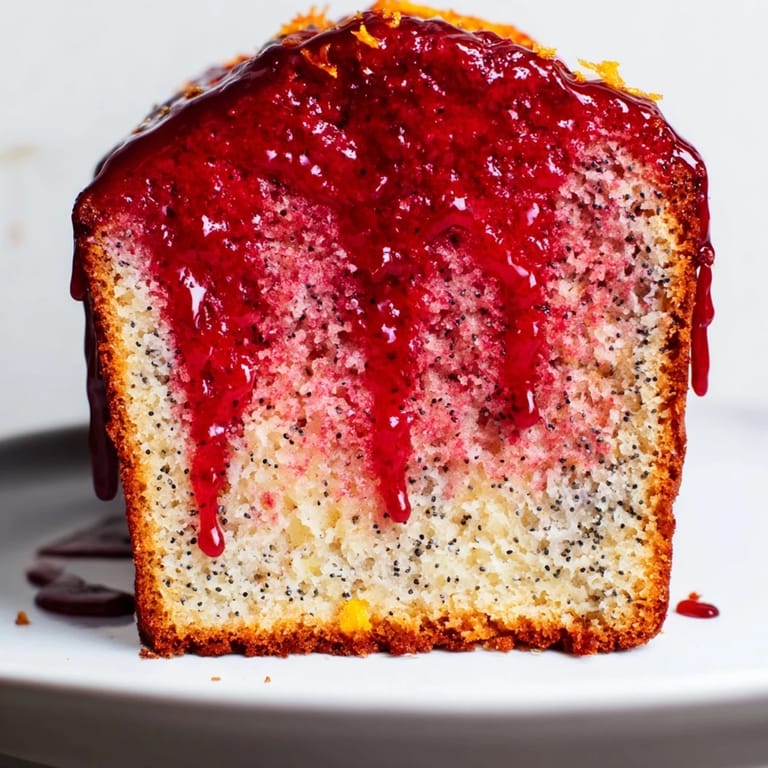
 The first blood oranges of the season showed up at the farmers market on a cold Saturday morning, their crimson flesh almost glowing under the tent lights. I bought six on impulse, drawn to their jewel-like color and the promise of something a little theatrical in the middle of winter. By Sunday afternoon, they were tucked into this loaf cake with poppy seeds and grated marzipan, filling the kitchen with a scent so bright and floral it felt like defiance against the gray sky. The cake came out rosy and tender, with a crumb that stayed moist for days. I sliced into it while it was still warm, unable to wait, and have never regretted that impatience.
I baked this for a brunch where I wanted to serve something that looked as good as it tasted, and the deep coral glaze did not disappoint. Friends kept asking if I had added food coloring, and I loved saying no, just blood oranges. One guest paired it with Prosecco and declared it the best decision she had made all week. The loaf disappeared faster than I expected, and I ended up making a second one the following weekend just to have it in the house again.
Ingredients
- All-purpose flour: The backbone of the cake, providing structure without weighing down the tender crumb.
- Baking powder: Gives the loaf a gentle lift and keeps the texture light and springy.
- Salt: A small amount sharpens the sweetness and brings out the citrus notes.
- Poppy seeds: Tiny but mighty, they add a subtle crunch and earthy contrast to the bright orange flavor.
- Unsalted butter, softened: Creamed with sugar, it creates air pockets that make the cake tender and rich.
- Granulated sugar: Sweetens and helps the butter whip up light and fluffy, building structure as it dissolves.
- Zest of 2 blood oranges: The oils in the zest carry the most intense citrus aroma, so dont skip this step.
- Large eggs: Bind the batter together and add richness, beaten in one at a time for a smooth emulsion.
- Marzipan, grated: Melts into the batter, adding almond sweetness and moisture that lasts for days.
- Blood orange juice: Freshly squeezed is best, the tart, floral juice is what gives the cake its signature color and zing.
- Whole milk: Adds richness and helps the batter come together smoothly without becoming too thick.
- Vanilla extract: A warm backdrop that supports the citrus without competing.
- Powdered sugar: Dissolves easily into the glaze, creating a smooth, glossy finish.
- Blood orange juice for glaze: Use just enough to make the glaze pourable but thick enough to set on the cooled cake.
Tired of Takeout? 🥡
Get 10 meals you can make faster than delivery arrives. Seriously.
One email. No spam. Unsubscribe anytime.
Instructions
- Preheat and Prepare:
- Set your oven to 175 degrees Celsius and line a loaf pan with parchment paper, leaving some overhang for easy removal. A little butter on the pan first helps the paper stick.
- Whisk the Dry Ingredients:
- Combine flour, baking powder, salt, and poppy seeds in a bowl, whisking to distribute the seeds evenly. Set it aside while you work on the wet ingredients.
- Cream Butter, Sugar, and Zest:
- Beat softened butter with sugar and blood orange zest until the mixture is pale, fluffy, and fragrant. This takes about three minutes and builds the structure that keeps the cake light.
- Add the Eggs:
- Beat in one egg at a time, letting each fully incorporate before adding the next. The batter should look smooth and glossy.
- Fold in the Marzipan:
- Grate the marzipan on the coarse side of a box grater, then fold it gently into the batter. It will melt as the cake bakes, leaving pockets of almond sweetness.
- Combine the Liquids:
- Whisk together blood orange juice, milk, and vanilla in a small bowl. This mixture will add moisture and that beautiful rosy hue.
- Alternate Wet and Dry:
- Add the flour mixture in three additions, alternating with the blood orange mixture, starting and ending with flour. Mix just until combined to avoid a tough crumb.
- Pour and Smooth:
- Scrape the batter into the prepared pan and smooth the top with a spatula. The batter will be thick but pourable.
- Bake Until Golden:
- Bake for 45 to 55 minutes, checking at 45. A toothpick should come out clean or with just a few moist crumbs clinging to it.
- Cool in Stages:
- Let the loaf cool in the pan for 10 minutes, then lift it out using the parchment overhang and transfer to a wire rack. Let it cool completely before glazing.
- Make the Glaze:
- Whisk powdered sugar with blood orange juice until smooth and just thick enough to coat the back of a spoon. Drizzle over the cooled cake and let it set for 10 minutes before slicing.
 Save to Pinterest
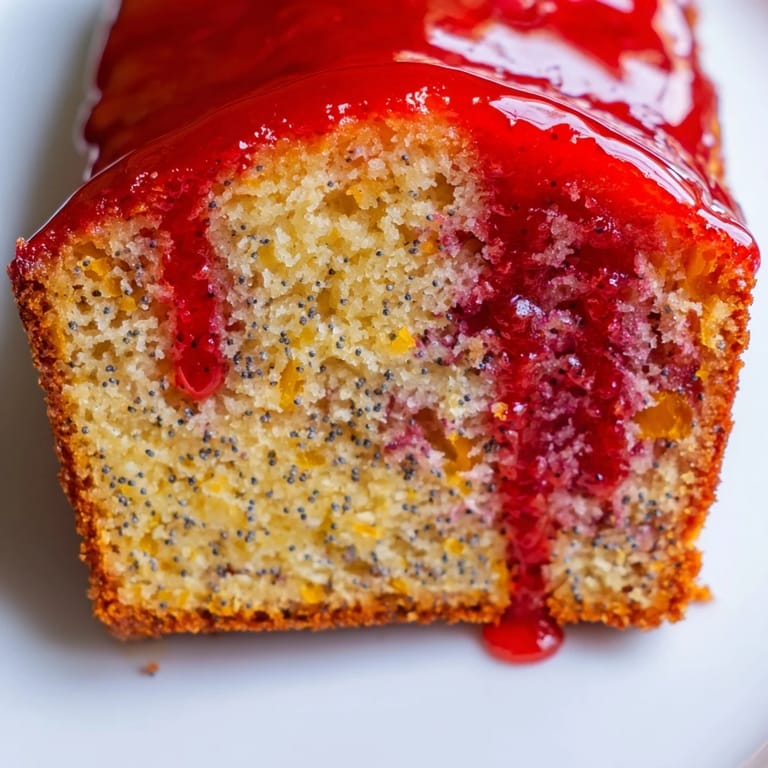
 I sliced into this loaf on a quiet Tuesday afternoon, still warm from the oven despite my best intentions to wait. The crumb was soft and golden with flecks of poppy seed, and the blood orange glaze had just begun to set. I ate one slice standing at the counter, then wrapped the rest and tucked it away, knowing it would taste even better the next day. It did, but I have never once regretted that first impatient slice.
Storing and Serving
This loaf keeps beautifully at room temperature for two to three days when wrapped tightly in plastic or stored in an airtight container. The marzipan ensures the crumb stays moist, and the flavors deepen as the cake sits. If you want to keep it longer, wrap individual slices in parchment and freeze them for up to a month. Thaw at room temperature and the texture comes back perfectly, though the glaze may lose a bit of its shine. I like to serve this with strong black tea or a floral Earl Grey, the bergamot echoes the citrus in a way that feels intentional.
Flavor Variations
If blood oranges are out of season, regular navel or cara cara oranges work well, though you will lose the dramatic color. A splash of orange liqueur in the glaze adds a grown up edge that pairs beautifully with the almond notes from the marzipan. You can also substitute the marzipan with almond paste for a deeper, less sweet almond flavor, though the texture will be slightly denser. I have added a handful of chopped pistachios to the batter before, and the green flecks looked stunning against the coral crumb.
What to Serve Alongside
This cake shines at brunch alongside a fruit salad or a bowl of Greek yogurt drizzled with honey. It is also lovely as an afternoon treat with a pot of tea and good conversation. I have served it at the end of a dinner party with a small glass of dessert wine, and it held its own without feeling too heavy. The poppy seeds and citrus make it feel elegant enough for company but casual enough to enjoy on an ordinary Wednesday.
- Pair with Earl Grey, chamomile, or a floral white tea.
- Serve with a dollop of creme fraiche or mascarpone for extra richness.
- Toast a slice lightly and spread with salted butter for breakfast.
 Save to Pinterest
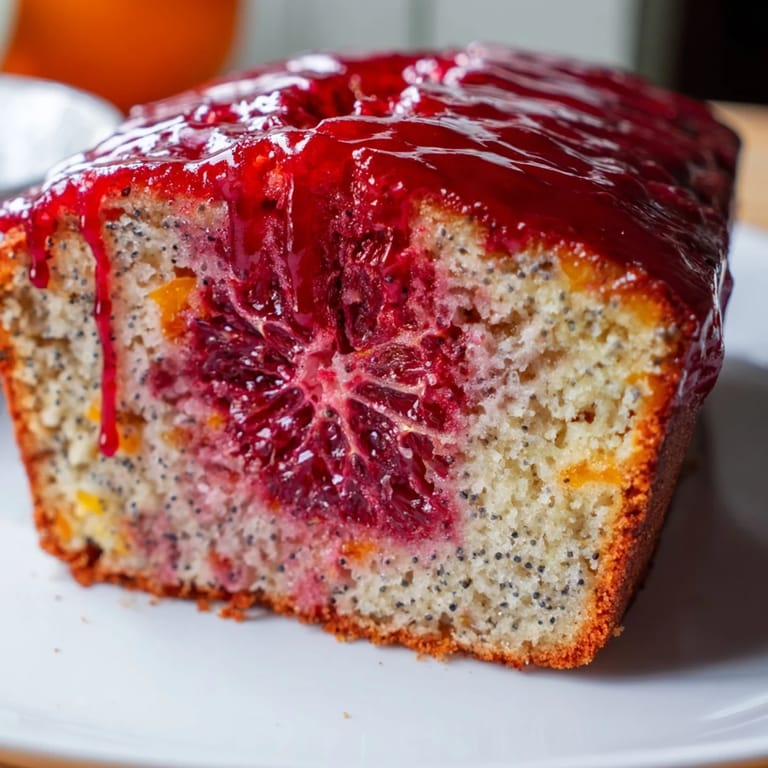
 This loaf has become one of those recipes I return to when I want something beautiful without too much fuss. It feels special, tastes bright, and fills the kitchen with the kind of warmth that lingers long after the oven cools.
Common Recipe Questions
- → Can I use regular oranges instead of blood oranges?
Yes, regular oranges work well as a substitute. You'll lose the distinctive ruby color and slightly deeper flavor, but the structure and technique remain the same. Consider adding a drop of red food coloring to the glaze if visual appeal matters.
- → How do I prevent the cake from drying out?
The marzipan and blood orange juice contribute moisture. Don't overbake—check doneness at 45 minutes. Cool completely before glazing, and store in an airtight container at room temperature. The cake improves slightly after a day as flavors develop.
- → What's the best way to grate marzipan?
Use a box grater on the fine side, or pulse briefly in a food processor. Keep marzipan cool before grating—refrigerate for 15 minutes if it becomes soft. This prevents clumping and ensures even distribution throughout the batter.
- → Can I make this dairy-free?
Substitute unsalted butter with a plant-based alternative in equal measure. Use unsweetened almond or oat milk instead of whole milk. Replace marzipan with almond paste mixed with a bit of coconut milk. The result will be slightly different in texture but still delicious.
- → How long does this cake keep?
Store in an airtight container at room temperature for 2–3 days. For longer storage, wrap tightly and freeze for up to 3 months. Thaw at room temperature before serving. The glaze may soften slightly upon thawing—reglaze if desired.
- → What pairs well with this cake?
Earl Grey tea complements the citrus beautifully. Prosecco or Moscato offer a sparkling, slightly sweet pairing. Chamomile or lemon verbena herbal teas also work well. For a richer match, try sweet sherry or a dessert wine.