 Save to Pinterest
 I discovered this dish at a gallery opening where the appetizers were almost too beautiful to eat. Someone had arranged blocks of red pepper, golden cheese, and dark grapes in such a precise, almost architectural pattern that it took me a moment to realize it was food at all. The geometric precision reminded me of the Bauhaus artists I'd been reading about, and I became instantly obsessed with recreating it at home. What started as a visual experiment turned into my go-to appetizer for anyone who appreciates both design and flavor.
I made this for my friend Maya who had just moved into her minimalist apartment, all white walls and clean lines. She stood in her kitchen looking at the platter I'd arranged, and I watched her face shift from skeptical to genuinely delighted. She said it was the first thing that felt artistic in her new space, which made me laugh because I'd basically turned snacks into wall art. Since then, every time I see geometric patterns anywhere, I think of that moment.
Ingredients
- Red bell pepper (1 large): Choose one that's firm and deeply colored, cut into clean 1-inch squares—the pepper should be sweet and crisp, never soft or wrinkled.
- Yellow cheddar or Gouda (120 g): This is your golden block, so pick a cheese that's firm enough to cut into clean rectangles without crumbling, and one that tastes good on its own.
- Blue or black seedless grapes (24): They're your anchors, the unexpected pop of contrast that makes the whole thing work—taste one before arranging to make sure they're as sweet as they look.
- Extra-virgin olive oil (1 tbsp, optional): A light brush over the peppers adds warmth and richness, but only if you want a softer touch.
- Sea salt and freshly ground black pepper: A whisper of both, just enough to remind people this is actually food and not an installation piece.
Tired of Takeout? 🥡
Get 10 meals you can make faster than delivery arrives. Seriously.
One email. No spam. Unsubscribe anytime.
Instructions
- Prepare your canvas:
- Wash and thoroughly dry your bell pepper—any lingering moisture will make it harder to cut cleanly. Slice it into vertical strips, then cut each strip into 1-inch squares so they have consistent shape and thickness. This uniformity is where the Bauhaus magic lives.
- Shape your blocks:
- Cut the cheese into rectangles about 1 inch by 1 inch—you want them substantial enough to feel substantial when you bite into them, not precious little slivers. Let them sit at room temperature for a few minutes before arranging so they're not ice-cold and harsh.
- Rinse and inspect:
- Gently rinse your grapes and pat them completely dry. This matters because you want them to sit snugly in your arrangement without slipping around or looking wet and droopy.
- Compose your grid:
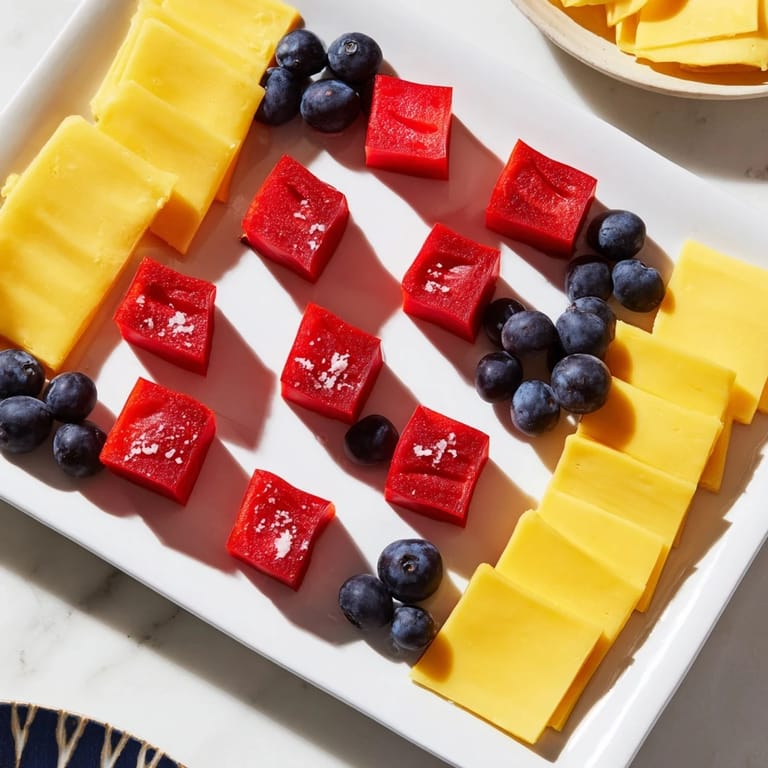
- On your serving platter, start arranging your elements in a geometric pattern—stripes, alternating blocks, whatever rhythm feels right to you. Let the colors guide you: red, then gold, then deep purple or black. Step back and adjust until it feels intentional.
- The optional finishing touch:
- If you're using the olive oil, brush it very lightly across the peppers so they gleam a little without becoming slick. Dust with the smallest amount of salt and pepper—just enough to hint at seasoning, not enough to overwhelm the colors.
- Serve and savor:
- Serve immediately while everything is crisp and vivid, or cover loosely and chill for up to thirty minutes if your timing needs flexibility. The cold actually sharpens the flavors and makes the cheese taste even more like itself.
 Save to Pinterest
 What started as a visual experiment became something deeper when I realized people actually paused before eating it. There's a strange magic in food that looks this deliberate—it makes everyone slow down and really look at what they're about to taste instead of just grabbing and consuming. It's become my favorite kind of appetizer because it changes the tone of the entire gathering.
Why Geometry Matters in Food
I used to think plating was pretentious until I started paying attention to how shape and color actually influence flavor. When something is arranged with intention, you taste it more carefully because your brain has already registered that something special is happening. This dish taught me that the eye genuinely does eat first—not as a cliché, but as a neurological fact that makes food taste better.
The Art of Strategic Simplicity
The beauty of this appetizer is that it proves you don't need complicated techniques or exotic ingredients to impress people. I've learned that the most sophisticated dishes are often the ones that look effortless and taste like they celebrate their own ingredients instead of masking them. Every element here stands on its own merit while contributing to something larger and more striking.
Making It Your Own
I've started experimenting with seasonal variations, swapping colors based on what looks vibrant at the market. Once I used orange bell pepper and white cheese with black grapes, and it felt completely different but equally striking. The framework stays the same while the palette shifts, which feels like the right balance between structure and creativity.
- Try roasting the peppers lightly for a softer texture and deeper sweetness if you want to add a single unexpected element.
- Serve with thin slices of good bread or subtle crackers on the side so people can build little bites if they want something more substantial.
- Remember that this is as much about the presentation as the taste—photograph it before anyone touches it, because you've earned that moment.
 Save to Pinterest
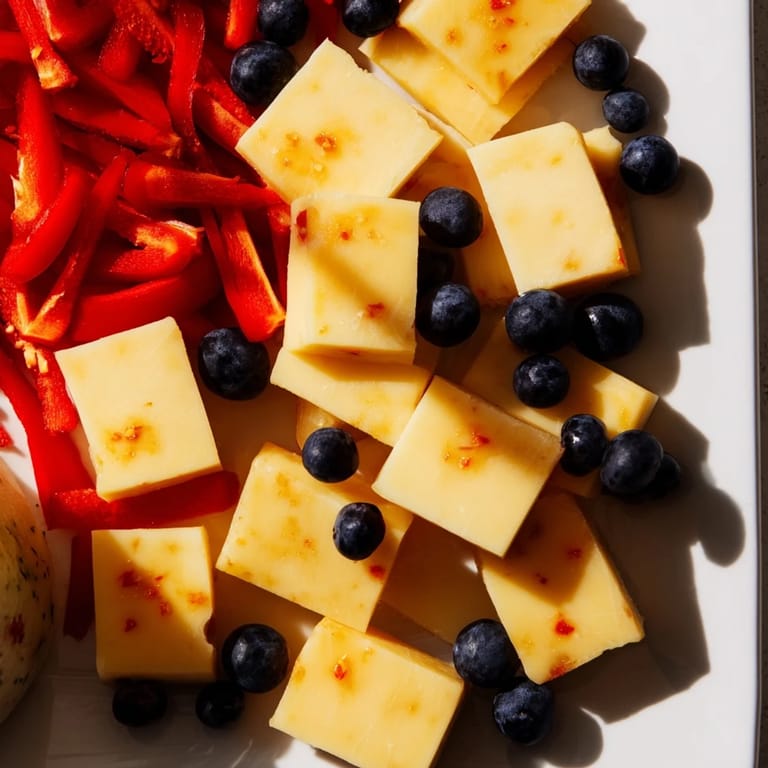
 This dish reminds me that sometimes the most memorable food moments come from restraint and intentionality rather than complexity. Serve it when you want people to notice, to pause, and to understand that you were thinking about their experience before they even arrived.
Common Recipe Questions
- → What ingredients make up the Bauhaus Block appetizer?
It includes red bell pepper squares, yellow cheddar or Gouda cheese blocks, and blue or black seedless grapes arranged geometrically.
- → How should the vegetables and cheese be prepared?
Cut the red bell pepper into 1-inch squares and the cheese into uniform 1-inch rectangular blocks for a neat grid.
- → Is cooking required for this appetizer?
No cooking is needed; the ingredients are arranged fresh and served immediately or chilled briefly.
- → How can I enhance the flavors before serving?
Optionally brush the peppers with extra-virgin olive oil and sprinkle sea salt and black pepper for added taste.
- → Can this appetizer accommodate dietary restrictions?
Yes, it is vegetarian and gluten-free; vegan options can be made by substituting the cheese with plant-based alternatives.
- → What settings are suitable for serving this appetizer?
Its vibrant colors and geometric design make it ideal for parties and gatherings, especially with art enthusiasts.