 Save to Pinterest
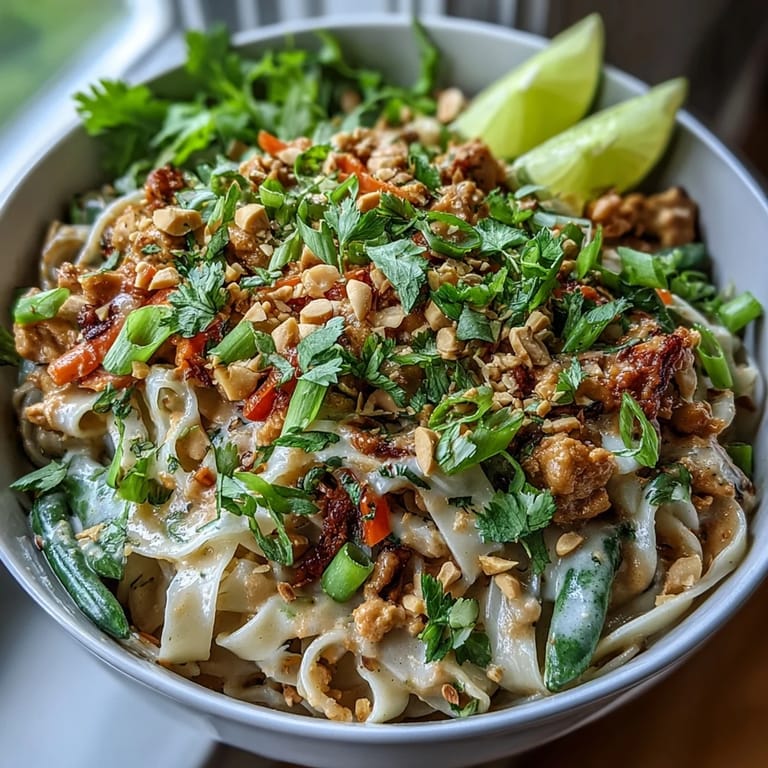
 The smell of toasted sesame oil hitting a hot pan is what hooked me on this dish. I was trying to clean out my fridge on a rainy Tuesday, tossing whatever I had into a skillet, when I remembered watching someone make potsticker noodles online. I threw in some peanut butter, a splash of soy sauce, and whatever vegetables were left in the crisper. What came out was this creamy, tangy, slightly spicy bowl that made me forget I was supposed to be eating leftovers.
I made this for a friend who swore she hated peanut sauce. She ate two bowls and asked for the recipe before she left. Now she texts me every few weeks asking if I remember the exact ratio of peanut butter to broth. I never do, because I eyeball it every time, but somehow it always works out.
Ingredients
- Ground chicken: It browns quickly and soaks up the sauce beautifully, but ground turkey or crumbled tofu work just as well if you want to switch things up.
- Wide rice noodles: These are the key to the potsticker noodle method since they soften directly in the sauce, becoming tender and flavorful without needing to boil separately.
- Red bell pepper: Adds a sweet crunch and a pop of color that makes the bowl feel vibrant and fresh.
- Shredded carrots: They cook down just enough to stay slightly crisp, and they soak up the peanut sauce like little flavor sponges.
- Snap peas: I love the snap they give when you bite into them, plus they keep their bright green color even after cooking.
- Green onions: The white parts add a mild sharpness to the base, and the green tops make a perfect fresh garnish at the end.
- Garlic and ginger: These two are non-negotiable for building that aromatic, warm base that makes the whole dish smell incredible.
- Creamy peanut butter: Use the regular kind, not natural, because it blends into the sauce more smoothly and creates that silky texture.
- Soy sauce: Go for low-sodium so you can control the saltiness, especially since hoisin sauce also brings some salt to the party.
- Hoisin sauce: It adds a sweet, slightly tangy depth that balances the richness of the peanut butter.
- Rice vinegar: A little acidity cuts through the creaminess and keeps the sauce from feeling too heavy.
- Honey or maple syrup: Just enough sweetness to round out the flavors without making it taste like dessert.
- Toasted sesame oil: A small amount goes a long way in adding that nutty, roasted aroma that makes everything smell like a restaurant kitchen.
- Sriracha or chili garlic sauce: Adjust this based on your heat tolerance, but even a little bit wakes up the whole dish.
- Chicken or vegetable broth: This is what helps the noodles cook and turns the peanut butter into a silky sauce instead of a sticky paste.
- Lime juice: Squeeze it in at the very end for a bright, fresh finish that ties everything together.
- Roasted peanuts: Chopped and sprinkled on top, they add crunch and remind you why peanut sauce is so good in the first place.
- Fresh cilantro: I know some people hate it, but if you love it, it adds an herbaceous brightness that completes the bowl.
Tired of Takeout? 🥡
Get 10 meals you can make faster than delivery arrives. Seriously.
One email. No spam. Unsubscribe anytime.
Instructions
- Brown the chicken:
- Heat a drizzle of oil in a large nonstick skillet or wok over medium-high heat, then add the ground chicken and break it up with a spoon as it cooks until browned and cooked through, about 5 minutes. If there is excess liquid, remove the chicken and set it aside so the pan stays hot and ready for the aromatics.
- Build the aromatic base:
- Toss in the garlic, ginger, and white parts of the green onions, stirring constantly for about a minute until the kitchen smells amazing and the garlic is just starting to turn golden.
- Add the vegetables:
- Stir in the bell pepper, carrots, and snap peas, cooking for 2 to 3 minutes until they start to soften but still have some crunch. You want them to hold their shape and not turn mushy.
- Lay in the noodles:
- Spread the dry rice noodles evenly over the vegetables in the pan. Do not stir yet, just let them sit there waiting for the sauce.
- Whisk the sauce:
- In a bowl, whisk together the peanut butter, soy sauce, hoisin sauce, rice vinegar, honey, sesame oil, sriracha, and broth until smooth and creamy. Pour this mixture over the noodles and vegetables, making sure everything is covered.
- Simmer and steam:
- Bring the whole thing to a simmer, then cover the pan and let it cook for 4 to 6 minutes, stirring occasionally so the noodles do not stick. The noodles will soften and soak up most of the sauce, turning tender and flavorful.
- Combine and finish:
- Return the cooked chicken to the pan and toss everything together over low heat for 2 to 3 minutes until creamy and well combined. Stir in the lime juice at the very end for that bright, fresh kick.
- Serve and garnish:
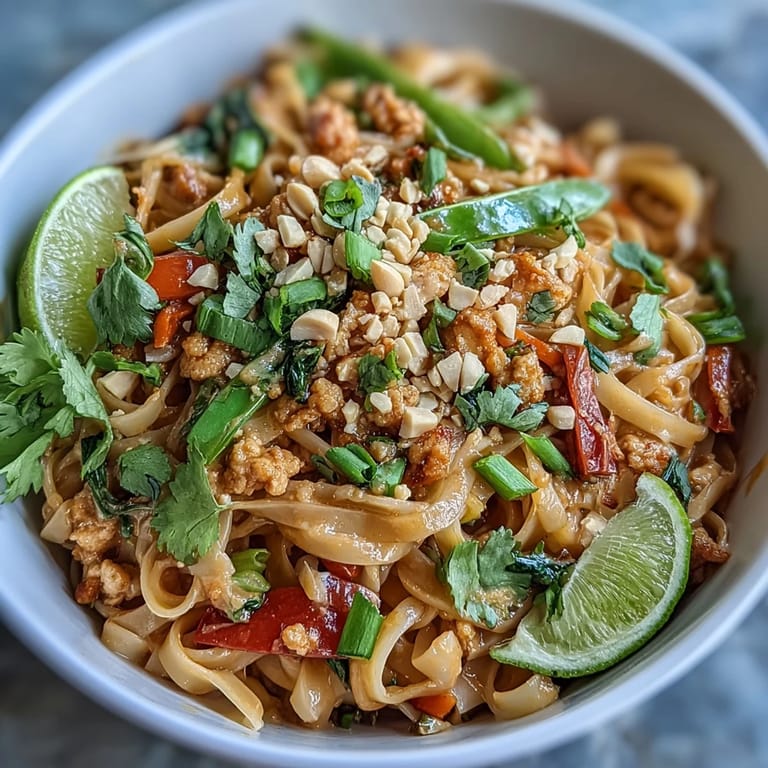
- Divide the noodles into bowls and top with chopped peanuts, cilantro, green onion tops, and extra lime wedges. Serve hot and watch everyone go back for seconds.
 Save to Pinterest
 This dish became my go-to whenever I needed to feel like I had my life together. It is the kind of meal that makes you look like you know what you are doing in the kitchen, even if you are just winging it. I have served it to picky eaters, vegetarians, spice lovers, and people who claim they do not like noodles, and every single time, the bowls come back empty.
Swapping the Protein
Ground turkey works just as well as chicken and cooks in the same amount of time. If you want to go meatless, crumble firm tofu into the pan and let it brown before adding the aromatics. I have also used leftover rotisserie chicken, shredded and tossed in at the end, which saved me even more time on busy nights.
Making It Gluten-Free
Swap the soy sauce for tamari and double-check your hoisin sauce label, because some brands sneak in wheat. Rice noodles are naturally gluten-free, so the rest of the dish is already safe. I have made this for a friend with celiac disease, and she could not tell the difference.
Adjusting the Heat and Storing Leftovers
If you love spice, add extra sriracha or sprinkle chili flakes on top when serving. For milder palates, skip the sriracha altogether and let people add hot sauce at the table. Leftovers keep in the fridge for up to three days, and I actually think they taste better the next day when the noodles have had more time to soak up the sauce.
- Reheat gently in a skillet with a splash of broth to loosen the sauce.
- Do not microwave on high or the noodles will turn gummy.
- Store garnishes separately so they stay fresh and crunchy.
 Save to Pinterest
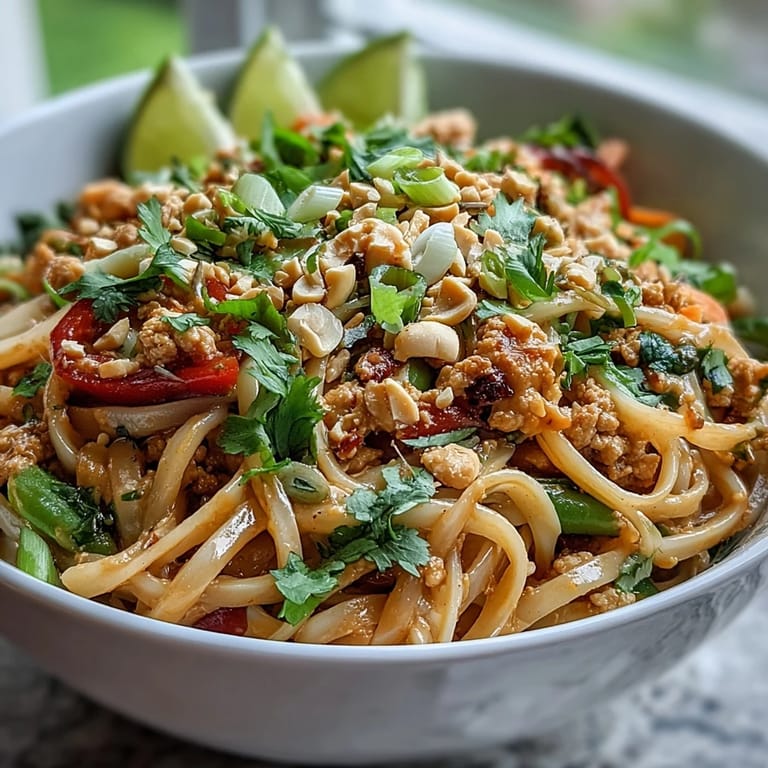
 This bowl is proof that weeknight dinners do not have to be boring or stressful. Make it once, and I promise it will end up in your regular rotation.
Common Recipe Questions
- → Can I use a different protein instead of ground chicken?
Yes, ground turkey works excellently as a substitute. For a vegetarian option, use crumbled firm tofu or tempeh. Cook the tofu until golden before proceeding with the other steps.
- → What type of rice noodles work best for this dish?
Wide rice noodles (about 1/4 inch thick) are ideal as they absorb the creamy peanut sauce beautifully. Pad Thai-style noodles work perfectly. Avoid using very thin vermicelli as they may overcook.
- → How can I make this dish gluten-free?
Replace soy sauce with tamari or coconut aminos, and use a certified gluten-free hoisin sauce. Rice noodles are naturally gluten-free, making the substitution simple.
- → Can I prepare the peanut sauce in advance?
Absolutely. Whisk the sauce ingredients together and store in an airtight container in the refrigerator for up to 3 days. Whisk again before using as the peanut butter may separate slightly.
- → What vegetables can I substitute or add?
Broccoli florets, baby corn, sliced mushrooms, or bok choy all work wonderfully. Adjust cooking times based on the vegetable—harder vegetables need a few extra minutes to soften.
- → How spicy is this dish and can I adjust the heat level?
The heat is mild to moderate with 1-2 teaspoons of sriracha. Omit it entirely for a milder version, or increase to 1 tablespoon for more kick. Fresh Thai chilies make an excellent spicy garnish.