 Save to Pinterest
 The first time I bit into a sabich, I was standing on a narrow Tel Aviv street at dusk, sauce dripping onto my fingers as the warm pita practically fell apart in my hands. What struck me wasn't just the explosion of flavors—it was how something so humble could feel like a celebration. Years later, I still chase that feeling every time I make this, layering crispy eggplant and creamy tahini like I'm building something sacred, not just dinner.
I made this for a friend who said they didn't eat vegetables, and watching them polish off two sabichs without hesitation taught me something about food sneaking past our defenses when it tastes this good. The eggplant wasn't what changed her mind—it was how everything worked together, each element doing its job so well that the whole became something nobody could resist.
Ingredients
- Eggplant: Two medium eggplants sliced thin are your canvas for golden, crispy rounds; the salt draws out moisture so they fry instead of steam, a trick that transforms the texture completely.
- All-purpose flour: Just a light coating, enough to catch color but not so much it becomes crunchy—restraint here matters more than coverage.
- Vegetable oil: A full cup sounds like a lot, but the eggplant absorbs it generously while it crisps, and having enough oil keeps the temperature steady.
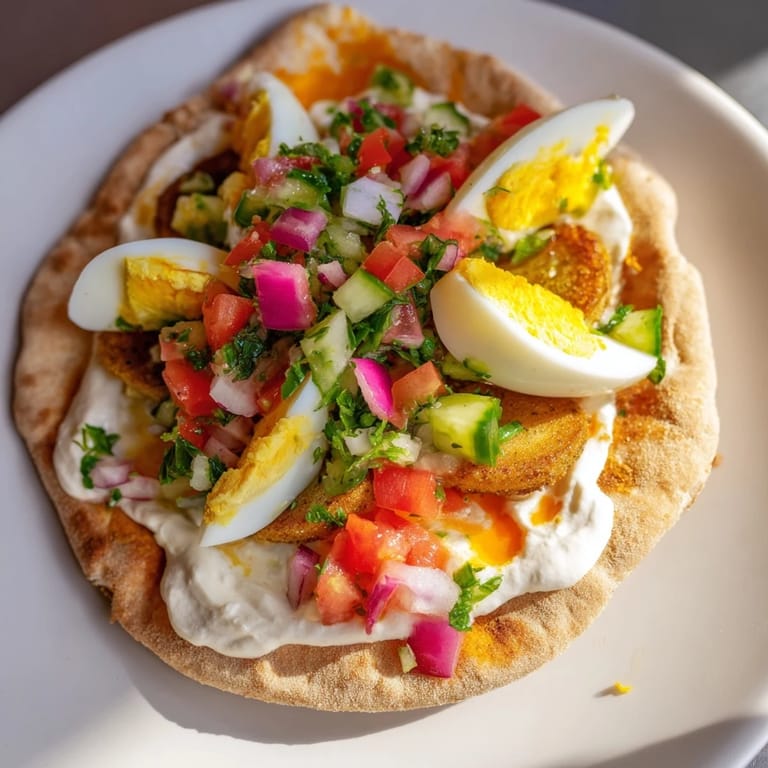
- Eggs: Four large eggs boiled to that perfect creamy center, sliced thick enough to be substantial but thin enough to distribute through the pita without sliding out.
- Israeli salad vegetables: Fresh tomatoes, crisp cucumber, and sharp red onion create a bright counterpoint to the richness, with parsley adding a whisper of earthiness.
- Tahini sauce: The glue that holds everything together—half a cup of paste thinned with water until it's pourable but still assertive, sharpened with lemon and garlic to cut through the fried eggplant.
- Pita bread: Large ones, warmed so they're flexible enough to stuff without tearing, creating pockets that hold your sabich like a gift.
- Amba: This pickled mango sauce is optional but transforms the whole experience with its sweet-sour punch, though the recipe works beautifully without it if you can't find it.
- Pickles and hot sauce: Final accents that let everyone personalize, turning assembly into a moment of choice.
Tired of Takeout? 🥡
Get 10 meals you can make faster than delivery arrives. Seriously.
One email. No spam. Unsubscribe anytime.
Instructions
- Release the eggplant's moisture:
- Salt your eggplant slices and let them sit for 15 minutes—you'll see beads of water form on the surface, which is exactly what you want. Pat them completely dry with paper towels so they fry instead of steam.
- Flour and fry to golden:
- Dust each slice lightly in flour, then slide them into hot oil and listen for that immediate sizzle. Two to three minutes per side until they're mahogany-brown and crispy at the edges, then drain on paper towels where they'll keep crackling as they cool.
- Cook eggs to soft perfection:
- While the eggplant fries, boil your eggs for exactly nine minutes, which gives you that creamy center you're after. An ice bath stops the cooking instantly, and peeling while still slightly warm makes the shells slip off like they're not even there.
- Build your salad fresh:
- Dice everything small, then toss it all together with lemon juice, olive oil, salt, and pepper just before assembly so the vegetables stay crisp and the flavors stay bright.
- Make tahini smooth and pourable:
- Whisk tahini, water, lemon juice, and minced garlic until it's completely smooth—it'll seem thick at first, then suddenly transform. Taste as you go, adding salt until it whispers rather than shouts.
- Warm the pita:
- Heat your pitas so they're warm and flexible, then slice them open gently to create a pocket that's deep enough to hold everything without tearing.
- Assemble with intention:
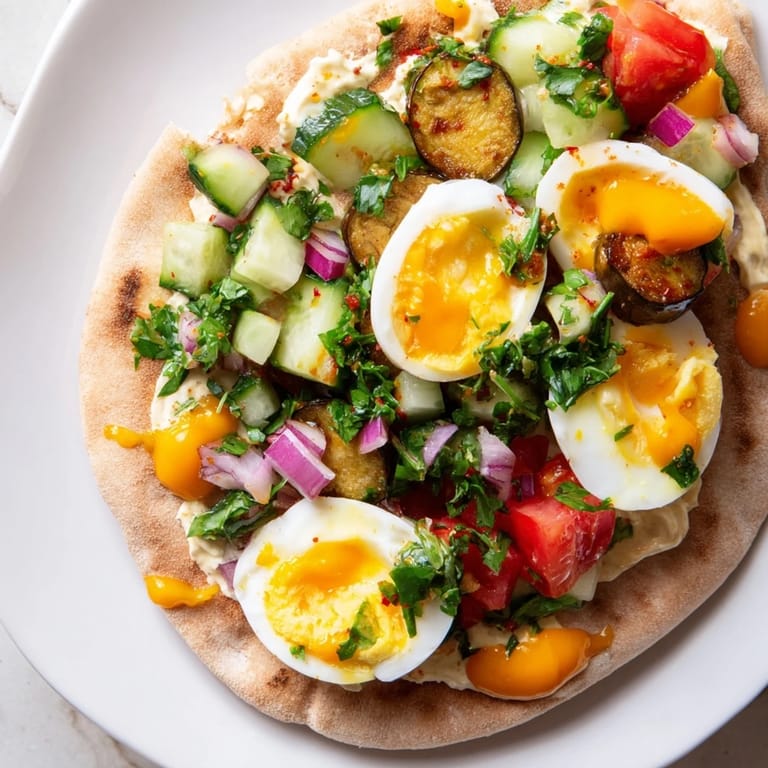
- Layer eggplant, sliced eggs, salad, then tahini sauce, letting flavors and textures build. Finish with amba, pickles, cilantro, and hot sauce according to your instincts.
- Serve immediately:
- Everything should still be warm, the eggplant still crackling, the pita still soft—this is a dish that lives in the moment.
 Save to Pinterest
 There's a moment when you're holding a warm pita stuffed with everything golden and fresh, steam rising into your face, and you realize why people queue up at street carts for this. It's not complexity—it's simplicity executed with such care that it becomes something memorable.
The Magic of Proper Eggplant Preparation
The eggplant is where sabich either sings or disappoints, and it all hinges on that initial salt-and-wait step that feels almost ceremonial. I learned this the hard way, frying eggplant straight without salting and watching it absorb oil like a sponge, turning out pale and greasy instead of golden and crispy. Now I think of it differently—the salt is an invitation for the eggplant to release what it doesn't need, leaving behind only its best self to be crisped in hot oil.
Tahini: The Binding Philosophy
Tahini sauce is more than a condiment here; it's the philosophical glue that brings contrast and richness to every bite. The moment you taste how it softens the sharpness of the lemon, rounds out the heat of the garlic, and creates a creamy counterpoint to crispy eggplant, you understand why it's not optional. The sauce should taste bold on its own—almost assertive—because it needs to hold its own against all the other flavors competing for attention in that pita.
Making It Your Own
Sabich thrives on customization, and that's part of its genius—everyone who eats it gets to decide what matters most to them. Some people treat it like a canvas for amba's sweet-sour intensity, while others go heavy on pickles and hot sauce, turning it into something sharp and bracing. I've learned that the best sabich isn't the one that follows the recipe most faithfully; it's the one that reflects whoever's assembling it.
- Amba can be replaced with harissa for heat or simply omitted if you prefer the tahini and fresh salad to shine.
- Tofu cubes fried alongside the eggplant create a fully vegan version that nobody will miss the eggs from.
- Make everything ahead of time and assemble to order—everyone gets a warm pita with their preferred ratios and toppings.
 Save to Pinterest
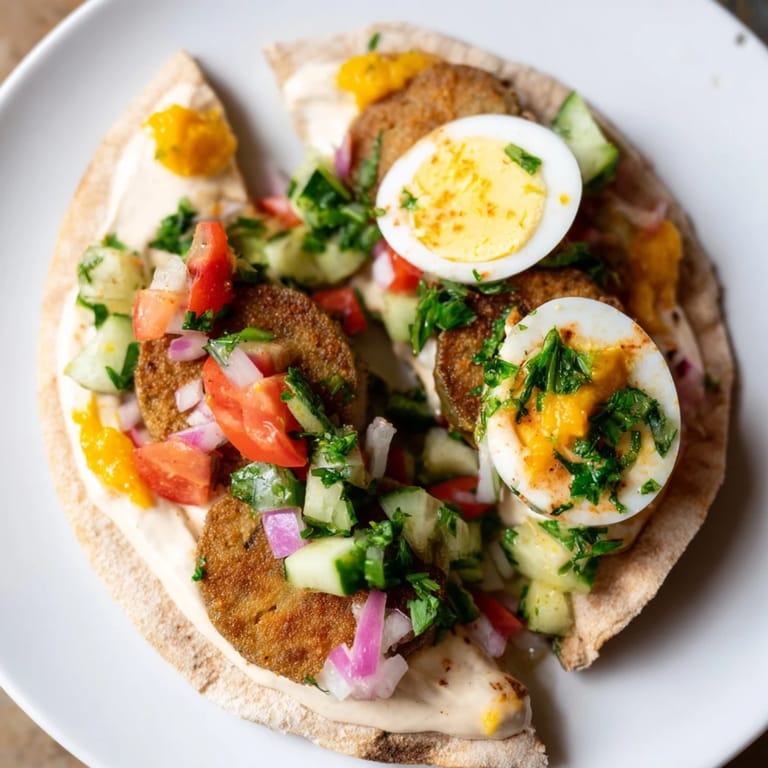
 Sabich taught me that vegetarian food doesn't need to apologize or prove itself—when you build it with this much intention and flavor, it stands on its own as something complete and nourishing. Make this when you want to feel like you're standing on that Tel Aviv street again, warm pita in hand.
Common Recipe Questions
- → How do I get the eggplant crispy without absorbing too much oil?
Salt the eggplant slices and let them sit to draw out excess moisture before patting dry and dredging lightly in flour. Fry in medium-high heat oil just until golden to avoid sogginess.
- → Can I make the tahini sauce thinner or thicker?
Yes, adjust the water quantity in the tahini sauce to achieve your preferred consistency, whisking well until smooth.
- → What is the role of the Israeli salad in this dish?
The salad adds a fresh, zesty crunch with diced tomatoes, cucumber, onion, herbs, and lemon juice that balances the richness of the fried eggplant and creamy tahini.
- → Are there suitable substitutions for the eggs?
For a vegan variation, omit the eggs or substitute with firm tofu slices seasoned to taste.
- → How should I serve this dish for best flavor?
Serve the filled pita pockets warm right after assembly, with optional pickles, amba sauce, and fresh cilantro for added aroma and contrast.