 Save to Pinterest
 The first bite of this stew happened on a January evening when the frost had crept up the kitchen window and I was determined to do something meaningful with the venison a neighbor had passed along. I'd never cooked game before, and the dark, lean meat sat on my counter like a challenge. A bottle of homemade sloe gin stood nearby, leftover from autumn foraging, and something about its deep purple hue made me think it belonged in the pot. The kitchen filled with warmth and wild, fruity depth as it simmered, and I knew I'd stumbled onto something special.
I made this for a small dinner party once, worried my friends might find venison too unfamiliar or intense. Instead, they scraped their bowls clean and asked for seconds. One guest, who usually avoided red meat, said the sweetness from the redcurrant jelly and sloe gin made it feel less heavy, almost delicate. That night taught me that food becomes approachable when you cook it with care and a little creativity.
Ingredients
- Venison shoulder or stewing venison: Choose a cut with some marbling if possible, it breaks down beautifully during the slow braise and stays moist rather than tough.
- Olive oil: Use a good quality one for browning, it carries flavor and helps build the fond at the bottom of the pan that becomes the base of your sauce.
- Onion, carrots, and celery: This classic trio adds natural sweetness and body to the stew, creating a foundation that holds everything together.
- Garlic: Fresh cloves bring warmth without overpowering the delicate game flavor.
- Tomato paste: Just a spoonful deepens the color and adds umami richness that rounds out the broth.
- Sloe gin: The star ingredient, it lends a tart, fruity complexity that you simply cannot replicate with wine alone.
- Beef or game stock: A good stock makes all the difference, homemade or high quality store bought will lift the entire dish.
- Redcurrant jelly: This little addition adds a glossy finish and gentle sweetness that balances the acidity of the gin.
- Bay leaves and thyme: Earthy herbs that infuse slowly and fill your kitchen with that unmistakable smell of home cooking.
- Juniper berries: Lightly crushed, they echo the botanicals in gin and tie the flavors together in a subtle, almost piney way.
- Polenta: Quick cooking or traditional both work, just stir constantly to avoid lumps and you will have a creamy, golden bed for the stew.
- Butter and Parmesan: Stirred into polenta at the end, they transform it from bland to indulgent with very little effort.
Tired of Takeout? 🥡
Get 10 meals you can make faster than delivery arrives. Seriously.
One email. No spam. Unsubscribe anytime.
Instructions
- Brown the venison:
- Heat olive oil in a heavy casserole until it shimmers, then add venison cubes in batches so they have room to sear properly. Let them sit undisturbed for a minute or two before turning, you want a deep caramelized crust that locks in flavor.
- Soften the vegetables:
- Add onion, carrots, and celery to the same pan, scraping up any browned bits as they cook. Stir in garlic and tomato paste toward the end, letting the paste darken slightly to release its sweetness.
- Deglaze with sloe gin:
- Return the venison to the pot and pour in the sloe gin, letting it bubble and reduce for a couple of minutes. The alcohol will cook off, leaving behind concentrated berry notes that cling to the meat.
- Build the braise:
- Add stock, redcurrant jelly, bay leaves, thyme, and juniper berries, then season with salt and pepper. Bring everything to a gentle simmer, cover, and let it cook low and slow for about two hours until the venison yields to a fork.
- Prepare the polenta:
- While the stew bubbles away, heat milk and water in a saucepan until steaming, then whisk in polenta gradually to avoid clumps. Stir constantly over low heat until thick and creamy, then fold in butter and Parmesan.
- Finish and serve:
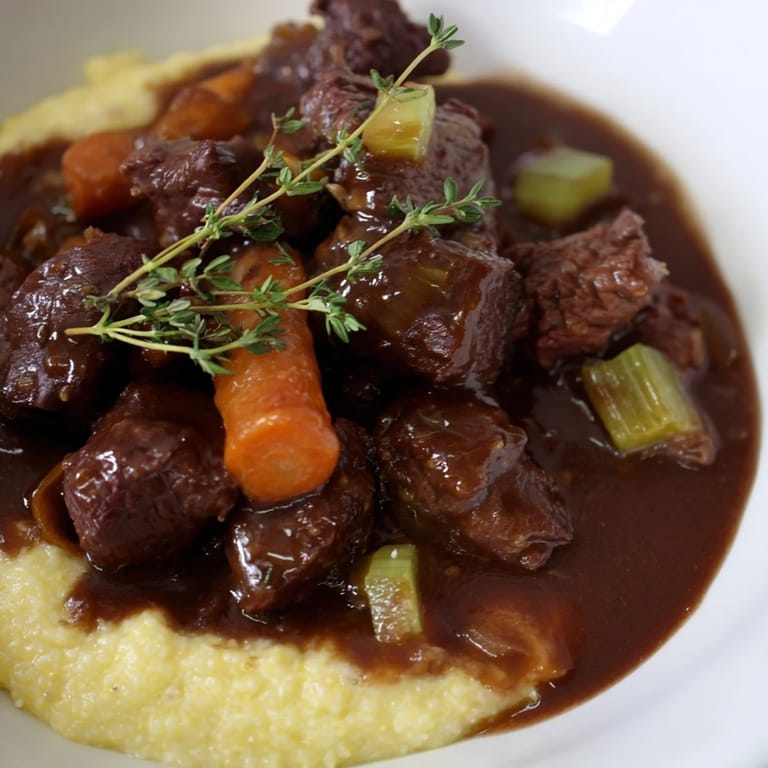
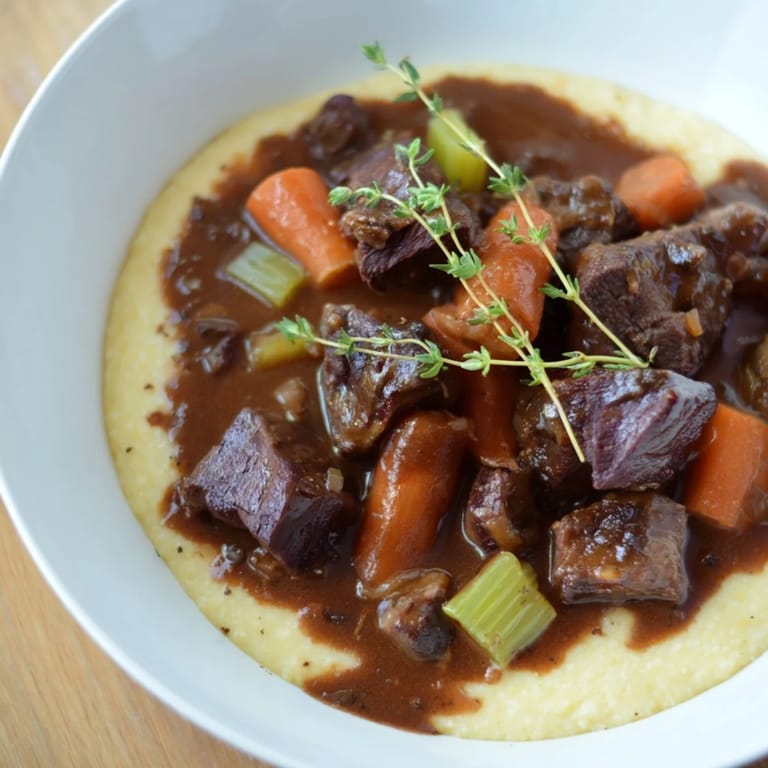
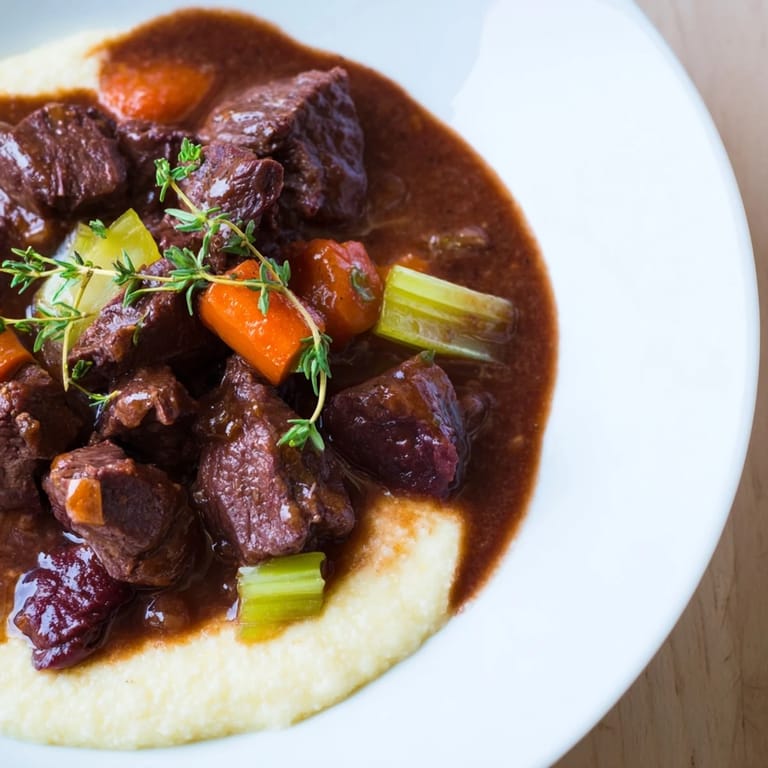
- Fish out the bay leaves and thyme stems from the stew, then ladle it generously over bowls of polenta. The creamy base soaks up the rich sauce, and every bite feels like a warm hug on a cold night.
 Save to Pinterest
 There was an evening when I served this to my father, who grew up hunting and had strong opinions about how game should taste. He took his time with each spoonful, then looked up and said it reminded him of meals his mother used to make, though she never used sloe gin. Sometimes the best compliment is when a dish feels both new and familiar at once, like it has always belonged at the table.
Choosing and Preparing Venison
Venison shoulder is ideal for slow cooking because it has enough connective tissue to break down into tenderness without drying out. If you can only find loin or steaks, save those for quick searing and opt for stewing cuts or ask your butcher for trimmings. Let the meat come to room temperature before browning, it sears more evenly and develops better color. Pat it dry with paper towels, moisture is the enemy of a good crust.
Working with Sloe Gin
Sloe gin brings a unique tartness and berry sweetness that you will not get from regular gin or even wine. If you cannot find it, a good quality port or blackberry liqueur can stand in, though the flavor will shift slightly. Do not be tempted to add too much, a little goes a long way and you do not want the stew to taste boozy. Let it reduce properly after deglazing so the alcohol cooks off and only the fruit essence remains.
Perfecting the Polenta
Polenta can go from creamy to gluey in moments if you stop stirring or let the heat climb too high. Use a whisk at first to break up any lumps, then switch to a wooden spoon once it thickens. Cooking it in a mix of milk and water gives it richness without making it too heavy, and the butter and Parmesan at the end add a silky finish that makes it irresistible.
- If you have leftovers, pour the polenta into a greased dish, chill it, then slice and pan fry for crispy cakes the next day.
- For extra depth, stir in a spoonful of mascarpone or crème fraîche along with the Parmesan.
- Always taste and season at the end, polenta needs more salt than you think to really shine.
 Save to Pinterest
 This stew has become my answer to cold, gray evenings when I need something that feels like an occasion without too much fuss. It is proof that a little patience and a bottle of something special can turn an unfamiliar ingredient into a meal you will want to make again and again.
Common Recipe Questions
- → Can I prepare this stew in advance?
Yes, venison stew improves with time as flavours deepen. Prepare it up to two days ahead, cool completely, and refrigerate. Gently reheat on the stovetop before serving. The polenta is best made fresh just before serving.
- → What's the best cut of venison to use?
Venison shoulder or dedicated stewing cuts work best due to their marbling and flavour. Avoid lean cuts like fillet, which can become tough during long cooking. Aim for cubes around 3 cm to ensure even cooking.
- → Is sloe gin essential, or can I substitute it?
While sloe gin provides distinctive fruity notes, you can substitute with port, berry liqueur, or red wine mixed with blackcurrant cordial. Each creates a slightly different flavour profile but maintains the stew's warming character.
- → How do I get smooth, lump-free polenta?
Whisk polenta gradually into simmering liquid and stir constantly over low heat. This prevents lumps from forming. Quick-cooking polenta requires less stirring time than traditional varieties. Be patient and maintain gentle heat.
- → Can I make this gluten-free?
Yes, this dish is naturally gluten-free. Simply verify your beef or game stock and cheese are certified gluten-free. Polenta is inherently gluten-free, making this an excellent option for those with coeliac disease or gluten sensitivity.
- → What wine pairs best with this dish?
Robust red wines with good tannins work beautifully. Choose Shiraz, Cabernet Sauvignon, or Côtes du Rhône. The wine's structure complements venison's richness while cutting through the creamy polenta. A lighter Pinot Noir also works well.