 Save to Pinterest
 There's a particular moment in autumn when the air shifts and suddenly you crave something warm and earthy, not sweet in the usual way. That's when I discovered hojicha—roasted green tea with this toasted, almost caramel-like depth—and became obsessed with baking it into a cake. My first attempt was dense and bitter, a learning curve I'm grateful for because it led me here, to this light, fragrant version layered with clouds of coconut cream.
I made this cake for my friend's book club one October evening, and what surprised me wasn't just that everyone loved it, but how the hojicha paired so naturally with the conversation that followed. Someone said it felt like tasting autumn in cake form, and honestly, that's exactly what I was going for.
Ingredients
- Gluten-free all-purpose flour blend and almond flour: Together they create a tender crumb that rivals wheat flour; the almond flour adds moisture and a subtle richness that keeps the cake from tasting thin.
- Hojicha powder: Use the best quality you can find because this is the star—lower-grade powder can taste dusty or bitter, while premium hojicha has that warm, toasty flavor that makes people pause mid-bite.
- Baking powder and baking soda: The combination works harder in gluten-free baking to create lift and structure where gluten would normally do the work.
- Apple cider vinegar and almond milk: When combined, they create a vegan buttermilk that adds tanginess and helps activate the baking soda for better rise.
- Maple syrup and coconut oil: They keep the cake moist and provide a natural sweetness that lets the hojicha's complex notes shine through instead of masking them.
- Full-fat coconut milk for frosting: Refrigerate it overnight so the cream separates from the liquid; only the thick cream gets whipped into frosting, and it becomes impossibly fluffy.
Tired of Takeout? 🥡
Get 10 meals you can make faster than delivery arrives. Seriously.
One email. No spam. Unsubscribe anytime.
Instructions
- Prepare your pan and oven:
- Preheating to 350°F (175°C) and lining your 8-inch pan with parchment paper takes two minutes but saves you from scrambling later. Greasing the sides too helps the cake release smoothly.
- Make your vegan buttermilk:
- Combine almond milk and apple cider vinegar in a small bowl and let it sit for 5 minutes—you'll see it start to curdle slightly, which is exactly what you want. This adds tanginess and helps the cake rise.
- Combine all dry ingredients:
- Whisk together the flours, hojicha powder, baking powder, baking soda, and salt in a large bowl. Make sure there are no lumps in the hojicha powder or they'll bake as bitter pockets.
- Mix wet ingredients separately:
- In another bowl, stir together your vegan buttermilk, maple syrup, melted coconut oil, and vanilla extract until smooth. This keeps the wet and dry separate until the last moment, which is key for tender cake.
- Combine wet and dry gently:
- Pour the wet mixture into the dry ingredients and stir just until combined—overmixing develops gluten-free flour in ways you don't want, making the cake tough. A few flour streaks are fine.
- Bake until golden:
- Pour the batter into your prepared pan, smooth the top with a spatula, and bake for 30 to 35 minutes until a toothpick inserted in the center comes out clean. The kitchen will smell absolutely wonderful.
- Cool strategically:
- Let the cake rest in the pan for 10 minutes (this helps it set), then turn it out onto a wire rack to cool completely. Don't frost a warm cake or the frosting will melt into puddles.
- Prepare the frosting:
- Scoop only the thick cream from the top of your chilled coconut milk can (save that liquid for smoothies or coffee). Beat it with maple syrup and vanilla until it's fluffy and holds peaks, which takes about 3 to 4 minutes with an electric mixer.
- Frost and garnish:
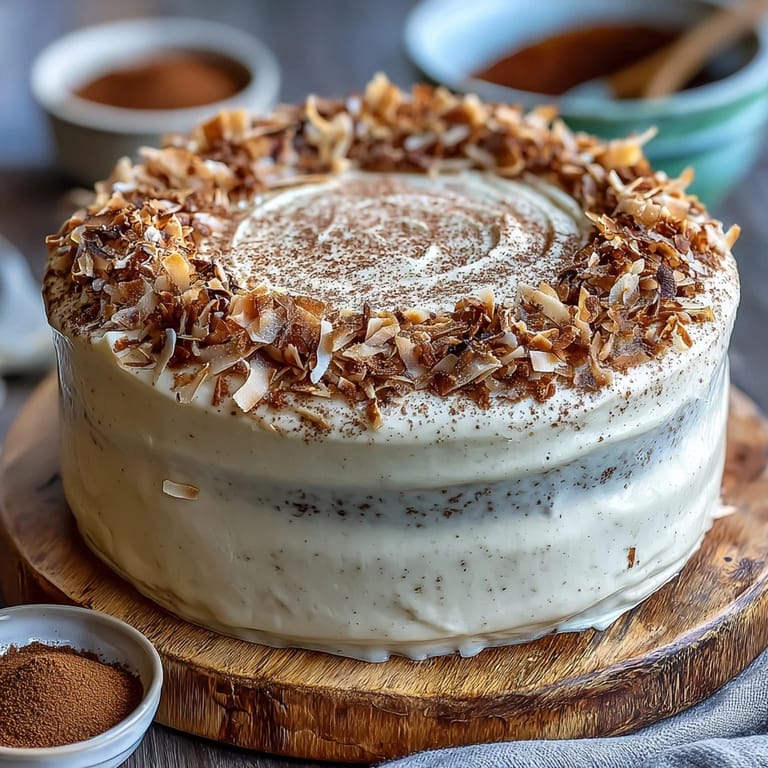
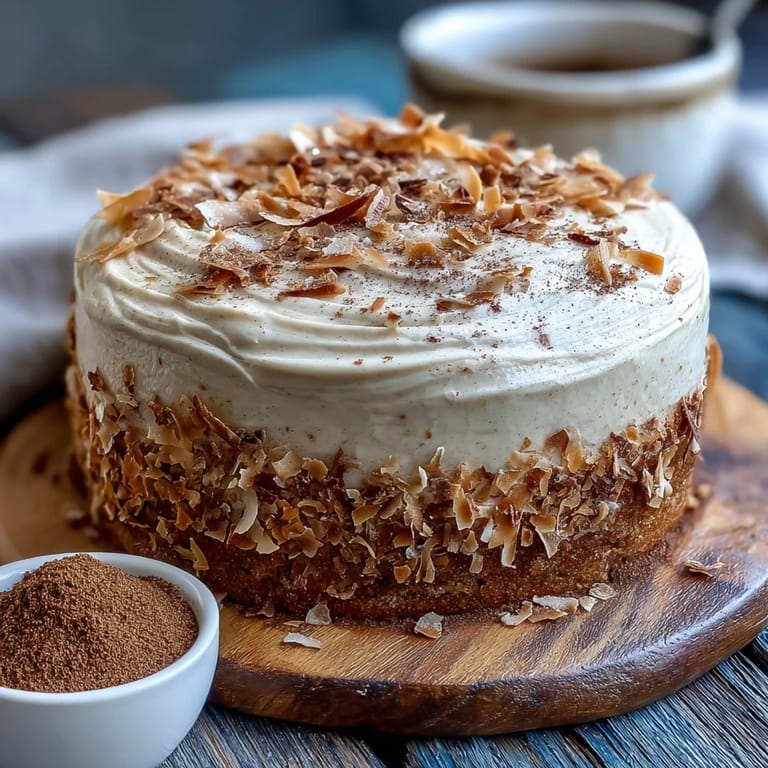
- Spread the coconut frosting evenly over the cooled cake with an offset spatula, then dust lightly with hojicha powder and scatter toasted coconut flakes across the top. This is where it goes from lovely to striking.
 Save to Pinterest
 The moment someone tasted this cake and closed their eyes, I knew it had crossed from recipe to ritual. Now whenever autumn rolls around, I get texts asking if I'm making it again.
The Hojicha Story
Hojicha is green tea that's been roasted at high temperature, transforming it into something darker, warmer, and less grassy than regular matcha or sencha. The roasting process brings out toasted and almost caramel-like notes that feel comforting rather than bright. In Japanese tea culture, it's beloved because it's gentle on the stomach and can be enjoyed any time of day without the caffeine intensity of other teas. When you bake with it, those same warm, toasted qualities infuse the cake with a sophistication that feels both subtle and unmistakable.
Why Gluten-Free Matters Here
Using a quality gluten-free blend in this cake isn't just an accommodation—it's actually a better choice for the texture you want. Gluten-free flours tend to absorb more liquid, which creates a naturally moister crumb. Almond flour adds fat and protein, which keeps things tender. The combination of these flours with the maple syrup and coconut oil creates a cake that stays soft for days, something I've found wheat flour versions don't always do as well.
Storage and Serving Suggestions
This cake actually improves after a day, as the hojicha flavor deepens and distributes more evenly through the crumb. Keep it covered in the refrigerator, and it will stay fresh and moist for up to 3 days. Serve it slightly chilled or at room temperature with a cup of hojicha tea, matcha, or even a light-bodied sake if you're feeling adventurous.
- Slice with a warm, damp knife for clean edges and a more elegant presentation.
- The frosting tastes best when the cake hasn't been sitting in the cold too long, so take it out about 15 minutes before serving.
- If you want to double the recipe and make a two-layer cake, simply divide the batter between two pans and double the frosting ingredients.
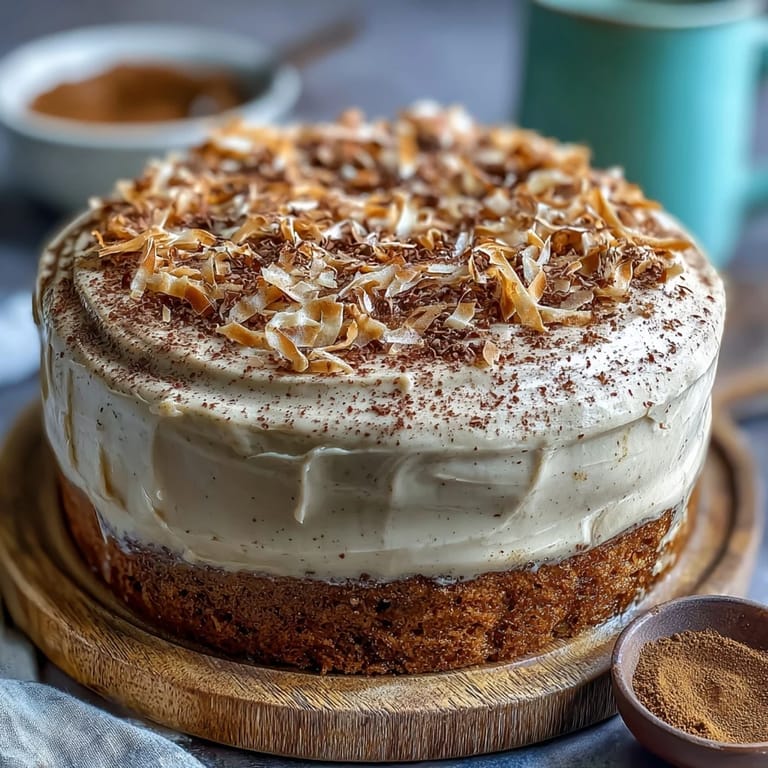 Save to Pinterest
 This cake has become my way of marking the season and sharing something that feels both nourishing and indulgent. It's proof that the most memorable desserts aren't always the fanciest ones.
Common Recipe Questions
- → What does hojicha taste like?
Hojicha has a distinctive roasted, earthy flavor with caramel-like undertones. It's less grassy and astringent than matcha, offering a warm, comforting taste that pairs beautifully with sweet vanilla and coconut notes.
- → Can I substitute the almond flour?
Yes, you can replace almond flour with additional gluten-free flour blend, though the texture may be slightly denser. Sunflower seed flour or hazelnut flour also work well as alternatives.
- → How do I store this cake?
Keep refrigerated in an airtight container for up to 3 days. The coconut frosting firms up when chilled, so bring slices to room temperature 15 minutes before serving for the best texture.
- → Is hojicha powder the same as matcha?
No, hojicha is made from roasted green tea leaves, giving it a reddish-brown color and mellow flavor. Matcha is made from shade-grown, steamed leaves and has a vibrant green color with a more grassy taste.
- → Can I make this as a layer cake?
Absolutely! Double the sponge ingredients and bake in two 8-inch pans. You'll need to increase the frosting quantity by 1.5 times to generously fill and coat both layers.
- → What can I use instead of coconut milk for frosting?
Cashew cream or a vegan butter-based frosting are good alternatives. However, coconut milk provides the lightest, fluffiest texture that complements the hojicha flavor profile.