 Save to Pinterest
 I discovered teriyaki chicken wraps on a Tuesday when I was rushing between errands and realized my lunch plans had completely fallen through. Rather than surrender to a sad desk meal, I remembered a bottle of soy sauce in my pantry and decided to improvise something quick. Twenty minutes later, I was wrapping up strips of glistening chicken in a warm tortilla, and the kitchen smelled so good that my roommate wandered out wondering what was happening. That first bite—the savory glaze, the cool crunch of cabbage against the soft tortilla—made me realize I'd stumbled onto something that felt both restaurant-worthy and genuinely easy to pull together.
I made these for a group of friends during a casual lunch party, and someone asked if I'd catered them. The best part was watching people eat these one-handed while standing in the kitchen, completely unbothered by manners, just genuinely hungry for more. That's when I knew I'd created something that doesn't need pomp or ceremony—just good flavors and the right texture balance.
Ingredients
- Boneless, skinless chicken breasts (about 400 g, cut into thin strips): Slicing against the grain keeps the pieces tender even after cooking; I learned this the hard way after making rubbery chicken strips once.
- Vegetable oil: This is your medium-high heat friend, allowing the chicken to get a light golden edge without burning the pan.
- Soy sauce: The backbone of the glaze—use regular or low-sodium based on your salt preference.
- Mirin: This sweet rice wine is what makes the sauce shiny and balanced; if you skip it entirely, the glaze tastes one-note.
- Brown sugar: Adds depth that plain white sugar doesn't quite achieve.
- Rice vinegar: The tiny acid bump that keeps everything from feeling cloying.
- Fresh ginger and garlic: Grated and minced fresh are non-negotiable here; the difference between fresh and powder is noticeable.
- Green cabbage and carrots: Shred them yourself if you have five minutes; the texture is fresher than pre-shredded.
- Spring onions: Add a mild onion sharpness that ties everything together.
- Large flour tortillas: Warm them just enough to soften, not to the point of tearing.
- Toasted sesame seeds and cilantro: Totally optional but they add that final textural contrast and brightness.
Tired of Takeout? 🥡
Get 10 meals you can make faster than delivery arrives. Seriously.
One email. No spam. Unsubscribe anytime.
Instructions
- Mix your teriyaki glaze:
- Whisk together soy sauce, mirin, brown sugar, rice vinegar, ginger, and garlic in a small bowl until the sugar dissolves. This is your moment to taste it and adjust—if it feels too salty, add a splash of water; too sweet, add more vinegar. Set it aside.
- Get the chicken golden:
- Heat vegetable oil in a large skillet over medium-high heat until it shimmers slightly, then add your chicken strips in a single layer. Let them sit for 3–4 minutes without stirring so they develop a light golden color on one side, then stir and cook another minute or two until they're mostly cooked through but not completely done.
- Glaze and reduce:
- Pour the teriyaki sauce over the chicken and stir to coat everything. The sauce will bubble and thicken over 3–4 minutes as it reduces, clinging to each piece of chicken with a beautiful glossy finish. When it looks like a proper glaze and not a loose liquid, you're done—remove from heat immediately.
- Warm your tortillas:
- Lay a tortilla in a dry skillet over low heat for 15–20 seconds per side, or wrap them in a damp paper towel and microwave for 20 seconds. You want them soft and pliable, not dried out or hot enough to burn your fingers.
- Assemble with intention:
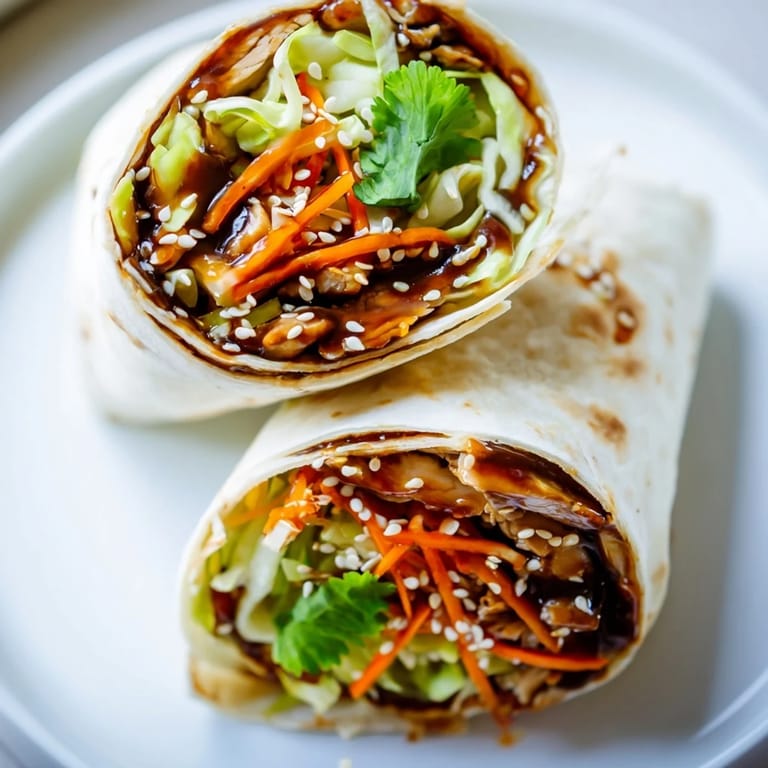
- Lay a warm tortilla flat on a clean surface, then layer about a quarter of the shredded cabbage, carrots, and spring onions down the center. Top with a generous portion of the glazed chicken strips, then sprinkle with sesame seeds and cilantro if you're using them.
- Roll it tight:
- Fold the sides of the tortilla in about an inch, then roll from the bottom up, keeping tension so it holds together without tearing. Wrap tightly enough that it won't fall apart in your hands, but gently enough that you don't tear the tortilla.
 Save to Pinterest
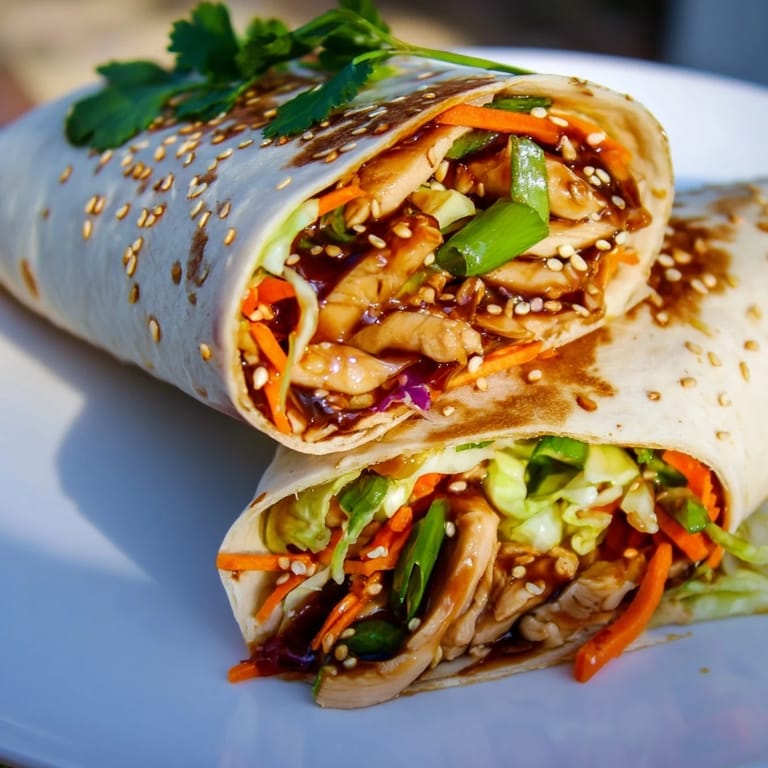
 There's a moment when you take the first bite of a wrap you've made yourself, and the warm tortilla gives way to cool, crisp vegetables and that glazed chicken that tastes better than you expected it to. That's when I stopped thinking of this as just a quick meal and started thinking of it as something worth making again and again.
Why This Becomes a Regular
Once you've made this once, you'll realize how adaptable it is to whatever's in your fridge and whatever time you have available. I've made it with store-bought rotisserie chicken when I was really short on time, and it was still wonderful. I've added a drizzle of sriracha for heat, extra ginger when I wanted brightness, or swapped in purple cabbage just because I felt like color. The core technique—a quick glaze, fresh vegetables, soft wrap—stays the same, and everything else is just you making it your own.
The Difference Between Good and Great
The real magic here is texture contrast and timing. You want the chicken to be tender and coated in glaze, the vegetables to stay crisp and fresh, and the tortilla to be warm without being limp. Getting these three things to happen at once requires just a little attention, nothing complicated. If you rush the assembly or let the wrap sit assembled for too long, the tortilla starts to absorb moisture from the vegetables and loses its appeal, so eating these immediately is worth the effort.
Storage and Variations
These wraps are best eaten fresh, but if you need to meal-prep, keep the components separate and assemble them just before eating. The glazed chicken keeps in the refrigerator for three days and reheats gently in a skillet. You can also prep all your vegetables the night before and store them in containers so morning assembly takes five minutes flat.
- For a spicier kick, drizzle sriracha or hot sauce into the wrap, or layer in thin slices of fresh chili alongside the vegetables.
- Try whole wheat, spinach, or gluten-free tortillas if you want to change things up nutritionally or for dietary reasons.
- If you're using rotisserie chicken as a shortcut, warm the pieces gently in the glaze for just a minute so they soak up those flavors without drying out further.
 Save to Pinterest
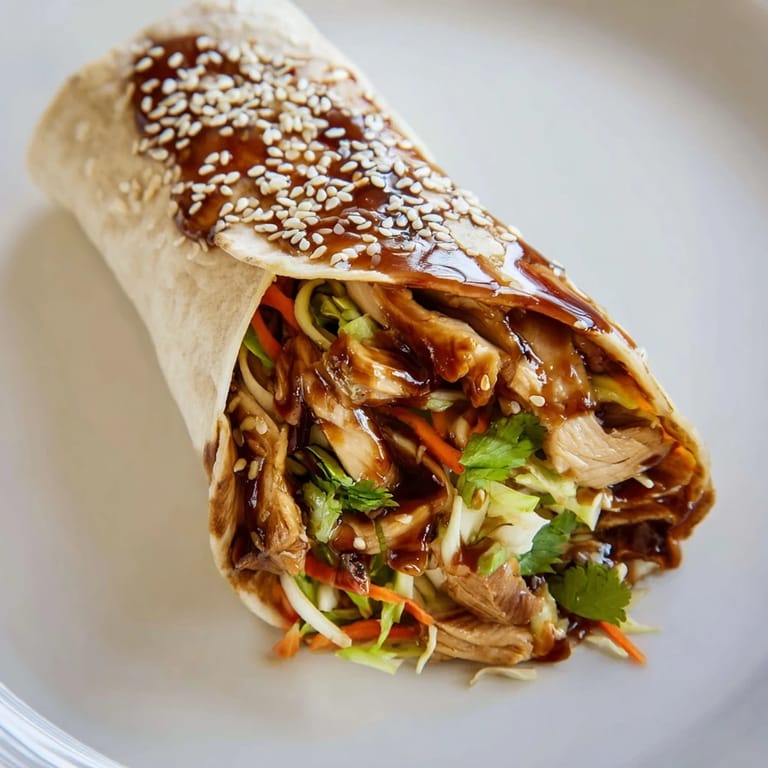
 This is the kind of meal that feels special enough for guests but easy enough that you'll actually make it on a regular Tuesday when you're tired and hungry. Once you nail the technique, it becomes something you reach for again and again.
Common Recipe Questions
- → What is the best way to cook the chicken strips?
Sauté chicken strips in vegetable oil over medium-high heat until golden and nearly cooked. Then add teriyaki sauce and let it thicken to glaze the chicken evenly.
- → Can I make this wrap spicy?
Yes, adding a drizzle of sriracha or slicing fresh chili into the wrap brings a spicy kick without overwhelming other flavors.
- → Which vegetables complement the teriyaki chicken best?
Shredded green cabbage, carrots, and thinly sliced spring onions provide fresh crunch and brighten the savory glazed chicken.
- → Are there suitable alternatives for the teriyaki sauce ingredients?
Mirin can be substituted by mixing honey and water, maintaining a sweet balance. Adjust soy sauce and brown sugar to taste for preferred sweetness and saltiness.
- → What wraps work well in place of flour tortillas?
Whole wheat or gluten-free wraps can be used, ensuring flexibility for dietary preferences while retaining softness for rolling.