 Save to Pinterest
 The first time I truly understood Turkish hospitality was through a meze platter—not in Turkey, but in my neighbor's kitchen on a warm Sunday afternoon. She'd invited a handful of us over, and instead of the usual cheese and crackers, she arranged this stunning board of vibrant colors and textures. The way everyone naturally gathered around it, picking and sharing, felt less like eating and more like a conversation without words. I've since learned that a good meze platter isn't just appetizers; it's an invitation to slow down and connect.
I remember my friend Sarah bringing a homemade hummus to a potluck and watching it disappear before anything else—even the fancy desserts. That moment taught me that simple, made-with-care food wins every time. Now whenever I'm assembling a meze platter, I always start with that hummus because I know it anchors the whole spread and sets the tone for generous, thoughtful sharing.
Ingredients
- Chickpeas (1 can, 400 g): The base of silky hummus—I always rinse them well because the starch can make it gluey instead of cloud-like.
- Tahini (2 tbsp): This is where the magic happens; use good quality stuff and give the jar a stir before measuring, as the oil separates.
- Extra-virgin olive oil (3 tbsp total): Turkish olives and hummus both need quality oil to shine, so don't skimp here.
- Garlic (1 clove, minced): Raw garlic is sharp, so go easy unless you love that punch; you can always add more.
- Fresh lemon juice (2 tbsp): Brightness is everything—bottled juice works, but fresh is noticeably better.
- Ground cumin (1/2 tsp): This warm spice is what makes it taste authentically Turkish, not just generally Mediterranean.
- Salt and pepper: Season as you go; hummus needs more salt than you'd think.
- Stuffed grape leaves, dolmas (12): Store-bought saves time without losing authenticity—look for them in the international aisle.
- Feta cheese (100 g, cubed): Creamy and salty; it anchors the cheese selection.
- Beyaz peynir or extra feta (100 g): The mild white cheese that melts slightly on your tongue.
- Kasseri or halloumi (100 g, sliced): This cheese has a higher melting point, so it holds its shape beautifully on the platter.
- Mixed Turkish olives (100 g): Green and black olives together give complexity—pit them if you're serving to guests who prefer it.
- Dried oregano (1/2 tsp): A light toss over the olives wakes them up without overwhelming them.
- Fresh vegetables (cucumber, tomato, lemon): These add crunch and color; slice them just before serving so they stay crisp.
- Fresh parsley (2 tbsp, chopped): The final green flourish that makes everything look intentional and alive.
- Warm pita or flatbread: Serve it warm so it's soft enough to wrap around the other elements.
Tired of Takeout? 🥡
Get 10 meals you can make faster than delivery arrives. Seriously.
One email. No spam. Unsubscribe anytime.
Instructions
- Blend the hummus until silky:
- In your food processor, combine the rinsed chickpeas, tahini, two tablespoons of olive oil, minced garlic, lemon juice, cumin, salt, and pepper. Pulse, then blend until completely smooth—this takes longer than you'd think, maybe three to four minutes. When it's ready, it should be the texture of soft butter; if it seems thick, add a splash of water a tablespoon at a time.
- Season and transfer to your serving bowl:
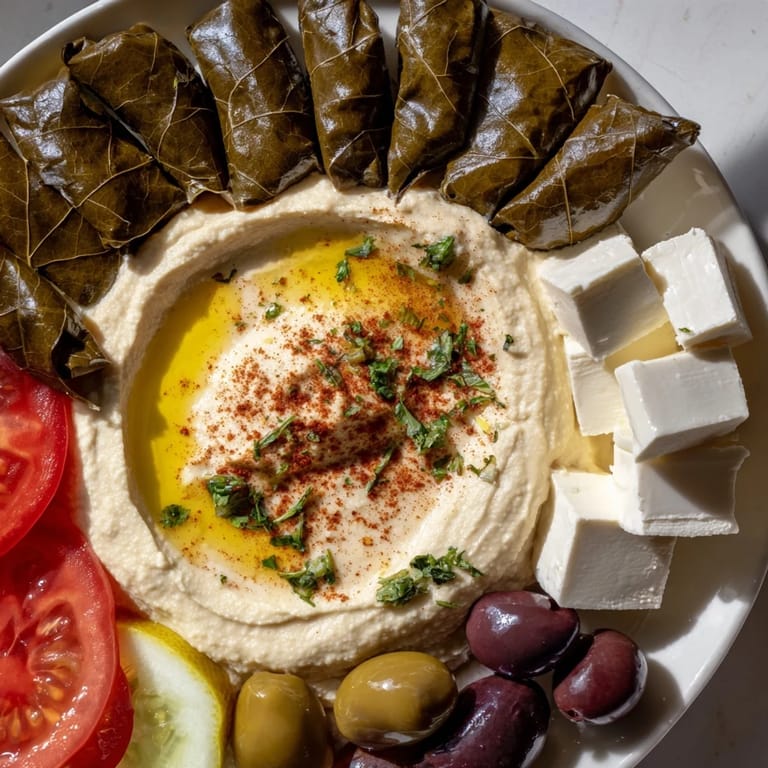
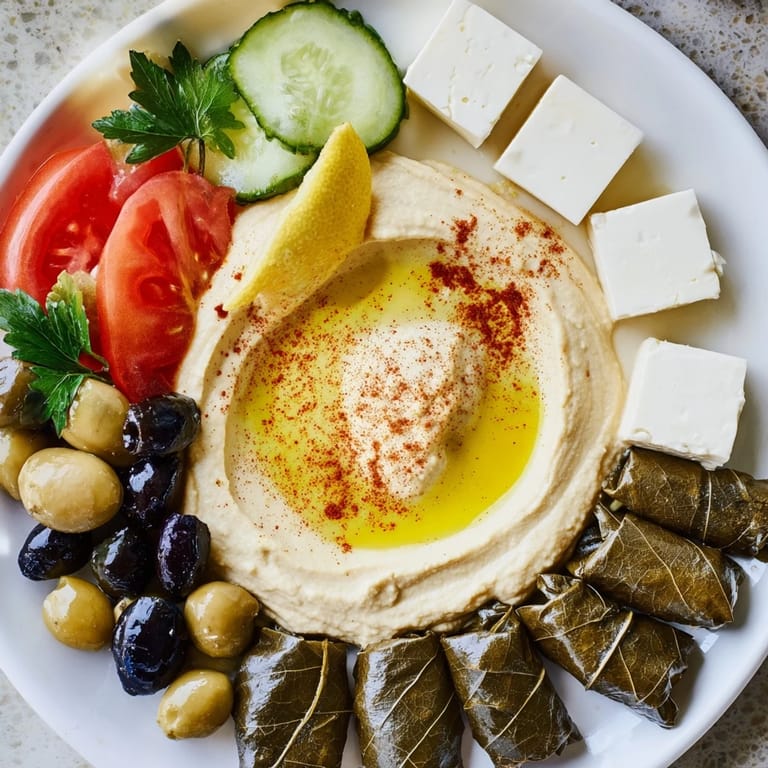
- Taste as you go and adjust the salt, lemon, or cumin to your preference. Transfer to a serving bowl, then drizzle a generous spiral of olive oil across the top and finish with a small pinch of paprika or sumac if you have it—it's traditional and looks beautiful.
- Arrange the dolmas with intention:
- Place the stuffed grape leaves seam-side down on your platter in a loose cluster or line. They're the anchor for one section of the board.
- Group the cheeses by type:
- Cut each cheese into bite-sized cubes or slices and arrange them in separate little clusters on the platter. Keeping them distinct helps people try each one.
- Dress and place the olives:
- Toss your mixed olives with the remaining tablespoon of olive oil and the dried oregano, then either place them in a small bowl nestled into the platter or scatter them around as you prefer.
- Add the fresh elements:
- Slice your cucumber and tomato, arrange them alongside the other components, and wedge lemon pieces around the platter's edges. Sprinkle the fresh parsley over everything for a final burst of green and freshness.
- Warm your pita and serve:
- Wrap pita in foil and warm it in a low oven, or wrap in a damp cloth. Cut into triangles and place nearby for people to use as vessels for the hummus and other elements.
 Save to Pinterest
 There was this moment during a dinner party when everyone stopped talking mid-conversation because they were too busy enjoying the food in front of them. That silence, that focus on flavor and each other, is what a good meze platter creates—it's the opposite of rushed eating. I realized then that this isn't just appetizers; it's an experience designed to bring people together.
The Art of Building Your Board
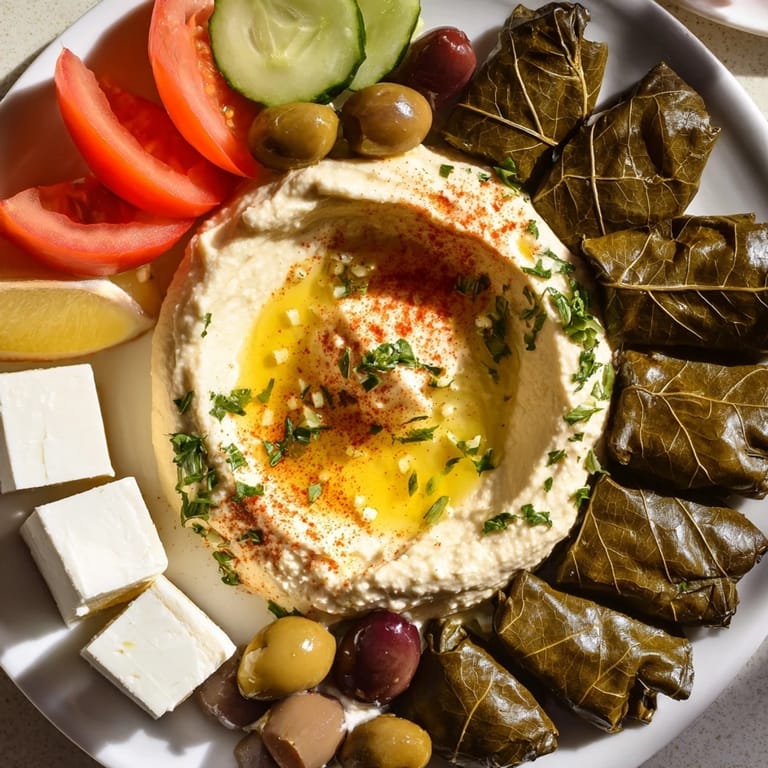
The layout of your meze platter matters more than you might think. I used to pile everything randomly until a Turkish friend gently rearranged mine, grouping similar items and leaving breathing room between them. She explained that a platter should guide the eye and the hand—you want people to be drawn to different elements as they explore. Think of it like creating pathways: the creamy hummus in one corner, the cheeses grouped together, the olives in their own little bowl, and the fresh vegetables as the bright threads that tie everything together. When you step back, it should look abundant but not chaotic.
Variations and Personal Touches
What makes a meze platter truly yours is knowing when to stay traditional and when to improvise. I once added roasted red peppers because I had extras from another dish, and they became the surprise everyone asked about. Grilled eggplant slices, spiced walnuts, pickled turnips, or even a small bowl of muhammara (roasted red pepper and walnut dip) all feel at home on this board. The base—the hummus, the cheeses, the olives—these should stay, but everything else is your canvas. The beauty of meze is that it's meant to be abundant and varied, so trust your instincts about what flavors and textures you love.
Pairing and Serving Wisdom
A meze platter is incredibly forgiving to serve, which is why I love it for entertaining. It doesn't require careful plating at the last minute, and you can add or subtract elements based on what you have on hand. The only thing I've learned matters is keeping everything fresh and at the right temperature—cheeses at room temperature taste better than cold ones, and the vegetables should be as crisp as possible. If you're serving wine, a crisp white like Turkish Narince or even a light rosé pairs beautifully, as does raki for those who drink it. For non-alcoholic options, strong Turkish tea or fresh lemonade both work wonderfully.
- Keep your platter covered lightly with plastic wrap until the moment you serve it so vegetables stay crisp.
- Set out small plates and napkins nearby so guests don't feel awkward about how to eat.
- Make extra hummus because it always disappears before you expect it to.
 Save to Pinterest
 There's something deeply generous about setting a meze platter in front of people—it's an invitation to take your time, taste freely, and enjoy good food without pretense. Once you make this once, you'll find yourself reaching for it again and again.
Common Recipe Questions
- → What are dolmas and how are they prepared?
Dolmas are grape leaves stuffed with a seasoned rice mixture. They can be store-bought or homemade by cooking rice with herbs, wrapping in leaves, and simmering until tender.
- → Can the hummus be made ahead of time?
Yes, hummus can be prepared in advance and stored in the refrigerator for up to two days, allowing flavors to deepen before serving.
- → What cheeses work best on this platter?
Traditional Turkish cheeses like feta, beyaz peynir, and kasseri or halloumi provide varied textures and tangy flavors that complement the other elements.
- → How should the olives be seasoned?
Olives are tossed with extra-virgin olive oil and dried oregano to enhance their natural fruitiness and add herbal notes.
- → What are suitable accompaniments for this platter?
Complement the platter with warm pita or flatbread, fresh cucumber and tomato slices, lemon wedges, and a sprinkle of parsley for freshness.
- → Is this platter suitable for vegetarians?
Yes, this selection features vegetarian-friendly ingredients including legumes, cheeses, and vegetables, with no meat or fish.