 Save to Pinterest
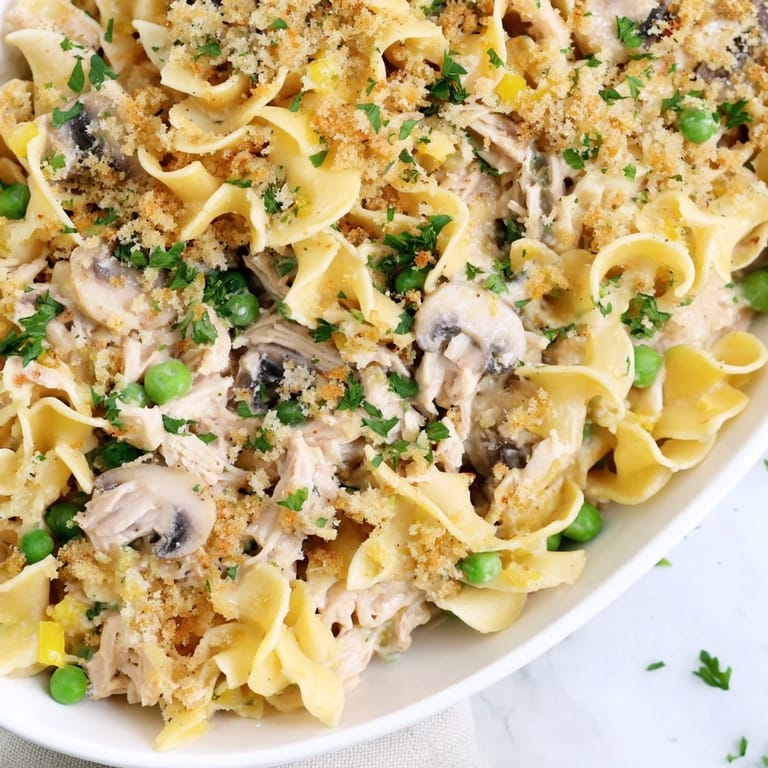
 My mom made tuna noodle casserole every Thursday night in the eighties, the kind with canned mushroom soup and potato chip crumbles on top. Years later, I found myself craving that exact comfort but wanting something with actual texture and flavor depth. This version keeps the soul of that weeknight staple but trades the shortcuts for real cream, fresh vegetables, and a golden panko crust that actually crunches.
I made this for my sister's book club last spring when I was too busy to do anything complicated, and it disappeared before dessert even came out. One of her friends texted me the next day asking for the recipe, which felt like the highest compliment possible for a casserole.
Ingredients
- Egg noodles (12 oz): The wider ribbons hold sauce better than thin pasta, and cooking them just until al dente means they won't turn to mush in the oven.
- Solid white tuna (two 5 oz cans): The texture matters here—look for chunks you can actually see, not the stuff that turns to paste.
- Frozen peas (1 cup): They thaw gently in the hot sauce and keep their shape, unlike canned peas which lose all dignity.
- Cremini mushrooms (1 cup sliced): These have more flavor than whites and add an earthy depth that lifts the whole dish.
- Yellow onion and celery (1 small onion, 1 cup diced): The aromatic base that makes this taste like actual home cooking, not just cream and pasta.
- Garlic (2 cloves minced): Adds a whisper of sharpness that keeps the sauce from being one-note.
- Unsalted butter (3 tbsp plus 2 tbsp melted): Real butter makes the sauce taste rich without any chemical aftertaste.
- All-purpose flour (3 tbsp): Creates the roux that thickens the sauce to the perfect coating consistency.
- Chicken or vegetable broth (2 cups): The backbone of the sauce—low-sodium lets you control the salt level.
- Whole milk (1 cup): Rounds out the flavor and creates a silky mouthfeel that feels indulgent.
- Sour cream (1/2 cup): Adds tang and creaminess without the heaviness of extra butter or cream.
- Dijon mustard (1/2 tsp): Just enough to add complexity without making anyone ask what that flavor is.
- Panko breadcrumbs (3/4 cup): Stays crispy much longer than regular breadcrumbs and browns beautifully.
- Parmesan cheese (1/2 cup grated): The salty, umami element that makes people lean in and take another bite.
- Fresh parsley (2 tbsp optional): A final brightness that wakes up the whole dish just before serving.
Tired of Takeout? 🥡
Get 10 meals you can make faster than delivery arrives. Seriously.
One email. No spam. Unsubscribe anytime.
Instructions
- Heat your oven and prep the stage:
- Set the oven to 400°F and lightly butter a 9x13-inch baking dish. This small step prevents sticking and creates a subtle flavor layer on the bottom of the casserole.
- Cook the noodles until just shy of done:
- Get salted water boiling, then add the egg noodles and cook until al dente—you want them tender but with a slight resistance when you bite one. They'll continue softening in the oven, so stopping just short prevents mushiness.
- Build the aromatic base:
- Melt butter in a large skillet over medium heat, then add the chopped onion and celery. Let them soften and become fragrant, about three minutes, then add the mushroom slices and cook until they release their liquid and begin to brown. This develops flavor that raw vegetables simply cannot provide.
- Toast the garlic and bloom the flour:
- Stir in the minced garlic for just one minute so it becomes fragrant but not bitter, then sprinkle the flour over everything and stir constantly for a couple of minutes. This toasting step is what prevents the flour from tasting raw or chalky in the finished sauce.
- Create a silky sauce:
- Gradually pour in the broth while stirring, then add the milk, and let everything come to a gentle simmer. Stir occasionally as it thickens—you're aiming for something that coats the back of a spoon and slowly drips off, which takes about three to four minutes.
- Finish with creamy richness:
- Remove from heat and stir in the sour cream, Dijon mustard, salt, and pepper until completely smooth. The warmth will create a sauce that's velvety without any lumps or graininess.
- Combine everything gently:
- Add the drained tuna, thawed peas, and cooked noodles to the sauce, folding gently until every strand of pasta is coated and the ingredients are evenly distributed. This is where restraint matters—fold rather than stir so the tuna stays in chunks.
- Transfer to the baking dish:
- Pour the entire mixture into your prepared dish, spreading it in an even layer. If it looks a little soupy, that's correct—the noodles will absorb liquid as it bakes.
- Make the crispy topping:
- In a small bowl, toss together the panko, grated parmesan, and melted butter until every breadcrumb is coated. This mixture will brown beautifully and stay crunchy instead of turning soggy.
- Bake until golden and bubbling:
- Spread the panko mixture evenly over the casserole and bake for twenty to twenty-five minutes until the topping is deep golden brown and you can see the sauce bubbling around the edges. The bubbling tells you the heat has made it all through the dish.
- Rest before serving:
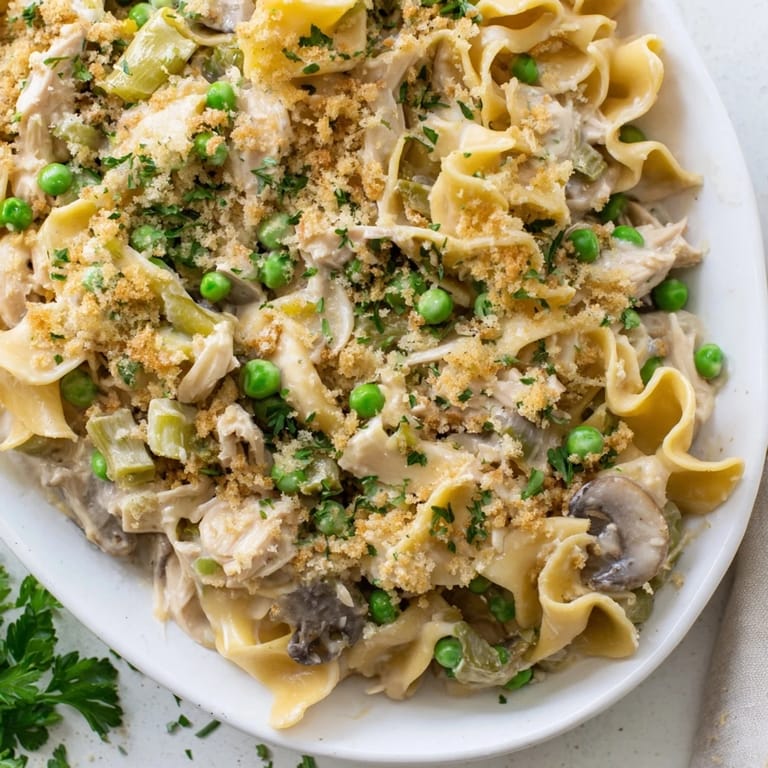
- Let the casserole sit for five minutes so the sauce can set slightly and everything stays together when you serve it. Finish with fresh parsley if you have it, which adds a final note of brightness.
 Save to Pinterest
 My partner took one bite and said it tasted like someone's grandmother had been in our kitchen, which was exactly what I was going for. That's when I realized comfort food doesn't have to apologize for itself.
Why This Recipe Works
The secret is in respecting the basics while elevating each component. Fresh vegetables give you flavor and texture that canned soup never could, real tuna stays recognizable instead of dissolving into the sauce, and the roux-based cream sauce actually adheres to the pasta instead of pooling at the bottom of the dish. The panko topping isn't just decoration—it's what makes people reach for thirds.
Making It Your Own
This recipe is a template that welcomes improvisation. If gruyère or aged cheddar is in your fridge, fold a handful into the sauce for a richer flavor. Greek yogurt substitutes beautifully for sour cream if you're looking for something lighter, and a splash of dry white wine added to the broth deepens the umami. Some people add a can of artichoke hearts, others throw in caramelized shallots, and I've seen versions that finish with everything bagel seasoning on top, which should tell you something about how forgiving this dish is.
Serving and Pairing
This casserole arrives at the table still steaming, and there's something ceremonial about how people gather around it. A simple green salad cuts through the richness, while a crisp white wine like Sauvignon Blanc or a light Pinot Grigio complements both the fish and the cream without competing for attention. I've served it alongside roasted broccoli, buttered green beans, and crusty bread, and all three felt right.
- Let it rest for those five minutes or the sauce will run across the plate instead of staying put.
- Leftovers are just as good cold straight from the fridge, or reheated gently in a low oven until warmed through.
- This recipe doubles easily if you're feeding a crowd; just use two baking dishes and add a few minutes to the baking time.
 Save to Pinterest
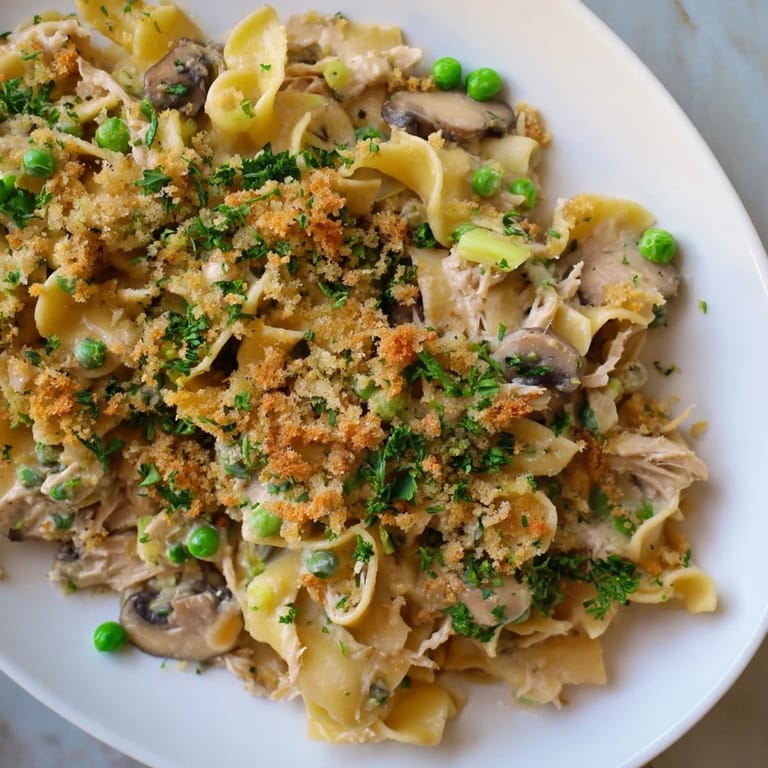
 This is the kind of dish that reminds you why casseroles survived decades of ridicule—because when they're made with care, they're genuinely delicious and they bring people together. Make this whenever you need comfort that doesn't feel like settling.
Common Recipe Questions
- → What noodles work best for this dish?
Egg noodles are ideal for their wide, tender shape that holds the creamy sauce well.
- → Can I substitute the tuna with another protein?
White tuna is traditional, but firm canned salmon or cooked chicken can be used for variation.
- → How do I get a crispy topping?
Mix panko breadcrumbs with melted butter and parmesan, then bake until golden and crunchy on top.
- → Is sour cream necessary in the sauce?
Sour cream adds richness and tang, but Greek yogurt can be used for a lighter alternative.
- → Can I prepare this dish ahead of time?
Yes, assemble and refrigerate before baking. Adjust baking time if starting from cold.
- → What wine pairs well with this casserole?
A crisp white wine like Sauvignon Blanc complements the creamy and savory flavors nicely.