 Save to Pinterest
 There's something almost magical about opening the slow cooker lid after eight hours and finding your kitchen filled with that deep, savory aroma of caramelized onions and tender beef. My neighbor once knocked on my door asking what I was cooking because the smell had drifted into her hallway, and that's when I realized this pot roast wasn't just dinner—it was an entire experience unfolding quietly in the kitchen. The beauty of this dish is that it asks almost nothing of you while delivering everything you crave on a cold evening.
I made this for my sister's family when she was overwhelmed with a new job, and watching her kids actually eat the vegetables without complaint felt like winning the lottery. The pot roast sat at the center of the table steaming gently, and nobody reached for their phones—they just ate quietly, contentedly, the way meals are supposed to be.
Ingredients
- Chuck roast (3 lbs): This cut has just enough marbling to become impossibly tender under low heat, and the fat dissolves into the gravy making it taste rich and authentic.
- Onion soup mix (1 packet): Don't skip this thinking you'll do better with individual spices—this packet is engineered to work in a slow cooker and saves you from the tedium of measuring.
- Carrots, potatoes, celery (4 lbs total): Cut them uniform so everything finishes at the same time, otherwise you'll have mushy potatoes and crunchy carrots fighting it out.
- Beef broth (2 cups): Use good quality broth here because it becomes the foundation of your entire sauce—watery broth makes watery gravy.
- Worcestershire sauce and tomato paste (2 tbsp each): These two ingredients add depth that makes people ask for your secret, and you can smile mysteriously and say it's just time.
- Black pepper and dried thyme (1 tsp each): The thyme is optional but it whispers sophistication without announcing itself loudly.
- Cornstarch slurry (2 tbsp each): Keep this on hand if you like thick glossy gravy, though honestly the natural juices are often silky enough without it.
Tired of Takeout? 🥡
Get 10 meals you can make faster than delivery arrives. Seriously.
One email. No spam. Unsubscribe anytime.
Instructions
- Prepare the roast with intention:
- Pat your chuck roast completely dry with paper towels—moisture is the enemy of browning, and dry meat is what allows that caramelization to happen. Dust it with pepper and thyme while you have it out, so this step feels ceremonial rather than rushed.
- Build your vegetable foundation:
- Spread carrots, potatoes, celery, and onion across the bottom of your slow cooker in a loose layer—they'll cradle the roast and keep it from sitting in liquid and steaming instead of braising. Think of this as creating a flavor raft that everything else will rest on.
- Position the roast like it owns the place:
- Lay the roast directly on top of the vegetables, fat side up if there's a presentation to it. This positioning lets the meat render its fat down over everything below while staying elevated from the liquid.
- Mix your braising liquid with purpose:
- In a separate bowl, whisk together beef broth, onion soup mix, tomato paste, and Worcestershire sauce until the soup mix dissolves and the tomato paste smooths out. Taste it directly from your spoon—it should taste noticeably savory, almost aggressively so, because it's about to season eight pounds of food.
- Pour and let go:
- Pour your mixture evenly over the roast and vegetables, making sure it reaches into the gaps. Cover your slow cooker and resist the urge to peek for at least four hours.
- Cook low and slow like it's non-negotiable:
- Set it to LOW for eight hours, which is the pace that allows connective tissue to break down into gelatin without the meat becoming stringy. The clock moves differently when you're not watching—by hour six the smell will become almost unbearable.
- Transfer to serve and decide about thickening:
- Remove the roast and vegetables to a platter, arrange them so they look intentional rather than collapsed. If you want gravy that coats a spoon, whisk cornstarch with cold water until smooth, stir it into the hot braising liquid, cover, and run the slow cooker on HIGH for another five to ten minutes—otherwise just spoon the natural juices over everything.
- Slice and present with generosity:
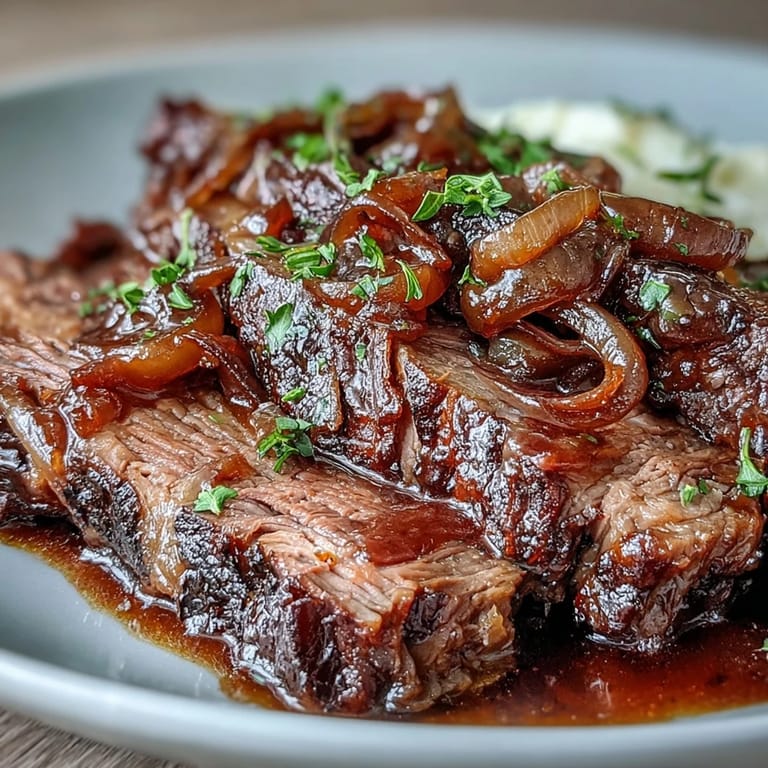
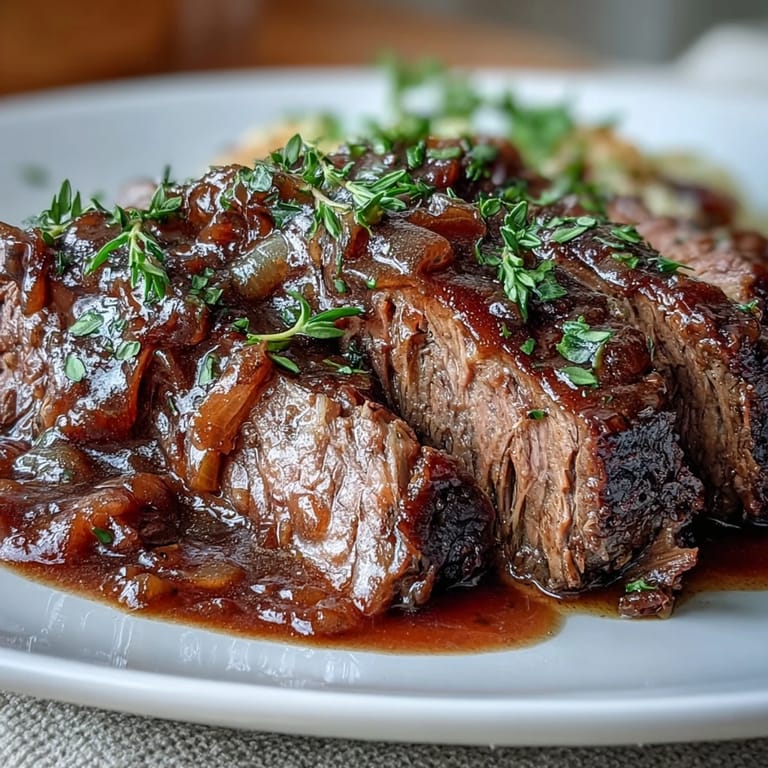
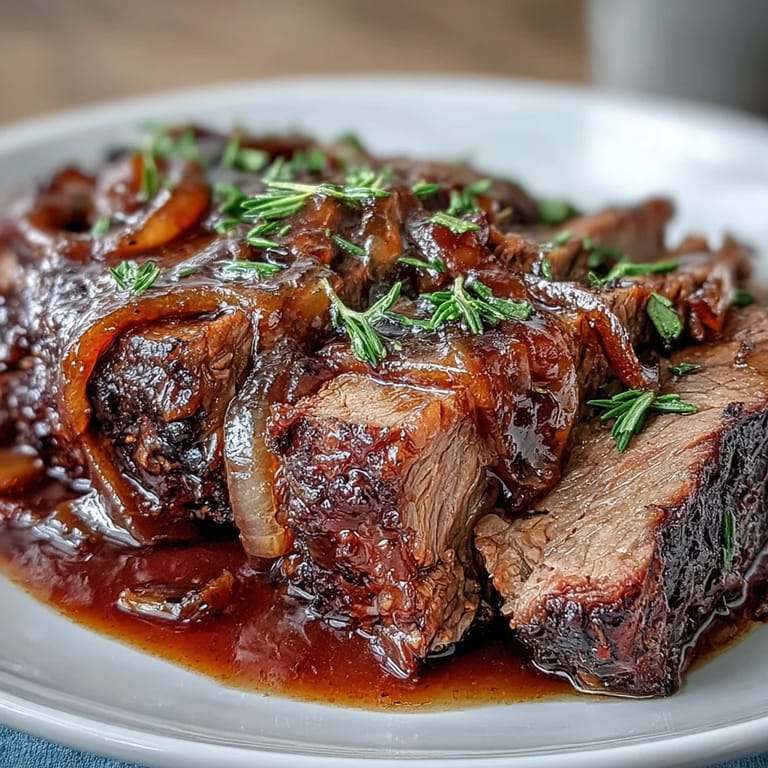
- Cut or shred the roast depending on who's eating and how tired you are, then spoon that deep brown gravy over top. The meat should be so tender it might fall apart under your knife, and if it does, that's the sign you did everything right.
 Save to Pinterest
 This dish taught me something important one winter when my elderly father came to stay: comfort food isn't about impressing people with technique, it's about showing up for them with something warm and honest. He had seconds without being asked, and that quiet gesture meant more than any complicated recipe ever could.
The Magic of Patient Cooking
There's a difference between fast food and slow food that goes beyond the clock. When you commit to eight hours in the slow cooker, something shifts in how you think about dinner—instead of racing against time, you're working with it. The meat doesn't get tough from high heat, the vegetables don't turn to mush from constant stirring, and the flavors have time to marry into something greater than their individual parts. This is the kind of cooking that rewards patience with tenderness.
Variations That Keep It Fresh
Once you've made this recipe three or four times, you'll start seeing possibilities everywhere. Some seasons I swap regular potatoes for parsnips because their slight sweetness plays beautifully against the savory soup mix base. Other times I'll add a tablespoon of balsamic vinegar to the braising liquid just to add a whisper of depth, or throw in a handful of mushrooms because someone in the house has become obsessed with them. The structure is solid enough to handle experimentation without falling apart, which is the mark of a truly good recipe.
Serving Suggestions and Final Touches
The real magic happens when you think about what goes on the table alongside this pot roast. Crusty bread becomes essential for soaking up gravy, and creamy mashed potatoes turn it from dinner into an event. A sharp green salad cuts through the richness and makes you feel less guilty about the seconds, and honestly, a glass of Cabernet Sauvignon with the beef is non-negotiable if you can manage it.
- Never skip the bread—the gravy is meant to be mopped up with something substantial.
- Make extra gravy by doubling the liquid if you know your crowd loves it poured generously over everything.
- Day-old leftovers shredded and tucked into sandwiches with horseradish cream are possibly better than the original meal.
 Save to Pinterest
 This pot roast lives in my regular rotation because it asks so little and delivers so much, and somehow that generosity of spirit has become the meal itself. Cook it, serve it, watch people become quiet and content—that's all the reward you'll ever need.
Common Recipe Questions
- → Can I use other vegetables besides carrots and potatoes?
Yes, parsnips or turnips can be substituted for some or all of the potatoes for a different flavor and texture.
- → Is it necessary to sear the roast before slow cooking?
Searing the roast adds extra depth of flavor and a richer color but is optional if you're short on time.
- → How can I thicken the cooking liquid into gravy?
Mix cornstarch with cold water and stir into the cooker after removing the roast. Cook on high for 5-10 minutes until thickened.
- → What cuts of beef work best for this dish?
Chuck roast is ideal due to its marbling and tenderness after slow cooking; other braising cuts can also work well.
- → Can this dish be gluten-free?
Yes, by selecting a gluten-free onion soup mix and checking Worcestershire sauce labels, it can fit a gluten-free diet.