 Save to Pinterest
 There's a particular moment in late summer when I find myself standing in front of a jar of sun-dried tomatoes at the market, and I'm instantly transported back to my friend Marco's kitchen in Florence. He showed me how to transform those concentrated little rubies into something magical—a pesto that tasted like warmth and complexity all at once. That afternoon, we made pasta together while the afternoon light streamed through his window, and I realized pesto didn't have to be green to be extraordinary. Now whenever I make this version, I'm chasing that same feeling of discovery, that same bold, savory magic.
I made this for my sister on a random Tuesday when she was going through a rough patch, and she sat at my kitchen counter with a glass of wine, twirling pasta on her fork and actually smiling for the first time in weeks. The brightness of the basil, the earthiness of those tomatoes, the way the sauce clung to every strand—it became our quiet ritual. Now she texts me whenever she needs this dish, and I know it's not really about the pasta.
Ingredients
- Dried pasta (400g): Penne, fusilli, or spaghetti all work beautifully; use whatever you have, but aim for good quality since there aren't many ingredients to hide behind.
- Sun-dried tomatoes in oil (120g): These are the soul of the dish, so don't skimp—look for ones that feel plump and vibrant, not dried out or dusty, and always save that oil.
- Freshly grated Parmesan (50g): Pre-grated cheese will make the pesto grainy and bitter, so take the two minutes to grate it yourself.
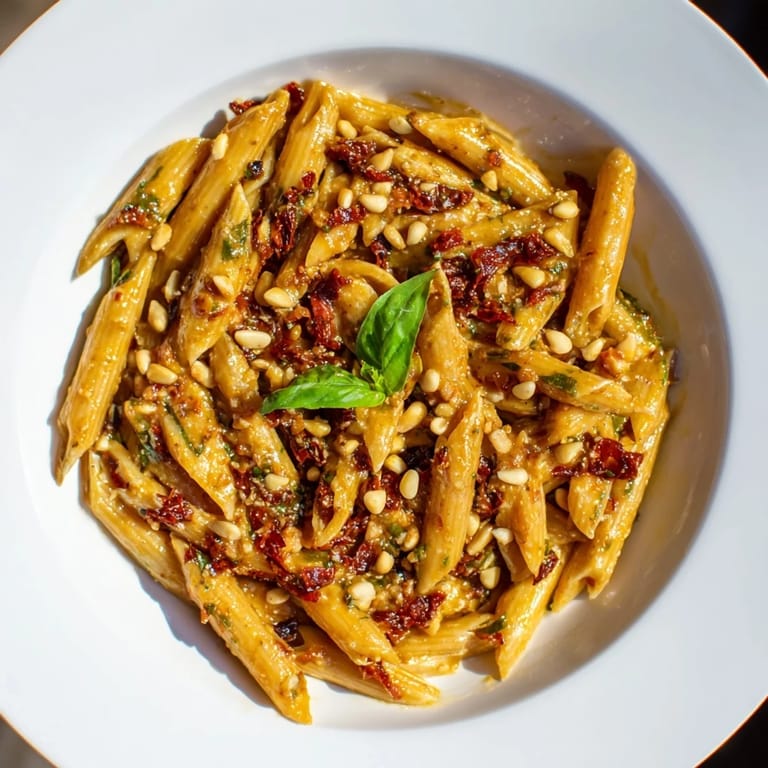
- Toasted pine nuts (40g): If they're not already toasted, toast them in a dry skillet for just a few minutes until fragrant and golden, or they'll taste raw and thin.
- Fresh garlic (2 cloves): Use fresh, not jarred, and don't crush it first—the food processor will do the work.
- Fresh basil leaves (30g): Pick them just before you need them, preferably from the top of the plant where they're most tender and perfumed.
- Reserved sun-dried tomato oil (2 tbsp): This liquid gold carries flavor that plain oil can't match, so don't waste it down the drain.
- Extra-virgin olive oil (2 tbsp): Use something you actually like tasting, not the cheapest bottle on the shelf.
- Fresh lemon juice (from 1/2 lemon): The acid is essential—it brightens everything and keeps the pesto from feeling heavy.
- Salt and black pepper: Taste as you go; the Parmesan is already salty, so go easy at first.
Tired of Takeout? 🥡
Get 10 meals you can make faster than delivery arrives. Seriously.
One email. No spam. Unsubscribe anytime.
Instructions
- Set the water to dance:
- Fill a large pot with water and salt it generously—it should taste like the sea. Bring it to a rolling boil before adding pasta; cold water means your pasta cooks unevenly and sticks to itself.
- Cook pasta to the moment:
- Follow the package timing, but start testing a minute before it says to, aiming for that sweet spot where it's tender but still has a gentle resistance when you bite it. The moment it reaches al dente, drain it into a colander while reserving at least half a cup of that starchy liquid gold.
- Begin the pesto magic:
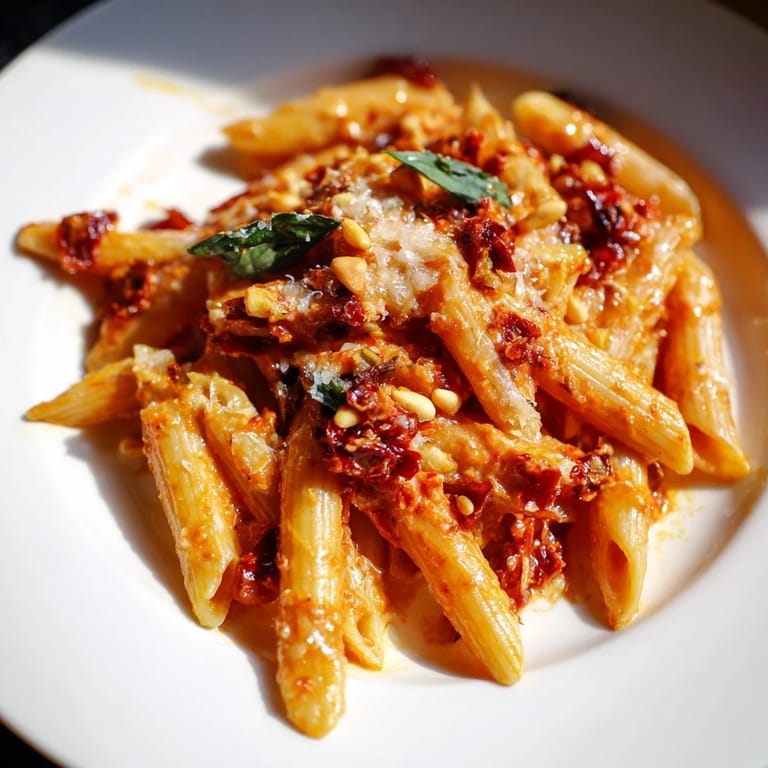
- Pulse the sun-dried tomatoes, Parmesan, pine nuts, garlic, and basil in a food processor until everything is finely chopped but not yet a paste. You want to see texture, not uniformity.
- Bring it all together:
- Add the reserved sun-dried tomato oil, olive oil, and lemon juice, then pulse again until the mixture is smooth and glossy. This is where you taste and adjust—add salt slowly, remembering that the cheese already brings saltiness, and finish with fresh pepper.
- Loosen the sauce:
- If your pesto looks thick enough to stand a spoon in, add pasta water a tablespoon at a time until it reaches that silky consistency that will coat every noodle without pooling at the bottom of the bowl.
- Marry pasta and sauce:
- Toss the warm pasta with the pesto in a large bowl, moving everything together gently so you coat each strand without breaking it. Add more pasta water if needed to keep everything moving and glossy.
- Serve with care:
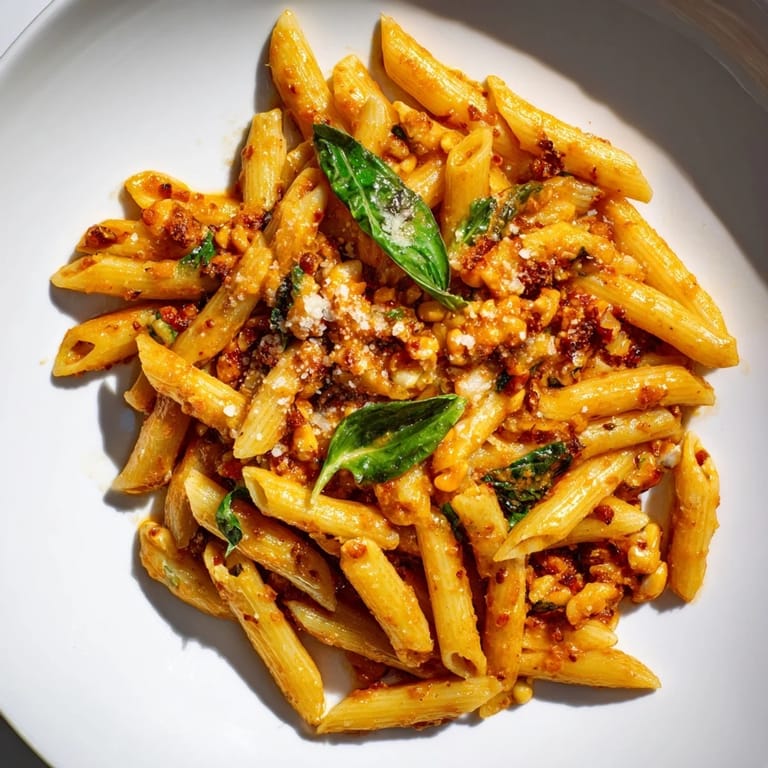
- Divide into bowls immediately while everything is warm, then top each portion with fresh basil leaves and a whisper of extra Parmesan.
 Save to Pinterest
 My neighbor once said that food brings people together, and I didn't really understand until I started sharing this pasta. There's something about a dish that's beautiful and bold and unpretentious all at once that makes people want to linger at your table a little longer. This pesto does that.
The Story Behind Sun-Dried Tomatoes
Sun-dried tomatoes aren't a new invention, though they feel trendy in modern kitchens—Italian cooks have been preserving summer's harvest this way for centuries, a practical solution to the reality that tomatoes only grow for a season. The act of drying concentrates their sweetness and depth, transforming them into something almost unrecognizable but absolutely essential to the Mediterranean pantry. When you cook with them, you're not just making dinner; you're carrying forward a tradition of making the most of what grows beneath the sun.
Building Flavor Without Heaviness
This pesto works because it balances richness with brightness, letting the pasta remain light rather than buried under a thick sauce. The lemon juice is crucial here—it's like opening a window in a warm room, letting air flow through and preventing everything from feeling too dense. Fresh basil does the same thing, adding a note of green herbal clarity that stops the dish from being all about the tomatoes and cheese.
Variations Worth Exploring
Once you understand how this pesto works, you'll start seeing endless possibilities in your kitchen. Walnuts cost less than pine nuts and bring a slightly different earthiness that works beautifully here, roasted vegetables can turn this into something more substantial, and if you're cooking for someone dairy-free, nutritional yeast actually does capture a savory, cheese-like note without the milk. The foundation is strong enough to support your changes.
- Swap the basil for mint or parsley if basil feels too grassy to you, and the pesto will taste completely different but equally delicious.
- A handful of roasted red peppers or grilled zucchini makes this feel like summer on a plate, especially when you're cooking in winter and craving that brightness.
- Add a small handful of fresh spinach while you're pulsing the pesto if you want to stretch your ingredients or sneak in extra vegetables without changing the flavor much.
 Save to Pinterest
 This is the kind of pasta that reminds you why simple food, made with intention and quality ingredients, is often the most satisfying. Make it for yourself on a quiet evening, or make it for people who matter, and watch how something so straightforward becomes completely memorable.
Common Recipe Questions
- → What pasta types work best with this dish?
Penne, fusilli, or spaghetti work well as they hold the pesto sauce nicely, enhancing every bite.
- → How can I adjust the pesto texture if it’s too thick?
Add reserved pasta cooking water gradually to loosen the pesto until it reaches a smooth, silky consistency.
- → Can I substitute pine nuts in the pesto?
Yes, walnuts are a great budget-friendly alternative that still add a pleasant crunch and flavor.
- → How do I make the dish vegan-friendly?
Replace Parmesan cheese with nutritional yeast to maintain the umami flavor without dairy.
- → What garnishes enhance the flavor of this pasta?
Fresh basil leaves and extra grated Parmesan cheese provide aromatic and creamy finishing touches.
- → Is there a recommended wine pairing?
A crisp Italian white wine like Pinot Grigio complements the bright and savory notes of this dish.