 Save to Pinterest
 My neighbor brought over a box of just-picked strawberries one June afternoon, and I had maybe an hour to figure out what to do with them before they'd start weeping. I pulled out butter, cream, and flour, thinking of those fancy afternoon tea shortcakes I'd seen in cookbooks but never attempted. What came out of the oven were these golden, impossibly tender scones that practically melted on your tongue, and suddenly the whole thing made sense: why pile complicated frosting on cake when fresh fruit and creamy yogurt could do all the heavy lifting?
I made these for a potluck once without realizing everyone else had brought casseroles and brownies, so this showed up looking like I'd spent the whole day in the kitchen when really I'd been outside until twenty minutes before we left. Three people asked for the recipe that night, and I remember one woman saying she'd never realized scones could be this easy because she'd always thought they required some kind of special technique or ingredient. It was a small thing, but it stuck with me.
Ingredients
- All-purpose flour: Two cups gives you structure without being tough; the smaller amount of sugar keeps these scones more savory-leaning so they taste fresh rather than like dessert bread.
- Cold unsalted butter: This is non-negotiable, and I mean properly cold from the fridge, cubed small. Those butter pieces create steam pockets that make scones flaky and tender instead of dense.
- Baking powder: One tablespoon is your leavening agent, creating that gentle rise without any yeasty flavor.
- Heavy cream: Two-thirds cup binds everything while keeping the crumb soft; don't substitute milk here or your scones will be gummy.
- Fresh strawberries: One pound of ripe ones macerating in sugar and lemon juice means they release their own syrup, so you get that juicy filling without added liquid.
- Greek yogurt: One and a half cups of plain Greek yogurt is tangier and thicker than regular yogurt, so it doesn't make your scone soggy and it adds this sophisticated edge.
- Honey or maple syrup: Just two tablespoons sweetens the yogurt without making it cloying, and the floral or woody notes add character.
Tired of Takeout? 🥡
Get 10 meals you can make faster than delivery arrives. Seriously.
One email. No spam. Unsubscribe anytime.
Instructions
- Set your oven and prep your surface:
- Get your oven to 400°F and line a baking sheet with parchment paper so your scones won't stick and will brown evenly on the bottom. This takes two minutes but saves you from the grief of scrubbing baked-on dough later.
- Combine your dry ingredients:
- Whisk together flour, sugar, baking powder, and salt in a large bowl until it looks completely uniform with no pockets of baking powder hiding anywhere. This distributes the leavening so your scones rise evenly.
- Work in the cold butter:
- Cut your cold butter cubes into the dry mixture using a pastry blender, two forks, or honestly just your fingertips until it looks like coarse breadcrumbs with some pea-sized butter pieces still visible. You want texture here, not a smooth paste, which is what creates those beautiful tender layers.
- Make and add the wet mixture:
- Whisk heavy cream, an egg, and vanilla together in a small bowl, then pour it over the flour mixture and stir with a fork just until the dough comes together into shaggy clumps. Overmixing here will make your scones tough, so stop as soon as you don't see dry flour.
- Shape your dough gently:
- Turn the dough onto a lightly floured surface and give it just four or five light kneads to bring it together, then pat it into a circle about one inch thick. Think of this as coaxing rather than working, letting the gluten relax.
- Cut and assemble for baking:
- Cut your circle into eight wedges like you're slicing a pie, arrange them on your parchment-lined sheet, and brush the tops with a little more cream to encourage browning and shine. This brushing makes a real difference in how golden they become.
- Bake until golden:
- Bake for 16 to 18 minutes until the tops are deep golden brown and you can smell that buttery scone aroma filling your kitchen. They'll feel firm on top but still give a little when you press gently.
- Prepare your strawberries while scones bake:
- Toss your sliced strawberries with two tablespoons of sugar and a teaspoon of lemon juice, then let them sit for at least ten minutes so they start releasing their own juice and become juicier than when you started. You'll notice the juice pooling at the bottom, which is exactly what you want.
- Mix your yogurt cream:
- Stir Greek yogurt together with honey and vanilla extract until smooth and creamy, tasting as you go and adjusting sweetness if needed. This should taste tangy but not sour, sweet but not candy-like.
- Assemble just before serving:
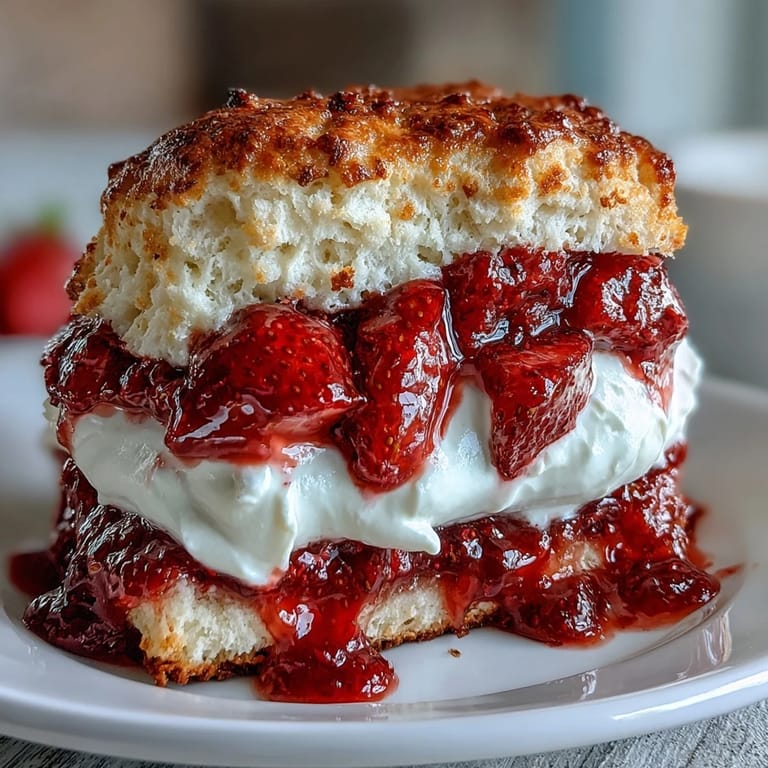
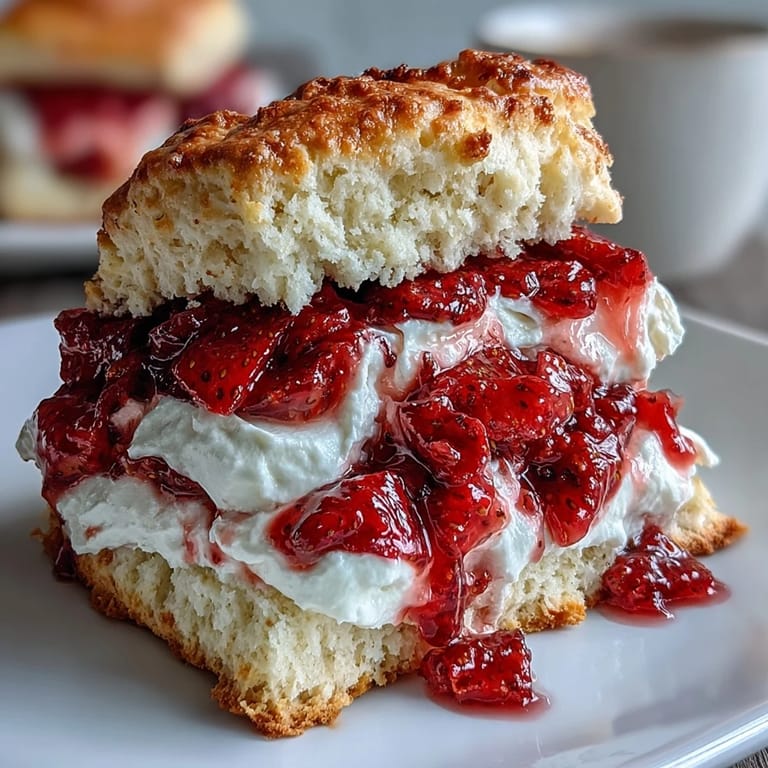
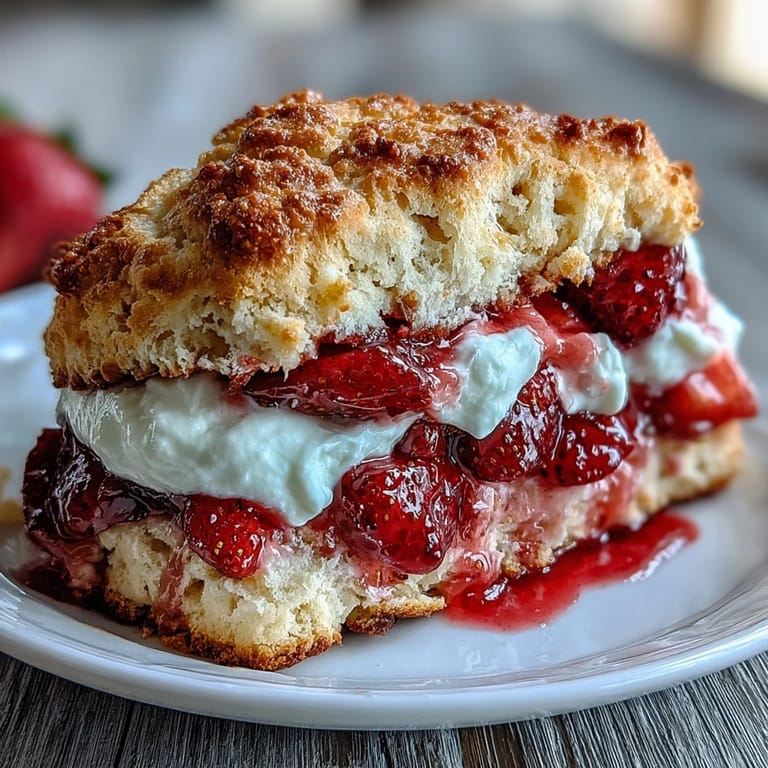
- Split your cooled scones in half horizontally, spoon the vanilla yogurt onto the bottom halves, pile on the strawberries with their juices, and crown with the scone tops. Serve right away so the scones stay crispy on the outside while the insides stay tender.
 Save to Pinterest
 What I love about this dessert is that it feels special enough for guests but approachable enough for breakfast on a Saturday when you're moving slow. There's something about assembling them at the table, watching people split open those warm scones and pile everything in, that reminds me why I cook in the first place.
The Secret of Tender Scones
The magic happens when you respect the butter. I learned this the hard way one August when I thought I could speed up the process by using softened butter, and what came out was more like a biscuit than a scone, dense and almost gritty. Now I'm religious about cold butter, and I can feel the difference in my hands as I work it in. Those little pockets of butter don't just add richness; they literally create steam during baking that puffs the scone up and creates those delicate layers. You want your mixture to look almost sandy, with visible butter pieces still scattered throughout, not a smooth dough.
Why Greek Yogurt Changes Everything
Regular whipped cream is wonderful, but there's something about the tang in Greek yogurt that makes the strawberries taste even brighter and more strawberry-like. I noticed this one afternoon when I was out of whipping cream and grabbed Greek yogurt instead, thinking it would be a temporary fix. The tartness cut through the sweetness of the fruit and scone in this way that felt more sophisticated, more intentional, like I'd planned it that way all along. Now it's non-negotiable, and I actually prefer it to the traditional approach.
Building Your Perfect Shortcake
Assembly matters more than you might think because timing affects everything. A warm scone with cool yogurt and fresh strawberries creates this temperature play that makes each bite interesting, but let those scones sit too long and they cool down and lose some magic. The strawberry juices soak into the bottom half of the scone if you let them sit, softening it in the best possible way, but too long and it becomes soggy rather than tender. This is why I assemble just before serving, letting everyone customize their own if you're serving a group.
- Split your scones horizontally rather than cutting them vertically, which gives you a wider surface area for the yogurt and fruit to cling to.
- If your scones cool completely before assembly, you can warm them gently in a 300°F oven for a few minutes to bring back that just-baked softness.
- Assemble these no more than five minutes before eating so the scone stays crispy on the outside while the interior stays tender.
 Save to Pinterest
 These strawberry scone shortcakes are the kind of dessert that tastes like you tried really hard but only asks that you show up with good ingredients and a light hand. They've become my answer to the question of what to bring when someone asks for something homemade but you don't want to spend all day in the kitchen.
Common Recipe Questions
- → What type of flour is best for scones?
All-purpose flour is ideal for tender, flaky scones, providing the right texture and structure.
- → How can I ensure the scones are flaky?
Use cold, cubed butter and gently cut it into the flour until the mixture resembles coarse crumbs, avoiding overmixing.
- → What is the purpose of macerating strawberries?
Macerating softens the strawberries and releases their natural juices, enhancing sweetness and flavor.
- → Can I substitute the yogurt with something else?
For a richer texture, try replacing half the yogurt with whipped cream, or use a dairy-free alternative if desired.
- → How should I store leftover scones?
Store scones in an airtight container at room temperature for up to one day to maintain freshness.