 Save to Pinterest
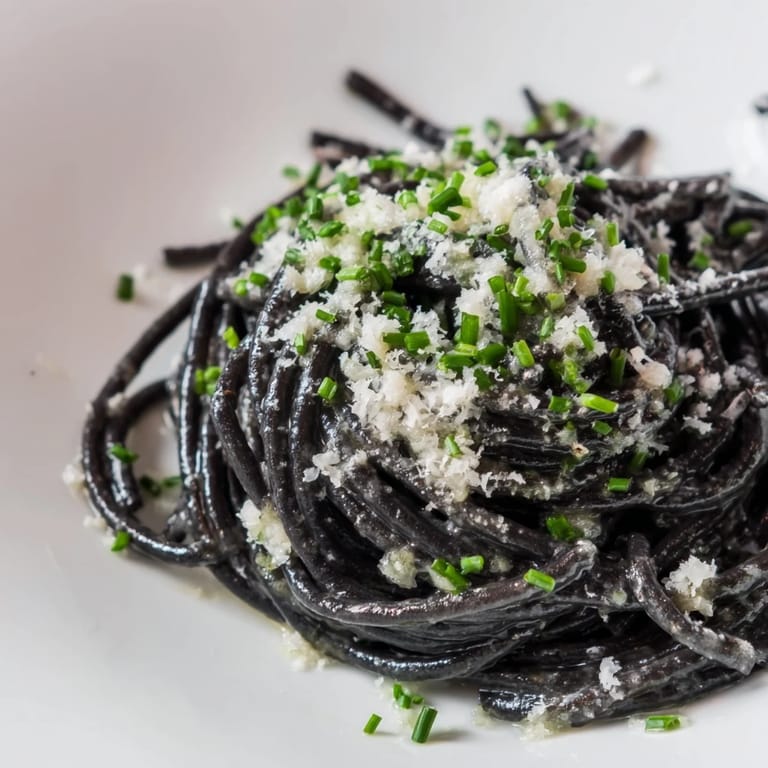
 The first time I served squid ink pasta at a dinner party, I watched my guests pause mid-conversation the moment their forks lifted that dramatic black tangle of noodles. One friend asked if it was safe to eat, another wanted to know if it tasted like the ocean, and honestly, I loved that moment of intrigue before that first bite. There's something about this dish that transforms an ordinary weeknight into theater, yet it's deceptively simple to make in your own kitchen.
I still remember standing in my kitchen during a rainy autumn evening, stirring that cream sauce as the smell of white wine and garlic filled the room, wondering if I was being too ambitious cooking something this restaurant-looking for friends I saw every week. By the time we sat down to eat, the pasta glistening under the kitchen light, I realized that's exactly the point—taking a moment to do something beautiful, even for people who know you in your messy everyday life.
Ingredients
- Squid ink pasta (400 g): Use dried squid ink pasta from a good Italian brand if you can find it, as it holds its color and firm texture better than some fresh versions; the pasta itself is mild, so don't worry that it will taste fishy.
- Unsalted butter (2 tablespoons): This builds your flavor base, so use real butter—it makes a noticeable difference in how silky your sauce becomes.
- Shallot (1 small, finely chopped): Shallots dissolve more gracefully into a cream sauce than onions do, adding sweetness without the sharp bite.
- Garlic (2 cloves, minced): Add it after the shallot softens, or it can turn bitter and overpower the delicate sauce.
- Dry white wine (150 ml): Choose something you'd actually drink—that acidic brightness cuts through the cream and prevents the sauce from tasting one-note.
- Heavy cream (250 ml): Don't be tempted to use light cream; the richness is part of what makes this feel special, and a little goes a long way.
- Lemon zest (1 teaspoon): This is the secret that makes people ask what's different—it brightens everything without making the dish taste lemony.
- Salt and freshly ground black pepper: Taste as you go; the pasta water adds saltiness, so season conservatively at first.
- Parmigiano-Reggiano (50 g, grated): The real thing, aged properly, has a complexity that melts into the sauce rather than just sitting on top.
- Chives (1 tablespoon, finely chopped): A last-minute shower of green that looks beautiful against the black pasta and adds a subtle onion whisper.
Tired of Takeout? 🥡
Get 10 meals you can make faster than delivery arrives. Seriously.
One email. No spam. Unsubscribe anytime.
Instructions
- Get your water ready:
- Bring a large pot of generously salted water to a rolling boil—taste it and it should taste like the sea. The pasta needs that seasoning from the water itself.
- Cook the pasta:
- Add your squid ink pasta and stir it once to prevent sticking, then follow the package timing for al dente. About a minute before it's done, grab a heatproof cup and scoop out about 1/2 cup of that starchy cooking water before you drain the pasta.
- Begin the sauce:
- While the pasta cooks, melt your butter in a large skillet over medium heat and listen for that gentle sizzle. Add your finely chopped shallot and let it soften for about 2 to 3 minutes until it's translucent and sweet-smelling.
- Wake up the garlic:
- Stir in your minced garlic and cook for just 30 seconds—you're looking for that fragrant moment right before garlic can turn bitter. The kitchen should smell like a good Italian restaurant now.
- Add the wine:
- Pour in your white wine and watch it bubble gently as you simmer for 2 to 3 minutes, letting the sharp alcohol notes cook off and the sauce begin to reduce into something more concentrated. You'll smell the transformation happen.
- Cream it together:
- Turn your heat down to low, then stir in the heavy cream and lemon zest, letting everything simmer so gently you barely see bubbles for about 2 to 3 minutes. The sauce will become noticeably thicker and silkier, coating the back of a spoon beautifully.
- Season and marry:
- Taste your sauce and season with salt and pepper—remember you can always add more but you can't take it back. Add your drained pasta to the sauce and toss everything together until each strand is coated in that creamy goodness.
- Adjust and serve:
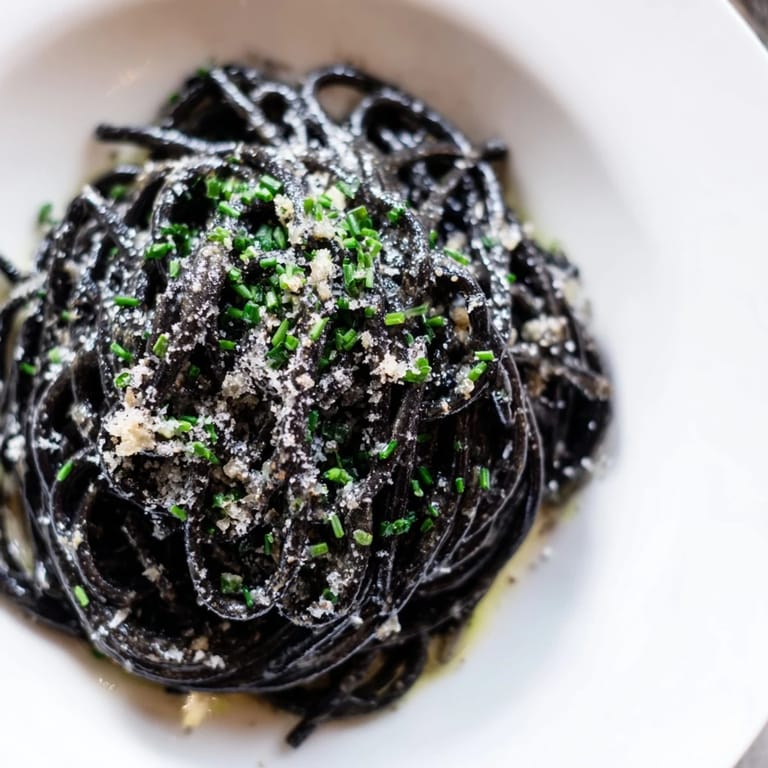
- If your sauce seems too thick, splash in some of that reserved pasta water a tablespoon at a time until it reaches that glossy, silken consistency where the pasta moves easily. Serve immediately onto warm plates, finishing with a generous scatter of Parmigiano-Reggiano, chopped chives, and a squeeze of fresh lemon if you want that brightness.
 Save to Pinterest
 I learned the power of this dish one night when a friend who usually orders only simple pasta dishes came back for thirds, then asked if I could teach her how to make it. Watching someone discover that restaurant-quality food doesn't require restaurant-level stress or expertise—that it's really just butter, cream, and attention—somehow mattered more than all the compliments combined.
Why Black Pasta Feels Fancy
Squid ink pasta has this almost theatrical quality that makes people think you've spent hours in the kitchen, when really you haven't done anything that complicated. The color comes from the squid ink mixed directly into the dough, which means it's been there all along, not something added at the last moment. It tastes almost neutral—a very subtle, briny whisper that most people can't quite identify—so the sauce becomes the real star, with the black pasta just providing visual drama and a bit of umami depth underneath.
Timing and Temperature Matter
This is a dish where paying attention to temperature and timing transforms the outcome from good to unforgettable. The cream sauce needs to be gentle and low—if you let it boil aggressively, it can break or separate, leaving you with something that looks curdled. The magic happens in those minutes of gentle simmering where the cream thickens slightly and becomes silken, not through aggressive heat but through patience. Once the pasta hits the sauce, everything needs to happen quickly because the heat from the skillet continues cooking the cream and the pasta, and that glossy, clingy consistency only exists for a few minutes before it sets.
Variations and Improvisation
This sauce is versatile enough to work with additions but restrained enough that you don't need them. Some nights I've sautéed a handful of shrimp until they curl and pink, then tossed them in right before serving for extra protein and that seafaring elegance. Other times, a few scallops do the same job. Even without seafood, the pasta stands beautifully on its own—I've found that what people love most is simply the combination of silky sauce and that dramatic color.
- If you want to add sautéed shrimp or scallops, cook them in a separate pan first, then toss them in at the very end so they don't overcook.
- A crisp white wine like Pinot Grigio pairs perfectly for both cooking and sipping alongside dinner.
- Fresh parsley works beautifully as a garnish if you don't have chives, though the mild onion note of chives is what I reach for every time.
 Save to Pinterest
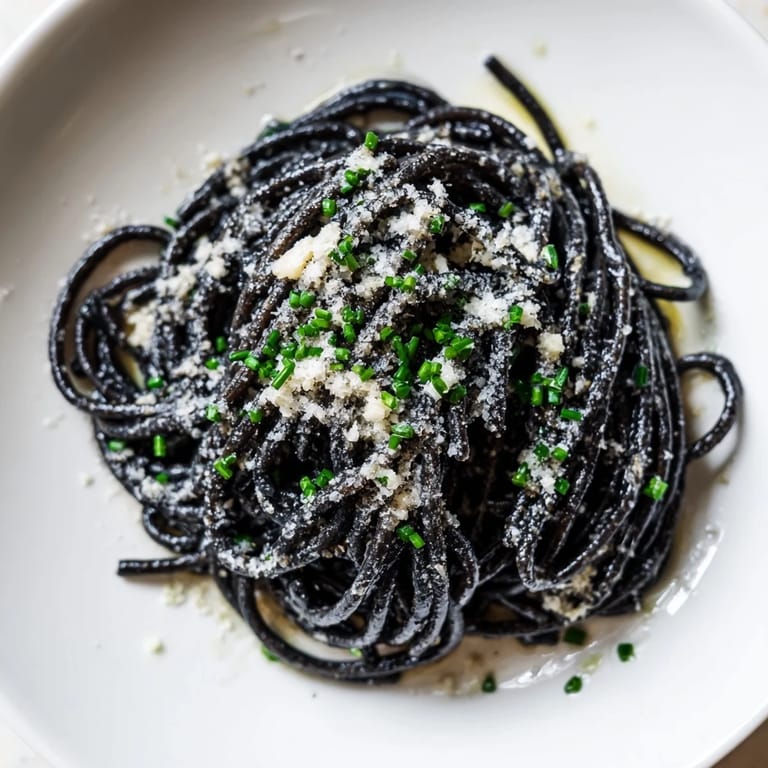
 Squid ink pasta in a cream sauce is the kind of dish that reminds you why you love cooking in the first place—it's simple enough to make on a regular evening but beautiful enough to feel like a celebration. The elegance comes not from complexity but from respecting good ingredients and taking your time.
Common Recipe Questions
- → What type of pasta works best for this dish?
Squid ink pasta, either dried or fresh, is ideal to capture the deep black color and subtle ocean flavor central to the dish.
- → How can I achieve a silky cream sauce consistency?
Simmer the cream gently with butter, shallots, garlic, and white wine until slightly thickened. Adding reserved pasta water helps adjust the sauce to a glossy, velvety texture.
- → Can I substitute ingredients if I don’t have shallots or Parmigiano?
Yellow onions can replace shallots with a slight flavor difference. For cheese, aged Parmesan or Pecorino Romano offers a similar savory punch.
- → Is it possible to add seafood to enhance the dish?
Absolutely. Sautéed shrimp or calamari can be added to the sauce for additional flavor and texture, complementing the squid ink pasta beautifully.
- → What wine pairs well with this creamy squid ink pasta?
A crisp Italian white like Pinot Grigio balances the richness of the cream sauce and complements the oceanic flavors of the pasta.