 Save to Pinterest
 The first time I made spinach pasta, my kitchen smelled like spring water and earth. I'd been watching my grandmother work with pasta dough for years, but something about that vibrant green dough felt like stepping into her world myself. There's a quiet magic in turning simple spinach leaves into something silky enough to roll paper-thin, and I realized that day why she'd always insisted on doing it by hand.
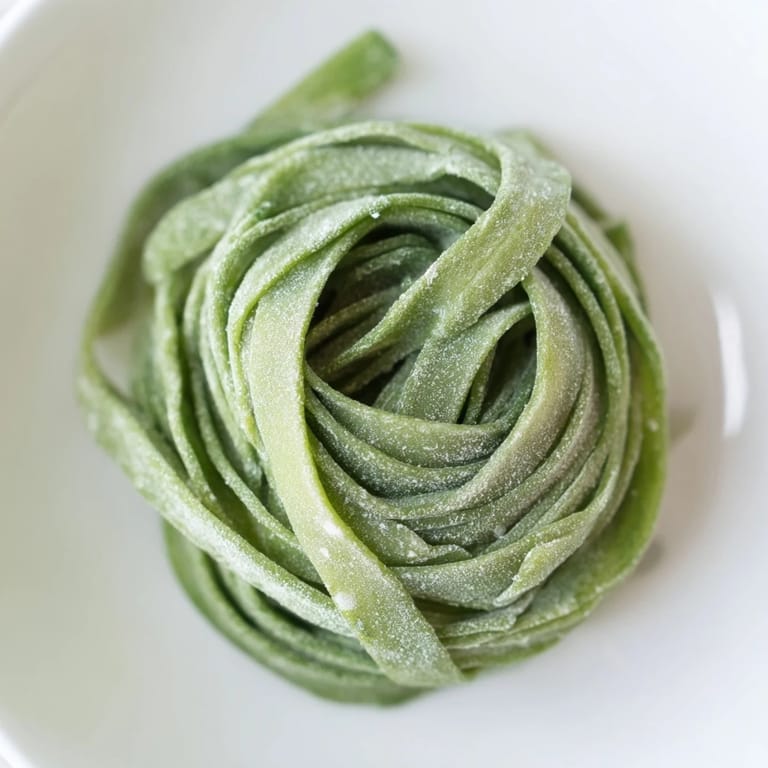
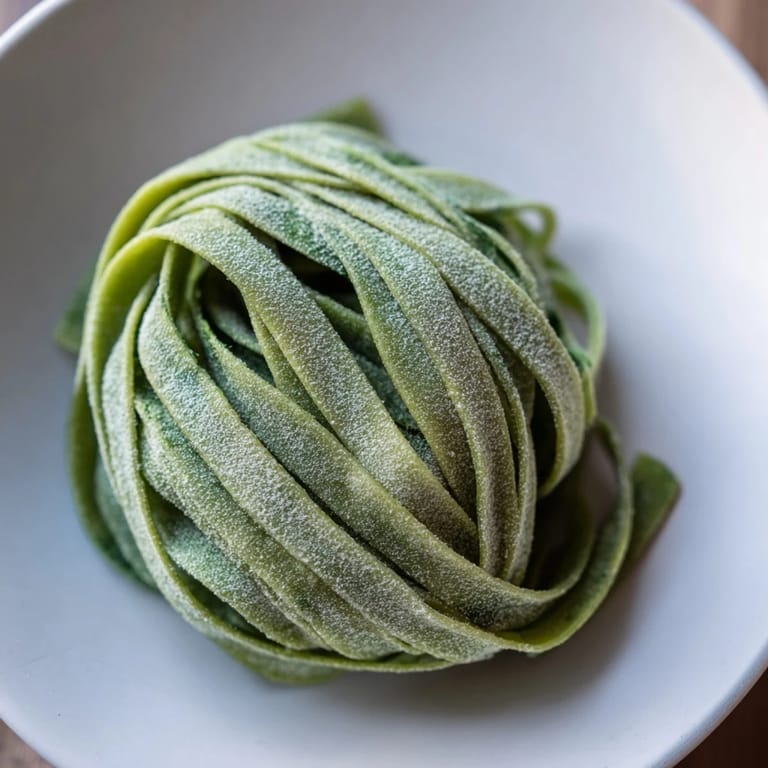
I made this for a dinner party once, and someone asked if I'd bought it from a specialty shop. That question made my whole evening. The green was so vivid against the white plates, and when people tasted it they actually paused, like they were experiencing something unexpected. It became the thing everyone asked me to bring after that.
Ingredients
- Fresh baby spinach: 100 g of tender leaves works better than the tougher mature spinach because it breaks down smoother and won't leave fibrous bits in your dough.
- Large eggs: Two eggs is exactly what 200 grams of flour needs, though you'll feel it in your hands before the math makes sense.
- Italian 00 flour: This isn't fancy, it's functional; the fine powder creates a silkier dough than all-purpose flour ever could.
- Semolina flour: Optional but worth considering if you want extra grip and a bit of texture, especially if you're rolling by hand.
- Fine sea salt: A half teaspoon sounds small until you taste how it wakes up the subtle spinach flavor.
Tired of Takeout? 🥡
Get 10 meals you can make faster than delivery arrives. Seriously.
One email. No spam. Unsubscribe anytime.
Instructions
- Prepare the spinach:
- Drop your spinach into boiling water and count to thirty. It wilts so fast you can barely blink, which is exactly when you want to pull it out. Squeeze it hard over the sink, then squeeze it again because there's always more water hiding in those leaves than you'd think.
- Make it smooth:
- A food processor takes just seconds and gives you the silkiest result, but a sharp knife and patient chopping works too. You're aiming for something that feels almost like a paste.
- Build the well:
- Mound your flour on the counter and use your fingers to create a crater in the middle, like you're cradling something precious. The walls need to be high enough to hold the eggs without breaking, so take a moment to build them right.
- Bring it together:
- Crack your eggs into the well, add the spinach puree, and use a fork to break the yolks. Gently start pulling flour from the inside walls, moving in slow circles until you can't use the fork anymore. Your hands will get a little messy, and that's when you know it's working.
- Knead with purpose:
- Eight to ten minutes of kneading is when the transformation happens; the dough goes from rough to smooth, from sticky to elastic. You'll feel it get easier under your palms, and that's how you know you're done.
- Let it rest:
- Wrap it tight in plastic and leave it alone for half an hour. This isn't about impatience; the gluten is relaxing and the flavors are settling into themselves.
- Roll and shape:
- A pasta machine takes the fear out of it, but a rolling pin and steady hands create something with more character. Either way, work in sections and dust with flour so it doesn't stick.
- Cook briefly:
- Fresh pasta cooks in the time it takes you to stir the pot, usually just a minute or two. Don't walk away from it.
 Save to Pinterest
 There's a moment when you first pull the dough apart after kneading where it feels alive in your hands. That's when I understood why my grandmother loved this work so much. It's not just about the pasta you'll eat; it's about those few minutes where something you made becomes beautiful.
The Spinach Question
Fresh spinach matters here in a way it doesn't in a salad. Frozen spinach will make you cry because it releases water no matter how hard you wring it out, and the dough becomes impossible. I learned this the hard way on a Tuesday afternoon when I thought I was being efficient. Baby spinach is tender and has less water than mature leaves, which makes it almost forgiving to work with. The more you make this dough, the more you develop a feel for exactly how much moisture you can handle, but starting with the best spinach you can find takes one variable off the table.
Flour Choices and Flexibility
Italian 00 flour isn't a rule, it's a preference that becomes obvious once you've felt the difference in your hands. It's milled so finely that it creates a silky dough that rolls thin without breaking, and that matters when you're trying to impress yourself or someone else. Semolina adds a slight grittiness that some people love because it prevents the dough from sticking to your hands and machine, but it also makes the final pasta a touch less delicate. You can substitute whole wheat flour for part of the white flour if you want nuttier flavor and more nutrition, though it will be slightly denser and need a touch more water. The beauty of knowing how to make pasta is learning that the recipe gives you guidelines, but your hands teach you how to adjust.
Beyond the Basic Shapes
Once you have this dough, you own the ability to make whatever shape calls to you that day. Some days I roll it thin for delicate fettuccine, other times I cut thick ribbons for tagliatelle that hold cream sauces like they were meant for each other. Ravioli becomes an excuse to fill the squares with ricotta and mushrooms, while lasagna sheets let you layer and bake something that feeds more people and lasts longer. Tortellini takes patience but looks like tiny gifts you made with your own hands. I've learned that the shape you choose often depends on what sauce you're planning, or sometimes just what mood you're in when the dough is rested and ready.
- Thin sheets work best with light oil or butter sauces that let you taste the spinach.
- Thicker shapes pair beautifully with cream, cheese, or hearty vegetable fillings.
- Cut your shapes as soon as the dough is rolled to prevent drying out.
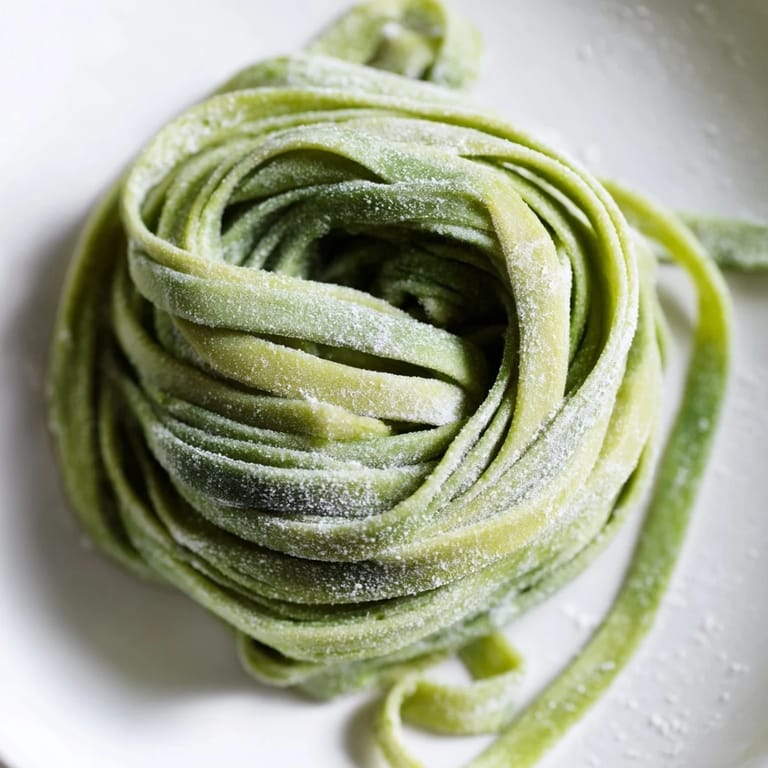 Save to Pinterest
 Every time I make spinach pasta, I'm making something that connects me to the people who taught me that food made by hand is always better than shortcuts. This dough reminds you why that's true.
Common Recipe Questions
- → How does spinach affect the dough?
Spinach adds a natural green color and subtle flavor while contributing moisture and nutrients to the dough.
- → Can I substitute whole wheat flour in this dough?
Yes, replacing part of the 00 flour with whole wheat adds a nuttier taste and more fiber but may affect dough elasticity.
- → Why should the spinach be blanched before adding?
Blanching softens the spinach, reduces bitterness, and helps remove excess moisture, improving dough texture.
- → What is the resting time for this dough?
Allow the dough to rest for 30 minutes wrapped tightly to relax the gluten and improve pliability.
- → How long should I cook the fresh pasta?
Fresh pasta cooks quickly; boil for 1–2 minutes until tender but still firm to the bite, or al dente.