 Save to Pinterest
 I was rearranging my kitchen after a dinner party when I noticed how the late afternoon light cast long shadows across my cutting board, turning ordinary knife work into something almost architectural. That's when the idea struck me—what if I carved cheese the way a sculptor shapes stone, building an edible cityscape? The first time I tried it, my tower of cheddar wobbled comically until I added a few fruit pieces as a foundation. Now whenever I make this skyline, my guests pause mid-conversation to photograph it before eating, which feels like the highest compliment a platter can receive.
Last summer I made this for my niece's architecture student friends, and watching them immediately start identifying which building each cheese slice represented felt like I'd accidentally stumbled onto their secret language. One of them held up a perfectly jagged Gruyère tower and declared it was the Chrysler Building, and the whole table erupted. That's when I realized this platter works because it sits at this wonderful intersection of playful and sophisticated—no one expects art to emerge from a cheese board.
Ingredients
- Sharp cheddar, block (120g): The anchor of your skyline—its deep golden color photographs beautifully and its crumbly texture actually helps when carving detailed edges.
- Gruyère, block (120g): Slightly nutty and firm enough to hold clean cuts; this is the cheese that makes your buildings look intentional rather than haphazard.
- Emmental, block (120g): Those tiny holes add visual texture and a subtle sweetness that balances sharper varieties.
- Havarti, block (120g): Creamy and pale, it provides contrast and cuts like butter when properly chilled.
- Gouda, block (120g): Its caramel undertones add warmth to your composition and it's forgiving if your cuts aren't perfectly clean.
- Seedless grapes, small bunch washed: Use these as your greenery at the base—their spheres suggest trees or parks breaking up the urban landscape.
- Apple, sliced small: Choose one with interesting color variation; slice just before serving to prevent browning.
- Pear, sliced small: Its soft curves soften the geometric cheese shapes and add an element of organic disorder.
- Assorted crackers (12–16, gluten-free optional): Think of these as the streets running between your buildings—they complete the edible city.
- Honey or fig jam (2 tbsp): A small ramekin alongside lets guests choose their own flavor adventure; honey adds shine, fig adds earthiness.
Tired of Takeout? 🥡
Get 10 meals you can make faster than delivery arrives. Seriously.
One email. No spam. Unsubscribe anytime.
Instructions
- Chill your cheese:
- Pop each block in the coldest part of your fridge for 15–20 minutes before you start carving. Cold cheese is forgiving cheese—it won't shatter or crumble unexpectedly, and your knife will glide through like you actually know what you're doing. I learned this the embarrassing way.
- Slice into vertical pieces:
- Using a sharp chef's knife, cut each block into slices roughly 1 cm thick. Think of them as the raw material, not the finished product—straight lines now, curves and angles next. A serrated knife will tear; stick with a smooth, sharp blade.
- Sketch your silhouettes:
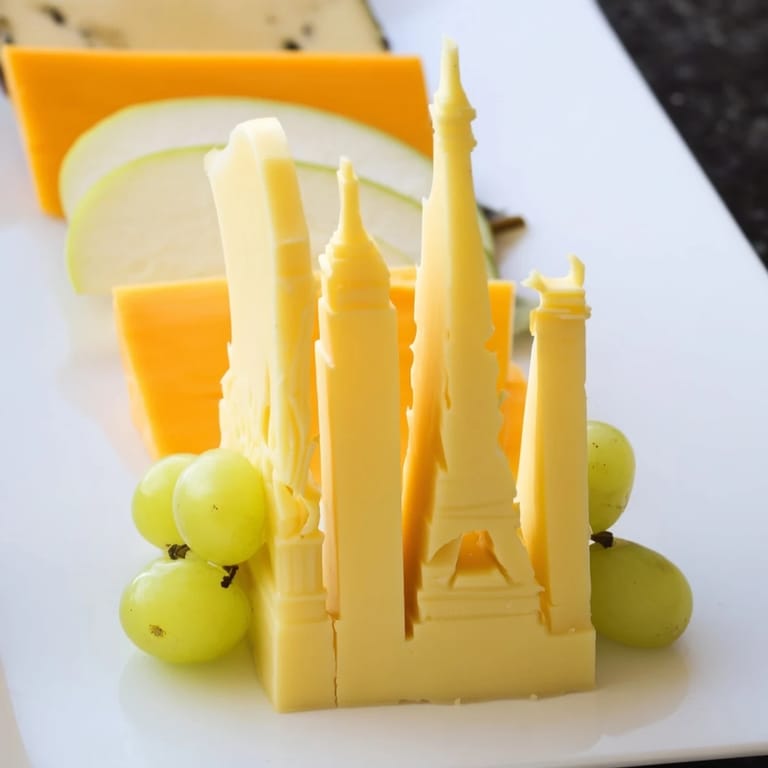
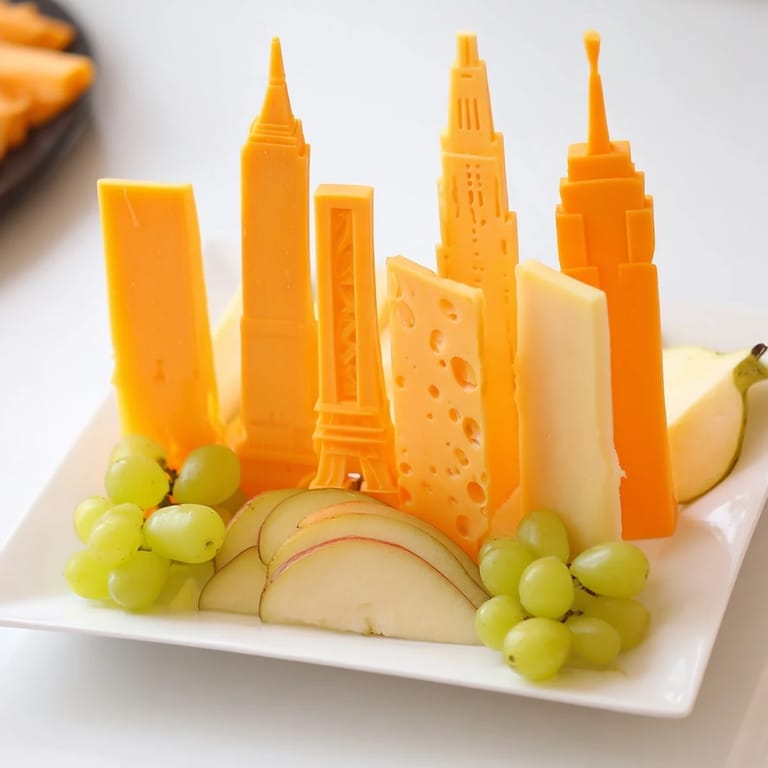
- Before you commit to permanent cuts, either trace a template (I use paper cutouts I've printed, laid against the cheese slice) or freehand with a paring knife using light, tentative scores. Famous landmarks are easier than you'd think—the Eiffel Tower is just triangular, Big Ben is a rectangle with a pyramid on top, the Empire State Building is about vertical lines.
- Carve with intention:
- Use your paring knife for detailed work, making small cuts that define edges and create silhouettes. Don't overthink it; imperfect edges actually look more organic and handmade. Aim for clean profiles against light, not museum-quality precision.
- Arrange your skyline:
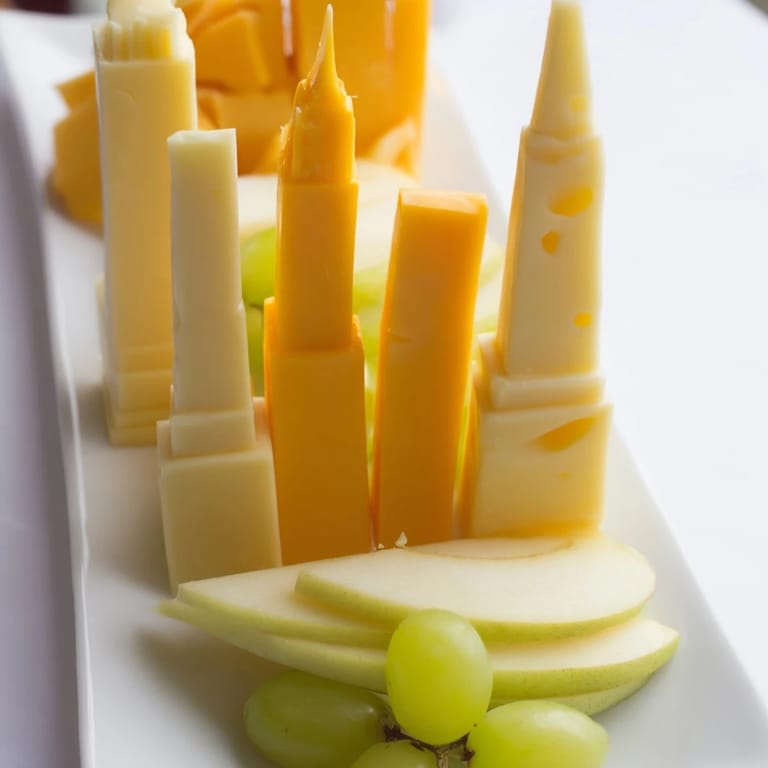
- Stand each cheese piece upright on your platter, arranging them by height and color so no two identical cheeses sit adjacent. It's like a puzzle where there's no wrong answer—just spaces waiting to be filled with visual interest.
- Layer in the landscape:
- Scatter your grapes at the base like little trees and parks, tuck apple and pear slices into gaps, and let them nestle against the cheese buildings. This grounding greenery is what tricks the eye into seeing an actual scene.
- Add your final touch:
- Arrange crackers nearby and place your ramekin of honey or fig jam as a small focal point. Step back, squint at it, and adjust until the composition feels balanced—art happens here, not in the carving.
 Save to Pinterest
 A friend once told me that beautiful food feels like receiving a small gift, even when you're the one who made it. Watching people gather around this edible cityscape and actually sit with it for a moment—not immediately devouring it but really looking—reminded me why I love making things. The cheese eventually disappears, but that pause, that moment of delight before the eating begins, stays with you.
Building Your Skyline—Choosing Your City
The magic of this platter is that it can represent anywhere. I've made it inspired by Paris (obvious Eiffel Tower), New York (Empire State and Chrysler), London (Big Ben and Tower Bridge), and even Tokyo. You can commit to one city's silhouettes or create an imaginary metropolis where architecture styles collide. The beauty is that your guests will read meaning into whatever you carve, so don't stress about perfect accuracy. A tower is a tower, and your guests' imaginations will finish what your knife started.
Color and Contrast—Making It Visually Sing
The five cheeses I've listed give you a natural spectrum from pale Havarti to deep cheddar. When arranging them vertically, alternate colors so no two similar shades stand next to each other—this creates rhythm and prevents your skyline from looking monochromatic. The grapes and fruit aren't just flavor; they're your dark accents against the cheese, the punctuation marks that guide the eye. White platter, dark grapes, golden cheese, pale fruit—this combination has never failed me.
Timing, Storage, and Serving Wisdom
You can carve and assemble this entirely 2–3 hours before your gathering, cover it loosely with plastic wrap, and refrigerate. The cheese stays firm and fresh, the fruit stays crisp, and you avoid last-minute scrambling. Remove it from the fridge about 10 minutes before serving so the cheese has just enough time to soften and bloom with flavor without becoming greasy or droopy. Serve with a crisp white wine—Sauvignon Blanc's acidity cuts beautifully through the richness of multiple cheeses in one bite.
- If any cheese slice tips over during assembly, a small grape wedged underneath acts as an invisible support system.
- Slice your apple and pear right before serving, and toss them briefly with lemon juice to prevent browning.
- Make this the centerpiece of your table, not a side dish—it deserves to be seen and admired before it disappears.
 Save to Pinterest
 This platter has become my favorite way to blur the line between cooking and creating something that exists in that beautiful moment before eating, when food is still art. Every time someone carves out their own piece of edible architecture and tastes it, I get to watch that tiny thrill of realizing that thoughtfulness and creativity can live in the simplest acts of food preparation.
Common Recipe Questions
- → What cheeses work best for shaping silhouettes?
Medium-firm cheeses like sharp cheddar, Gruyère, Emmental, Havarti, and Gouda hold shape well when sliced vertically and are easy to carve into building outlines.
- → How can I make clean cuts for detailed shapes?
Chill the cheese blocks for 15–20 minutes before cutting, and use a sharp paring knife or small cookie cutters to achieve precision.
- → What fruits pair well with this platter?
Seedless grapes, apple, and pear slices add fresh sweetness and color that complement the savory cheeses and create visual contrast.
- → Are gluten-free crackers suitable for this display?
Yes, gluten-free crackers can be used without affecting the texture or presentation, catering to dietary preferences.
- → How should I arrange the platter for best effect?
Place the cheese silhouettes upright in a skyline arrangement, with fruit slices and grapes at the base to mimic greenery and add color.
- → Can this platter be prepared ahead of time?
Slicing and shaping the cheese blocks can be done up to a few hours before serving; keep refrigerated until arranged on the platter.