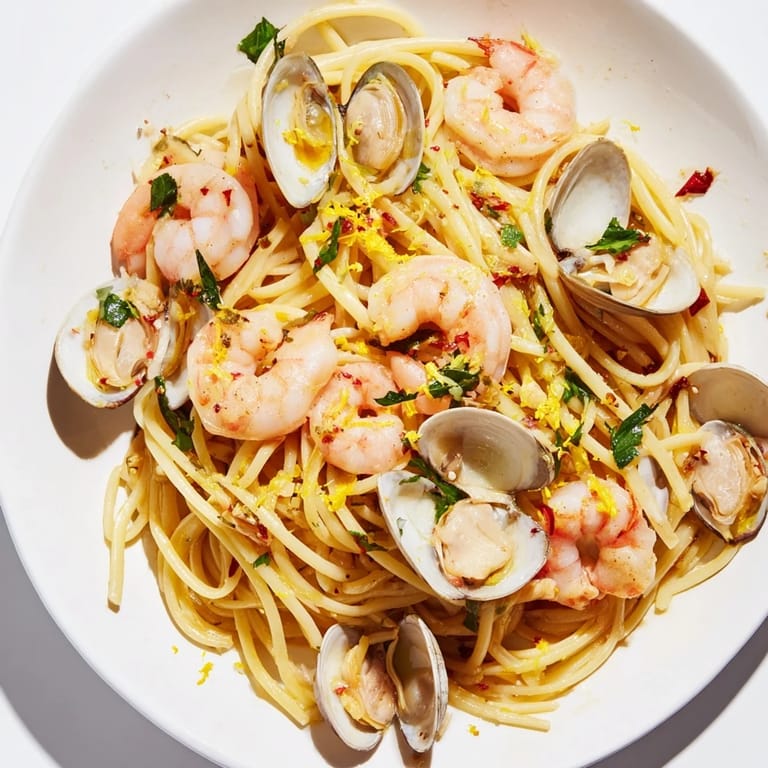
 Save to Pinterest
 The first time I truly understood Italian cooking, I was standing in a small kitchen in Rome, watching a woman named Lucia make this dish with such casual grace that it seemed like she was barely trying. She pulled out a handful of shrimp and some clams from a paper bag, heated olive oil until it whispered in the pan, and suddenly the whole room smelled like garlic and the sea. That moment taught me that aglio e olio isn't about fancy technique—it's about respecting each ingredient enough to let it shine.
I made this for my sister the night she got her new job, and she took one bite, closed her eyes, and didn't say anything for a full minute. When she opened them, she just smiled and asked for more. That's when I realized this pasta isn't really about the ingredients—it's about those quiet moments when food becomes a way of saying things words can't quite capture.
Ingredients
- Large shrimp (250 g): Buy them fresh if you can, and peel them yourself right before cooking—the texture will be noticeably better than pre-peeled frozen ones.
- Fresh clams (500 g): Get them from a reliable fishmonger and ask them to scrub them for you if you're nervous about it, then rinse them at home just before use.
- Spaghetti (400 g): Don't skimp on pasta quality; dried Italian pasta has better texture and will hold the sauce beautifully.
- Extra virgin olive oil (6 tbsp): This is your sauce, so use the best bottle you have—one you'd actually want to drizzle on bread.
- Garlic cloves (5), thinly sliced: Sliced garlic cooks faster and infuses more evenly than minced, and you'll avoid that bitter burned taste.
- Red chili flakes (1/2–1 tsp): Start with less than you think you need; you can always add more heat, but you can't take it out.
- Dry white wine (1/2 cup): Use something you'd drink yourself—it makes a real difference in the final flavor.
- Lemon (1): Fresh lemon juice brings everything into focus right at the end, so squeeze it just before serving.
- Fresh flat-leaf parsley (1/4 cup): The green color and fresh herbaceousness matter more than you'd think for balance.
- Salt and freshly ground black pepper: Taste as you go; seafood is delicate and wants gentle seasoning.
Tired of Takeout? 🥡
Get 10 meals you can make faster than delivery arrives. Seriously.
One email. No spam. Unsubscribe anytime.
Instructions
- Get your pasta water ready:
- Fill a large pot with salted water and bring it to a rolling boil—this is your safety net for the sauce later. Once the spaghetti goes in, set a timer and taste it a minute or two before the package says it's done.
- Create your golden garlic oil:
- Pour olive oil into a large skillet over medium heat, then add your sliced garlic and chili flakes. You want the kitchen to smell incredible without the garlic turning brown—that bitter edge will haunt you. When it's just golden and fragrant, you're there.
- Cook the shrimp gently:
- Slide the shrimp into the garlic oil and let them sit for about a minute on each side until they turn pink. They'll keep cooking later, so don't overdo it now.
- Let the clams open:
- Pour in the white wine, add your clams, cover the skillet, and let them steam for three to five minutes while you shake the pan occasionally. When they crack open, they're ready; if any stay stubbornly shut, toss them.
- Bring it all together:
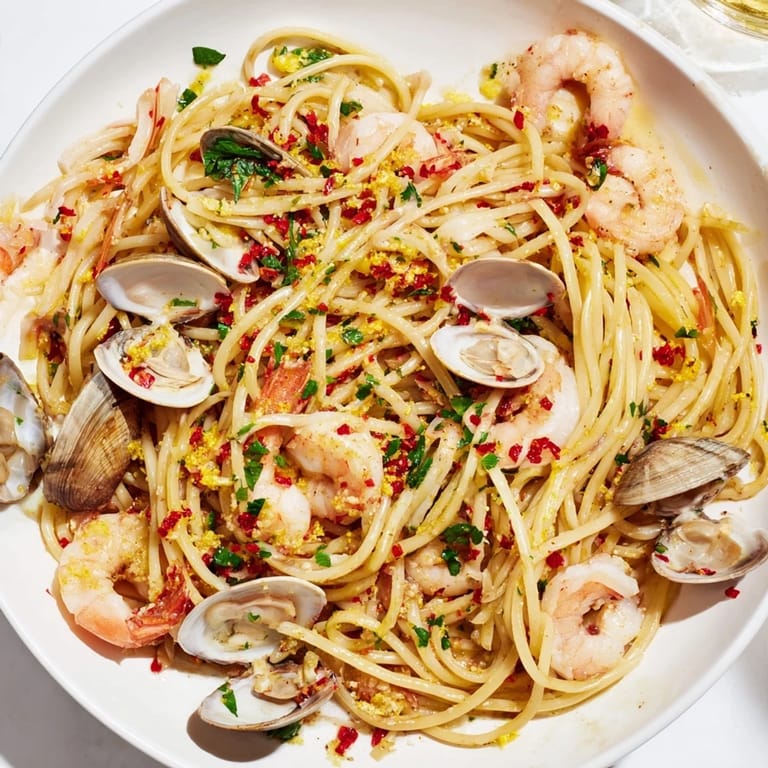
- Return the shrimp to the skillet, add your drained pasta, lemon zest, and lemon juice, then toss everything while adding pasta water a little at a time. You're looking for that silky coating that clings to the spaghetti, not a broth.
- Taste and serve:
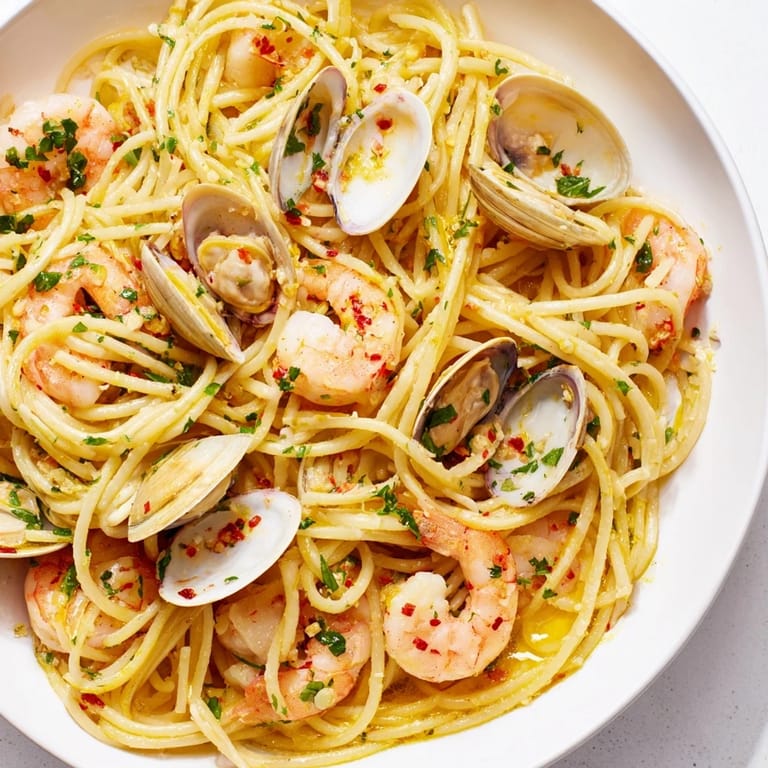
- Season with salt and pepper, sprinkle with fresh parsley, and plate it immediately while everything is still warm and the clams are still tender.
 Save to Pinterest
 There's a moment in this recipe, right when you toss the hot pasta with the garlicky oil and the seafood, when steam rises and everything comes together, and you realize you just made something as good as what you'd pay a lot of money for in a restaurant. That quiet pride is worth the effort.
Choosing Your Seafood
The quality of your shrimp and clams is everything here, since they're the stars and there's nowhere to hide. Visit a fishmonger if you have one nearby—they can tell you exactly when the seafood came in and will clean it properly. If you're using frozen shrimp, thaw them gently in cold water the night before, and taste a tiny piece of clam broth before serving to make sure the salinity is right.
Pasta Water as Liquid Gold
That half cup of starchy pasta water you reserve is your secret weapon, transforming a drizzle of oil and shrimp into a proper sauce that clings to every strand. I learned this the hard way by not reserving it once and having to use more wine, which threw off the whole balance. Now I always cup my hands under the colander and make sure I catch some of that milky water before it goes down the drain.
Variations and Pairings
Once you understand how this dish works, you can play with it a little—swap in mussels for a different briny flavor, add a handful of calamari for texture, or use linguine instead of spaghetti if that's what you have. A crisp Pinot Grigio or Vermentino on the side will echo all those bright, mineral notes in the pasta.
- If you can't find fresh clams, frozen ones work in a pinch, but thaw them gently first.
- For a milder version, use just a pinch of chili flakes or skip them entirely and let the garlic take the lead.
- Leftovers can be gently reheated with a splash of white wine, though it's best enjoyed fresh.
 Save to Pinterest
 This dish has a way of turning an ordinary weeknight into something worth remembering. Make it when you want to feel a little closer to the sea and a little more Italian.
Common Recipe Questions
- → What type of seafood works best for this dish?
Fresh shrimp and clams are ideal, but mussels or calamari can be added for variety. Make sure all shellfish are cleaned properly.
- → How do you ensure the pasta is perfectly cooked?
Cook spaghetti in salted boiling water until al dente, just tender but still firm to the bite, usually following package instructions.
- → Can I adjust the spiciness level?
Yes, the amount of red chili flakes can be increased or decreased according to taste preferences to control heat.
- → What role does the reserved pasta water play?
Adding reserved pasta water helps create a silky sauce that binds the olive oil, seafood juices, and seasonings to the pasta.
- → Is white wine essential in this preparation?
White wine adds acidity and flavor depth, but it can be omitted or substituted with a light broth if preferred.