 Save to Pinterest
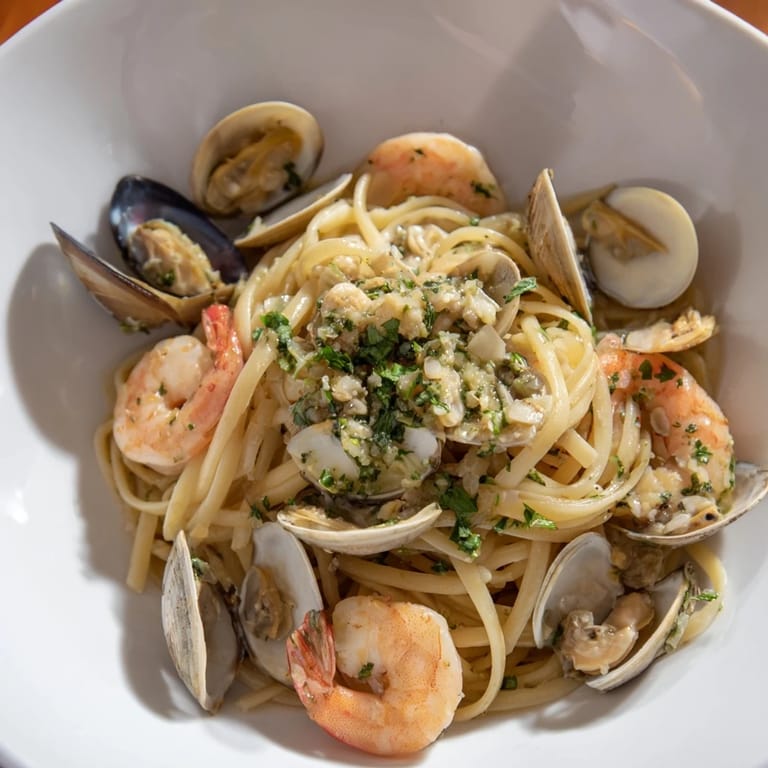
 The first time I made seafood linguine properly, I was cooking for someone who claimed they didn't like seafood. Twenty minutes later, watching them twirl pasta laden with briny clams and tender shrimp, I realized the magic wasn't in hiding the ocean flavors but in letting them sing. That night taught me that the best dishes don't apologize for what they are, and this one—with its fragrant garlic-white wine sauce—doesn't need to.
I made this for my neighbor once when he was going through something difficult, and he showed up at my door the next morning with flowers and a sheepish smile. He said it was the first meal in weeks that made him feel like things might actually get better. I didn't say much, just that garlic and good seafood have a way of healing more than just hunger.
Ingredients
- Large shrimp: Buy them still in their shells if you can—they stay more tender, and you can make stock from the shells another day.
- Fresh clams and mussels: These need to be alive when you cook them; give them a gentle tap test and discard any that don't close.
- Dried linguine: Don't reach for the fresh pasta here; dried linguine has enough texture to hold the sauce without getting gummy.
- Extra virgin olive oil: This is your base, so use something you actually like tasting on its own.
- Garlic and shallot: Slice the garlic thin so it cooks evenly and seasons the oil without burning.
- Dry white wine: Something you'd drink yourself—the cheaper stuff often tastes thin and one-note once cooked down.
- Fish or chicken stock: This steadies the sauce and lets the seafood be the star, not the supporting player.
- Lemon zest and juice: The zest gives brightness without wateriness; add juice at the very end so it stays alive on your tongue.
- Fresh parsley: A handful scattered on top makes it look like you knew what you were doing all along.
Tired of Takeout? 🥡
Get 10 meals you can make faster than delivery arrives. Seriously.
One email. No spam. Unsubscribe anytime.
Instructions
- Start your pasta water:
- Bring a large pot of salted water to a boil—it should taste almost like the sea. Add linguine and cook until just shy of tender; you'll finish it in the sauce, so don't let it get too soft.
- Build your flavor base:
- Warm olive oil in a deep skillet and let the garlic and shallot soften slowly until the kitchen smells like a Italian coastal town. This 2-minute step is everything.
- Quick sear the shrimp:
- Bump the heat up and get the shrimp in for just a minute per side until they blush pink—they'll finish cooking in the sauce, so don't let them get tough.
- Open the shells:
- Add the clams and mussels with white wine and cover the skillet; listen for the gentle pop-pop-pop of shells opening. This takes 3–4 minutes, and any that stay stubborn should be tossed.
- Bring it all together:
- Pour in stock and return the shrimp, then add your drained linguine along with reserved pasta water. Toss everything gently over low heat, watching as the starches in the water create a silky sauce that clings to every strand.
- Finish with brightness:
- Stir in butter, lemon zest, and juice, letting the heat carry those flavors through. Taste and season—salt blooms differently once everything's combined.
 Save to Pinterest
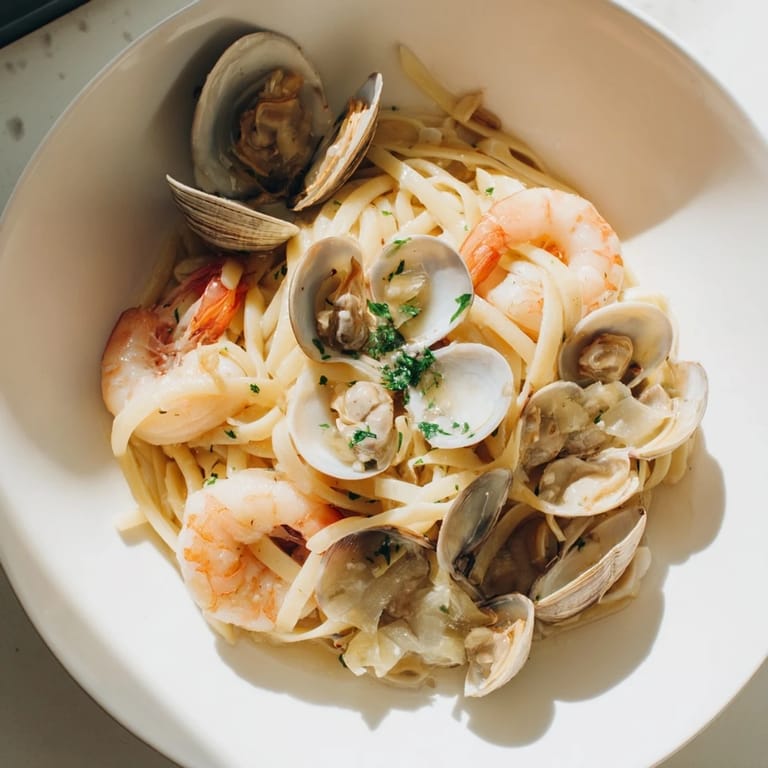
 There's a moment right before you serve this dish when you're standing in your kitchen with steam rising from the pan and the smell of garlic, white wine, and the ocean all mixed together, and you think, this is why I learned to cook. That's what this dish does—it transforms an ordinary evening into something you'll remember.
Choosing Your Seafood
Not all seafood behaves the same in a pan, and learning their personalities changes everything. Shrimp love a quick sear and can bounce back from being slightly overcooked; clams and mussels, on the other hand, are naturally briny and need less salt in the sauce or things get overwhelming. If your fishmonger lets you, ask them to show you how to tap-test for freshness—a live clam closes instantly, while a dead one just sits there, which is a very different dinner.
Wine and Stock Matter
I've made this with bottom-shelf wine once and swore I'd never again; the sauce tasted thin and slightly sour no matter what I did. Good wine doesn't need to be expensive, but it needs to be something that tastes good on its own. The same goes for stock—a homemade or quality store-bought version creates a sauce that tastes like you simmered it all day, while weak stock makes you scramble with butter and lemon to fix it.
Timing and Temperature
Medium-high heat is your friend when you want to develop flavor in the garlic and shallot, but it's also your enemy if you lose focus for thirty seconds. Once everything is in the pan together, drop back to low heat and let it come together gently; rough boiling can toughen the seafood and break the sauce. The beauty of this dish is that it moves fast, so having everything prepped and within arm's reach means the difference between a polished dinner and a frantic one.
- Prep your seafood before you start cooking—peeling shrimp while everything else is sizzling is a recipe for burnt garlic.
- Keep that pasta water close; you might need a splash more to loosen the sauce at the last second.
- Serve immediately on warm bowls so the pasta doesn't cool before it reaches the table.
 Save to Pinterest
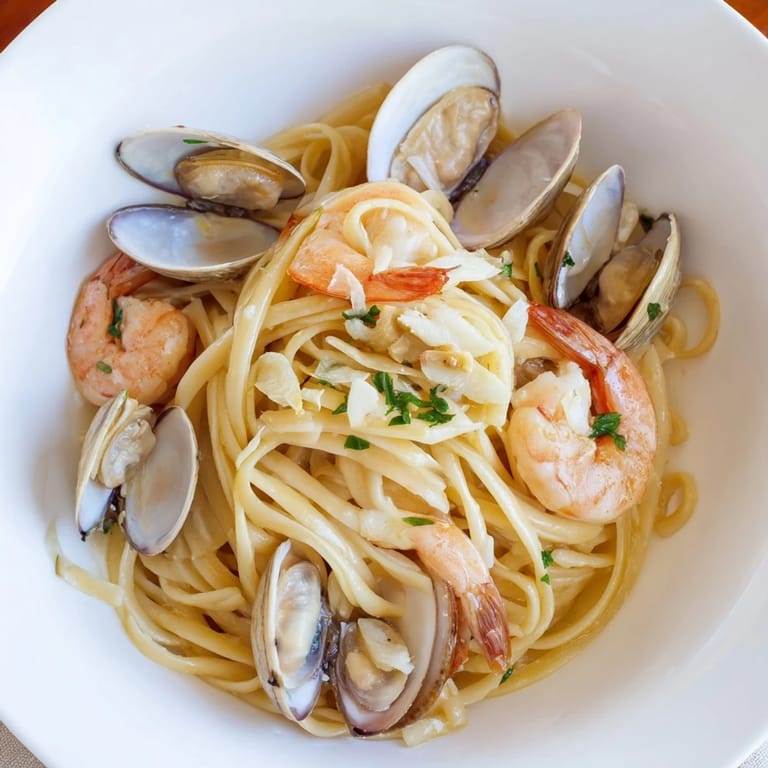
 This dish reminds me that cooking doesn't always have to be complicated to feel meaningful. Serve it with cold white wine and good company, and you've got something that tastes like love tastes.
Common Recipe Questions
- → How do I know when the clams and mussels are cooked?
When the shells open wide after steaming in the white wine sauce, the clams and mussels are ready. Discard any that remain closed.
- → Can I substitute other seafood for shrimp?
Yes, calamari or scallops both make excellent alternatives and complement the flavors of the garlic and lemon sauce.
- → What pasta is best for this dish?
Linguine is ideal as its flat, thin shape holds the sauce well, providing a balanced texture alongside the seafood.
- → How can I enhance the sauce's richness?
Adding a splash of cream towards the end enriches the sauce, creating a smoother and silkier texture.
- → What wine pairs well when serving this dish?
A crisp Italian Pinot Grigio or Vermentino pairs beautifully, complementing the seafood and lemon notes.