 Save to Pinterest
 I still hear the sound of the cleaver on the butcher's block the first time I watched my uncle prepare haggis in his farmhouse kitchen outside Glasgow. The smell was intense, earthy, almost wild, and I wasn't sure I'd have the stomach for it. But when he served it that evening with a dram of whisky and a glint in his eye, I understood why this dish has survived centuries. It's bold, unapologetic, and deeply tied to the land.
The first time I made haggis on my own, I was nervous about the offal and the casing, worried I'd botch the whole thing. My friend sat at the table with a doubtful expression, arms crossed, until I sliced it open and the steam carried that peppery, nutmeg-laced aroma across the room. By the second bite, he was asking for the recipe. That night taught me that haggis isn't just food, it's a conversation starter.
Ingredients
- Sheeps heart, liver, and lungs: The soul of haggis, these give it that deep, mineral richness, though lamb or liver mince works if you can't source the traditional cuts.
- Beef or lamb suet: This adds moisture and holds everything together during the long simmer, don't skip it or the texture suffers.
- Steel-cut oats: Toasting them first brings out a nutty sweetness that balances the richness of the meat.
- Onions: Finely chopped and mixed raw, they mellow into a savory backbone as the haggis cooks.
- Beef stock: Keeps the filling moist and helps the flavors meld, you can use the cooking liquid from the offal for even more depth.
- Spices (pepper, coriander, nutmeg, allspice, salt): This blend is what makes haggis warm and aromatic, not just meaty.
- Sheeps stomach or casing: Traditional and dramatic, but a pudding basin wrapped in foil works just as well if you're not ready for the full experience.
- Potatoes and turnips: Creamy tatties and sweet, buttery neeps are the perfect foil to the spiced, savory haggis.
Tired of Takeout? 🥡
Get 10 meals you can make faster than delivery arrives. Seriously.
One email. No spam. Unsubscribe anytime.
Instructions
- Prepare the Offal:
- Rinse the heart, liver, and lungs under cold water, then simmer them gently for 1 to 2 hours until they're tender and easy to mince. The smell is strong, but it softens as it cooks.
- Toast the Oats:
- Spread the steel-cut oats on a dry skillet and toast until golden and fragrant. This small step makes a noticeable difference in flavor.
- Mix the Filling:
- Combine the minced offal, suet, toasted oats, chopped onions, and any optional mince in a large bowl. Pour in the stock and seasonings, mixing until everything is evenly moist.
- Fill the Casing:
- If using a stomach or casing, rinse it well and loosely pack the mixture inside, leaving room for expansion. Tie the ends securely with twine.
- Simmer the Haggis:
- Lower the filled casing into a pot of gently boiling water, making sure the water doesn't cover the top. Simmer for 2 hours, checking the water level so it doesn't run dry.
- Prepare Neeps and Tatties:
- Boil the potatoes and turnips separately until fork-tender, then mash each with butter, salt, and pepper. Keep them warm until serving.
- Serve:
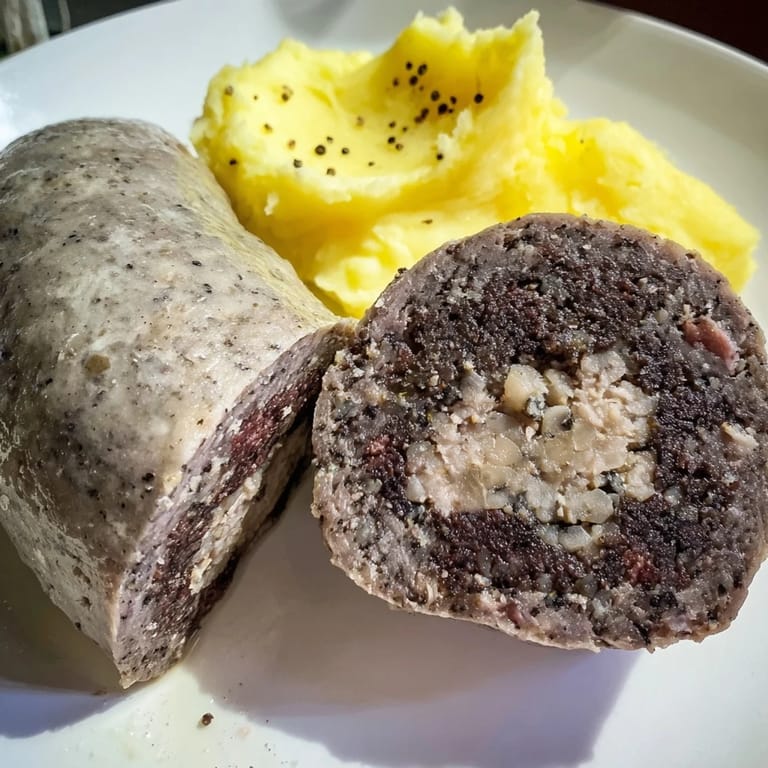
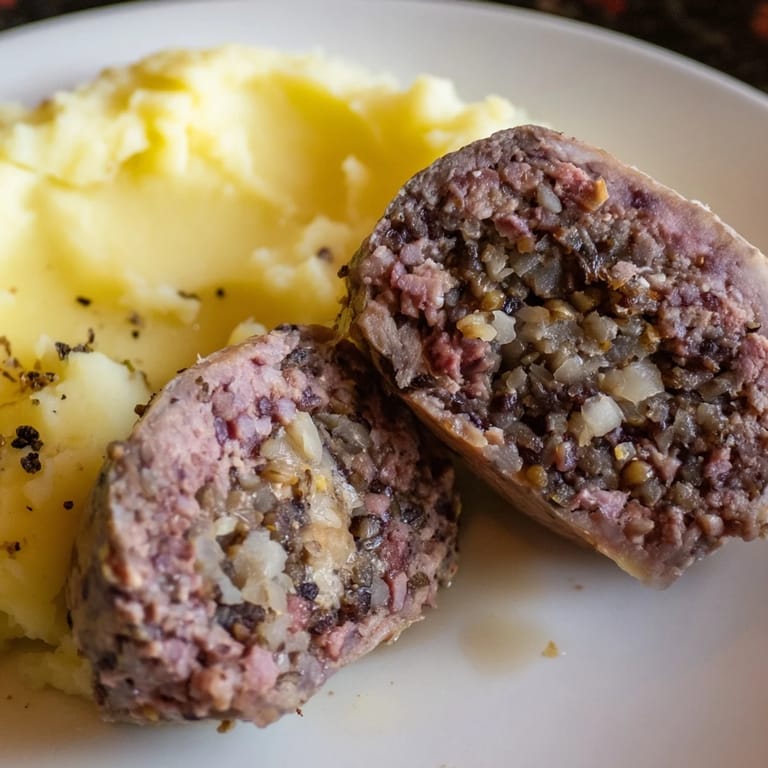
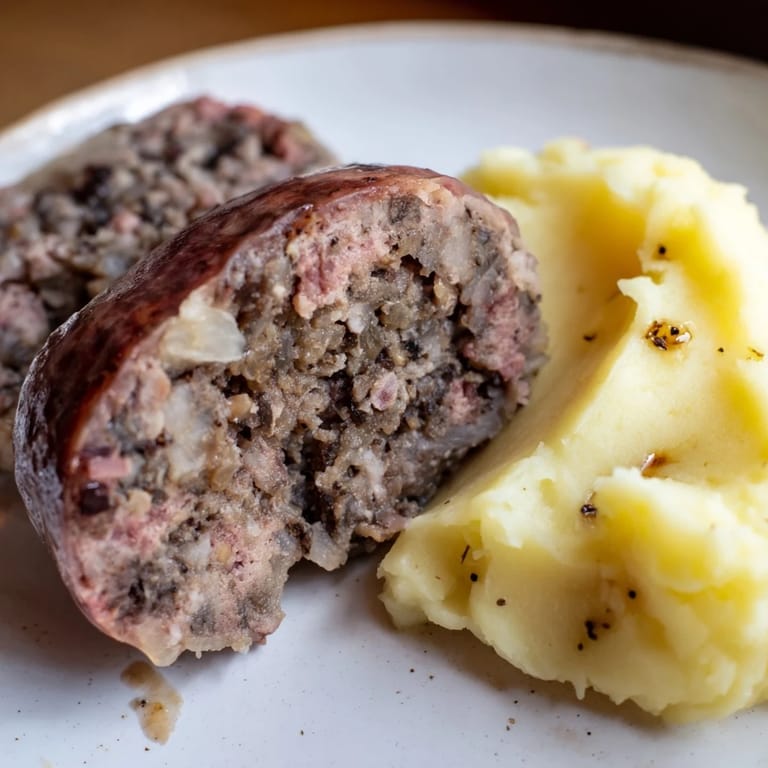
- Carefully lift the haggis from the pot, let it rest for a few minutes, then slice it open. The steam that escapes is half the ceremony.
 Save to Pinterest
 One cold January evening, I served haggis to a table of friends who'd never tried it, and we toasted with whisky before the first bite. The room went quiet for a moment, then someone laughed and said it tasted like Scotland itself. That's when I realized haggis isn't just a recipe, it's a ritual, a story told in spice and steam.
Serving Suggestions
Haggis shines alongside creamy mashed neeps and tatties, but I've also loved it with a whisky cream sauce drizzled over the top, rich and slightly sweet. Some folks like it with oatcakes and a sharp cheddar, turning it into a hearty platter. A dram of single malt on the side is traditional, and honestly, it just feels right.
Storage and Reheating
Leftover haggis keeps well in the fridge for up to three days, wrapped tightly in foil or stored in an airtight container. I've reheated slices in a hot skillet with a little butter, crisping the edges, and it's almost better the next day. You can also freeze it for up to two months, just thaw overnight before gently reheating in a covered dish.
Common Questions and Tips
If you can't find offal, a mix of beef and lamb mince gives you a similar texture, though the flavor will be milder. I've made it both ways, and while the traditional version has more character, the mince version is still delicious and less intimidating for first-timers. Don't be afraid to adjust the spices to your taste, I once added a pinch of cayenne and it gave the whole dish a gentle warmth.
- Always rinse the casing thoroughly, any residue will affect the taste.
- Use a meat thermometer if you're unsure, the center should reach at least 75°C.
- If the mixture feels too dry, add a splash more stock, it should hold together but not be soupy.
 Save to Pinterest
 Haggis might seem daunting, but it's one of those dishes that rewards courage with unforgettable flavor. Make it once, and you'll understand why it's been celebrated for generations.
Common Recipe Questions
- → What meats are used in traditional haggis?
Traditional haggis uses sheep's heart, liver, and lungs, or substitutes like lamb or liver mince for texture.
- → How is the mixture held together during cooking?
Toasted steel-cut oats and suet act as binders, absorbing flavors and moisture while holding the mixture firmly.
- → Can I cook haggis without a sheep's stomach casing?
Yes, an oven-proof pudding basin covered tightly with foil can be used as an alternative casing.
- → What accompaniments pair well with this dish?
Mashed turnips (neeps) and potatoes (tatties) are traditional sides, often enhanced with butter and seasoning.
- → Is there a milder variation available?
Replacing offal with beef and lamb mince yields a milder flavor while maintaining richness.