 Save to Pinterest
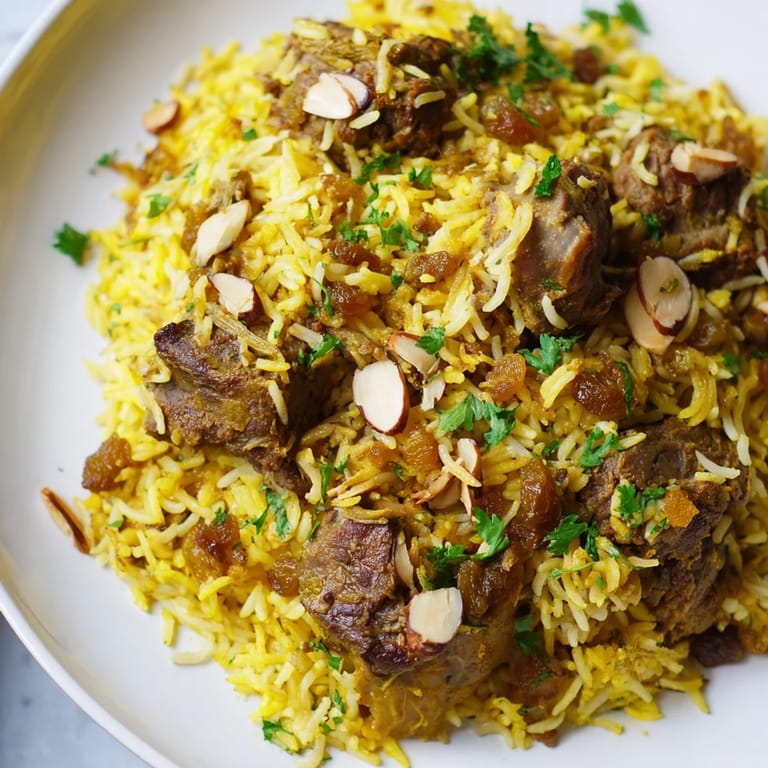
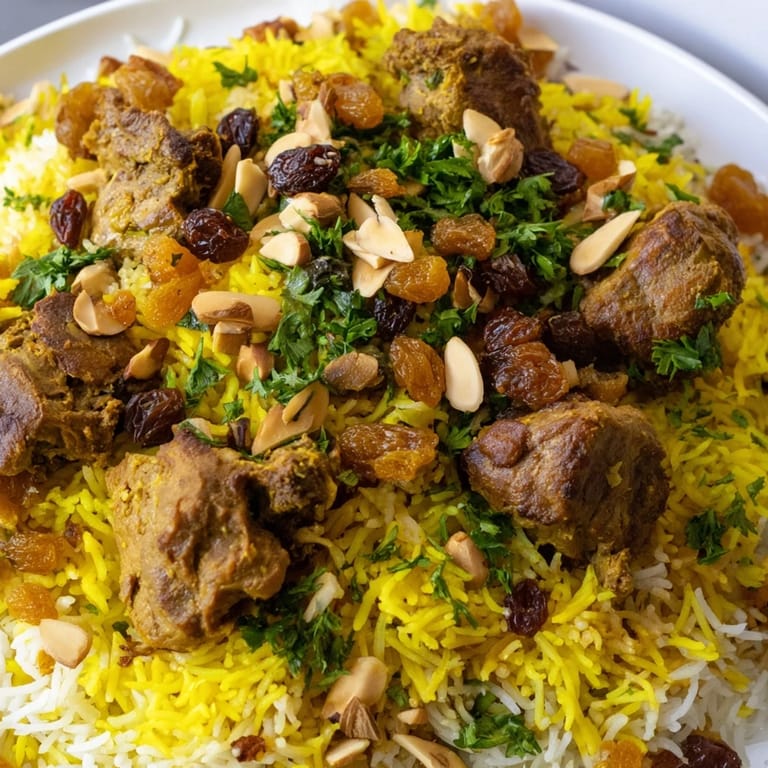
 My first encounter with kabsa happened at a family gathering where the aroma alone made everyone stop mid-conversation. The rice arrived at the table as a golden mountain, studded with almonds and raisins, and I watched how it brought people together in that quiet, hungry way that only truly special food can. Since then, I've learned that kabsa isn't just about following steps—it's about understanding how spices bloom, how meat becomes tender, and how fragrance becomes memory in a single pot.
I made this for my sister's surprise dinner, and her eyes lit up the moment she smelled what was happening in the kitchen. The whole house smelled like celebration—cinnamon and cardamom mixing with something savory and deep—and by the time we sat down, everyone understood why this dish shows up at every important meal in Saudi kitchens.
Ingredients
- Bone-in lamb or chicken pieces (1 kg): The bones release collagen and flavor that seasoning alone can't achieve, creating a broth that tastes like it's been simmering for days.
- Vegetable oil (1 tbsp): Just enough to get your onions golden and your meat caramelized without drowning everything.
- Large onion, finely sliced: This becomes the foundation—sweet, soft, and almost melted into the background by the time your spices join the party.
- Garlic, minced (3 cloves): Added after the onion so it doesn't burn, giving you a mellow garlic presence rather than a harsh bite.
- Ground cumin (2 tsp): The hero spice that makes kabsa taste like kabsa—warm, slightly nutty, unmistakably Middle Eastern.
- Ground coriander (2 tsp): Adds brightness without sharpness, balancing the heavier spices beautifully.
- Ground cinnamon (1½ tsp): This is what people taste first and ask about last—sweetness that makes sense in a savory dish.
- Ground black pepper (1½ tsp): More than a pinch, less than you'd expect, creating a gentle heat that builds.
- Ground turmeric (1 tsp): A whisper of earthiness and that golden color everyone expects.
- Ground cardamom (1 tsp): If you've never used this before, you're about to understand why it's worth seeking out.
- Ground cloves (½ tsp): Measured carefully—this one has opinions, and too much takes over everything.
- Ground allspice (½ tsp): The quiet glue holding all these flavors together in harmony.
- Dried bay leaves (2): These steep in the broth like tea, adding a subtle herbal layer beneath everything else.
- Dried black lime, pierced (1, optional): This is the secret weapon—it adds a floral, slightly sour complexity that makes people ask what the ingredient is.
- Medium tomatoes, chopped (2): They break down into the broth, adding body and a gentle acidity that keeps the dish from feeling one-note.
- Medium carrot, grated (1): The sweetness here is intentional, balancing the spices and adding subtle texture.
- Basmati rice, rinsed and soaked (3 cups): Rinsing removes starch so each grain stays separate; soaking means even cooking from edge to center.
- Chicken or lamb stock (5 cups): Homemade is magnificent, but good quality store-bought works—this is where much of your flavor lives.
- Golden raisins (½ cup): They plump up in the heat, adding pockets of sweetness that surprise and delight.
- Slivered almonds, toasted (½ cup): Toast them yourself just before serving so they stay crisp and bring a textural contrast nothing else can provide.
- Fresh parsley, chopped (¼ cup, optional): A last-minute green note that makes the dish look alive and adds a fresh exhale at the end.
- Salt, to taste: Added at the right moment, it doesn't just season—it deepens every other flavor.
Tired of Takeout? 🥡
Get 10 meals you can make faster than delivery arrives. Seriously.
One email. No spam. Unsubscribe anytime.
Instructions
- Start with golden onions:
- Heat your oil over medium-high heat until it shimmers slightly, then add your sliced onion. You're looking for deep golden color, which takes about 5-7 minutes and means the onion is caramelizing, not just softening. This step is where your foundation flavor gets built.
- Build the aromatics:
- Once your onion is golden, add minced garlic and cook for just a minute—you want it fragrant but not brown, or it turns bitter. This fast timing matters more than you'd think.
- Brown the meat properly:
- Add your meat pieces in a single layer if you can, let them sit for a couple minutes before stirring, and don't crowd the pot. This develops a crust that tastes like something special, and it takes about 8 minutes total.
- Welcome the spices:
- Pour in all your spices along with bay leaves and black lime. You'll feel the kitchen shift—suddenly it smells like celebration. Stir constantly for 1-2 minutes so the spices wake up and bloom into the oil rather than clumping.
- Add brightness:
- Stir in your chopped tomatoes and grated carrot, then cook for 4-5 minutes, stirring occasionally. You're creating a flavorful base that the rice will absorb later.
- Simmer the meat tender:
- Pour in your stock and bring everything to a boil, then lower the heat to low, cover, and let it simmer. For chicken, 35-40 minutes is enough; for lamb, give it the full 60 minutes until the meat pulls apart easily.
- Prepare for the rice:
- Remove the cooked meat with tongs or a slotted spoon and set it aside somewhere warm. Taste your broth at this point—this is your last chance to adjust salt before the rice goes in.
- Combine rice and broth:
- Stir in your drained rice and salt directly into the simmering broth, then nestle your meat pieces back on top. The rice will sink and rise as it cooks, which is exactly what you want.
- Add the sweet finish:
- Scatter your raisins across the surface, then cover the pot. Lower the heat to low and let it cook undisturbed for 25-30 minutes until the liquid is absorbed and the rice is fluffy.
- Rest and fluff:
- Remove from heat and let it sit covered for a few minutes, then discard your bay leaves and black lime carefully. Use a fork to gently fluff the rice, separating the grains without mashing them.
- Finish like you mean it:
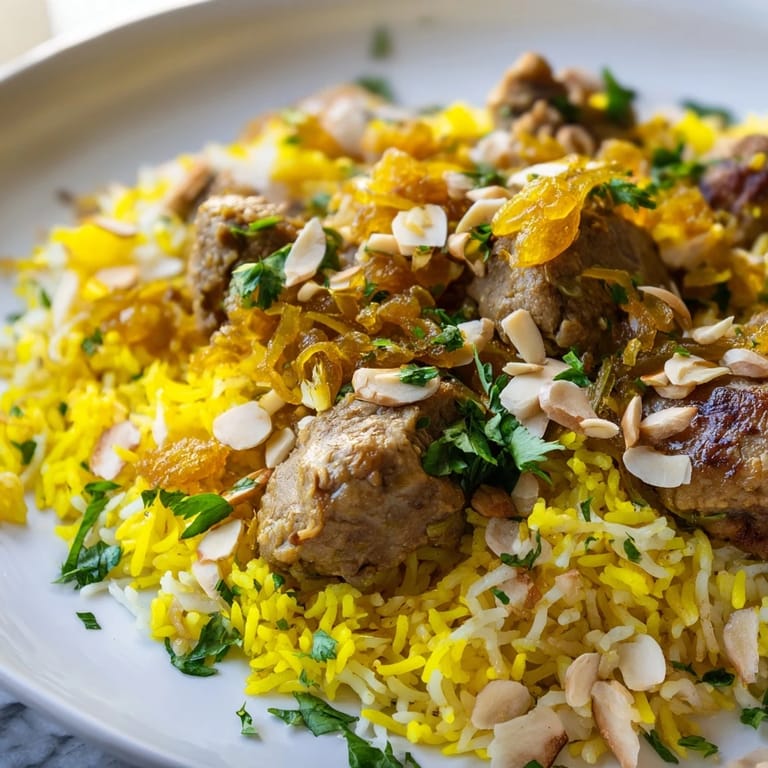
- Transfer everything to a serving platter, then crown it with your toasted almonds and fresh parsley. The presentation matters because people eat with their eyes first.
 Save to Pinterest
 I remember my grandmother placing her hand over the pot's lid, feeling the steam, then nodding with that knowing look that meant everything was exactly right. There was something sacred about that moment—not just cooking, but trusting your senses and experience enough to know when to stop fussing and let the magic happen.
The Story Behind Kabsa
Kabsa is celebration food in Saudi culture, the kind of dish that appears at weddings, holidays, and the moments when people gather because something matters. Every family has their own spice ratio, their own small adjustments, and that variation is exactly the point—it means your version will taste like your kitchen, your choices, your care. When you make this, you're not just following a recipe; you're participating in a tradition that's been refined over generations and welcomes newcomers with open arms.
Mastering the Spice Balance
The spices in kabsa aren't competing—they're conversing. Cinnamon whispers sweetness, cumin grounds everything in warmth, coriander brightens, and cardamom adds something floral and complex that people struggle to name. If you toast your whole spices before grinding them, you'll notice a depth that pre-ground spices sometimes lack, but honestly, quality pre-ground spices will serve you beautifully here. What matters most is tasting as you go and understanding that spice ratios are starting points, not commandments.
Making It Your Own
Some families add a pinch of saffron for even more luxury, while others swap the raisins for dates or add pine nuts alongside almonds. The black lime is traditional and transforms the dish entirely, but if you can't find it, a squeeze of fresh lemon at the end whispers a similar brightness. This flexibility means you can make kabsa with what your market offers and what your instincts tell you, and it will still be absolutely authentic.
- Try toasting your cumin and coriander seeds whole, then grinding them fresh right before cooking—the difference is subtle but noticeable.
- Serving with cooling accompaniments like cucumber-tomato salad and plain yogurt creates a balance that makes everyone want another plate.
- Leftovers transform into fried rice if you press them into a pan with a little oil the next day, creating something entirely new.
 Save to Pinterest
 Making kabsa is an act of generosity toward yourself and anyone lucky enough to eat it. The care you take in those small moments—browning the onions properly, blooming the spices, toasting the almonds—becomes flavor that people taste and remember.
Common Recipe Questions
- → What type of meat works best for this dish?
Lamb is traditional, offering rich flavor, but chicken or beef also work well and adapt to different preferences.
- → Can I omit any spices without losing the authentic taste?
Some spices like loomi (dried black lime) and cloves add distinct aroma but can be skipped if unavailable, though flavor depth may lessen slightly.
- → How do the raisins and almonds contribute to the dish?
Golden raisins add subtle sweetness, balancing savory spices, while toasted almonds provide a crunchy texture contrast.
- → Is it important to soak the basmati rice before cooking?
Soaking the rice helps achieve a fluffy texture by reducing cooking time and preventing grains from sticking together.
- → What is the best way to ensure the meat stays tender?
Simmering the meat gently in spiced broth for the recommended time ensures it becomes tender and infused with flavors.
- → Can this dish be prepared ahead of time?
Yes, flavors often improve after resting. Reheat gently with a splash of stock or water to maintain moisture.