 Save to Pinterest
 My neighbor brought this salad to a potluck on a sticky August evening, and I watched people come back for thirds when there were three other desserts competing for attention. She wouldn't share the recipe that night, just smiled and said the secret was timing. Months later, when she finally told me it was the candied walnuts that did the trick, I understood—toasting them until they were barely golden, then hitting them with sugar while they were still warm, created this crispy-chewy magic that nothing else could replicate.
I made this for my sister when she came home after a tough week, and she didn't say much while eating, just kept reaching for more beets. Later she told me it was the peppery bite of the arugula against the sweetness of the beets that made her feel like herself again—how food can do that sometimes, shift something just enough.
Ingredients
- Beets: Medium ones roast evenly and stay tender without drying out; scrub them well before wrapping to avoid grit in every bite.
- Arugula: Use fresh and peppery, not the delicate stuff that wilts the second you look at it; this green needs backbone.
- Walnut halves: Toasting them yourself transforms them from bland to deeply nutty and is absolutely worth the five minutes.
- Granulated sugar: This creates the candy coating; brown sugar tastes good but doesn't coat as prettily.
- Fresh goat cheese: Crumbly and slightly tangy, it's the creamy counterpoint that makes everything else pop.
- Extra-virgin olive oil: Don't skimp here; this is the backbone of your vinaigrette and you taste every drop.
- Balsamic vinegar: A good quality one adds richness; cheap versions taste sharp and one-dimensional.
- Dijon mustard: The emulsifier that keeps your dressing silky; regular yellow mustard won't do the same job.
- Honey: A touch of sweetness balances the vinegar and makes the vinaigrette feel round and complete.
Tired of Takeout? 🥡
Get 10 meals you can make faster than delivery arrives. Seriously.
One email. No spam. Unsubscribe anytime.
Instructions
- Roast the beets until they're impossibly tender:
- Heat your oven to 400°F and wrap each beet snugly in foil like you're tucking them in for a nap. They'll roast for 35–40 minutes until a fork slides through the center without resistance, filling your kitchen with that deep, sweet, earthy smell. Let them cool just enough to handle, then the skin practically falls off under cool running water.
- Toast and candy those walnuts while the beets finish:
- Line a baking sheet with parchment and set it nearby. In a skillet over medium heat, listen for the walnuts to start crackling and smelling toasted, about 2 minutes, then sprinkle them with sugar and salt. Keep stirring constantly for 3–4 minutes, watching as the sugar melts and turns amber and clings to every piece—don't walk away, this is where magic or disaster happens in 30 seconds.
- Make the vinaigrette while everything else cools:
- Whisk together olive oil, balsamic vinegar, Dijon mustard, honey, and a pinch each of salt and pepper in a small bowl. Taste it on a piece of arugula and adjust; the vinegar should sing but not overpower, and the honey should round everything out.
- Build the salad right before serving:
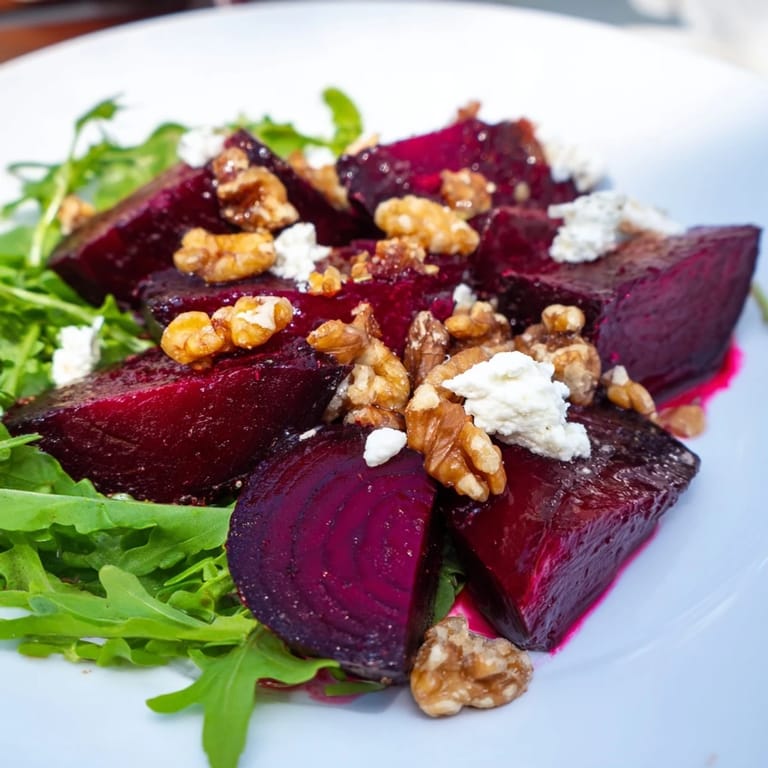
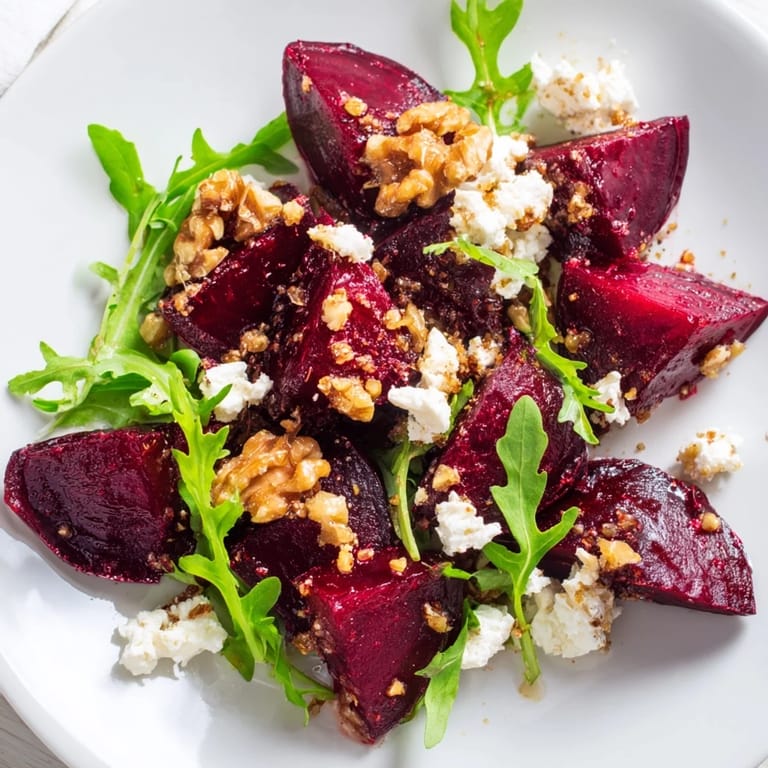
- Arrange arugula on a platter, scatter roasted beets and candied walnuts over it, then crumble goat cheese across the top. Drizzle the vinaigrette over everything just before people eat, so the greens stay crisp and the warmth of the beets doesn't turn them into mush.
 Save to Pinterest
 My daughter asked me once why I kept making this salad so much, and I realized it was because every time people ate it, they slowed down. They weren't rushing through dinner thinking about what was next; they were just there, eating something that tasted good and felt thoughtful.
Choosing Your Greens
Arugula is traditional for a reason—that peppery bite cuts through the sweetness of the beets and the richness of the goat cheese perfectly. But I've made this with baby spinach when that's what I had, and it's different but still good, a little milder and more delicate. The salad bends to what you have on hand, which is one of its best qualities.
Building Flavor Layers
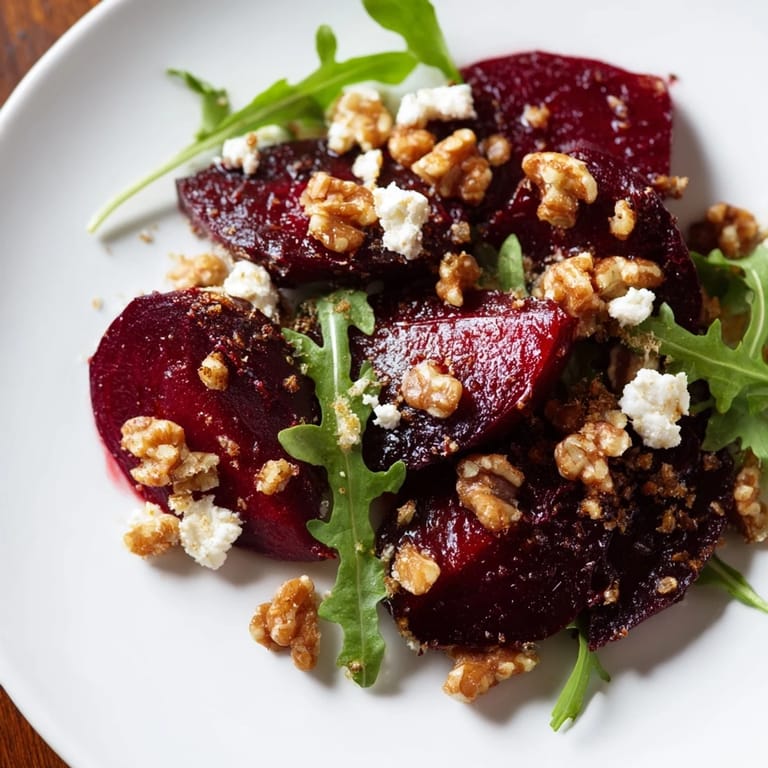
This salad works because every element does something different on your palate. The sweetness of the roasted beets, the heat from the arugula, the crunch and caramelized sugar of the walnuts, the creaminess of the cheese—nothing repeats, and each bite is different depending on how much of each you get. That's what makes it interesting enough to go back for thirds.
Make-Ahead Tips and Timing
Roast the beets and make the candied walnuts hours ahead or even the day before; they actually taste better when they've had time to settle. Make your vinaigrette a few hours in advance too and let it sit, which lets the flavors marry. The only thing you do right before eating is wash the arugula and assemble the salad.
- Store roasted beets in an airtight container in the refrigerator for up to five days and bring them to room temperature before serving.
- Candied walnuts stay crispy for two days in an airtight container, though they'll start to absorb humidity after that.
- The vinaigrette keeps for a week in a sealed jar and actually gets better as it sits, so make extra.
 Save to Pinterest
 This salad has taught me that simple food made with attention can feel like a gift. Make it for someone you want to slow down with.
Common Recipe Questions
- → How do I roast beets properly?
Wrap each beet in foil and roast at 400°F for 35–40 minutes until fork-tender. Allow to cool before peeling and slicing.
- → What is the best way to make candied walnuts?
Toast walnuts in a skillet over medium heat, sprinkle with sugar and salt, then stir constantly until sugar melts and coats the nuts evenly.
- → Can I substitute arugula with other greens?
Yes, baby spinach or mixed greens make excellent alternatives, offering a milder flavor while maintaining freshness.
- → What vinaigrette ingredients balance this salad?
A mix of olive oil, balsamic vinegar, Dijon mustard, honey, salt, and pepper creates a tangy, slightly sweet dressing that complements the earthy beets and creamy cheese.
- → Are there options for dairy-free variations?
For a dairy-free option, omit goat cheese or substitute with a plant-based cheese alternative.