 Save to Pinterest
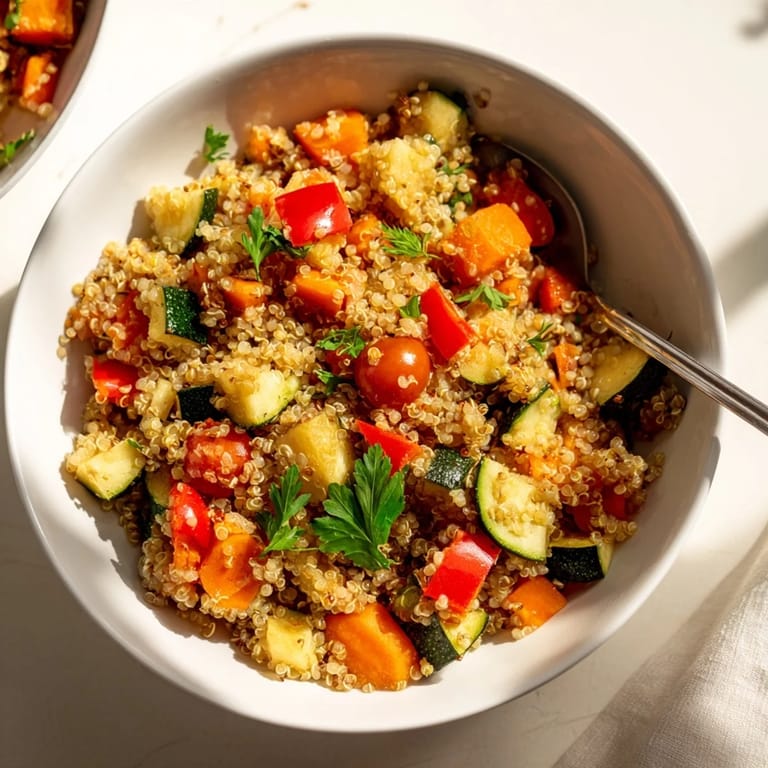
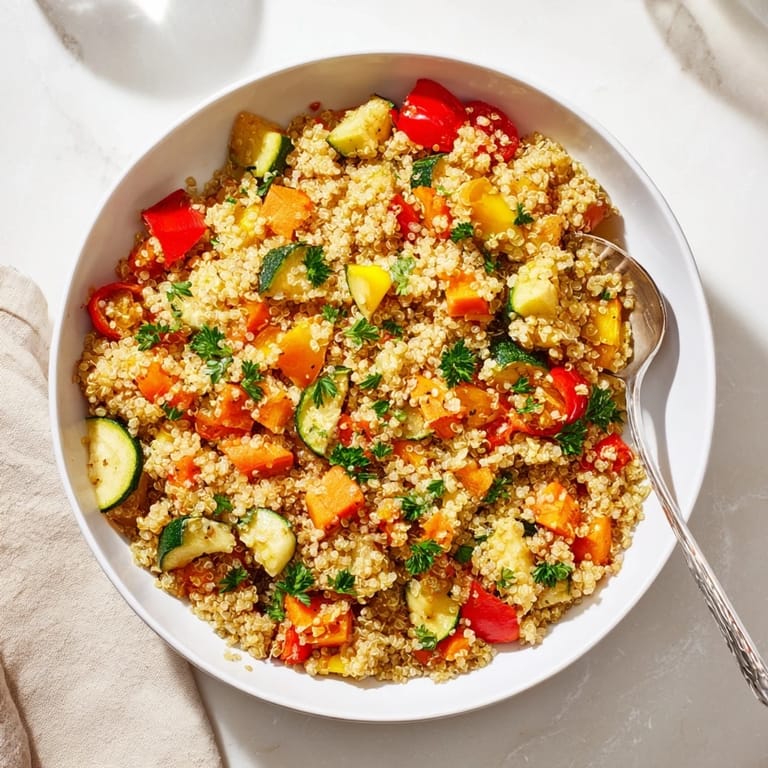
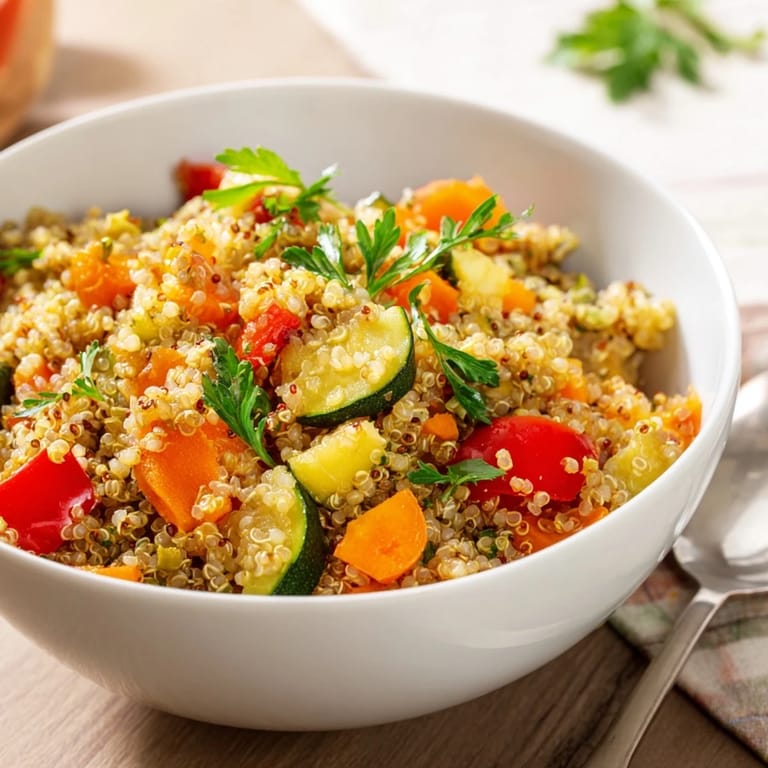
 My kitchen timer went off just as the evening light hit the counter, and I pulled out a tray of vegetables so golden they practically glowed. I'd been experimenting with quinoa all week, trying to make something that didn't taste like I was eating healthy on purpose. This pilaf changed everything. The roasted vegetables gave it sweetness and char, the herbs made it smell like a garden, and suddenly quinoa wasn't just trendy, it was delicious.
I made this for a potluck once, worried it might seem too plain next to the casseroles and dips. Instead, people kept coming back for seconds, asking if I'd added something fancy. All I'd done was let the oven do the work and toss everything together at the end. One friend said it reminded her of a grain bowl she'd paid fifteen dollars for downtown, and I realized sometimes the best cooking is just good ingredients treated with respect.
Ingredients
- Quinoa: Rinsing it under cold water removes the natural bitter coating and makes it fluffy, not gummy.
- Vegetable broth: Use this instead of water for deeper flavor, or add a splash of soy sauce if you only have water on hand.
- Red bell pepper: Roasting brings out its natural sugar and adds pops of color that make the dish look alive.
- Zucchini: Cut it into even pieces so it roasts at the same rate as the carrots and doesn't turn mushy.
- Carrot: Peeling and dicing small helps it caramelize beautifully in the oven alongside everything else.
- Red onion: Its mild sweetness mellows with roasting and adds little bursts of flavor throughout the pilaf.
- Cherry tomatoes: Halving them lets their juices concentrate and create tiny sweet spots in the finished dish.
- Olive oil: Use enough to coat the vegetables lightly so they brown instead of steam.
- Garlic: Fresh minced garlic blooms in the pan and perfumes the quinoa with warmth.
- Cumin: A little goes a long way, adding earthy depth without overpowering the fresh vegetables.
- Thyme: Dried thyme is easier than fresh here and holds up well to the roasting and tossing.
- Smoked paprika: This adds a hint of campfire and makes the dish taste more complex than it really is.
- Parsley: Chopped fresh parsley brightens everything and adds a pop of green at the very end.
- Mint: Optional but magical, mint makes the pilaf taste summery and a little unexpected.
- Lemon juice: A squeeze at the end wakes up all the flavors and balances the richness of the olive oil.
Tired of Takeout? 🥡
Get 10 meals you can make faster than delivery arrives. Seriously.
One email. No spam. Unsubscribe anytime.
Instructions
- Preheat and prep:
- Turn your oven to 425°F so it's screaming hot and ready to caramelize those vegetables. Gather your baking sheet and give it a quick wipe if needed.
- Toss the vegetables:
- Spread bell pepper, zucchini, carrot, onion, and cherry tomatoes on the sheet, drizzle with olive oil, season with salt and pepper, and toss with your hands until everything glistens. Make sure they're in a single layer so they roast instead of steam.
- Roast until golden:
- Slide the tray into the oven and set a timer for 20 minutes, then stir everything around and roast another 5 minutes until the edges are browned and the tomatoes have burst. The smell will tell you when it's ready.
- Cook the quinoa:
- While the vegetables roast, combine rinsed quinoa and broth in a saucepan, bring it to a boil, then lower the heat, cover, and let it simmer for 15 minutes until the liquid disappears. Let it sit off the heat for 5 minutes, then fluff it with a fork so every grain separates.
- Bloom the spices:
- Heat a large skillet with a drizzle of olive oil over medium heat, add garlic, and stir for 30 seconds until it smells toasty. Toss in cumin, thyme, and smoked paprika and let them sizzle for a few seconds.
- Combine everything:
- Add the fluffy quinoa and roasted vegetables to the skillet and toss gently so the spices coat everything without mashing the vegetables. Let it warm through for a minute or two.
- Finish with freshness:
- Turn off the heat, sprinkle in parsley, mint if using, and squeeze lemon juice over the top. Toss one last time, taste, and adjust salt or lemon as needed.
 Save to Pinterest
 One evening I served this alongside grilled chicken for my parents, and my dad, who usually skips the side dishes, finished his portion and reached for more. He didn't say much, just nodded and kept eating, which in his language meant it was good. My mom asked for the recipe, and I realized this pilaf had quietly become one of those dishes that doesn't need an occasion, it just makes dinner better.
How to Customize Your Pilaf
This recipe is a template, not a rule. Swap in whatever vegetables are sitting in your crisper, butternut squash, broccoli, eggplant, even green beans work beautifully. If you want more protein, toss in a drained can of chickpeas during the final mix or crumble feta on top if you're not keeping it vegan. I've added toasted pine nuts, stirred in spinach at the end, and even used different grains like farro when I'm out of quinoa.
Storing and Reheating
This pilaf keeps well in the fridge for up to four days in an airtight container. I actually love it cold straight from the fridge, eaten with a fork over the sink like a guilty pleasure. To reheat, add a splash of broth or water and warm it gently in a skillet or microwave, stirring halfway through. The flavors deepen overnight, so leftovers often taste even better the next day.
Serving Suggestions
I've served this as a main with a simple green salad and crusty bread, but it's just as good as a side next to grilled fish, roasted chicken, or lamb chops. It works at room temperature for picnics and potlucks, and you can even stuff it into bell peppers or wrap it in grape leaves if you're feeling fancy.
- Top with crumbled goat cheese or feta for tangy richness.
- Drizzle with tahini or a lemony yogurt sauce for extra creaminess.
- Serve it in bowls with a poached egg on top for a hearty breakfast or brunch.
 Save to Pinterest
 This pilaf has become my answer to busy weeknights and lazy weekends alike, proof that something simple can surprise you every time. I hope it lands on your table as often as it does on mine.
Common Recipe Questions
- → Can I prepare this pilaf ahead of time?
Yes, this pilaf is excellent prepared in advance. Store it in an airtight container in the refrigerator for up to 3 days. Serve chilled or gently reheat in a skillet with a splash of vegetable broth. The flavors actually deepen as it sits.
- → What vegetables work best for roasting?
Seasonal vegetables with similar cooking times work wonderfully. Try squash, eggplant, broccoli, cauliflower, or asparagus. Aim for uniform dicing so everything cooks evenly. Root vegetables like sweet potato need slightly longer roasting time.
- → How do I make this more protein-rich?
Stir in a drained can of chickpeas, black beans, or white beans during the final toss. For a non-vegan option, crumbled feta or crumbled goat cheese adds richness. Serving alongside grilled chicken or fish also boosts protein content.
- → Is this suitable for meal prep?
Absolutely. Portion the pilaf into containers and refrigerate for up to 4 days. It tastes wonderful cold or at room temperature, making it ideal for lunch boxes and quick weeknight dinners. Refresh with extra lemon juice before serving.
- → Can I modify the spice blend?
Definitely. This base spice combination is versatile. Try adding cayenne for heat, swap cumin for coriander, or experiment with different dried herbs like oregano or basil. Taste as you go and adjust to your preference.
- → What's the best way to cook quinoa perfectly?
Always rinse quinoa under cool water first to remove bitter coating. Use a 1:2 ratio of quinoa to liquid. Bring to boil, cover, reduce heat to low, and simmer 15 minutes. Let stand covered for 5 minutes, then fluff with a fork for light, separate grains.