 Save to Pinterest
 There's something about the smell of pesto hitting a hot pan that instantly transports me to my friend Marco's kitchen in the city—he'd make this pasta on nights when we'd show up unannounced, hungry and chatty. He'd always insist the secret was using good chicken and not overthinking it, and he was right. Now I make this when I want something that feels both effortless and special, something that tastes like it took longer than it actually did.
I remember making this for a potluck on a warm evening, and someone asked for the recipe before they'd even finished their first bite—that's when I knew I'd found my go-to crowd-pleaser. It's the kind of dish that works whether you're feeding yourself or four people, no stress either way.
Ingredients
- Chicken breasts: Halve them horizontally so they cook through quickly and stay tender; this little trick changed everything for me.
- Penne or fusilli: Either shape works beautifully because the ridges and curves catch the pesto like tiny flavor traps.
- Store-bought basil pesto: There's no shame in this shortcut—it's the whole point, honestly.
- Extra-virgin olive oil: Use the good stuff you actually enjoy, because you'll taste it.
- Garlic: Just minced, nothing fancy; it blooms in the hot oil and perfumes everything.
- Parmesan cheese: Freshly grated makes a difference in how it melts and coats the pasta.
- Cherry tomatoes: They burst slightly when warmed, releasing their sweetness into the dish.
- Baby spinach: Added at the very end so it wilts gently from the residual heat.
- Salt and black pepper: Season as you taste, not by rule.
- Fresh basil and extra Parmesan: For finishing, because the end matters as much as the beginning.
Tired of Takeout? 🥡
Get 10 meals you can make faster than delivery arrives. Seriously.
One email. No spam. Unsubscribe anytime.
Instructions
- Season and sear the chicken:
- Pat your chicken dry, season generously with salt and pepper, then lay it into a hot, oiled pan. You want to hear it sizzle immediately—that's how you know the heat is right. Let each side get golden and slightly charred, about 4 to 5 minutes per side, then let it rest while you handle the pasta.
- Cook the pasta:
- Boil salted water and cook your pasta until it still has a slight firmness to it, not mushy. Before draining, scoop out a mug of that starchy water—it's liquid gold for loosening the sauce later.
- Build the sauce base:
- In the same pot you used for pasta, warm the remaining oil with minced garlic for just 30 seconds. You're not cooking the garlic, just waking it up. Then add the tomatoes and let them soften slightly, which takes about 2 minutes.
- Bring it all together:
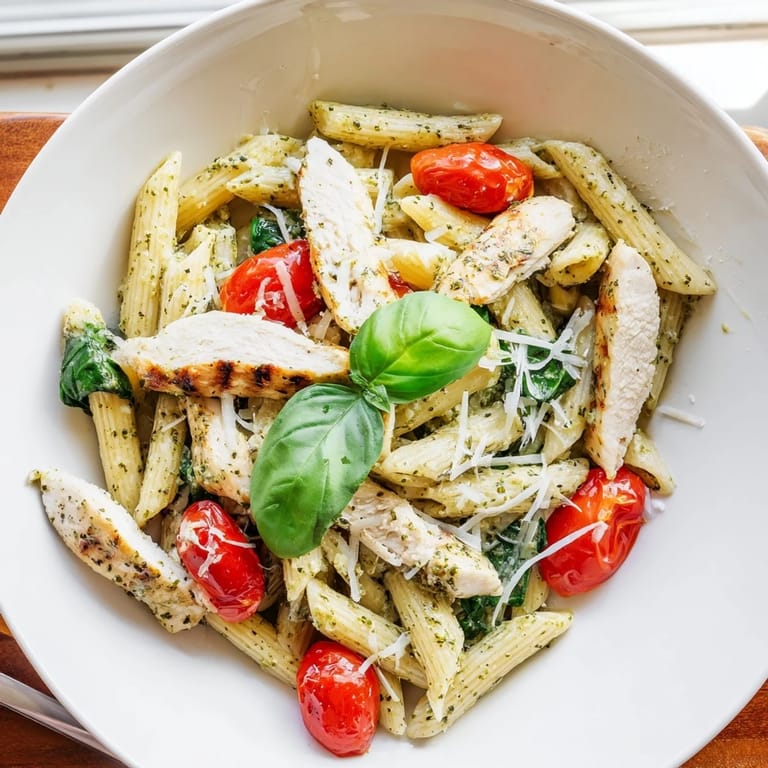
- Return the cooked pasta to the pot, then stir in the pesto, a splash of that reserved pasta water, and the Parmesan. The sauce should coat everything in a creamy green layer, not pool at the bottom.
- Finish with chicken and spinach:
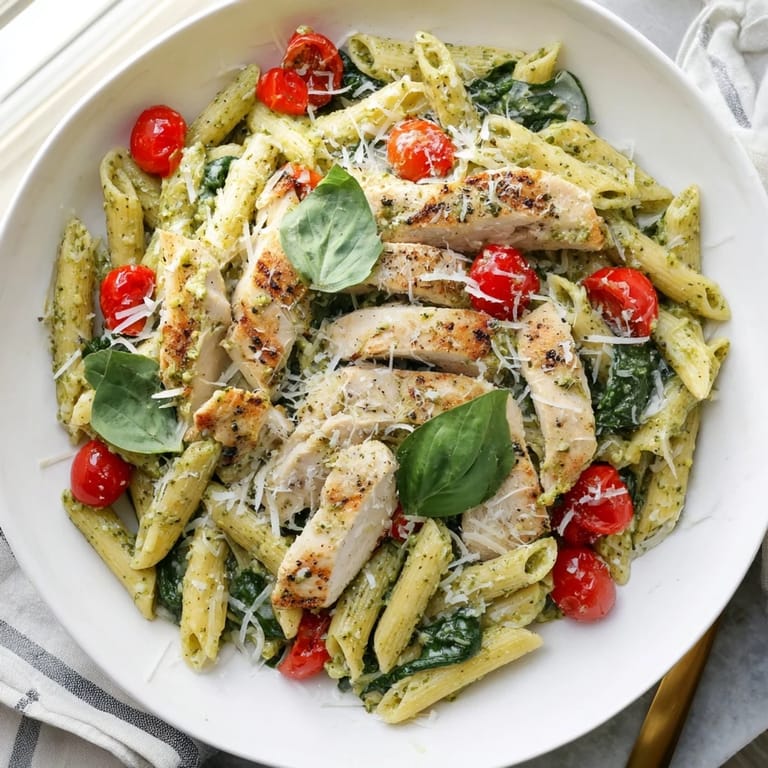
- Slice your rested chicken and fold it into the pasta along with the baby spinach. The heat from the pasta will wilt the spinach, and everything becomes this beautiful, cohesive dish.
 Save to Pinterest
 The first time someone told me this tasted like restaurant food, I realized that good cooking isn't about complexity—it's about respecting good ingredients and timing. This dish taught me that.
Why This Matters
This recipe works because it trusts the pesto to carry the weight of flavor, meaning you're not juggling a dozen techniques at once. The chicken adds protein and substance, but the real magic is in how those three elements—pasta, pesto, and heat—become something greater than the sum of their parts. It's the kind of dish that reminds you why people love cooking in the first place.
Variations Worth Trying
Once you've made this a few times and it becomes muscle memory, you can start playing. I've swapped in shrimp for nights when I want something lighter, and the dish works just as well. Sun-dried tomato pesto brings an earthier sweetness, arugula pesto adds a peppery edge, and sometimes I'll toss in roasted red peppers or artichoke hearts just because they're there. The structure is flexible enough to welcome change while staying fundamentally itself.
Serving and Pairing
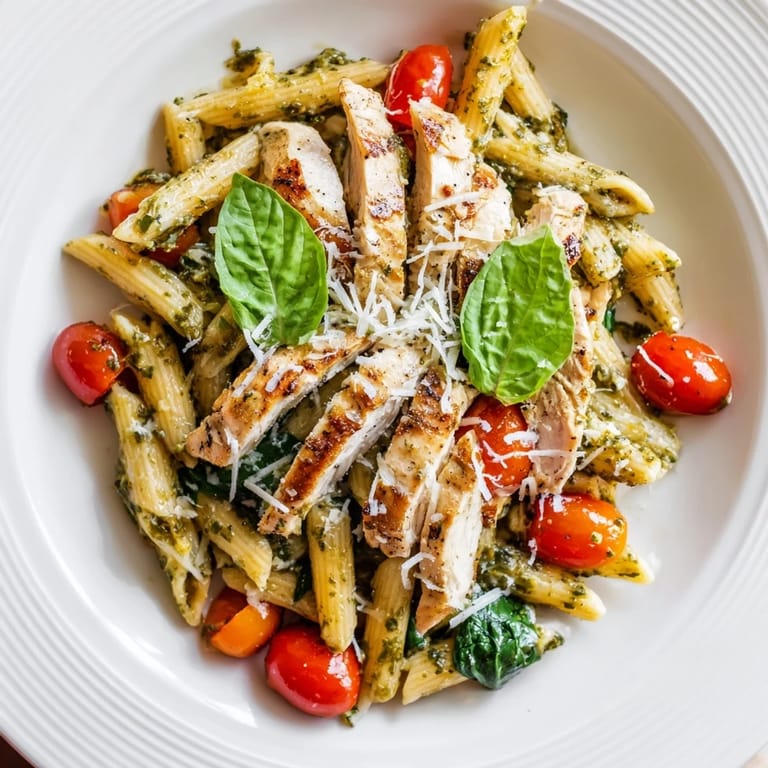
Serve this while it's still warm, with extra basil scattered on top and a grater of Parmesan beside the plate so people can add as much as they like. A crisp white wine like Pinot Grigio cuts through the richness beautifully, or a light red if that's what you have. The pasta is filling enough as a main course, but a simple green salad on the side never hurts, just something to cleanse the palate between bites.
- Don't skimp on the finishing basil—it brightens everything.
- If your pesto is very thick, add the pasta water gradually until the consistency is right for you.
- Eat this immediately; it's best while warm and the pasta still has its texture.
 Save to Pinterest
 This is the kind of weeknight dinner that leaves you feeling satisfied and a little proud, which is really the whole point. Make it, enjoy it, and maybe someone will ask for the recipe too.
Common Recipe Questions
- → What type of pasta works best for this dish?
Penne or fusilli are ideal as their shapes hold the pesto sauce well, adding texture and flavor in each bite.
- → Can I substitute the grilled chicken with other proteins?
Yes, grilled shrimp or tofu make excellent alternatives for different dietary preferences without compromising the flavor.
- → How do I prevent the spinach from overcooking?
Add the baby spinach last and toss just until it wilts lightly, preserving its vibrant color and texture.
- → Is store-bought pesto a good choice?
Store-bought basil pesto provides convenience and a consistent flavor, making it a perfect shortcut without sacrificing taste.
- → What wine pairs well with this chicken and pesto pasta?
A crisp Pinot Grigio or a light-bodied red wine complements the fresh herbs and tender chicken beautifully.
- → How should I reheat leftovers without drying out the chicken?
Reheat gently on low heat with a splash of reserved pasta water or olive oil to keep the chicken moist and the pasta saucy.