 Save to Pinterest
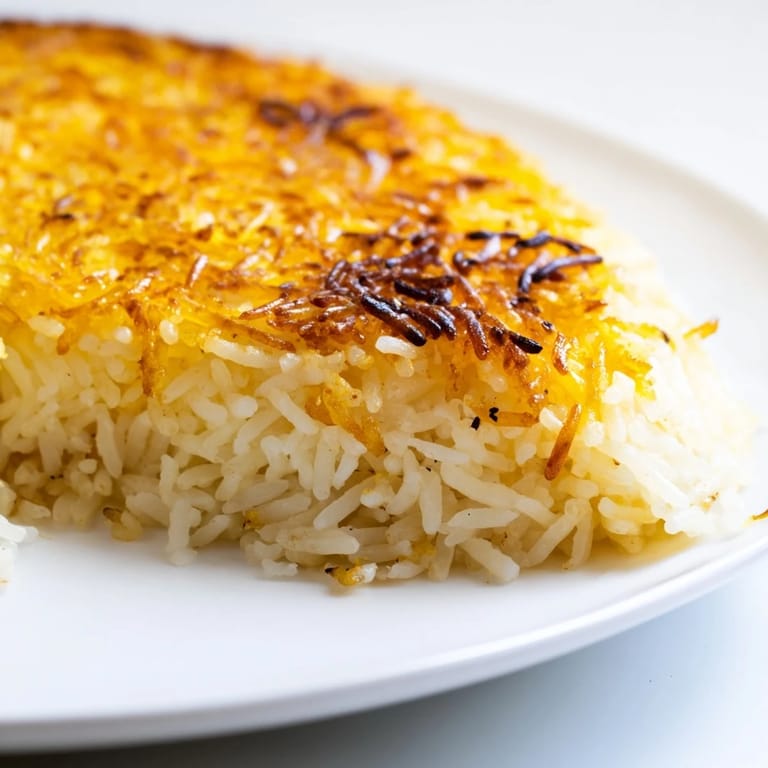
 The first time I understood why Persian cooks treasure tahdig so fiercely was watching my neighbor's hands move with quiet certainty as she flipped a pot of rice onto a platter, revealing a shatteringly crisp, golden disc underneath. The steam rose, carrying that toasty, almost burnt-caramel aroma that smells nothing like ordinary rice and everything like something worth waiting for. She didn't rush or fret as the rice steamed and clicked in the pot—she just knew it was working. That moment changed how I thought about rice entirely, from a quiet side dish into something with personality and purpose.
I made this for the first time during a particularly quiet winter, trying to recreate something I'd tasted months earlier and couldn't stop thinking about. My kitchen filled with the smell of saffron steeping, and I kept lifting the lid (which I absolutely shouldn't have done) just to peek at the rice slowly transforming below. The moment the tahdig finally crackled under a wooden spoon, I felt something shift—like I'd learned a small secret about patience and heat.
Ingredients
- Basmati Rice (2 cups): Its long grains stay separate and delicate even after steaming, which is why it's worth seeking out; regular rice becomes mushy and won't give you that tender-but-defined texture.
- Salt (1 tablespoon): Used for soaking, it seasons the rice evenly from the inside and helps keep grains distinct.
- Saffron Threads (1/4 teaspoon): A small amount infuses color and an earthy, slightly sweet note that makes people pause and ask what that flavor is.
- Plain Greek Yogurt (4 tablespoons): This is the magic—it creates a creamy, golden layer that crisps into the tahdig crust, with a subtle tang that brightens the rice.
- Vegetable Oil (2 tablespoons, plus extra): Use a neutral oil that can handle medium heat without smoking; it helps everything brown evenly.
- Unsalted Butter (2 tablespoons, melted): Adds richness to the crust and a whisper of nutty flavor that deepens as it caramelizes.
- Ground Turmeric (1/2 teaspoon, optional): If you use it, the rice takes on a warm golden hue and a subtle earthiness that feels intentional.
- Ground Black Pepper (1/2 teaspoon): A small amount creates little speckles and warmth that balances the other flavors.
Tired of Takeout? 🥡
Get 10 meals you can make faster than delivery arrives. Seriously.
One email. No spam. Unsubscribe anytime.
Instructions
- Rinse and soak the rice:
- Run the basmati under cold water, stirring with your fingers until the water clears from milky to transparent—this removes the starch that would make it gluey. Soak it in salted water for at least 30 minutes; this step matters more than you'd think, loosening the grains so they cook separately.
- Parboil until just tender:
- Bring a pot of water to a rolling boil, add the drained rice, and cook for only 5–6 minutes until it's soft on the outside but still has a slight resistance in the center. You're not fully cooking it; you're waking it up.
- Steep the saffron:
- Grind the threads with the back of a spoon (it releases the color faster) and pour hot water over them, letting them bloom for 10 minutes until the water turns deep golden-red.
- Make the tahdig base:
- Whisk together yogurt, 1 tablespoon of that saffron water, turmeric if using, and about 1 cup of the parboiled rice, stirring until it's a thick, paste-like consistency. This mixture will brown into something crispy and almost caramel-like.
- Heat the pot:
- Warm the oil and melted butter together over medium heat in a heavy-bottomed pot until it shimmers and smells warm and inviting. This takes only a couple of minutes.
- Build the layers:
- Spread the yogurt-rice mixture evenly across the bottom, creating an even layer about 1/2-inch thick. Gently mound the remaining rice over it, then drizzle the rest of the saffron water across the top like you're blessing it.
- Create steam vents:
- Using the handle of a wooden spoon, poke 4–5 small holes down through the rice mound so steam can escape without building up pressure and turning your rice into a brick.
- Steam with a towel trick:
- Wrap a clean kitchen towel around the lid (this traps condensation and helps the crust form), cover the pot tightly, and cook over medium heat for 10 minutes until you hear gentle crackling. Reduce heat to low and cook for 35–40 minutes; you'll hear occasional sounds like the rice is gently frying, which means the tahdig is forming beautifully.
- Rest and flip:
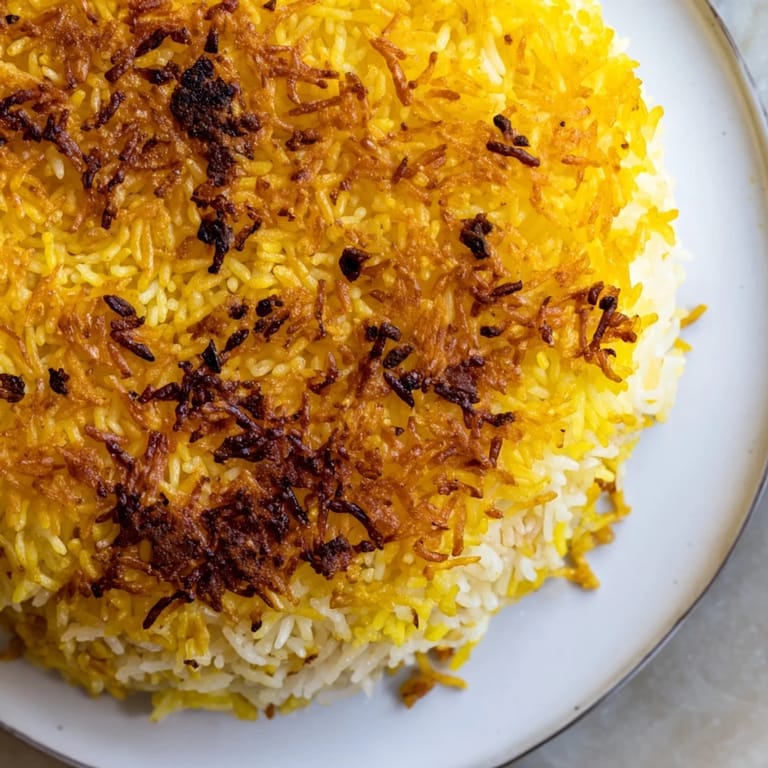
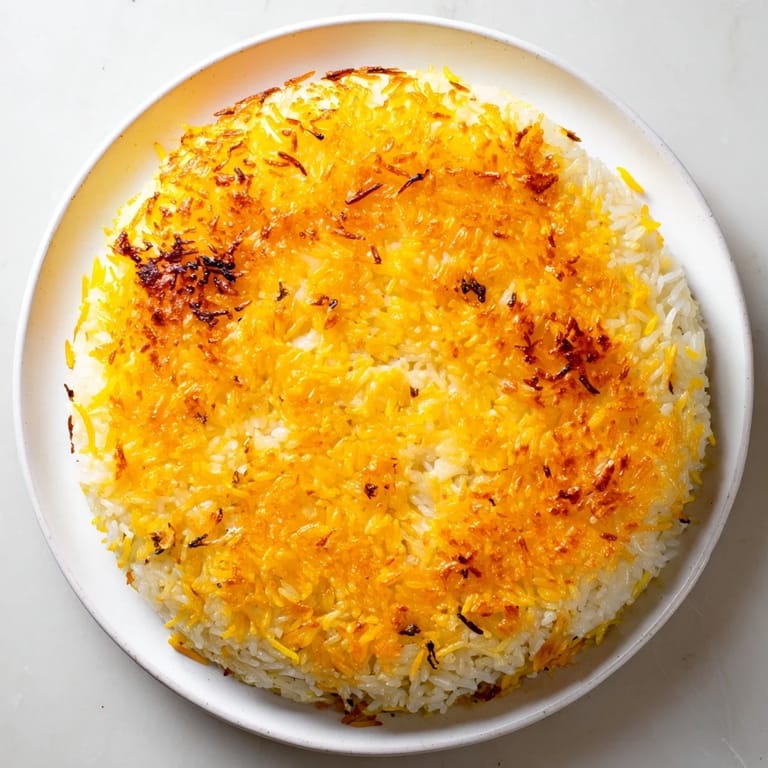
- Remove from heat and let it sit undisturbed for 5 minutes so the crust firms up. Place a serving platter over the pot, take a breath, and flip it all in one confident motion so the golden tahdig lands on top.
 Save to Pinterest
 The night I first served this to guests, I was more nervous than I should have been about a pot of rice. But when I flipped it and that tahdig landed golden and intact, the table went quiet for a moment—everyone staring at that shatteringly crisp circle like it was something more than rice. It was a reminder that food doesn't have to be complicated to feel like a gift.
The Tahdig Crust: The Heart of the Dish
The tahdig isn't a happy accident—it's the entire point of this recipe, and understanding why it works makes everything else fall into place. The yogurt caramelizes from the heat and fat, creating a savory-sweet, almost custard-like base that crisps where it touches the hot pot. I've learned that the right balance between heat and patience is what separates a thin, pale bottom from a deep mahogany crust that shatters satisfyingly under a spoon. Some cooks use thinly sliced potatoes or even flatbread instead, and those work beautifully too—they all share that same principle of creating something crispy and golden below the fluffy rice.
Saffron: The Golden Thread That Ties Everything Together
A quarter teaspoon of saffron might seem stingy until you bloom it in hot water and watch it transform into something rich and aromatic. The color alone signals that something special is happening, and the flavor—earthy, slightly sweet, with no sharp edges—complements rice in a way nothing else quite does. When I first started making this, I thought saffron was expensive fussiness, but now I understand it's one of those ingredients that whispers rather than shouts, making everything around it taste more like itself.
Making It Your Own
This recipe is forgiving enough to welcome small changes once you understand the fundamentals. Some cooks add a cinnamon stick or cardamom pods to the boiling water, filling the kitchen with a warm spice that layers beautifully under the saffron. Others garnish with barberries for a pop of color and tartness, or with fresh dill and parsley for brightness. The confidence comes from knowing that the technique—the layering, the steaming, the patient heat—stays the same.
- If you're nervous about flipping, run a thin spatula around the edges first to loosen it slightly from the pot.
- Leftover tahdig rice keeps for a couple of days and is unexpectedly good cold or gently reheated in a low oven.
- Use a pot with a heavy bottom and a tight-fitting lid; a thin pot will cook the bottom unevenly.
 Save to Pinterest
 This is the kind of dish that feels like a small celebration every time you make it, the kind that reminds you why cooking matters. Once you nail it, it becomes something you reach for again and again, each time understanding it a little better.
Common Recipe Questions
- → What is tahdig and how is it made?
Tahdig is the crispy, golden crust formed at the bottom of the pot when cooking rice. It's made by layering a saffron and yogurt mixture under parboiled rice, then slow-cooking until it crisps up.
- → Can I use other ingredients instead of yogurt for the tahdig layer?
Yes, thinly sliced potatoes or flatbread may be used to create the tahdig crust instead of the yogurt-rice mixture for varied texture.
- → How do I prevent the rice from sticking and burning?
Use a heavy-bottomed pot and medium to low heat during cooking. Wrapping the lid with a towel helps trap steam evenly and protects the rice.
- → What gives tahdig its distinct flavor and aroma?
Saffron infused in hot water adds fragrance and color, while turmeric and black pepper provide subtle warming spices enhancing the aroma.
- → Is Tahdig suitable for special diets?
Yes, it is vegetarian and naturally gluten-free. However, it contains dairy from yogurt and butter, so consider this if you have sensitivities.
- → How do I serve Persian tahdig rice?
After cooking, invert the pot onto a platter so the crisp tahdig layer is on top, making for an impressive presentation and delightful texture contrast.