 Save to Pinterest
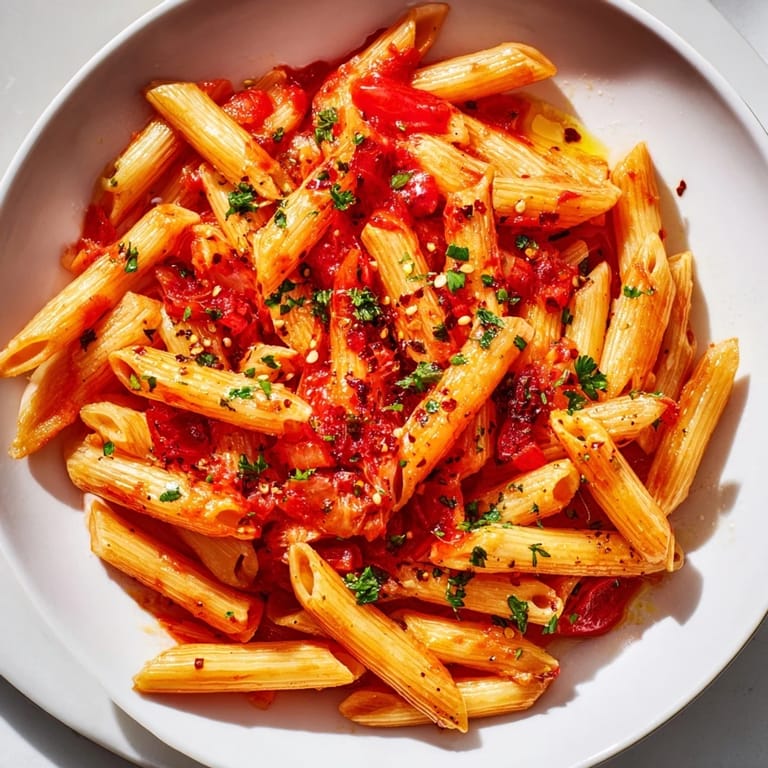
 I discovered penne all'arrabbiata by accident on a Tuesday night when I had nothing in my pantry except a dented can of tomatoes, some garlic, and an almost-empty bottle of olive oil. No cheese, no cream, no fancy ingredients—just the kind of bare-bones cooking that forces you to pay attention. The first bite was electric: the heat from the chili flakes dancing on my tongue, the garlic singing through the sauce, and that perfect, slightly yielding texture of penne catching every bit of the bright red coating. It was humble and honest, and I understood immediately why Romans have been making this for generations.
The second time I made this, I was cooking for a friend who'd just moved to the city and was eating nothing but delivery food. I remember standing at the stove, listening to the garlic and chili flakes pop gently in the oil, and thinking about how something so simple could feel like such a gift. When they tasted it, their eyes went a little wide—not from the heat, but from recognition. They told me later it was the first home-cooked meal that made them feel like staying might be worth it.
Ingredients
- 400 g penne rigate: The ridges catch and hold the sauce, so don't substitute with smooth pasta—that's where half the pleasure lives.
- 3 tbsp extra virgin olive oil: This is your foundation, so use something you'd actually taste on its own; cheap oil makes cheap-tasting food.
- 4 large garlic cloves, thinly sliced: Sliced, not minced, because you want each piece to soften and sweeten as it cooks, creating little tender pockets throughout the sauce.
- 1–2 tsp red chili flakes: Start with 1 teaspoon and taste as you go; heat preference is personal, and this dish is forgiving about it.
- 800 g canned whole peeled tomatoes: Crush them by hand right into the pan—there's something oddly satisfying about it, and the irregular pieces cook better than finely processed tomatoes.
- 1 tsp sea salt and 1/2 tsp black pepper: Taste and adjust at the end; the pasta water will add its own saltiness, so don't oversalt early.
- 2 tbsp fresh flat-leaf parsley, finely chopped: The brightness matters here, cutting through the richness and heat at the finish.
- Extra virgin olive oil, for drizzling: One final pour at the very end, after the heat is off—it blooms and reminds you why olive oil costs what it does.
Tired of Takeout? 🥡
Get 10 meals you can make faster than delivery arrives. Seriously.
One email. No spam. Unsubscribe anytime.
Instructions
- Boil the pasta water:
- Get a large pot of water rolling at a full boil and salt it generously—it should taste almost like the sea. This is where the pasta's flavor starts, not where it finishes.
- Cook the penne:
- Add pasta and stir it once to prevent sticking, then let it cook until al dente, with a bite still in the center. Before you drain it, scoop out a coffee mug of the starchy cooking water and set it aside—this liquid gold will help your sauce cling to the pasta.
- Start the sauce base:
- While pasta cooks, pour olive oil into a large skillet over medium heat and watch it shimmer slightly. Add your sliced garlic and chili flakes, and listen for that gentle crackling and popping; this takes about 1 minute and fills the kitchen with a smell that announces dinner is happening.
- Build the sauce:
- Crush the tomatoes into the pan one-handed if you're feeling bold, then add salt and pepper. Let it bubble gently for 12 to 15 minutes, stirring every few minutes, until the sauce darkens slightly and thickens just enough to cling to a spoon.
- Marry the pasta and sauce:
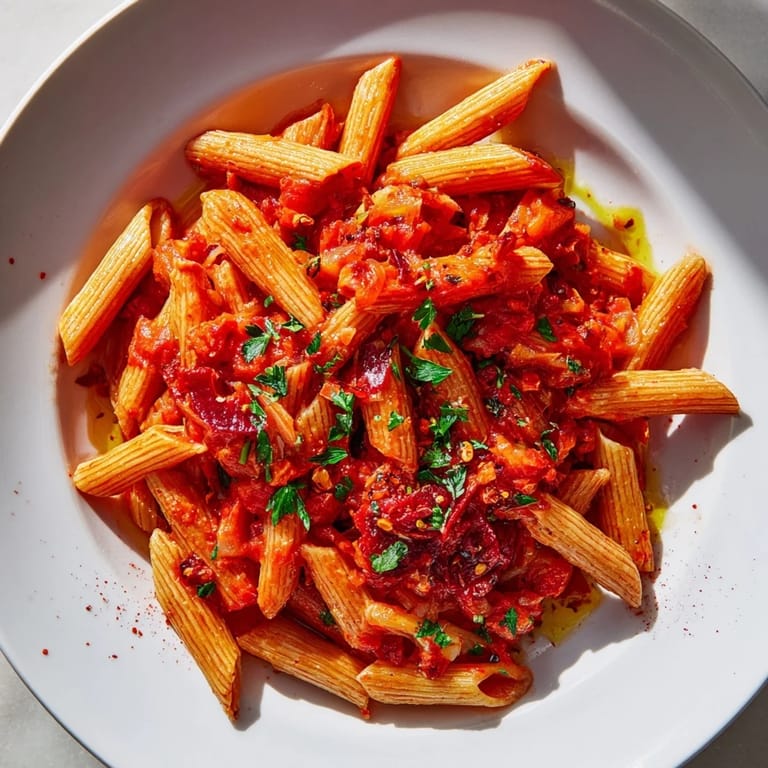
- Add your drained penne to the skillet and toss it all together, using some of that reserved pasta water to loosen things if the mixture feels too thick or tight. The starch in the water helps bind everything into one glossy, cohesive dish.
- Finish and serve:
- Take the skillet off heat, stir in the parsley, and pour a small stream of good olive oil over top. Plate immediately while everything is still steaming, and let the heat do the final cooking as the dish settles.
 Save to Pinterest
 I made this dish for my mother on the one evening she admitted she was tired of her own cooking, and something about watching her relax into it—really relax, not just eat politely—shifted how I thought about cooking for people. It stopped being about impressing and became about offering comfort in the simplest form.
The Philosophy of Four Ingredients Doing Everything
There's something liberating about a recipe with this much restraint. Penne all'arrabbiata taught me that flavor doesn't require quantity—it requires attention. The garlic, oil, tomatoes, and chili are all doing multiple jobs: garlic is both flavor and aroma, oil is fat and mouthfeel and vehicle for heat, tomatoes are acid and body and subtle sweetness, and chili is heat and complexity. Each element matters because there's nowhere for mediocrity to hide. This is the opposite of a recipe that throws ten things together hoping something sticks.
The Heat Question
People either love the fire in this dish or they're convinced they don't, but almost everyone is lying to themselves about which camp they're in. The heat builds quietly and arrives late, so by the time you feel it, you're already three bites in and hooked. The trick is that the heat isn't aggressive; it's almost playful, dancing with the sweetness in the tomatoes. I've learned that people who claim they can't handle spice usually mean they've never had good spice applied with intention. Start light, taste, adjust, and remember that you can always add more heat but you can't remove it.
When You Have Time to Linger
On the evenings when you're not rushing, let the sauce simmer closer to 20 minutes instead of 15, letting the tomatoes break down further and the oil emulsify more fully. The longer cooking also gives the garlic time to turn almost translucent and lose any harsh edges. You can also turn the heat down even lower and let the sauce barely bubble, which requires patience but rewards it with a sauce that tastes like it spent hours simmering instead of minutes.
- A squeeze of lemon juice added just before serving brightens the whole dish without making it taste citrus-forward.
- A handful of dried chili flakes stored in a cool place lasts for months and improves with age, developing deeper, more complex heat.
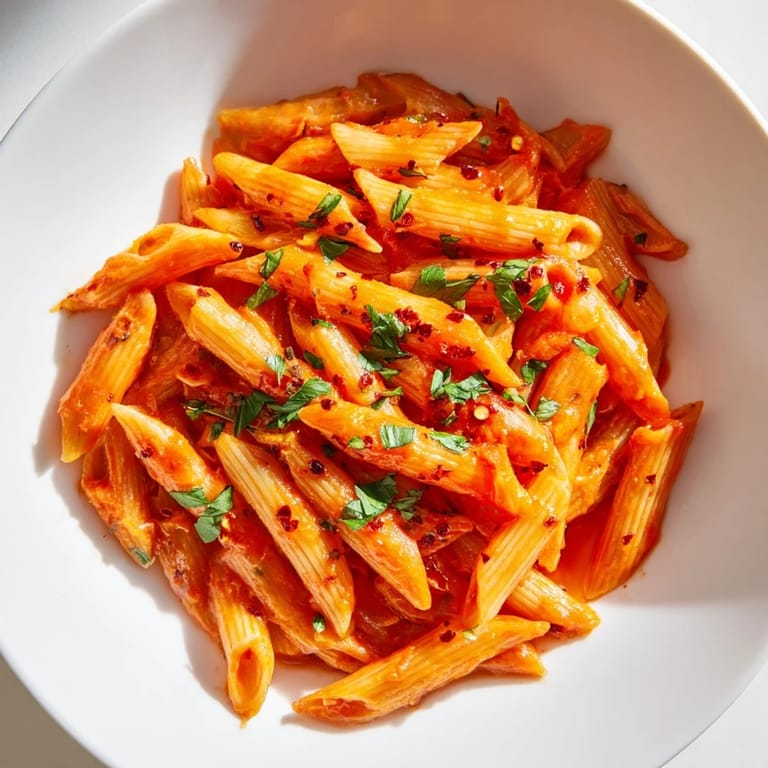
- The traditional Roman version absolutely refuses cheese, but if you use it, use it sparingly and choose a peppery Pecorino Romano over mild Parmesan.
 Save to Pinterest
 This is the kind of dish that feels extravagant and reckless until you actually make it, and then you realize it's the most restrained, elegant thing in your cooking rotation. Once you understand it, you'll make it again and again.
Common Recipe Questions
- → How do I adjust the spice level?
Vary the quantity of red chili flakes to suit your heat preference, reducing them for a milder flavor.
- → What type of pasta works best?
Penne rigate is ideal for holding the sauce, but any tubular pasta can be used as a substitute.
- → Can I make it gluten-free?
Yes, simply replace regular penne with a gluten-free version to accommodate dietary needs.
- → Is fresh parsley essential?
Fresh parsley adds brightness and aroma, enhancing the dish’s overall flavor, though it can be omitted if unavailable.
- → How is the sauce thickened without cream?
The sauce thickens naturally by simmering crushed tomatoes, developing depth and intensity without dairy.