 Save to Pinterest
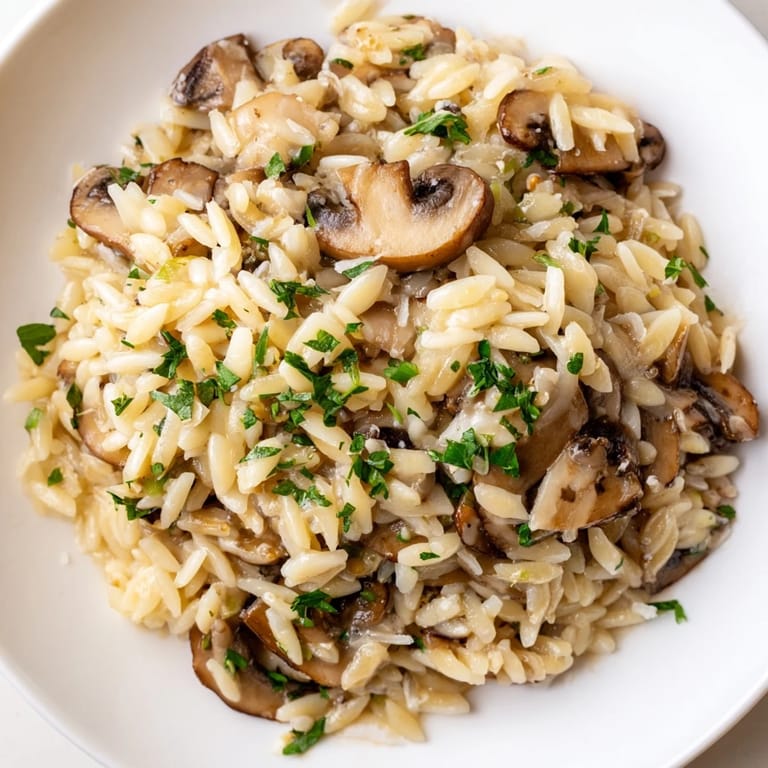
 There's something almost meditative about standing at the stove with a wooden spoon in hand, waiting for each ladle of broth to disappear into rice-like grains. Except this time, there's no rice—just orzo, that tiny pasta that somehow transforms into something creamy and luxurious when you treat it like risotto. I discovered this trick by accident one weeknight when I was tired of my usual risotto routine but craving that same comforting, stirred-with-intention feeling. The mushrooms sweating in butter first gave me that earthy confidence that everything would work out.
I made this for friends on a rainy Thursday and watched them get quiet mid-bite, the kind of quiet that means comfort food is doing its job. One of them asked if I'd been secretly trained as a chef, and I had to laugh—nope, just a very patient wooden spoon and the willingness to stand here with you for twenty minutes while broth slowly disappears into starch and turns golden.
Ingredients
- Orzo pasta: Don't skip toasting it slightly in the pan—those few extra seconds add a subtle nuttiness that grounds the whole dish.
- Cremini or button mushrooms: Slice them evenly so they cook at the same rate and get those caramelized edges without turning to mush.
- Vegetable broth: Keep it warm in a separate pot—cold broth slows everything down and breaks the rhythm of cooking.
- Olive oil and butter: Use both for depth; the oil sautés everything, and the butter at the end is what makes this feel indulgent.
- Parmesan cheese: Freshly grated matters here—pre-grated versions have anti-caking agents that won't melt as smoothly into the creaminess.
- Onion and garlic: Chop them small so they disappear and become flavor rather than texture.
- White wine: Optional but worth it—it adds brightness and a subtle complexity that makes people wonder what your secret is.
- Frozen peas: Add these near the end so they stay tender and don't turn to little rocks.
- Fresh parsley: A garnish that feels like the finishing touch, not an afterthought.
Tired of Takeout? 🥡
Get 10 meals you can make faster than delivery arrives. Seriously.
One email. No spam. Unsubscribe anytime.
Instructions
- Build your flavor base:
- Warm olive oil until it shimmers, then let the onion soften for a few minutes until it's translucent and sweet-smelling. This takes patience, but it's the foundation everything else sits on.
- Introduce the mushrooms:
- Add garlic first so it blooms, then the mushrooms. Let them sit undisturbed for a minute before stirring—this is when they start browning and concentrating their flavor into something deeper.
- Toast the orzo:
- Stir the dry pasta into the mushroom mixture for just a minute. You'll hear it crackle slightly and smell something nutty—that's exactly what you're after.
- Add wine if you're using it:
- Pour it in and let it sizzle and mostly disappear. This moment smells like you're doing something deliberately delicious.
- Begin the stirring dance:
- Add the first cup of warm broth and stir often, scraping the bottom of the pan where the good stuff sticks. When it's mostly absorbed, add another half-cup, and repeat.
- Watch for the transformation:
- Around the 10-minute mark, the orzo starts releasing its starch and the whole pan becomes creamy without any cream. Stir in the peas now if you're using them.
- Finish with richness:
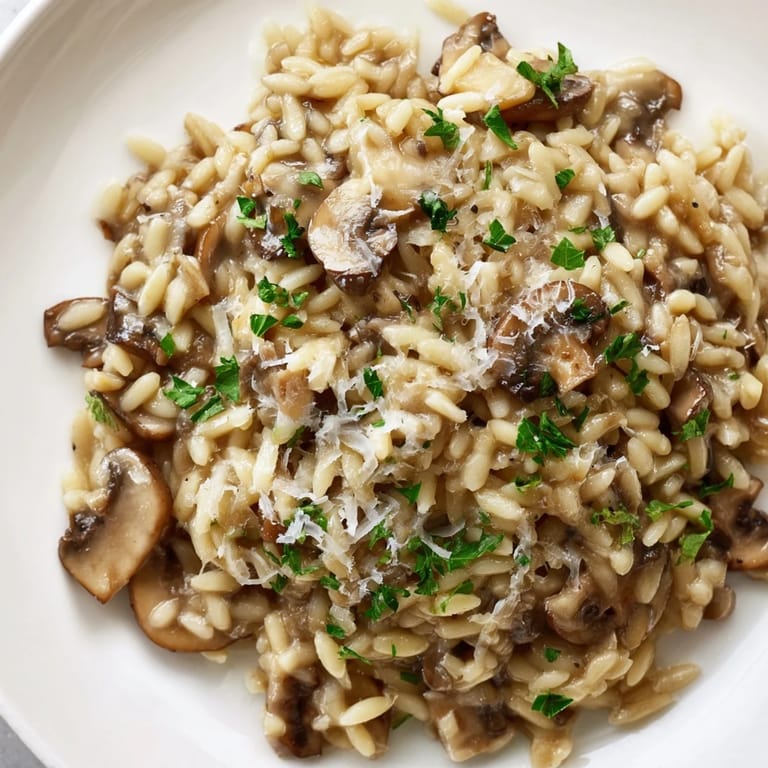
- When the orzo is tender but still has a slight bite, remove it from heat and stir in butter and Parmesan until everything melts into something that coats the back of a spoon beautifully.
 Save to Pinterest
 Someone once told me that risotto is just an exercise in patience dressed up as dinner, and this orzo version proves they were right. There's something about the repetitive motion and the slow emergence of creaminess that makes you feel like you've actually accomplished something, even though you're basically just standing in one spot.
Why This Works Better Than You'd Expect
Orzo has always felt like the in-between pasta to me—not quite rice, not quite noodle—but that's exactly why it surrenders to risotto cooking so beautifully. The starch releases evenly, the pasta shapes cradle the broth, and everything comes together with an almost silly ease. You get restaurant texture at home without needing Arborio rice or an encyclopedia of technique.
The Mushroom Magic
Mushrooms are the secret reason this dish tastes so much richer than it should. When you let them cook undisturbed for a moment, they release their moisture and then brown it away, creating this concentrated umami that makes every spoonful feel intentional and deep. They're also forgiving—you can't really overcook them in a way that ruins the whole dish, which is refreshing when you're busy stirring pasta.
Variations and Moments of Inspiration
This dish is a blank canvas for whatever you find in your kitchen or your mood that evening. Some nights I add a handful of sautéed spinach for color and a peppery note, other times I stir in a whisper of truffle oil right before serving because I'm feeling luxurious. The peas are optional but they add brightness, and fresh parsley at the end is less about nutrition and more about the reminder that something green and fresh matters even in a creamy dish.
- Try mixing in sautéed spinach or arugula for earthiness and a pop of color.
- A touch of truffle oil or a squeeze of lemon at the very end shifts the whole mood.
- For dairy-free, swap vegan Parmesan and plant-based butter and it tastes just as good, just different.
 Save to Pinterest
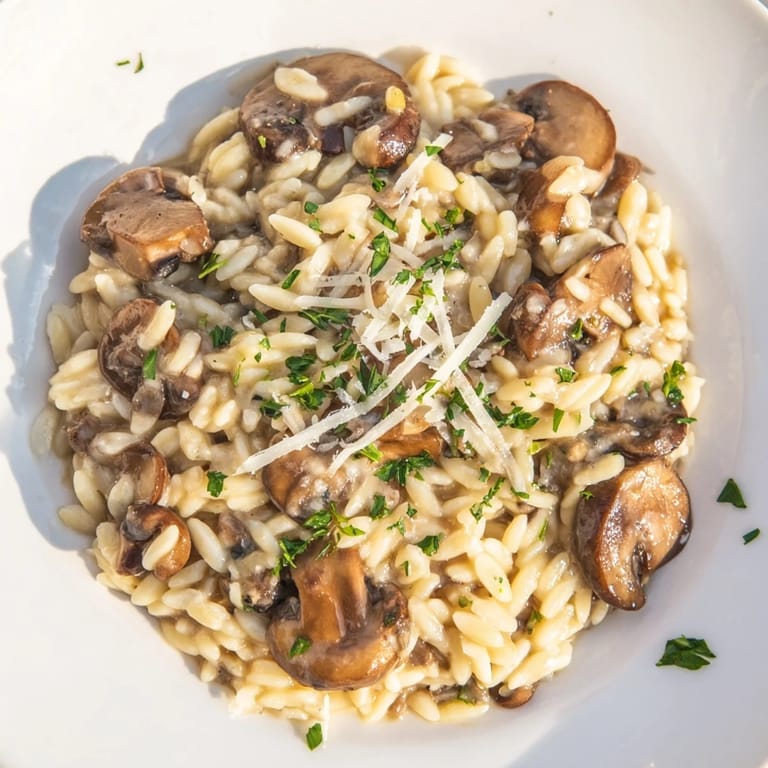
 This is the kind of dish that feels simple enough to make on a Tuesday but tastes like you were thinking about it all day. Serve it immediately while it's still creamy, with extra Parmesan on the side and maybe a glass of crisp white wine if you're feeling it.
Common Recipe Questions
- → How is orzo cooked risotto-style?
Orzo is gently toasted then slowly cooked by gradually adding warm broth, stirring frequently to release starches and create a creamy texture similar to risotto.
- → Can I use different mushrooms in this dish?
Yes, cremini, button, or even wild mushrooms like shiitake or portobello can be used to enhance the earthy flavors.
- → Is adding white wine necessary?
White wine adds subtle acidity and depth but can be omitted; simply replace it with extra broth.
- → How do I achieve the creamy consistency?
Slowly adding broth and stirring continuously helps the starches in the orzo release, producing a rich, creamy consistency similar to traditional risotto.
- → What can I serve with this dish?
This dish pairs well with light salads, crusty bread, or a crisp white wine such as Pinot Grigio or Sauvignon Blanc.