 Save to Pinterest
 There's something about the smell of olives and garlic hitting hot oil that instantly transports me to a sun-soaked kitchen I visited once in a small village outside Athens. I wasn't trying to recreate that memory when I first made this tapenade pasta at home on a weeknight—I just needed something fast and deeply satisfying. The moment I tasted it, I realized I'd accidentally bottled that exact feeling into a weeknight dinner. Now it's the dish I make when I want the Mediterranean without leaving my kitchen.
My friend Marco came over complaining he was tired of the same rotation of pasta dishes, and I threw this together while we caught up. He watched me buzz the olives and capers into submission, then asked why he'd never thought to use pasta water as a binding agent. That tiny detail—the starchy water turning everything silky—became his entire reason for requesting this dish at every gathering since.
Ingredients
- Mixed pitted olives (1 cup): Use a combination of Kalamata and green olives if you can—they play off each other beautifully, one briny and rich, the other grassy and sharp. Buy them from a barrel or good deli counter when possible; jarred ones work but tend to taste a bit flat.
- Capers (2 tablespoons): These tiny pickled buds pack an outsized punch of vinegar and salt, which is exactly what makes this sauce come alive. Rinse them well to shed some of their brine unless you like things aggressively salty.
- Garlic (2 cloves): Fresh garlic gets pulsed raw into the tapenade, so it matters more than you'd think—use the good stuff and peel it fresh.
- Fresh parsley (2 tablespoons): This isn't decoration; the brightness cuts through the salt and makes the whole dish feel alive rather than heavy.
- Fresh lemon juice (1 teaspoon): A squeeze of real lemon, not bottled, will change everything about how this tastes.
- Extra-virgin olive oil (1/4 cup): This is the engine of the dish, so don't skimp—get something you'd actually want to taste on its own.
- Spaghetti or linguine (12 oz): Thinner pasta shapes grip the chunky tapenade better than thicker cuts, which is why I reach for these two first.
- Pasta cooking water (1/4 cup reserved): This starchy water is your secret weapon; it turns the tapenade from a paste into a sauce that clings to every strand.
Tired of Takeout? 🥡
Get 10 meals you can make faster than delivery arrives. Seriously.
One email. No spam. Unsubscribe anytime.
Instructions
- Boil the pasta with intention:
- Salt your water so it tastes like the sea—this is the only time you'll season the pasta itself. As it cooks, fill a small bowl or measuring cup with the water before draining; you want that starchy liquid at room temperature, not steaming, so it blends smoothly with the tapenade.
- Build the tapenade:
- Pulse the olives, capers, garlic, parsley, and lemon juice until the mixture looks coarsely chopped and still has texture, then drizzle the olive oil in slowly while the processor runs. Stop when it looks like chunky, spreadable paste—not a smooth puree.
- Marry the sauce and pasta:
- Return the drained, still-warm pasta to the pot and add the tapenade, then toss hard and add reserved pasta water in splashes until everything glistens and the sauce coats each strand. The residual heat will help it all come together.
- Finish and serve right away:
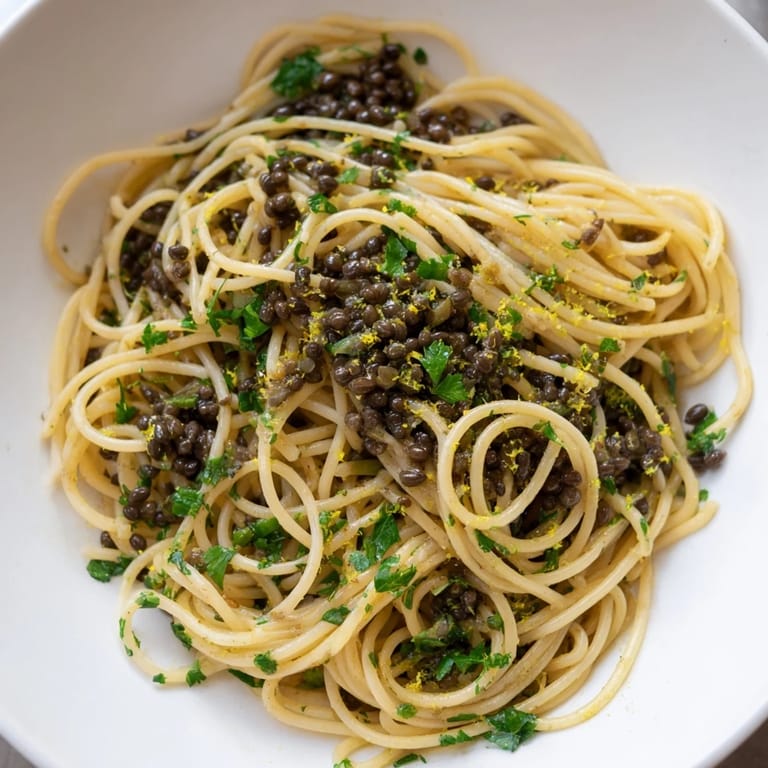
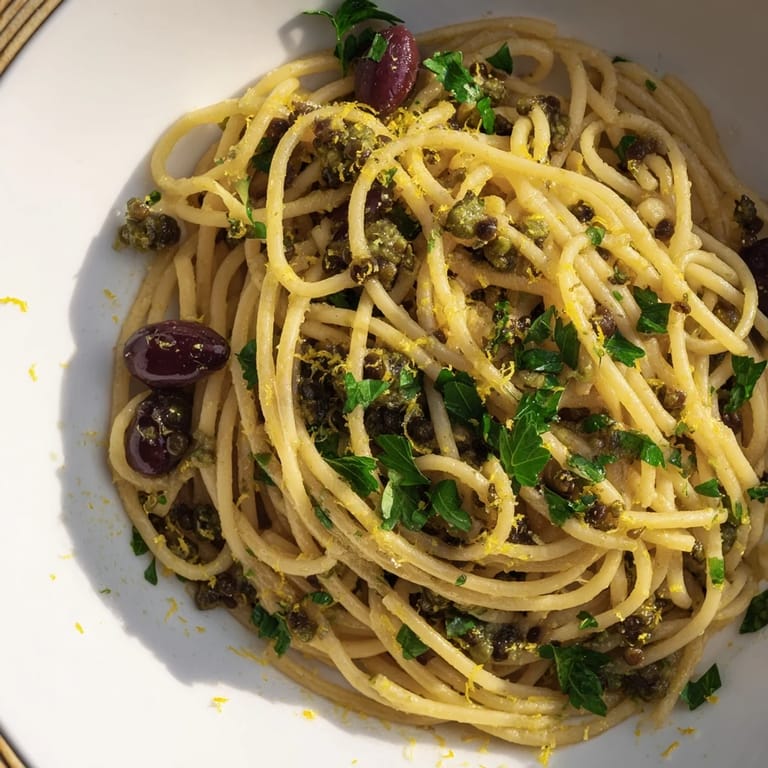
- A scatter of fresh parsley, a whisper of lemon zest, and a handful of shaved Parmesan if you're not going vegan takes this from simple to special in five seconds.
 Save to Pinterest
 I served this to my partner on our first night back from a trip, when neither of us felt like cooking anything complicated. We ate it standing at the counter straight from the pot, and that's when I knew it had crossed from recipe into something we'd make on autopilot when everything else felt like too much effort.
On Salt and How It Changes Everything
Olives and capers are already deeply salty, which means you almost never need to add salt to this dish at the end. The only seasoning that matters is black pepper, cracked fresh and generous. I learned this the hard way after adding an extra pinch of sea salt and ending up with something that tasted like a tear-stained regret. Now I taste as I go and trust that the brine in the ingredients has already done the work.
When You Want It Spicy or Different
Red pepper flakes stirred into the tapenade before mixing with the pasta will shift the entire mood—suddenly it's not Mediterranean comfort but something with a little attitude. Some nights I add a tablespoon of sun-dried tomatoes or a few chopped anchovies if I'm feeling bold, though I always leave these optional since they change who the dish is for. The base recipe is perfect as-is, but it's also forgiving enough to bend toward your cravings.
Pasta Shapes and Why They Matter Here
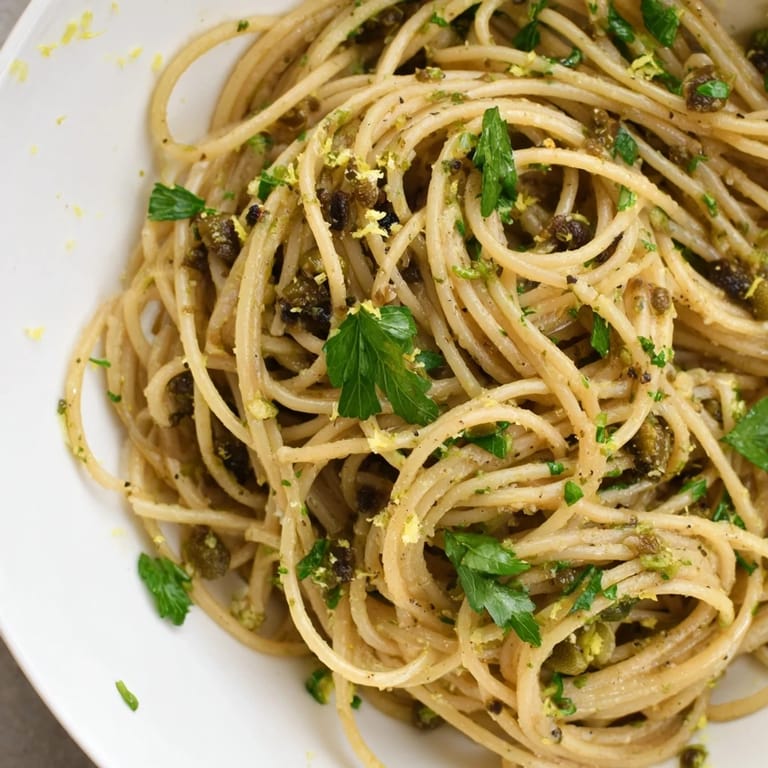
I've made this with everything from thin spaghetti to wide ribbons of pappardelle, and the sauce behaves differently with each one. Thinner, more delicate shapes let the chunky tapenade become the real star, while wider ribbons tend to showcase the pasta more equally. For this particular sauce with its coarse texture and bold flavor, I keep coming back to spaghetti or linguine because they disappear into the tapenade and let it shine. Whole wheat and gluten-free pasta work beautifully too—the slightly nuttier flavors pair better with the olives than you'd expect.
- Taste the pasta two minutes before the package says it's done so you catch it at al dente.
- If your sauce ever feels too thick, warm a splash of pasta water over gentle heat and stir it back in.
- This dish doesn't keep well refrigerated, so treat it as a right-now meal and make only what you'll eat.
 Save to Pinterest
 This pasta lives in that beautiful space where it's simple enough to make without thinking but interesting enough that you'll remember eating it. It's the kind of dish that makes a regular Tuesday feel a little bit intentional.
Common Recipe Questions
- → What type of olives work best in tapenade?
Kalamata and green olives provide a balanced, rich flavor and texture ideal for a vibrant tapenade.
- → Can I use gluten-free pasta options?
Yes, gluten-free pasta substitutes like rice or corn-based noodles work well and maintain the dish's integrity.
- → How do I get the tapenade sauce silky?
Adding reserved pasta cooking water helps emulsify the olive oil and tapenade, creating a smooth, glossy sauce.
- → What can I add for extra flavor?
A pinch of red pepper flakes or sun-dried tomatoes can introduce depth and a subtle kick to the tapenade blend.
- → Is this dish suitable for vegan diets?
Yes, use vegan pasta and skip Parmesan or use a dairy-free alternative to keep it fully vegan-friendly.