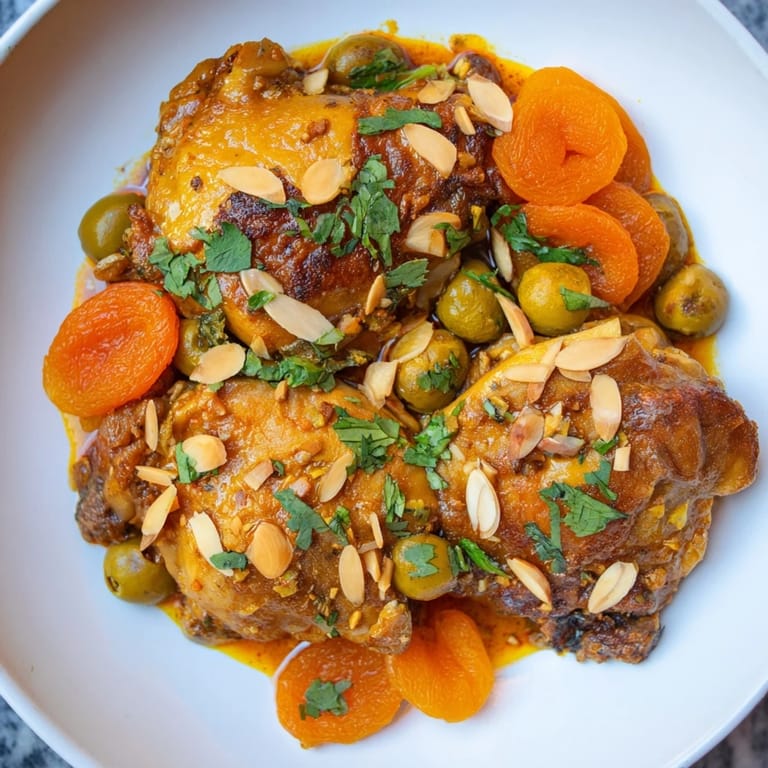
 Save to Pinterest
 I discovered this tagine on a crowded spice market street in Marrakech, watching a woman stir an enormous copper pot with such ease that I had to know her secret. She laughed when I asked for the recipe and simply said, "Let the chicken tell you when it's ready." Years later, I finally understood what she meant, and now every time I make this, I feel that same calm confidence settle over my kitchen.
I made this for my sister the first time she visited from out of state, and watching her taste the preserved lemon was worth every minute of chopping. She closed her eyes mid-bite, and when she opened them, she just said, "This tastes like somewhere beautiful." I've been making it ever since because of that moment.
Ingredients
- Bone-in, skin-on chicken thighs (1.5 lbs): They stay juicy where breasts would dry out, and the bones release gelatin that makes the sauce glossy.
- Onion and garlic (1 large, 3 cloves): The aromatic base that lets everything else shine without overshadowing the spices.
- Fresh ginger (1-inch piece): Grate it just before using so you get that bright, almost citrusy bite.
- Carrot (1 large, sliced): Adds natural sweetness and body to the sauce as it softens.
- Dried apricots (1 cup, halved): Look for ones that are a deep orange and slightly chewy, not hard and pale.
- Preserved lemon (1, optional but recommended): If you can find it, use it; if not, a little lemon zest mixed with salt gets you partway there.
- Fresh cilantro (1 small bunch): Save this for the very end so it stays bright and alive.
- Cumin, coriander, cinnamon, paprika, turmeric (1 tsp each, plus 1/2 tsp black pepper and 1/8 tsp cayenne): Toast these in your mind as a warm hug in spice form; don't skip the cayenne just because it's optional.
- Olive oil (2 tbsp): Use something you actually like tasting, not the cheapest bottle.
- Chicken broth (1 cup): Low-sodium lets you control the salt and keeps the flavors clear.
- Diced tomatoes (1 can, 14 oz, drained): Draining them prevents the tagine from becoming watery.
- Green olives (1/2 cup, pitted and halved): Add these near the end so they stay firm and don't turn mushy.
- Slivered almonds (1/4 cup, toasted): Toast them yourself just before serving if you have the time; it only takes three minutes and transforms them.
Tired of Takeout? 🥡
Get 10 meals you can make faster than delivery arrives. Seriously.
One email. No spam. Unsubscribe anytime.
Instructions
- Dry and season the chicken:
- Pat each thigh with a paper towel so the skin gets golden instead of steamed. Season generously, remembering you'll taste salt in every bite.
- Build a golden crust:
- Heat your pot until a drop of water sizzles on contact, then lay the chicken skin-side down and resist the urge to move it for a solid three minutes. You'll know it's ready when it releases from the pan without sticking.
- Create your aromatic base:
- Once the chicken is out, soften the onion and carrot slowly, letting them give up their sweetness. This takes about five minutes and is worth every second.
- Bloom the spices:
- Add garlic, ginger, and all those warm spices to the softened vegetables and cook for just a minute until the kitchen smells like every Moroccan memory you've ever had. Don't let them burn.
- Deglaze and marry the flavors:
- Pour in the tomatoes and scrape the bottom of the pot with your wooden spoon, pulling up all those dark caramelized bits. This is where the real flavor lives.
- Return the chicken and simmer gently:
- Nestle the thighs back in, add the apricots, lemon, and broth, then cover and let the heat drop to low. The gentle bubble is what you want, not an aggressive boil.
- Let time do its work:
- After 45 minutes under cover, the chicken should shred with barely a touch. Stir it once or twice, but don't fuss.
- Finish with olives and brightness:
- Uncover the pot, add the olives, and let the sauce reduce and thicken for ten more minutes. Taste and adjust salt if it needs it.
- Serve with intention:
- Warm a serving bowl, scatter cilantro and almonds on top, and serve with couscous, rice, or flatbread to soak up every drop of sauce.
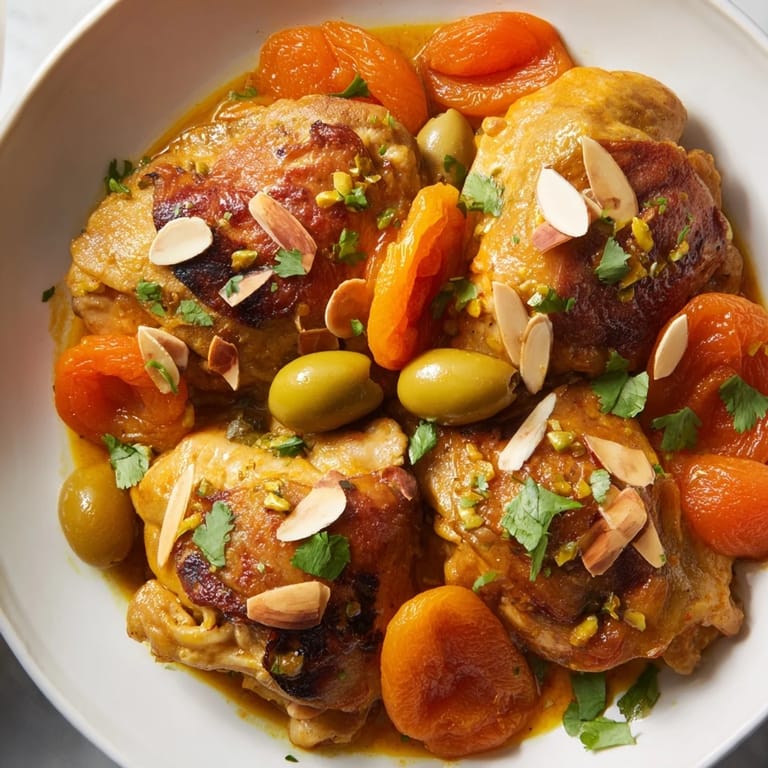 Save to Pinterest
 There's this moment about thirty minutes into cooking when your entire house smells like spice and slow-cooked chicken, and someone walks in from outside and just stops, eyes closed, breathing it all in. That's when you know you're making something that matters.
The North African Kitchen in Your Home
Moroccan cooking taught me that slow doesn't mean complicated. A tagine is really just a conversation between heat, time, and ingredient quality, where each element gets to speak without being shouted over. Once you understand that rhythm, you start seeing it in other dishes, other cultures, other ways of being in the kitchen.
Pairing and Serving
This tagine sings alongside fluffy couscous, especially if you finish the couscous with a little butter and toasted pine nuts. Rice is equally beautiful, and warm flatbread becomes almost a utensil, letting you soak up every last bit of that sweet-savory sauce. I've also served it over bulgur when I wanted something earthier, and it absolutely works.
Making It Your Own
The beauty of a tagine is that it invites improvisation without falling apart. I've added dried figs when apricots weren't available, swapped half the olives for a handful of pomegranate seeds for brightness, and once even added a small pinch of smoked paprika because I wanted something deeper.
- If you prefer less heat, skip the cayenne entirely; the warm spices are plenty.
- For a vegetarian version, use chickpeas instead of chicken and add extra root vegetables like parsnips or sweet potato.
- Make this a day ahead and reheat gently, as the flavors only deepen.
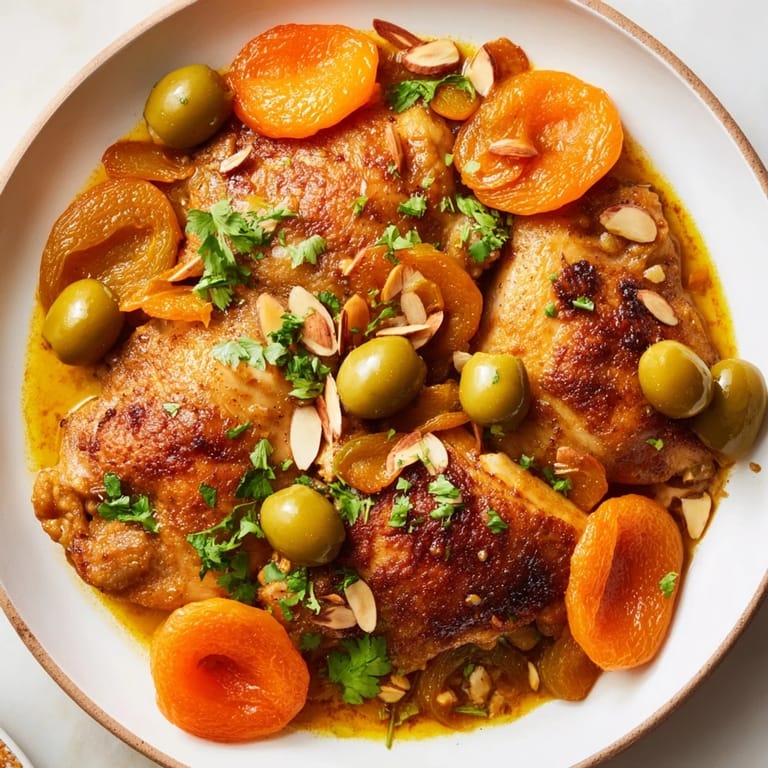 Save to Pinterest
 This tagine is the kind of dish that tastes like care, like you traveled somewhere and brought the warmth back home. Make it when you have time to be present, and it'll repay you in comfort and flavor.
Common Recipe Questions
- → What cut of chicken works best for this dish?
Bone-in, skin-on chicken thighs are ideal as they stay moist and develop rich flavor during slow cooking.
- → Can the preserved lemon be omitted or substituted?
Yes, preserved lemon adds a tangy brightness but can be skipped or replaced with a splash of lemon juice if unavailable.
- → How should I serve this tagine?
It pairs perfectly with steamed couscous, fluffy rice, or warm flatbread to soak up the sauce.
- → What spices give this dish its characteristic flavor?
Cumin, coriander, cinnamon, paprika, and turmeric combine to create the warm, fragrant spice profile typical of Moroccan cooking.
- → Can this dish be made vegetarian?
Yes, substitute chicken with chickpeas and root vegetables for a hearty, plant-based variation.