 Save to Pinterest
 There's something magical about throwing together a Mediterranean chickpea salad on a warm afternoon when the farmers market has overflowed your bag with perfect cherry tomatoes and glossy olives. I discovered this salad not through a cookbook, but through necessity—a friend was coming over, I had thirty minutes, and my fridge held little more than pantry staples and fresh produce. What emerged was so vibrant and satisfying that it became my go-to whenever I need something that tastes like you spent hours planning it, when really it took fifteen minutes and zero cooking.
I remember serving this to my sister on a Sunday in late July, when the heat made the idea of cooking anything feel criminal. She took one bite and immediately asked for the recipe, then came back the next week with her own version—she'd added shredded mint and a pinch of red pepper flakes, which honestly made it even better. That's when I realized this salad isn't something you master once and stop tinkering with; it's something that invites your own touches.
Ingredients
- Chickpeas (1 can, 15 oz): Drain and rinse them thoroughly—this removes the starchy liquid that can make the salad gummy and dulls the fresh flavors you're building.
- Cucumber (1 large): Dice it just before assembly so it stays crisp and holds its crunch rather than weeping into the dressing.
- Cherry tomatoes (1 cup): Halve them to release their juices slightly, which will season the entire salad as it sits.
- Kalamata olives (1/2 cup): Pit and slice them yourself if you can—the difference in flavor from fresh versus pre-sliced is worth the two extra minutes.
- Red onion (1/2 cup, finely diced): This is where sharpness comes from, so don't skip it; the acidity balances the creamy feta beautifully.
- Feta cheese (1/2 cup, crumbled): Use a quality block feta if possible and crumble it by hand rather than buying pre-crumbled, which can be dense and flavorless.
- Fresh parsley (1/4 cup): Chop it just before tossing so the chlorophyll stays bright green and the flavor punches through rather than turning muddy.
- Extra virgin olive oil (1/4 cup): This is your base, so don't reach for the cheap bottle—a peppery, grassy oil will elevate the entire dish.
- Lemon juice (2 tablespoons, fresh): Bottled juice is flat; fresh juice has a brightness that makes people ask what your secret ingredient is.
- Dried oregano (1 teaspoon): It's Mediterranean shorthand—a whisper of the region right in your bowl.
- Garlic clove (1 small, minced): One small clove is enough; too much will overpower the delicate balance and make you feel like you're eating garlic with a salad.
- Sea salt (1/2 teaspoon) and black pepper (1/4 teaspoon): Taste as you go—these quantities are a starting point, not gospel.
Tired of Takeout? 🥡
Get 10 meals you can make faster than delivery arrives. Seriously.
One email. No spam. Unsubscribe anytime.
Instructions
- Gather and prep:
- Line up your ingredients like you're about to conduct an orchestra. Rinse those chickpeas under cool water until the water runs clear, letting your fingers gently rub them to loosen any stubborn skins that float to the surface.
- Build the salad base:
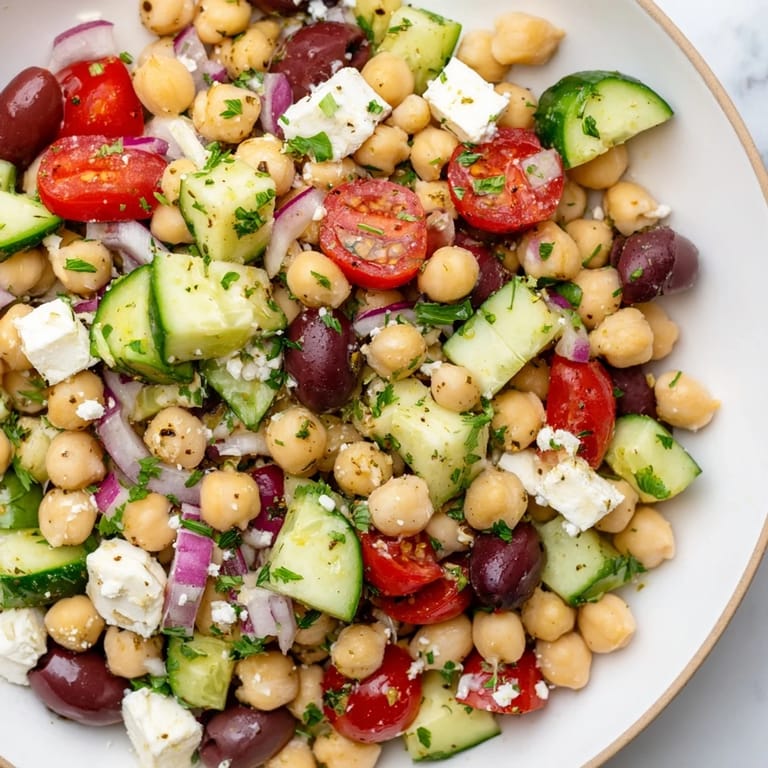
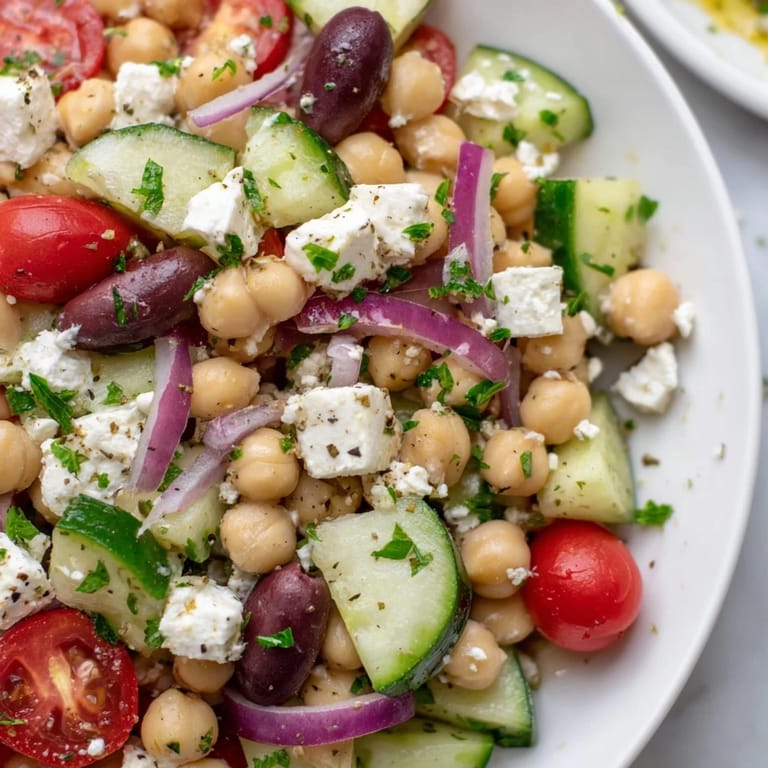
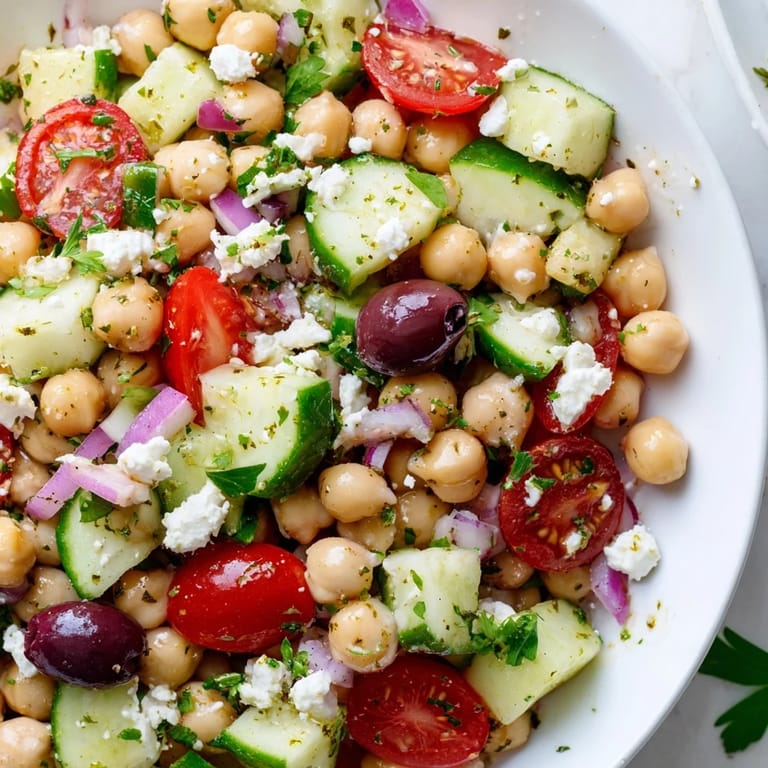
- In a large bowl, tumble together the chickpeas, cucumber, tomatoes, olives, red onion, feta, and parsley. This is where you'll notice the colors—the deep purple of the olives against the pale green cucumber, the crimson tomato halves nestled against creamy feta. Don't overthink the arrangement; just let them mingle.
- Whisk the dressing:
- In a small bowl or jar, combine the olive oil, lemon juice, oregano, minced garlic, salt, and pepper. Whisk or shake vigorously until the ingredients emulsify slightly and the garlic is evenly distributed. The dressing should smell bright and herbaceous, not just oily.
- Marry the flavors:
- Pour the dressing over the salad and toss gently but thoroughly, making sure every piece of chickpea and vegetable gets coated. Listen for the soft scraping sound of the spoon against the bowl—that's how you know you're mixing with intention.
- Taste and rest:
- Before serving, taste a forkful and adjust the salt and lemon juice if needed. If you have time, let it sit for 15 to 30 minutes in the fridge so the flavors deepen and become more intertwined.
 Save to Pinterest
 What struck me most about this salad was the afternoon my grandmother tasted it and immediately started critiquing it—not harshly, but with the intensity of someone who'd cooked Mediterranean food for sixty years. She added a whisper more oregano than I thought necessary, insisted the lemon needed to shine brighter, and then ate three servings. That's when I understood that this recipe isn't precious or fixed; it's alive and wants your confidence.
When to Serve This
This salad thrives in warm months when you're tired of cooking but not tired of eating well. Pack it for a picnic in a glass container, bring it to a potluck where everyone's bringing heavy casseroles, or plate it alongside grilled lemon chicken on a Tuesday night when you want dinner to feel like celebration without the effort. It's equally at home as a light lunch on its own or as a supporting player in a larger spread.
Variations That Work
Once you've made this salad a few times, you'll start noticing gaps you want to fill. Maybe it's the crunch of toasted pine nuts scattered over the top, or the unexpected sweetness of pomegranate seeds in autumn, or the heat of a pinch of Aleppo pepper. Some people swear by adding roasted red peppers, others introduce diced avocado at the last moment so it stays creamy and intact. A friend of mine stirs in a spoonful of hummus to make it more substantial when it's her main course, and somehow that works too.
Storage and Make-Ahead
If you're meal-prepping, keep the components separate and assemble the salad just before eating—the vegetables will stay crisp and the feta will remain distinct rather than softening into the dressing. The dressing keeps for three days in a jar in the fridge, shaken vigorously before use. The salad itself, once assembled, is best eaten within a few hours, though it won't spoil if you're gentle with it.
- Store the dressing separately in a sealed jar and shake it well before each use, as the oil and lemon juice will naturally separate.
- If you've added avocado or other delicate elements, they belong in the salad only minutes before you eat it.
- Leftover salad is perfect tucked into a pita pocket with a spoonful of hummus the next day, transformed into something entirely new.
 Save to Pinterest
 This salad has quietly become the thing I make when I want to feel Mediterranean without leaving my kitchen, when I want to eat something that tastes alive, or when I need to prove to myself that cooking doesn't always require fire or flour or hours. It's the kind of recipe that gets better each time you make it, not because you're perfecting a technique, but because you're learning what your version should taste like.
Common Recipe Questions
- → What makes this salad Mediterranean?
Key Mediterranean ingredients like olives, feta cheese, oregano, and olive oil give this salad its authentic regional flavor.
- → Can this salad be made vegan?
Yes, simply omit feta or substitute with a plant-based cheese alternative to keep it vegan-friendly.
- → How should the salad be served?
Serve it fresh as a light meal or a side dish, or chill it briefly to enhance the blend of lemon and herbs.
- → What is the best way to prepare the chickpeas?
Drain and rinse canned chickpeas well to remove excess salt and improve texture before combining them with other ingredients.
- → Can additional vegetables be added?
Yes, adding diced avocado or roasted red peppers can boost flavor and texture variety.