 Save to Pinterest
 The first time I made choux pastry, I stood in front of my oven door for twenty minutes, absolutely transfixed. I'd read about how these simple ingredients could transform into puffy golden clouds, but seeing it happen in real time felt like watching a tiny miracle. The kitchen filled with that unmistakable buttery aroma that makes everyone within a fifty-foot radius wander in, asking what's baking. When I pulled them out, perfectly risen and hollow inside, I knew I'd found something special. Adding mango pastry cream came later, inspired by an abundance of ripe mangoes and a desire to carry that tropical brightness through every bite.
I made these for a friend's summer dinner party last year, and I still remember the silence that fell over the table when everyone took their first bite. The mango flavor was so bright and unexpected against the familiar comfort of cream puffs—like discovering a secret hiding spot in your childhood home. My friend Sarah actually closed her eyes for a full ten seconds, and when she opened them, she asked if I could teach her how to make them 'right now, before we forget how good these taste.' We ended up in her kitchen until midnight, mango puree everywhere, laughing at our imperfect attempts at piping perfect circles.
Ingredients
- Water and whole milk: Using both instead of just water creates a richer, more tender choux pastry that browns beautifully and develops a deeper flavor
- Unsalted butter: Cold butter cubed into the liquid ensures even melting, and controlling the salt yourself lets you balance the final taste precisely
- All-purpose flour: This is the structure builder—when you add it all at once to the boiling liquid and stir vigorously, you're cooking the flour's starch just enough to create that signature smooth ball that pulls away from the pan sides
- Room temperature eggs: I learned the hard way that cold eggs can seize up the warm dough, leaving you with a curdled mess instead of glossy, pipeable perfection
- Mango puree: Fresh mango pureed until completely smooth gives the brightest flavor, but high-quality canned puree works beautifully when mangoes aren't in season
- Cornstarch: This thickens the pastry cream into that velvety, spoon-coating consistency that holds its shape inside the puffs without becoming starchy or gummy
- Vanilla extract: Don't skip this even with the mango flavor—it bridges the gap between the tropical fruit and the creamy, custard-like base
Tired of Takeout? 🥡
Get 10 meals you can make faster than delivery arrives. Seriously.
One email. No spam. Unsubscribe anytime.
Instructions
- Heat your oven and prepare your station:
- Preheat oven to 400°F and line a baking sheet with parchment paper—having everything ready before you start cooking the dough is crucial since choux pastry waits for no one
- Create the dough base:
- Combine water, milk, butter, sugar, and salt in a saucepan over medium heat, bringing it to a full rolling boil so the butter completely melts before adding flour
- Add the flour and cook it out:
- Dump all the flour in at once and stir vigorously with a wooden spoon for about two minutes until the mixture forms a smooth ball that pulls away from the sides—this cooks out the raw flour taste and develops the structure that will later trap steam
- Cool the dough slightly:
- Remove from heat and let it rest for three to four minutes, because adding eggs to hot dough will cook them and create scrambled egg bits instead of that smooth, glossy texture you need
- Beat in the eggs one at a time:
- Add each egg individually, mixing thoroughly after each one until completely incorporated—the dough should become glossy, smooth, and slowly fall from a spoon when lifted, which is the perfect consistency for piping
- Pipe perfect mounds:
- Transfer dough to a piping bag fitted with a large round tip and pipe twelve mounds about 1.5 inches wide onto your prepared baking sheet, leaving space between them because they'll expand significantly in the oven
- Bake until golden and puffed:
- Bake for 20 to 25 minutes at 400°F without opening the oven door—seriously, don't open it or the puffs could collapse—then reduce temperature to 325°F, prick each puff with a skewer to release steam, and bake 5 more minutes to dry out the centers completely
- Warm the mango and milk mixture:
- Heat milk and mango puree in a saucepan over medium heat until just simmering, watching closely so it doesn't boil over or scorch on the bottom
- Prepare the egg yolk base:
- Whisk together egg yolks, sugar, and cornstarch until the mixture becomes pale and smooth, which will take about two minutes of enthusiastic whisking
- Temper the egg mixture:
- Slowly pour half the hot mango-milk mixture into the yolks while whisking constantly—this gradual warming prevents the eggs from scrambling and creates a smooth, custardy base
- Cook until thickened:
- Pour everything back into the saucepan and cook over medium heat, whisking constantly, until thickened and bubbling for two to three minutes—the mixture should coat the back of a spoon and hold a line when you drag your finger through it
- Add butter and vanilla:
- Remove from heat and stir in butter and vanilla until smooth and glossy, then transfer to a bowl and press plastic wrap directly onto the surface to prevent a skin from forming
- Chill completely:
- Refrigerate for at least one hour, or until cold and completely set—trying to fill warm puffs with cold cream will create soggy, disappointing results
- Split and fill the puffs:
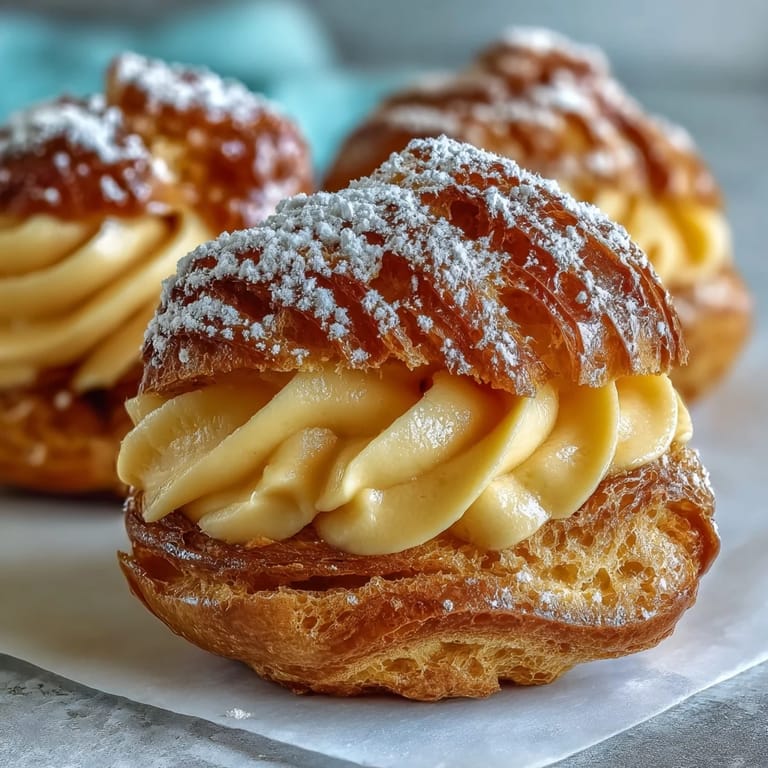
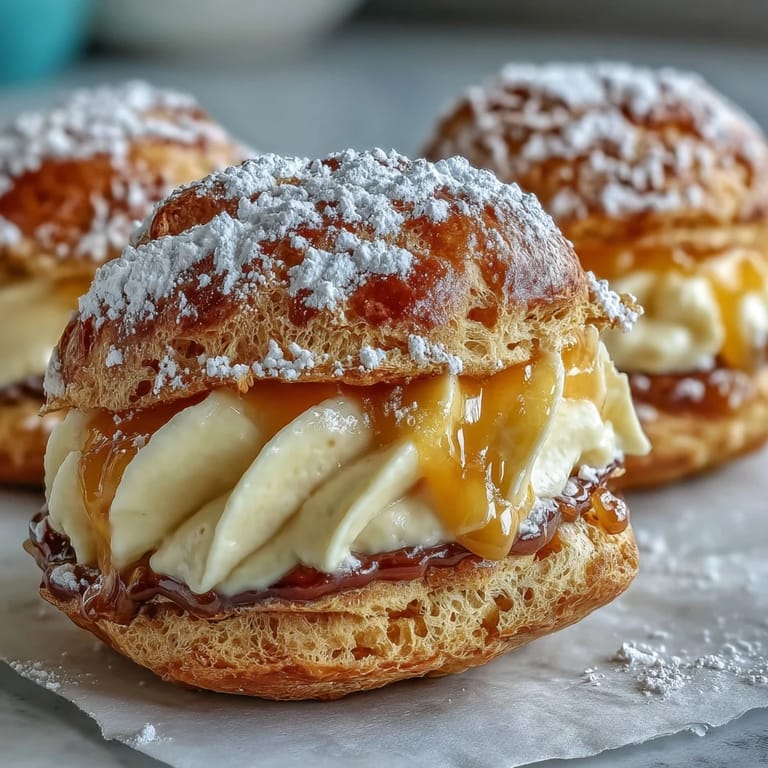
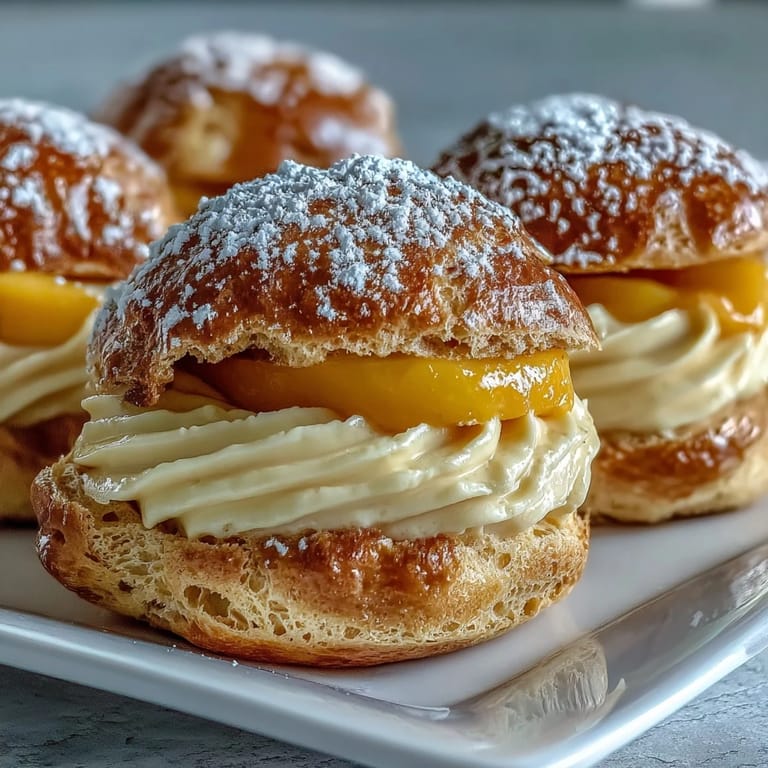
- Cut each completely cooled puff in half horizontally, fill a piping bag with your chilled mango pastry cream, and pipe a generous amount onto the bottom half of each puff
- Finish and serve:
- Replace the tops and dust generously with powdered sugar just before serving—wait until right before serving to dust, as the sugar will absorb moisture and disappear if it sits too long
 Save to Pinterest
 These became my go-to dinner party dessert after the summer dinner incident. There's something magical about serving something that looks so impressive but comes together with pantry staples and fresh fruit. I've made them for birthdays, for neighbors who need cheering up, and just because Tuesday called for something special. The best part is watching people take that first bite, eyes widening as they hit the mango cream—like they've discovered a secret you've been keeping.
Making The Pastry Cream Foolproof
The tempering step—gradually warming the egg yolks with hot liquid—is where most pastry cream goes wrong. I've had my share of curdled, grainy batches because I rushed this step. Take your time, whisk constantly, and resist the urge to dump all the hot liquid in at once. Think of it as introducing two nervous strangers at a party—slow and steady wins the race.
Getting The Perfect Puff Shape
Piping choux pastry takes practice, and my first attempts looked more like lumpy rocks than elegant cream puffs. The trick is holding the piping bag perpendicular to the baking sheet, applying even pressure, and stopping just before you think you should. Keep the tip close to the parchment, and you'll get those beautiful round mounds that puff up evenly in the oven.
Storage And Serving Timing
Filled cream puffs are best eaten within a few hours, but sometimes life demands advance preparation. You can bake the puffs a day ahead and store them in an airtight container—the pastry cream can also be made a day ahead and kept chilled. Fill them just before serving, and dust with powdered sugar at the very last minute.
- If your baked puffs feel slightly soft before filling, pop them in a 325°F oven for 5 minutes to recrisp
- Mango puree can vary in sweetness—taste your pastry cream before chilling and adjust with a little more sugar if needed
- Any leftover pastry cream makes an incredible dip for fresh fruit or a filling for crepes the next day
 Save to Pinterest
 There's nothing quite like breaking through that crisp shell into the cool, fragrant cream inside. These mango cream puffs have become my way of bringing a little sunshine to the table, no matter the season.
Common Recipe Questions
- → Can I make the choux pastry ahead of time?
Yes, bake the pastry shells up to 24 hours in advance. Store them in an airtight container at room temperature. They'll lose some crispness but regain texture when filled with the chilled cream.
- → What if I can't find mango puree?
Fresh ripe mangoes work perfectly—simply blend the flesh until smooth. You can also use frozen mango chunks, thawed and pureed. Canned mango puree is another convenient option.
- → Why did my pastry puffs deflate?
Opening the oven door too early can cause puffs to collapse. Also, underbaking leads to soggy centers that eventually sink. Ensure the shells are deeply golden and follow the final drying step at 325°F.
- → Can I freeze filled cream puffs?
It's not recommended—the moisture from the mango cream makes the pastry soggy when thawed. Freeze unfilled shells for up to a month, then fill with fresh cream when ready to serve.
- → How do I know when the pastry cream is thick enough?
The cream is ready when it bubbles and coats the back of a spoon without running off. This typically takes 2-3 minutes of constant whisking. The texture will continue thickening as it chills.
- → Can I use all milk instead of the water-milk combination?
Yes, though using all milk creates a slightly richer, more tender choux. The water-milk blend provides a balance of richness and structure that helps the puffs hold their shape beautifully.