 Save to Pinterest
 My grandmother would shape kibbeh with her eyes closed, her hands moving like they had a memory all their own. She said the dough told you when it was ready, and I didn't understand until the first time I felt that perfect resistance beneath my wet palms—neither too sticky nor too dry. Now whenever I make kibbeh, I'm transported to her kitchen in Beirut, the smell of allspice and cinnamon filling the air while her voice drifted between stories and kitchen wisdom.
I served these to my roommate during a random Tuesday night dinner, and she asked for the recipe before she'd even finished her first one. That's when I realized kibbeh isn't just Lebanese comfort food—it's a conversation starter, a way of saying someone matters enough to spend an hour in the kitchen for them.
Ingredients
- Fine bulgur wheat (1 cup): This is your foundation, and rinsing it well prevents mushiness; let it sit undisturbed so the grains soften evenly and stay distinct.
- Ground beef or lamb (500 g for dough, 250 g for filling): Use lean meat—fatty kibbeh becomes greasy and loses its elegant texture.
- Onion (2 small, finely chopped): One goes into the dough for subtle sweetness, one into the filling for deeper caramelized flavor.
- Allspice (1.5 tsp total): This warm spice is the soul of kibbeh; don't skip it or substitute carelessly.
- Cinnamon (0.75 tsp total): Just a whisper of it rounds out the spice blend and adds an almost imperceptible warmth.
- Pine nuts (0.5 cup): Toast these gently until they turn golden—they're precious and expensive, so watch them closely.
- Salt and black pepper: Taste as you go; kibbeh needs bold seasoning because the bulgur is mild and neutral.
- Cold water (2 tbsp, as needed): Add it slowly while kneading; you want the dough supple but not wet.
- Vegetable oil for frying or olive oil for brushing: If frying, keep the oil clean and hot, or your kibbeh will absorb grease instead of crisping.
Tired of Takeout? 🥡
Get 10 meals you can make faster than delivery arrives. Seriously.
One email. No spam. Unsubscribe anytime.
Instructions
- Prepare the bulgur with care:
- Rinse the bulgur under cold running water until the water runs clear, then let it rest in a fine-mesh strainer for 10 minutes. The grains will soften and become tender without turning to mush.
- Build the dough:
- Combine the softened bulgur with ground meat, chopped onion, and all the spices in a large bowl. Knead everything together like you're making bread, adding cold water one tablespoon at a time until the mixture becomes smooth and cohesive enough to hold a shape.
- Make the filling:
- Heat olive oil in a skillet and sauté the onion until it softens and turns golden at the edges. Add the second batch of ground meat, breaking it into small pieces as it cooks, then stir in the pine nuts, allspice, cinnamon, salt, and pepper—cook until the nuts are toasted and fragrant, about 3 to 4 minutes.
- Cool and refrigerate:
- Spread the filling on a plate to cool while you chill the dough for at least 20 minutes; this makes shaping easier and prevents the filling from tearing through the dough.
- Shape with wet hands:
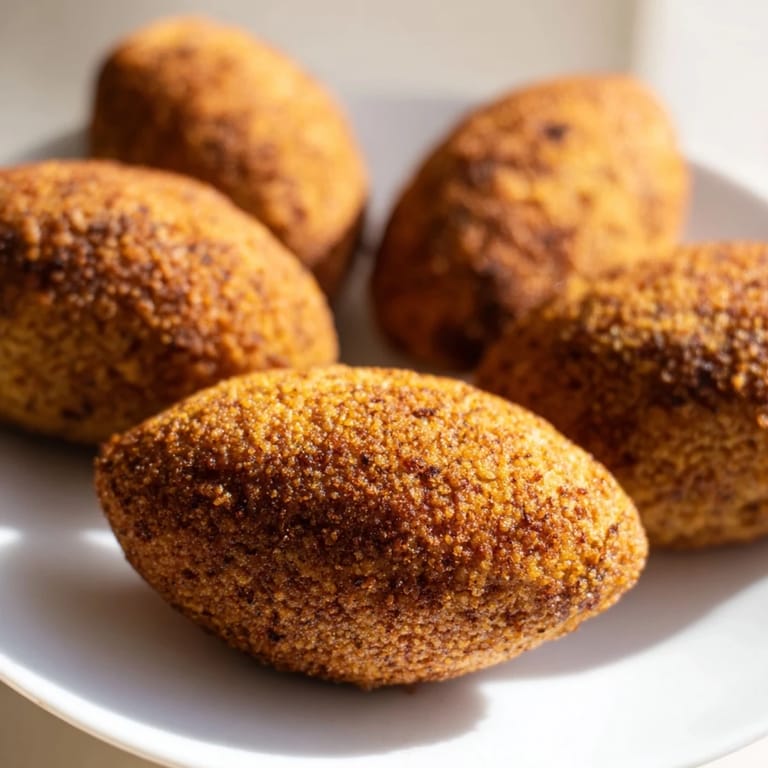
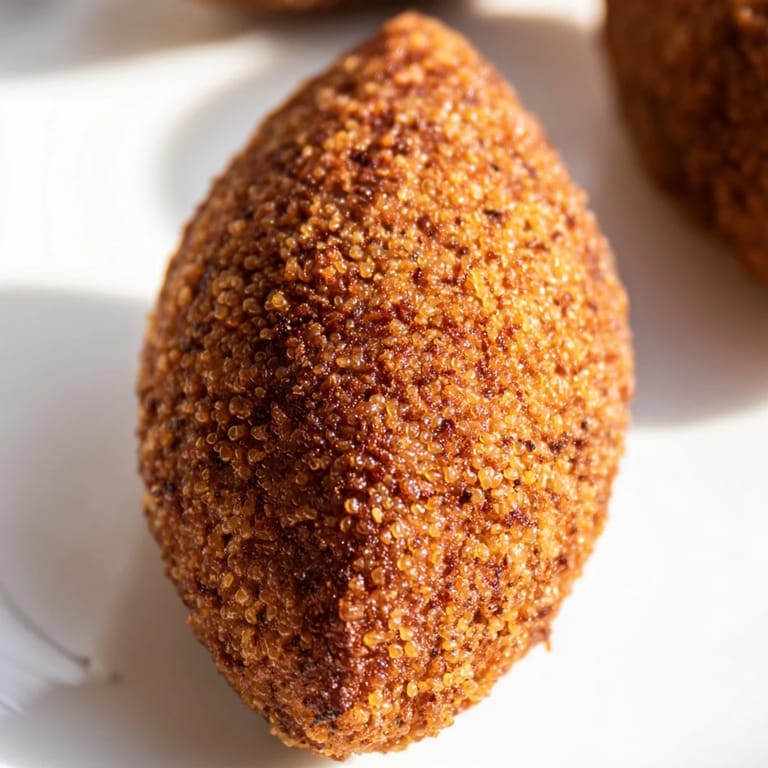
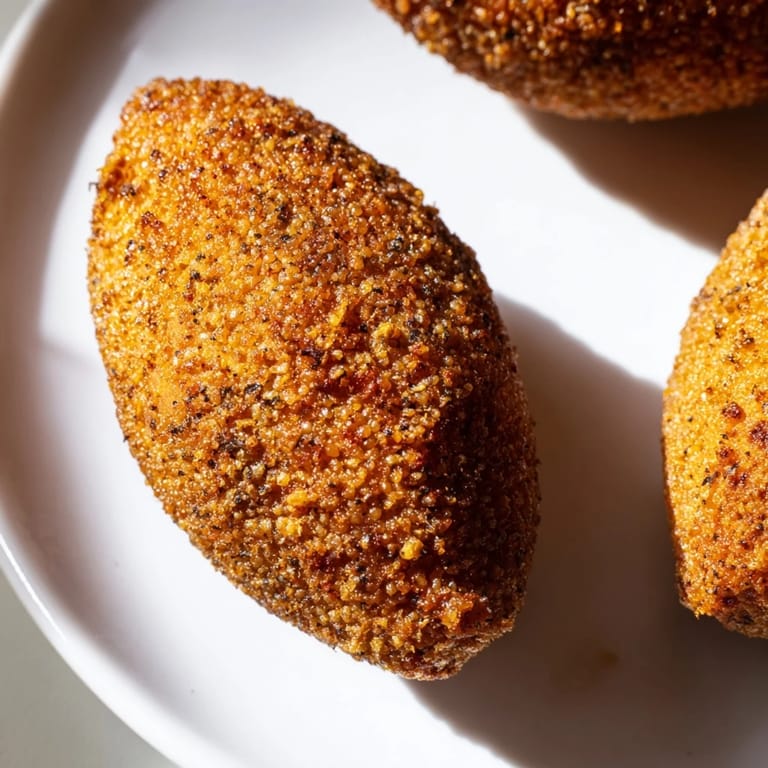
- Wet your hands with cold water and take a golf-ball-sized piece of dough, then flatten it gently in your palm to form a thin, boat-shaped shell. Place a small spoonful of filling in the center, then pinch and seal the edges together, shaping it into an elongated torpedo or football that tapers at both ends.
- Fry for maximum crispness:
- Heat vegetable oil to 180°C (350°F) and fry the kibbeh in batches for 4 to 5 minutes, turning them occasionally, until they're deep golden brown and the surface shatters slightly when you bite it. Drain on paper towels while they're still hot.
- Or bake for a lighter version:
- Preheat the oven to 200°C (390°F), arrange kibbeh on a parchment-lined baking sheet, brush them lightly with olive oil, and bake for 25 to 30 minutes, turning halfway through, until golden and crisp.
 Save to Pinterest
 There's a moment when you pull the first batch from the oil and the kitchen fills with that unmistakable aroma—spice, crispy wheat, caramelized meat—and you know you've done something right. That's when kibbeh stops being just a recipe and becomes a small act of love.
Choosing Between Frying and Baking
Frying gives you that incomparable shatter, that golden-brown perfection that traditionalists insist upon, but baking is honest too—it creates a gentler crispness and makes the dish feel less heavy. I fry mine when I have guests and want to impress, but when I'm cooking for a weeknight dinner, I bake them and feel just as satisfied.
What to Serve Alongside
Kibbeh shines brightest when surrounded by cool, bright flavors that cut through the richness. A garlicky yogurt sauce or tahini drizzled over the top is traditional, but a crisp tomato and cucumber salad with lemon vinaigrette is equally important—it balances every spiced, meaty bite.
Making Them Ahead
I've learned that frozen kibbeh are actually easier to fry than fresh ones because the cold dough is more forgiving, and you can cook them straight from the freezer without thawing. You can prepare the filled, shaped kibbeh up to three months in advance, which means you're always one hot pan away from an impressive meal.
- Arrange shaped kibbeh on a tray, freeze them solid for at least 4 hours, then transfer to freezer bags to save space.
- Add 1 to 2 extra minutes to the frying time if cooking from frozen.
- Baked kibbeh thaws and crisps beautifully in a 180°C oven for about 15 minutes.
 Save to Pinterest
 Every time I make kibbeh, I understand a little more why my grandmother didn't need to watch her hands—she was teaching them to remember. Now I'm doing the same.
Common Recipe Questions
- → What is kibbeh made of?
Kibbeh combines fine bulgur wheat with spiced ground lamb or beef, along with onions and warming spices to form a dough and a separate savory filling.
- → How do you shape kibbeh croquettes?
Moistened hands flatten the dough into a thin oval shell, which is filled with spiced meat and pine nuts, then sealed and shaped into torpedo-like forms.
- → What cooking methods can be used for kibbeh?
Kibbeh can be deep-fried until golden and crispy or brushed with olive oil and baked for a less oily alternative, both producing a crisp exterior.
- → Can kibbeh be prepared ahead of time?
Yes, kibbeh croquettes can be shaped and frozen before cooking, preserving their flavors for up to three months.
- → What spices are commonly used in kibbeh?
Allspice, cinnamon, black pepper, and salt provide distinctive warm and aromatic notes essential to kibbeh’s flavor profile.
- → Are there vegetarian alternatives to the traditional filling?
Cooked lentils and sautéed mushrooms make flavorful vegetarian fillings that maintain the dish’s texture and spice balance.