 Save to Pinterest
 I discovered the magic of edible mazes at a dinner party where someone handed me a pencil and said, "Draw what you want guests to follow." That's when it clicked—food doesn't have to be served on a plate; it can be an experience, a puzzle, a conversation starter all at once. The Labyrinth was born from that moment, combining my love of nuts and seeds with the pure joy of watching people navigate their way to a prize. It's become my favorite way to say hello at a gathering without saying much at all.
Last summer, I made this for a garden gathering on a long wooden board, and someone's five-year-old spent twenty minutes carefully following the path with her finger before eating a single cashew. Her mother watched with the kind of wonder usually reserved for much fancier things. That's when I realized this wasn't just an appetizer—it was permission to play with your food.
Ingredients
- Raw almonds: These stay crisp longer than most nuts and provide a subtle earthiness that balances richer varieties.
- Roasted cashews: Their buttery sweetness is the anchor of the whole arrangement, so buy good ones if you can.
- Pistachios: The green keeps your maze vibrant and their slight saltiness pairs beautifully with seeds.
- Pecan halves: I use these for color contrast and because their rich flavor stops people mid-chew.
- Hazelnuts: These are your secret weapon for adding an unexpected chocolatey note without any chocolate.
- Pumpkin seeds: They're sturdy enough to handle being picked up and have a satisfying crunch.
- Sunflower seeds: Mild and reliable, these fill gaps without overpowering and keep the maze looking full.
- Black sesame seeds: The dramatic color is everything here—they make the path pop against lighter nuts.
- White sesame seeds: These add texture and work as visual breathing room between darker elements.
- Flaxseeds: Small enough to tuck into corners and dense enough to add substance without being heavy.
- Soft-ripened cheese: Brie and Camembert work best because they actually soften as the board sits out, rewarding the journey with better texture.
- Dried cranberries or cherries: These fill empty spaces with pops of color and a tart-sweet contrast that keeps people coming back.
- Fresh herbs: Thyme and rosemary add an unexpected savory note that makes the cheese feel more sophisticated.
- Honey or agave: A light drizzle on the cheese creates visual shimmer and balances the saltiness of the surrounding nuts.
Tired of Takeout? 🥡
Get 10 meals you can make faster than delivery arrives. Seriously.
One email. No spam. Unsubscribe anytime.
Instructions
- Sketch your path (optional but helpful):
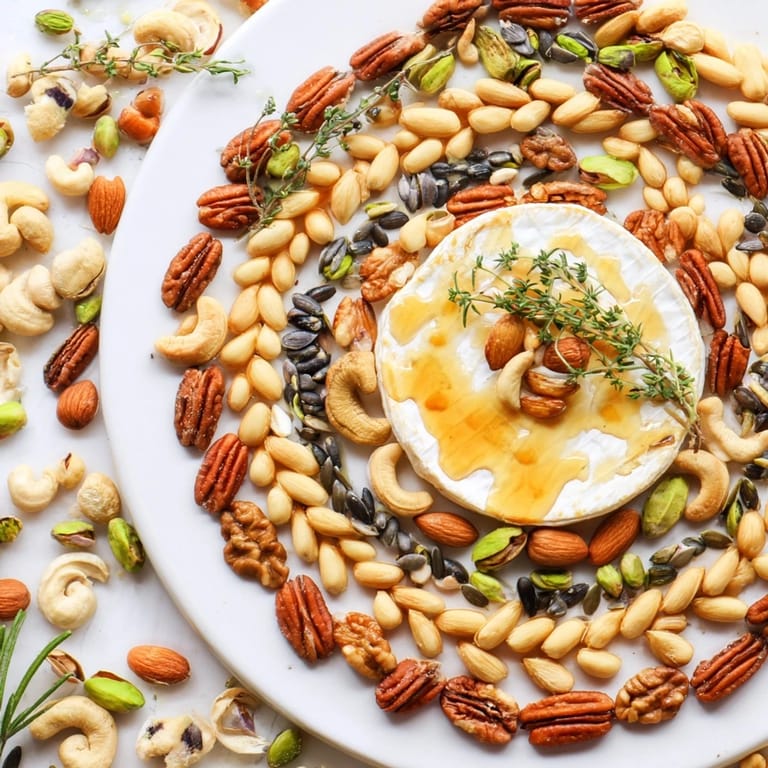
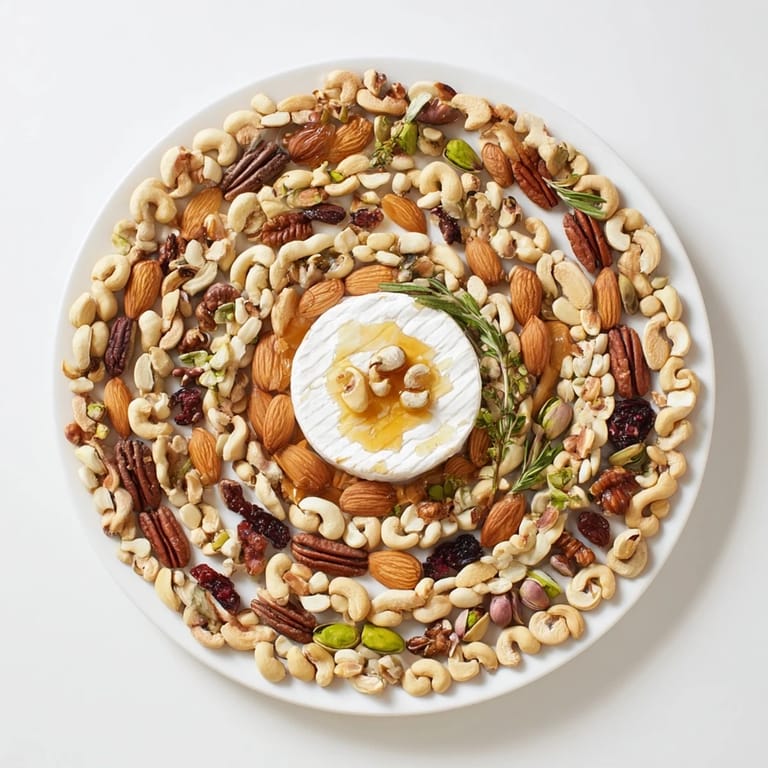
- Use a pencil to lightly draw a winding labyrinth on your platter, curving from the outer edge toward the center. If you mess up, it's just pencil—no pressure.
- Begin the first line:
- Start at the outer edge with your first nut or seed, laying them single-file along your pencil line. This is meditative work—there's no rush, and the rhythm of it is oddly calming.
- Build with contrast:
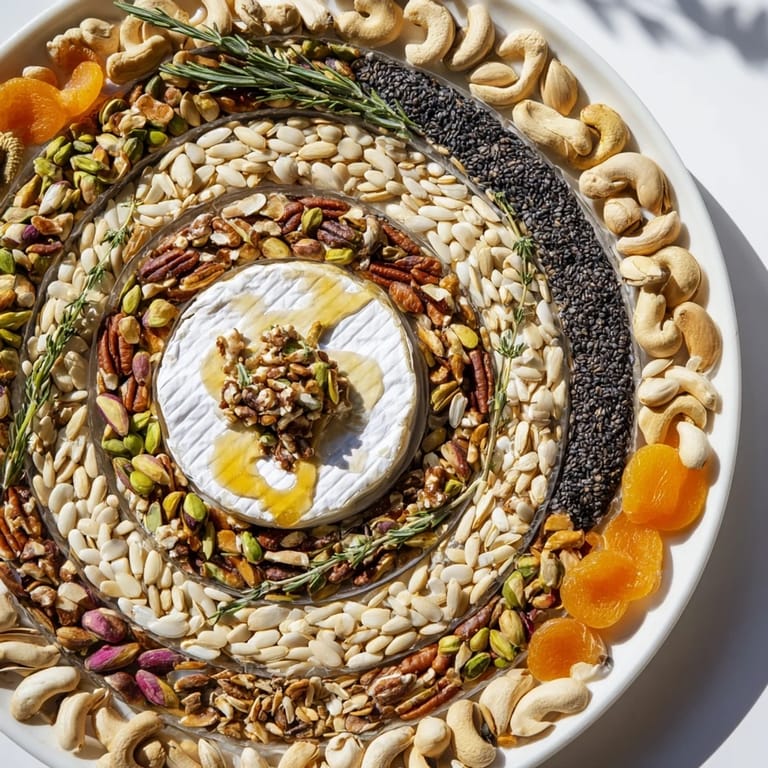
- Move to the next line inward and switch to a different nut or seed, choosing colors and sizes that pop against what came before. Almonds next to sesame seeds, pistachios next to sunflower seeds—let your eye guide you.
- Keep the spiral moving:
- Continue winding your path inward, layer by layer, until you're just a few inches from the center. Step back every few lines to see how the overall pattern is emerging.
- Place your prize:
- Set the cheese wheel dead center, and suddenly the whole arrangement has a purpose and a destination.
- Crown the cheese:
- Scatter fresh herbs across the top and let honey drizzle down the sides in uneven rivulets—perfectly imperfect is the goal here.
- Fill the gaps:
- Tuck dried cranberries or cherries into any spaces that feel empty, treating them like jewels in a crown.
- Invite people to play:
- Hand out small forks or picks and encourage guests to follow the path, or skip around, or make their own rules entirely.
 Save to Pinterest
 A friend once told me that the best appetizers are the ones people remember not for how they tasted, but for how they made them feel. The Labyrinth does that—it gives people permission to slow down, to trace a path with their hands, to make the small ritual of eating into something playful and shared.
The Art of Arrangement
The pencil sketch is optional, but I've learned it saves you from second-guessing yourself halfway through. Some of my best labyrinths came from abandoning the pencil and just following my instinct, but a light guide gives you confidence and keeps your spiral from getting lopsided. Think of it like sketching a drawing before you paint—it's not the finished product, just permission to move forward.
Why Nuts and Seeds Matter
Every nut and seed brings something different to the table—crunch, richness, color, surprise. Almonds are your steady friend, cashews are your crowd-pleaser, but it's the hazelnuts and the contrast of black and white sesame that make people pause and actually taste what they're eating. The mix isn't just about flavor; it's about texture and visual interest. When you bite into a pecan after sunflower seeds, your mouth experiences a small story, and that's what makes this board feel generous rather than random.
Making It Your Own
This is where you get to make it personal, and honestly, that's the whole point. Swap out any nut or seed you don't like for something you do, or lean into allergies by doubling down on what everyone can eat. I've made vegan versions by using a plant-based cheese, and they're just as stunning and somehow feel even more intentional. The beauty of The Labyrinth is that it's as much about what you choose to include as what you choose to leave out.
- Add candied ginger for warmth, or dried apricots for tartness if dried cranberries feel too sweet.
- Swap the soft cheese for a hard aged one if your crowd prefers something they can slice, though the soft version really does deliver more theater.
- Consider mixing in some dark chocolate chips at the very center if you're feeling bold and want to blur the line between appetizer and dessert.
 Save to Pinterest
 The Labyrinth reminds me that sometimes the best way to bring people together isn't through complicated cooking, but through creating a moment worth sharing. Every time I set one of these boards on a table, I watch something shift in the room—people slow down, they smile, they actually enjoy each other while eating. That's the real magic.
Common Recipe Questions
- → What nuts and seeds work best for this platter?
Use a mix of raw almonds, roasted cashews, pistachios, pecans, hazelnuts, pumpkin seeds, sunflower seeds, sesame seeds, and flaxseeds to create diverse textures and colors.
- → Can I make a vegan version?
Absolutely, substitute the cheese wheel with a plant-based alternative to accommodate vegan preferences.
- → How do I create the labyrinth design?
Sketch a gentle winding path on your serving platter with a pencil if desired, then arrange the nuts and seeds in single-file lines following the sketch.
- → What pairings complement this dish?
This platter pairs beautifully with light white wines like Sauvignon Blanc or sparkling ciders, enhancing the nutty and creamy flavors.
- → Are there any allergen considerations?
Note that this includes tree nuts and seeds, and dairy if using traditional cheese. Check ingredients carefully if allergies exist.