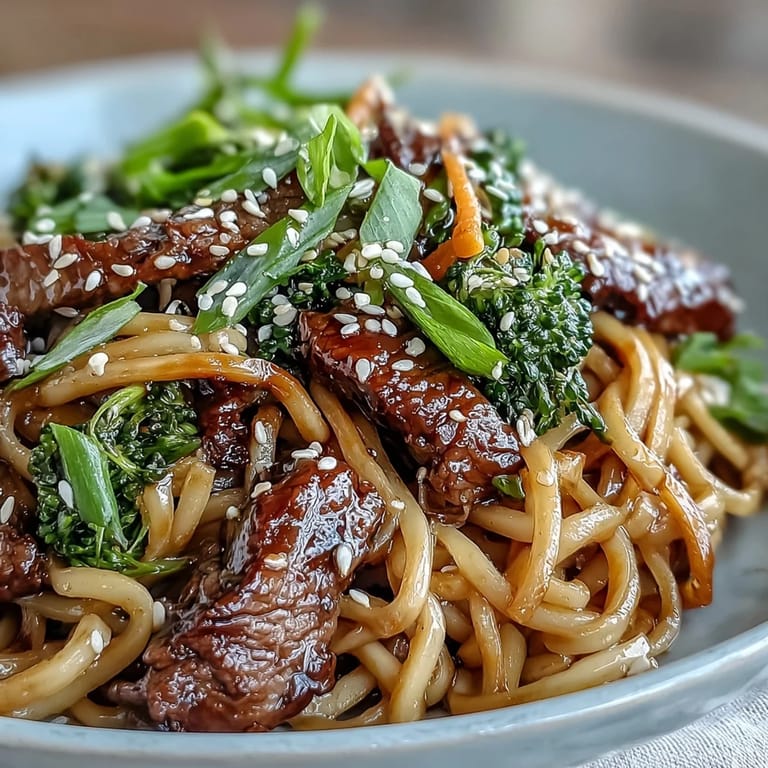
 Save to Pinterest
 My friend Sarah showed up at my apartment one rainy Tuesday with a bag of rice noodles and a challenge: make something that tastes like the Korean beef noodle bowl we'd demolished at that tiny spot near her office. I had no recipe, just her vague description of how the sauce tasted—glossy, slightly sweet, deeply savory. An hour later, my kitchen smelled like garlic and ginger, and we were slurping noodles straight from the bowl, wondering why we hadn't tried this at home sooner.
I made this for my roommate during a particularly exhausting work week, and watching his face light up when he took the first bite reminded me that good food doesn't require fancy techniques or complicated ingredients—just attention and care. He asked for seconds before finishing his first bowl, which felt like the highest compliment I could receive.
Ingredients
- Rice noodles (8 ounces): Soft and silky, they absorb the sauce beautifully and cook in minutes—don't skip the cold water rinse after draining if you want them tender without clumping.
- Flank steak (1 pound, thinly sliced against the grain): Slicing against the grain is the secret to tenderness; it breaks up the muscle fibers so every bite melts rather than cheats.
- Broccoli florets (1 cup): Cut them bite-sized so they cook evenly and don't overshadow the beef in your bowl.
- Bell pepper (1, red or yellow, sliced): The natural sweetness balances the umami of the soy sauce beautifully.
- Carrot (1, julienned): Thin matchsticks cook quickly and add a subtle crunch that keeps things lively.
- Green onions (2, chopped): Save these entirely for garnish—their fresh bite is what brings the whole dish into focus.
- Garlic (3 cloves, minced): Mince it fine so it distributes evenly and toasts just enough to lose its harsh edge.
- Ginger (1 teaspoon, grated): Fresh ginger brings warmth without heat; use a microplane if you have one so it releases its oils fully.
- Soy sauce (1/3 cup): The backbone of your sauce, so choose one you'd actually drink a spoonful of.
- Brown sugar (2 tablespoons): It dissolves seamlessly into the sauce and adds depth that white sugar can't match.
- Sesame oil (1 tablespoon): A small amount goes a long way—it's potent and golden and honestly transforms everything it touches.
- Vegetable oil (2 tablespoons): Use it to get your skillet hot enough to sear the beef properly without sticking.
- Sesame seeds: A pinch of these at the end adds texture and that toasted, nutty finish that makes people ask for your recipe.
Tired of Takeout? 🥡
Get 10 meals you can make faster than delivery arrives. Seriously.
One email. No spam. Unsubscribe anytime.
Instructions
- Get Your Noodles Ready:
- Boil water according to your noodle package and cook them until just tender, then drain and rinse under cold water so they don't stick together into one giant clump. Set them aside in a bowl where they won't dry out.
- Heat Your Skillet Hot:
- Get your large skillet or wok screaming hot over medium-high heat, then add vegetable oil—you want it shimmering and almost smoking so the beef sears properly instead of steaming.
- Sear the Beef Until Golden:
- Working in a single layer if possible, add your thin beef slices and let them sit for 2 to 3 minutes until they develop a caramelized crust on the bottom. Stir once, cook another minute, then remove to a clean plate.
- Build Flavor with Aromatics:
- In that same skillet (don't wash it, all those brown bits are flavor), add minced garlic and ginger and stir constantly for about 30 seconds until the smell hits your nose—that's when you know they're toasted and ready.
- Stir-Fry Your Vegetables:
- Toss in broccoli, bell pepper, and carrot and keep the heat high, stirring frequently so everything cooks evenly without getting mushy. You want a gentle sizzle and maybe 5 minutes of cooking time—the vegetables should still have personality when you bite into them.
- Make Your Sauce Magic:
- While vegetables cook, whisk together soy sauce, brown sugar, and sesame oil in a small bowl until the sugar dissolves completely and everything looks glossy and unified.
- Bring It All Together:
- Return the beef to the skillet, pour that gorgeous sauce over everything, and stir gently so every piece of beef and vegetable gets coated. Add your cooked noodles and toss gently for about 2 minutes until hot and evenly sauced.
- Finish with Grace:
- Taste one last time—adjust soy sauce if you want more depth, or sesame oil if it needs richness—then top with chopped green onions and a scatter of sesame seeds.
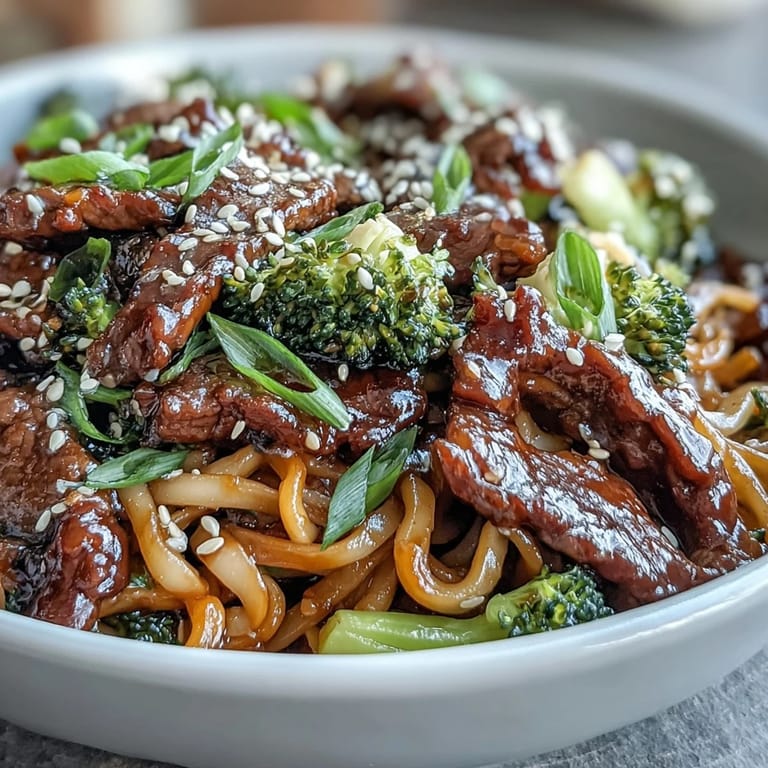 Save to Pinterest
 My mom tasted this once and said it reminded her of traveling through Seoul, which felt impossible since I made it in my tiny city kitchen with grocery store ingredients. But that's what good cooking does—it bridges memory and moment, turning an ordinary Tuesday dinner into something that feels like stepping into someone else's story.
Why Slicing Matters
I learned about cutting against the grain the hard way when my first attempt came out chewy and stubborn. The muscle fibers in beef run in one direction, and when you slice perpendicular to them, you break those fibers into shorter segments so they can't tense up when cooked. Now I always take an extra minute to identify the grain and angle my knife accordingly—it's a small act that transforms the entire eating experience.
The Science of the Sear
High heat and minimal crowding are what create that mahogany crust on the beef through a process called the Maillard reaction, where proteins and sugars bond to create complex, savory flavors. When I started cooking the beef in batches instead of throwing it all in at once, the results improved dramatically—suddenly I had texture and depth instead of pale, steamed meat swimming in its own moisture.
Making This Your Own
Once you understand the structure of this dish, you can play with it endlessly without losing what makes it special. Swap vegetables based on the season, add a splash of sriracha if you want heat, or try chicken or tofu if beef isn't your thing. The real magic isn't in following orders perfectly—it's in understanding why each step exists so you can adapt with confidence.
- Add snap peas, snow peas, or zucchini for spring and summer variations that still cook in the same time window.
- A drizzle of gochujang or sriracha mixed into the sauce transforms this into something spicy without overpowering the other flavors.
- Leftovers taste even better the next day because the noodles soak up the sauce overnight, so make extra if you're meal prepping.
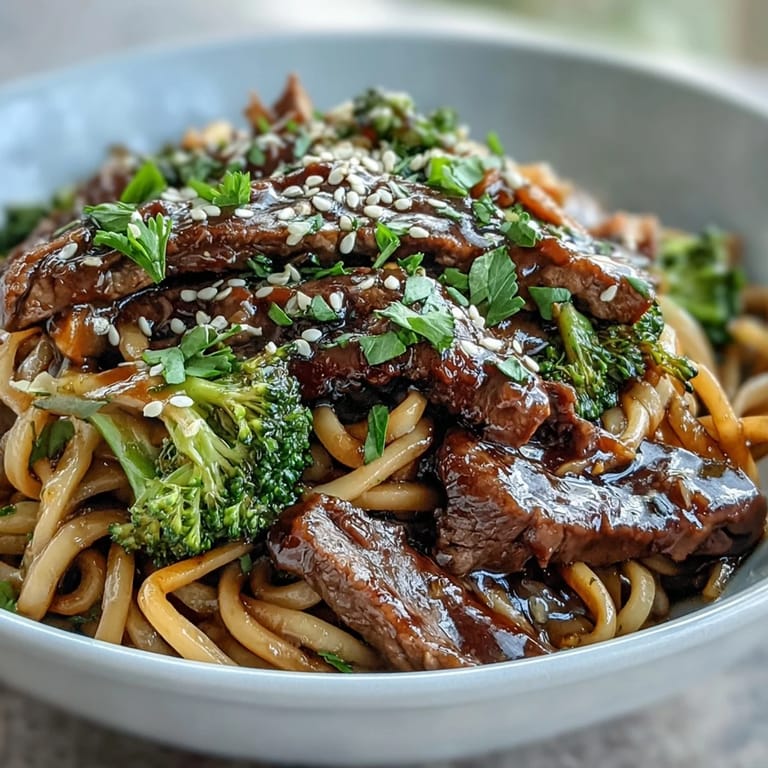 Save to Pinterest
 This dish taught me that Korean food isn't about complexity or hard-to-find ingredients—it's about balance and understanding how flavors speak to each other. Make it once and you'll understand why it's become something I return to whenever I want to feel competent and nourished at the same time.
Common Recipe Questions
- → Can I use a different type of noodle?
Yes, you can substitute rice noodles with lo mein, udon, or even spaghetti if needed. Adjust cooking times according to package directions.
- → How do I slice flank steak properly?
Slice the flank steak thinly against the grain for maximum tenderness. Partially freezing the meat for 15-20 minutes makes slicing easier.
- → Can I make this dish spicier?
Absolutely! Add sriracha, gochujang, or red pepper flakes to the sauce for extra heat. Start with a small amount and adjust to taste.
- → What protein alternatives work well?
Chicken breast, pork tenderloin, shrimp, or firm tofu all make excellent substitutes for flank steak. Adjust cooking times based on your chosen protein.
- → How should I store leftovers?
Store in an airtight container in the refrigerator for up to 3 days. Reheat gently in a skillet or microwave, adding a splash of water if needed.
- → Is this dish gluten-free?
It can be made gluten-free by using tamari or gluten-free soy sauce and confirming your rice noodles are certified gluten-free.