 Save to Pinterest
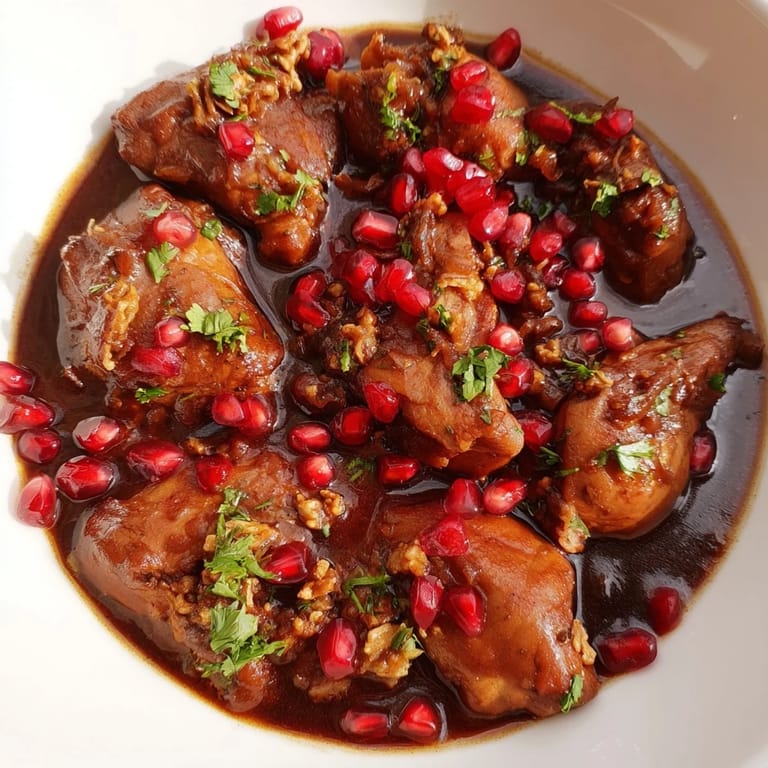
 The first time I truly understood fesenjan was when my grandmother handed me a wooden spoon and told me to taste the sauce mid-simmer. That glossy, jewel-dark reduction coating the back of the spoon—part sweet pomegranate, part earthy walnut, with a whisper of cinnamon—changed everything I thought I knew about Persian cooking. It wasn't one flavor dominating; it was a conversation happening on my tongue. Now whenever I make this stew, I'm transported back to her kitchen, the smell of toasted walnuts filling the air, and that quiet moment when she smiled and said, 'This is how you know it's ready.'
I made this for a dinner party once when I was nervous about impressing someone's family, and halfway through cooking, I realized I didn't need to be. The stew did the impressing for me—it filled the room with such warmth that by the time we sat down, everyone was already leaning in, asking questions, wanting to know the story behind it. That's when I learned that fesenjan isn't just food; it's an invitation to slow down together.
Ingredients
- Boneless chicken thighs or duck (700 g): Thighs stay tender through the long simmer and have enough fat to absorb the sauce without drying out—duck is traditional, but chicken is just as honest and more forgiving.
- Walnuts (250 g, finely ground): This is your stew's backbone; grinding them fresh makes all the difference because store-bought walnut flour can turn bitter sitting on shelves.
- Pomegranate molasses (500 ml): Don't skip this—it's the soul of the dish, giving you that deep tart punch that can't be replicated by lemon or vinegar.
- Water (500 ml): This becomes part of the sauce as it reduces, so use filtered water if you can; it keeps the flavors clean.
- Onion (1 large): Finely chopped means it almost disappears into the sauce, adding sweetness and body without announcing itself.
- Sugar (2 tbsp): Start here and adjust—this isn't about sweetness, it's about balance; some pomegranate molasses batches are tangier than others.
- Cinnamon, turmeric, cardamom (1/2 tsp, 1/4 tsp, 1/4 tsp): These spices are the quiet conversation that makes the whole dish feel Persian rather than generic; don't skip the cardamom if you have it.
- Salt and black pepper (1/2 tsp each): Season the meat generously before browning—this step builds flavor that carries through the entire stew.
- Vegetable oil (2 tbsp): Use something neutral so the spices and pomegranate take center stage.
Tired of Takeout? 🥡
Get 10 meals you can make faster than delivery arrives. Seriously.
One email. No spam. Unsubscribe anytime.
Instructions
- Season and prepare your canvas:
- Pat your meat dry and season generously with salt and pepper on all sides. This matters more than you might think—the salt helps the meat hold onto its juices during browning, and dry meat means better browning, which means deeper flavor in every bite.
- Build your base with caramelized onions:
- Heat oil over medium heat and add your onions, stirring occasionally. Let them take their time turning golden brown (8–10 minutes)—this is where the stew's sweetness foundation begins. You'll know they're ready when they've collapsed into soft, amber-colored strands.
- Brown the meat to lock in richness:
- Increase heat slightly and add the meat to your golden onions, letting each piece rest in the pot for a minute or two before stirring. This browning step creates flavor compounds through the Maillard reaction that make the finished stew taste deeper and more complex than if you skip it.
- Toast the walnuts into the fat:
- Stir in your ground walnuts and cook for 2–3 minutes, stirring constantly. You'll feel the texture change under your spoon as the heat brings out the walnuts' oils; this step transforms them from just a thickener into something rich and toasted that defines the whole dish.
- Build the sauce with balance:
- Add pomegranate molasses, water, sugar, and spices all at once, stirring well so everything dissolves. The mixture will look dark and glossy, almost like liquid silk—this is exactly what you want.
- Simmer gently, covered, for the long haul:
- Bring to a gentle boil, then lower the heat to a whisper and cover. Let it simmer undisturbed for about an hour, stirring occasionally. You're looking for the meat to become tender enough to break with just a spoon, and the sauce to deepen in color as the flavors marry.
- Reduce uncovered to thicken and concentrate:
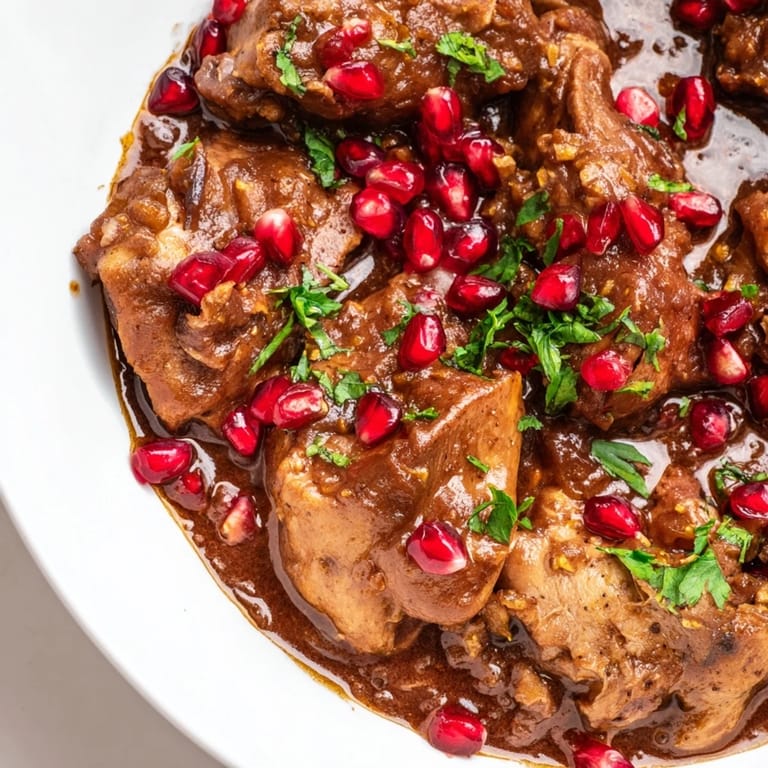
- Remove the lid and simmer for another 30 minutes, stirring frequently. Watch for the oil from the walnuts to rise to the surface—this is your signal that the sauce has thickened and concentrated beautifully. The stew should coat the back of a spoon like silk when you're done.
- Taste, adjust, and rest before serving:
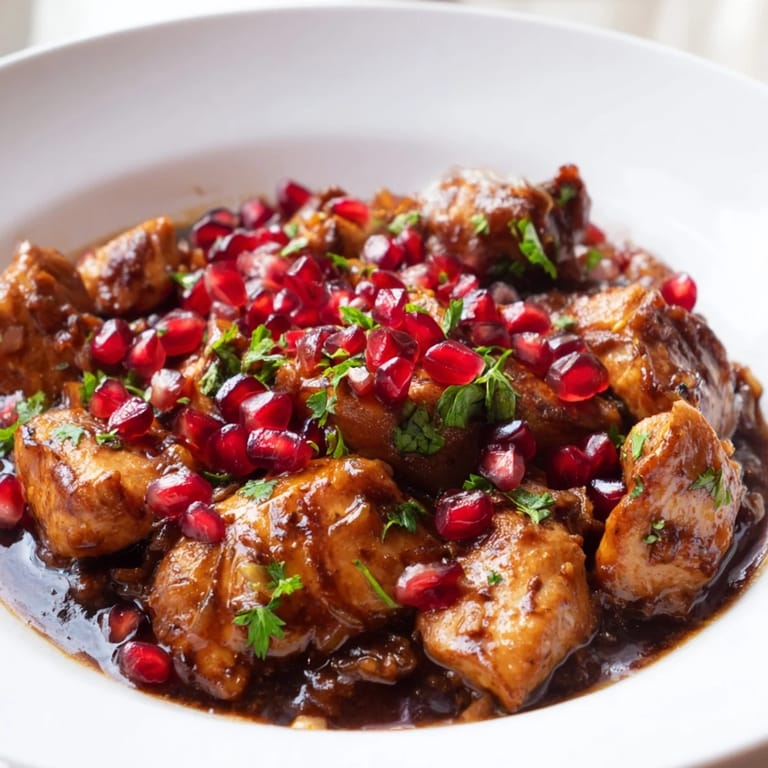
- Taste it now and fine-tune the seasoning. If it feels too tart, add a bit more sugar; if too sweet, a squeeze of lemon can help. Serve hot with steamed basmati rice, scattered with pomegranate seeds and fresh parsley if you have them.
 Save to Pinterest
 Years ago, I made this for someone going through a difficult time, and they told me months later that they'd made it again and again, that cooking it had become a way to remind themselves that good things still existed. That's when I understood that fesenjan carries something beyond ingredients—it's built on patience, on care, on the belief that some things are worth taking time for.
The Poetry of Balance
What makes fesenjan feel almost magical is how it plays three flavor notes against each other: the pomegranate's bright tartness cuts through the richness of the walnut sauce, while cinnamon and cardamom add a spice that's more whisper than shout. It's not about any single flavor winning; it's about them creating something together that none of them could achieve alone. The first time you taste it, you might be confused—is it sweet? Savory? Sour?—and that confusion is exactly the point. By the second or third bite, your palate understands the conversation and surrenders to it completely.
Meat Matters
Duck is traditional for a reason—its richer fat and slightly gamey flavor stand up beautifully to the sauce's intensity. But chicken thighs (not breasts) are honest substitutes that won't let you down. If you're vegetarian, mushrooms work because they have enough body to hold the sauce, or eggplant if you want something that absorbs the flavors more completely. The meat is important, but it's really there as a vehicle for the sauce—the sauce is the star.
Making It Your Own
The beauty of fesenjan is that it trusts you to taste and adjust. Every pomegranate molasses brand has different tartness levels, and every walnut batch has subtle flavor variations. Cooking this dish teaches you to trust your palate and make decisions in real time rather than blindly following instructions. Some cooks add a touch of turmeric for color and earthiness, others skip it; some adore cardamom's floral note, others find it unnecessary. The skeleton of the recipe stays the same, but the soul is yours to shape.
- If your sauce feels too thick after 30 minutes of uncovered simmering, add water a tablespoon at a time until it reaches the right consistency.
- Pomegranate molasses can be hard to find, but it's worth ordering online or checking Persian and Middle Eastern markets rather than substituting.
- Make a double batch if you can—this stew genuinely improves after sitting in the refrigerator for a day or two, and it freezes beautifully for up to three months.
 Save to Pinterest
 This dish reminds me every time I make it that some recipes aren't just about feeding people—they're about honoring where they come from and the hands that taught you to make them. That's the real magic of fesenjan.
Common Recipe Questions
- → What meat works best for this stew?
Boneless chicken thighs or duck are ideal, offering tender, flavorful results. Duck is traditional, while chicken is a common substitute.
- → Can the sauce be adjusted for sweetness?
Yes, sweetness can be varied by adjusting the amount of sugar and pomegranate molasses to suit personal taste.
- → How do the walnuts affect the dish?
Ground walnuts create a rich, creamy texture and add a subtle nutty flavor that complements the tartness of the pomegranate.
- → Is it possible to make a vegetarian option?
Yes, substitute mushrooms or eggplant for the meat to maintain the stew's hearty and savory qualities.
- → What is the best way to serve this dish?
Traditionally served with Persian saffron basmati rice (chelow), which balances the rich and tangy flavors of the stew.
- → How long should the stew simmer?
Simmer for about 1 hour 30 minutes to allow flavors to meld and the sauce to thicken properly.