 Save to Pinterest
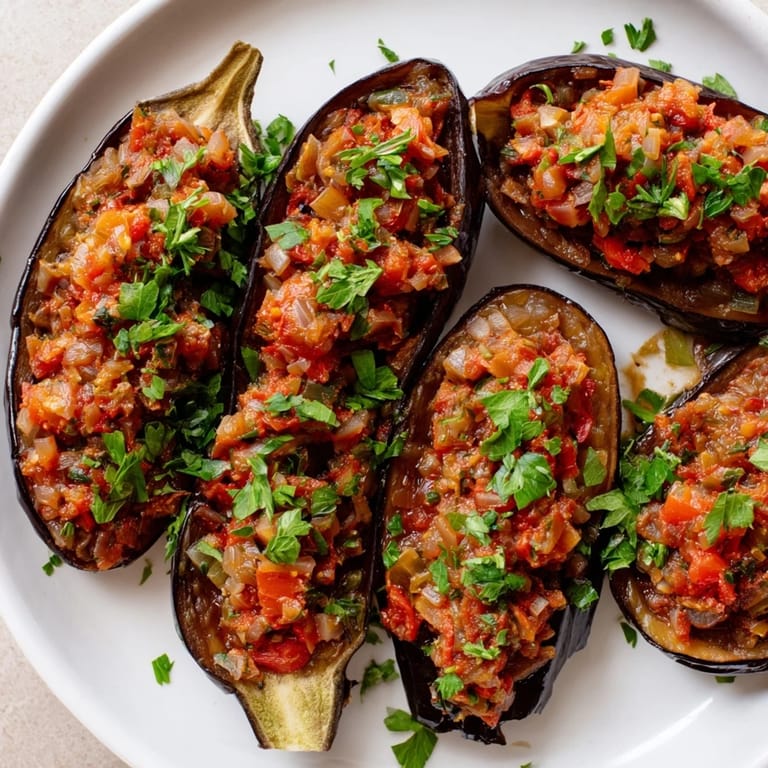
 There's something magical about watching someone taste imam bayildi for the first time—the way their eyes widen when they discover that silky eggplant cavity filled with sweet tomatoes and softened onions. I learned to make this dish during a summer spent in Istanbul, where a neighbor invited me to her kitchen on a sweltering afternoon. She showed me the trick of peeling those striped eggplant patterns by hand, patient and deliberate, and I realized that Turkish cooking isn't about rushing—it's about honoring each ingredient's transformation. This dish became my answer whenever I wanted to cook something that felt both humble and show-stopping.
I made this for my sister on the evening she told me she was moving abroad, and somehow the fact that we were sitting together eating something warm and slow-cooked felt like the right way to mark the moment. The kitchen smelled like caramelized onions and herbs, and we ate it almost in silence, the kind where words don't matter. That's when I understood why this dish has lasted centuries—it's the kind of food that makes you feel held.
Ingredients
- Eggplants (4 medium, about 250 g each): Choose ones that are firm and glossy, as they'll hollow out more cleanly and absorb the filling beautifully.
- Onions (3 medium, thinly sliced): They're the backbone of the filling—cook them low and slow until they're almost melting into the pan.
- Ripe tomatoes (4, peeled and diced): Summer tomatoes are ideal, but good-quality canned ones work if fresh aren't at their peak.
- Garlic cloves (4, minced): Don't let these brown in the oil, or they'll turn bitter and steal the show.
- Green bell peppers (2, seeded and finely chopped): These add sweetness and body to the filling without overpowering.
- Flat-leaf parsley (1 bunch, chopped): Stir this in at the very end so it stays bright and fresh-tasting.
- Extra virgin olive oil (120 ml / ½ cup): Use oil you actually enjoy tasting—this isn't the time to be stingy or grab the cheapest bottle.
- Water (120 ml / ½ cup): This creates steam in the oven and keeps everything moist without making it soupy.
- Lemon juice (from ½ lemon): The acidity cuts through the richness and brings everything into focus.
- Sugar (1 tsp): Just enough to balance the tomato's acidity and deepen those caramelized onion flavors.
- Sea salt (1½ tsp, plus more to taste): Salt the eggplants first to draw out moisture—it's a step that makes a real difference.
- Ground black pepper (½ tsp): Freshly ground tastes cleaner and more alive than pre-ground.
- Paprika (1 tsp, optional): A touch adds warmth and a slight smokiness if you want it.
Tired of Takeout? 🥡
Get 10 meals you can make faster than delivery arrives. Seriously.
One email. No spam. Unsubscribe anytime.
Instructions
- Prepare the eggplants:
- Wash them under cool water and, starting at the top, carefully peel alternating lengthwise stripes using a vegetable peeler or sharp knife—you'll create a striped pattern that looks elegant and helps them cook evenly. Lay each one flat on a cutting board and make a careful slit lengthwise, about a quarter inch deep, leaving the rounded ends intact so the eggplant stays in one piece.
- Draw out the bitterness:
- Sprinkle the cut sides generously with salt and set them aside on a clean kitchen towel for 20 minutes. You'll see moisture bead on the surface—this is the eggplant's natural bitterness leaving. Rinse gently under cool water and pat completely dry with a clean towel.
- Build the filling:
- Heat half the olive oil in a large skillet over medium heat and add the sliced onions, stirring occasionally until they soften and turn golden at the edges, about 8 minutes. They should smell sweet and jammy, not raw or sharp.
- Add layers of flavor:
- Stir in the minced garlic and chopped bell peppers, cooking for another 3 minutes until fragrant. Then add the diced tomatoes, sugar, salt, pepper, and paprika if using, and let everything simmer together for about 10 minutes until the mixture thickens and the flavors knit together.
- Finish the filling:
- Remove from heat and stir in the fresh parsley, letting it stay bright green in the warm filling. Taste and adjust the seasoning—remember, the eggplant will add its own subtle flavor.
- Fry the eggplants:
- In a clean skillet, heat the remaining olive oil over medium heat and gently lay in the eggplants. Let them get lightly golden on the cut sides and all over the skin, about 8 minutes total, turning carefully so they don't break apart.
- Stuff and arrange:
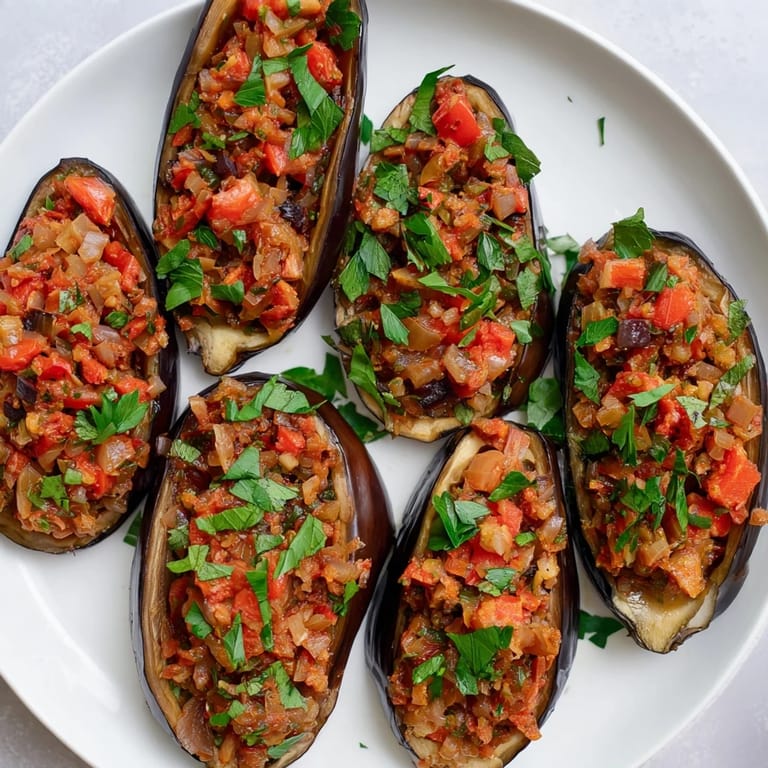
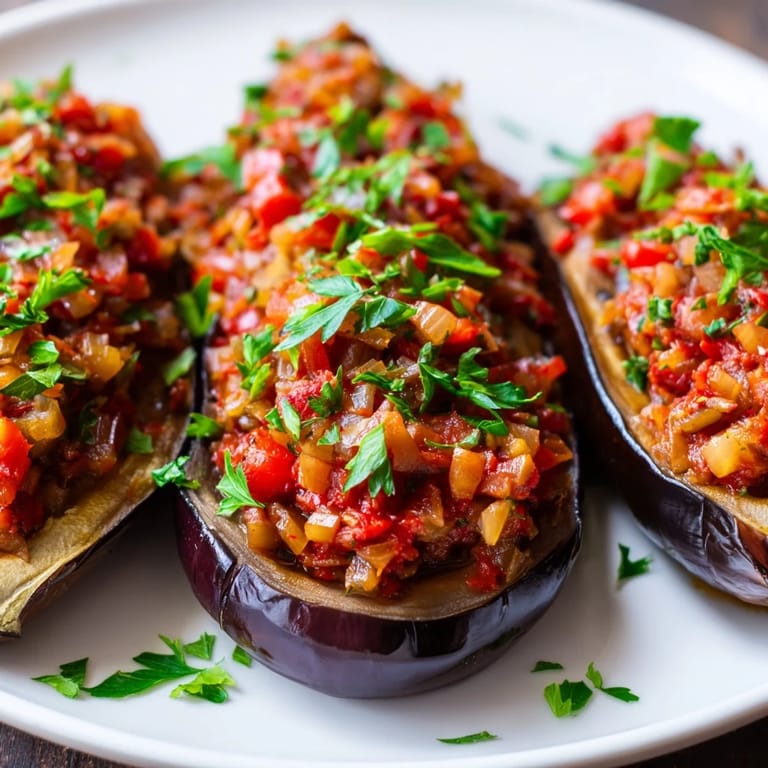
- Transfer the warm eggplants to a baking dish, cut-side up. Carefully open the slit wider with the back of a spoon and spoon the tomato filling generously into each cavity, letting it mound slightly at the top.
- Add moisture and fragrance:
- Drizzle the lemon juice over the filling, then pour the water around the eggplants in the baking dish—not over them, just in the spaces between.
- Bake covered:
- Cover tightly with foil and slide into a preheated 180°C (350°F) oven for 35 minutes. The steam trapped under the foil will gently cook the eggplant until it's silky.
- Finish with color:
- Remove the foil and bake uncovered for another 10 to 15 minutes until the eggplants are completely tender when pierced with a fork and the filling is bubbling at the edges. The longer cooking time lets some of the liquid reduce and intensifies the flavors.
- Cool before serving:
- This is crucial—let the dish cool to room temperature before eating. As it cools, the flavors settle and deepen, and the eggplant firms up just enough to hold its shape when plated.
 Save to Pinterest
 My favorite memory of this dish is watching my grandmother and my mother debate the best way to distribute the filling, my grandmother insisting that less was more, my mother piling it high. They were both right, of course, and somehow that small disagreement taught me that cooking is as much about the conversation as it is about the food. Now when I make it, I think of both of them.
On Choosing Eggplants
The eggplant you choose sets the tone for everything. Look for ones that are firm to the touch with glossy, unblemished skin—avoid any that feel soft or have wrinkled patches. Medium-sized eggplants are ideal because they cook through evenly without the insides becoming watery. I learned this the hard way with an enormous eggplant that took nearly twice as long and left me wondering if I'd ever chosen correctly in my life.
The Art of Slow Onions
The filling's sweetness comes almost entirely from onions that have been given time and heat to soften and caramelize. This isn't a step to rush—those 8 minutes matter. Medium heat is your friend here because high heat will brown them too quickly on the outside while the inside stays sharp and raw. When they're ready, they'll smell almost dessert-like, sweet and golden, and they'll surrender completely to the spoon.
Variations and Personal Touches
Once you understand how this dish works, it becomes a canvas for your own kitchen experiments and preferences. A pinch of cinnamon or allspice stirred into the filling adds an unexpected warmth that feels almost secret. A chopped green chili or a splash of hot sauce brings a pleasant bite that cuts through the richness. Some cooks add a handful of pine nuts or walnuts for texture, and others whisk a little yogurt into the filling for creaminess.
- A pinch of cinnamon or allspice whispers spice without announcing itself loudly.
- Fresh chili or harissa adds heat that wakes up your palate between bites.
- Serve alongside crusty bread, rice, or a generous dollop of tangy yogurt to round out the meal.
 Save to Pinterest
 This is a dish that asks you to slow down, to layer flavors thoughtfully, and to trust that good ingredients and gentle heat will create something memorable. It reminds me every time I make it that some of the best food doesn't need to be complicated—just honest, and made with care.
Common Recipe Questions
- → What is the best way to prepare eggplants to avoid bitterness?
Salt the eggplants and let them sit for about 20 minutes to draw out bitterness, then rinse and pat dry before cooking.
- → Can I use other oils besides olive oil for this dish?
Extra virgin olive oil is preferred for its flavor and richness, but you can substitute with mild vegetable oils if needed.
- → How do the filling ingredients enhance the dish?
The combination of tomatoes, onions, garlic, and bell peppers creates a fragrant and savory filling that balances the mildness of the eggplants.
- → Is there a recommended way to serve Imam Bayildi?
It is traditionally enjoyed warm or at room temperature, often accompanied by crusty bread, rice, or yogurt on the side.
- → Can this dish be prepared in advance?
Yes, flavors often improve when made a day ahead, allowing the ingredients to meld and deepen in taste.
- → Are there any optional spices to elevate the filling?
Adding a pinch of cinnamon, allspice, or chopped green chili can introduce extra warmth and complexity to the filling.