 Save to Pinterest
 My gym buddy Sarah showed up one morning with these golden bagels, and I watched her demolish two before her workout while casually mentioning she'd made them herself. I was skeptical—bagels from scratch sounded like a Saturday project for someone with way more patience than I have. But then she handed me one still warm from cooling, and the moment that tangy yogurt glaze hit my tongue alongside the chewy dough studded with plump raisins, I understood why she'd bothered. Turns out, homemade bagels are less about difficulty and more about trusting the process.
I made a batch during that weird week when everything felt off—you know, when even coffee doesn't fix your mood. Pulling those bagels out of the oven and smelling that cinnamon-honey combo rising up filled something I didn't know needed filling. My partner came downstairs halfway through baking, caught the smell, and suddenly we were laughing about something stupid while the kitchen steamed up and felt like the safest place in the house.
Ingredients
- Bread flour (3 ½ cups): This is the workhorse that gives bagels their signature chew; all-purpose will work but won't give you that satisfying bite you're after.
- Whey protein powder (¾ cup): Vanilla or unflavored both work—I've learned vanilla adds an almost imperceptible sweetness that plays nicely with the cinnamon.
- Instant yeast (2 ¼ tsp): One packet; don't skip the foaming step or you'll wonder why your bagels came out dense.
- Warm water (1 ¼ cups): Around 110°F—use your wrist to test, and if it feels pleasantly warm (not hot), you're in the zone.
- Honey or maple syrup (2 tbsp): Feeds the yeast and adds subtle sweetness; I prefer honey because it caramelizes slightly during baking.
- Ground cinnamon (1 tbsp): Don't be shy here—it's what makes these bagels feel like a treat rather than just fuel.
- Salt (1 ½ tsp): Balances sweetness and strengthens the gluten structure.
- Raisins (¾ cup): Plump them in warm water for five minutes before adding if you want them extra tender, though I usually just fold them in dry.
- Water and honey for boiling: The honey adds a subtle sweetness to the crust and helps them brown beautifully.
- Greek yogurt for glaze (½ cup): Use 2% or 5% fat—nonfat tastes thin and sad, trust me on this.
- Powdered sugar (2 tbsp): Just enough sweetness without overwhelming; sift it if it's clumpy.
- Vanilla extract and cinnamon pinch: Echoes the flavors in the dough without being repetitive.
Tired of Takeout? 🥡
Get 10 meals you can make faster than delivery arrives. Seriously.
One email. No spam. Unsubscribe anytime.
Instructions
- Wake up your yeast:
- Combine warm water, yeast, and honey in your bowl and let it sit for five minutes—you'll see it get foamy and bubbly, which is your signal that everything's alive and ready to work. This step takes thirty seconds and changes everything about the outcome.
- Build the dough:
- Stir in flour, protein powder, cinnamon, and salt until you've got a shaggy, rough mass that looks almost too dry. Don't overthink it; the gluten will develop as you knead.
- Work in the raisins and knead:
- Add raisins and knead by hand or machine for eight to ten minutes until the dough becomes smooth and elastic, adding a pinch more flour only if it's so sticky it won't come together. You'll feel it change under your hands—suddenly it goes from rough to silky.
- Let it rise:
- Place in an oiled bowl, cover with a clean towel, and find a warm spot—I use my oven with just the light on during winter. In forty-five minutes it should roughly double; don't stress if it takes an hour, especially if your kitchen is cool.
- Shape those bagels:
- Preheat your oven to 425°F and divide the dough into eight equal pieces—I use a kitchen scale to be honest because eyeballing usually leads to three huge bagels and five tiny ones. Roll each into a ball, poke your thumb through the center, and gently stretch it into a bagel shape with a hole about the size of a golf ball.
- Boil with purpose:
- Bring two quarts of water and a tablespoon of honey to a gentle boil in a large pot. Working in batches so you don't overcrowd, drop bagels in and boil for forty-five seconds per side—they'll sink, float back up, and you want them in the water for exactly that amount of time or they get either dense or doughy.
- Bake to golden:
- Transfer boiled bagels to parchment paper and bake for eighteen to twenty minutes until they're golden brown and sound hollow when you tap them. The kitchen will smell insane—in the best way possible.
- Make the glaze:
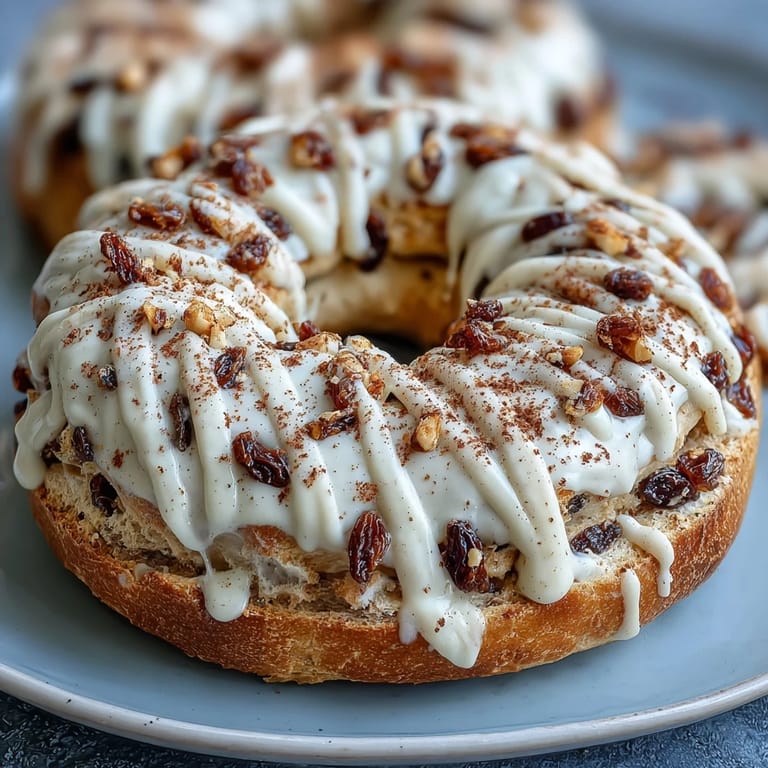
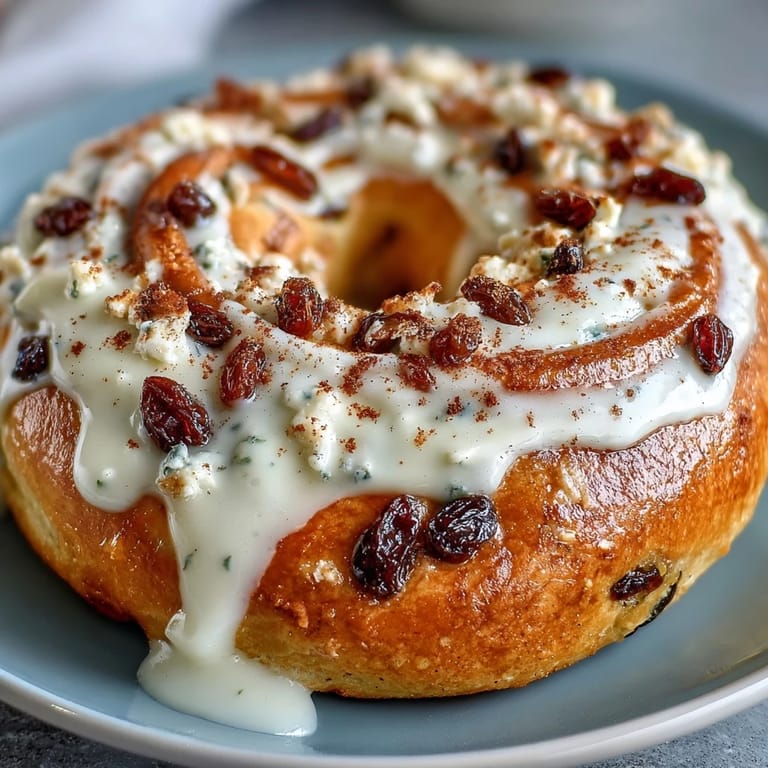
- While bagels cool completely, whisk together Greek yogurt, powdered sugar, vanilla, and a pinch of cinnamon until smooth. Drizzle just before serving so it doesn't soak into the bagel and disappear.
 Save to Pinterest
 My niece took one of these bagels to school and apparently told everyone her aunt was basically a professional baker now, which was hilarious and humbling at the same time. Seeing her proud face in that photo she texted me made the whole messy kitchen and sticky hands worth it in ways that have nothing to do with nutrition or macros.
Why the Boil Matters More Than You Think
I used to skip the boil when I first started making bagels, convinced I could just bake them and fake it. The result was sad, bread-like circles that nobody wanted. The moment I actually boiled them, everything clicked—the exterior developed that glossy, chewy crust while the inside stayed tender and open-crumbed. The boiling gelatinizes the starch on the surface, creating a barrier that keeps moisture in during baking. It sounds like a small thing until you bite into one and understand why bagel shops guard their recipes so carefully.
The Protein Powder Reality Check
Using protein powder in baked goods can be tricky because it absorbs liquid differently than flour does, and some brands have a slight chalky aftertaste that ruins everything. I've learned that vanilla-flavored powder works better here than unflavored because it adds dimension without being noticeable, and the cinnamon-raisin profile covers any funkiness that might try to sneak through. The key is not exceeding the three-quarter cup amount, or you'll get an overly dense crumb and a weird mouthfeel.
Customizing Without Losing the Magic
Once you've nailed this version, you can absolutely pivot—dried cranberries instead of raisins change the flavor profile entirely, making it more tart and sophisticated, while chopped dates add an almost caramel-like richness. I even tried adding a quarter teaspoon of cardamom once on a whim, and it turned this into something almost Middle Eastern that nobody expected but everyone wanted seconds of. The base dough is forgiving as long as you respect the rising and boiling steps.
- Swap raisins for chopped dates, dried cranberries, or even a mix of both for completely different vibes.
- A dairy-free glaze using coconut yogurt works beautifully if you're cooking for someone with restrictions.
- Store bagels in an airtight container and they stay soft for three days, or freeze them for up to two weeks and toast from frozen.
 Save to Pinterest
 These bagels taught me that homemade doesn't always mean complicated—sometimes it just means showing up and letting simple ingredients do their thing. They're the kind of breakfast that makes you feel like you've got your life together, even on days when you definitely don't.
Common Recipe Questions
- → What makes these bagels high-protein?
The addition of whey protein powder to the bread flour boosts the protein content without altering the soft texture.
- → How does boiling affect the bagels?
Boiling the dough briefly before baking ensures a chewy crust and smooth surface characteristic of traditional bagels.
- → Can I replace raisins with other dried fruits?
Yes, dried cranberries or chopped dates work well to maintain sweetness and texture.
- → What is the purpose of the Greek yogurt glaze?
The glaze adds a tangy sweetness and a creamy finish that complements the cinnamon and raisins perfectly.
- → Is bread flour necessary for this dough?
Bread flour is recommended to create the ideal chewy texture due to its higher gluten content.