 Save to Pinterest
 The first time I made miso chicken noodle bowls was after a particularly wet and chilly hike through the forest near my apartment. My fingers were still stiff with cold as I warmed them against the steaming pot of broth on the stove. I had been experimenting with miso for weeks but hadn't quite found the perfect application until that evening, when my body craved something deeply warming yet fresh. The umami-rich broth immediately became my go-to comfort food, especially during those transitional seasons when you need something both nurturing and light.
Last winter, I made these noodle bowls for my friend who was recovering from a nasty cold. As we sat across from each other, the steam rising between us like a fragrant curtain, I watched her face brighten with the first spoonful. She later told me it was the first thing she could actually taste in days. There's something magical about the combination of ginger, garlic and miso that seems to cut through even the foggiest of days and brings clarity back to the palate.
Ingredients
- White miso paste: I discovered this pale, mellow paste creates a more delicate flavor than red miso, letting the other ingredients shine while still providing that wonderful umami foundation.
- Boneless chicken thighs: After trying both cuts multiple times, thighs consistently yield a juicier result that stands up beautifully to the bold flavors in the broth.
- Soba noodles: Their nutty flavor adds another dimension that plain wheat noodles simply can't match, and their chewy texture holds up well in hot broth.
- Baby bok choy: The contrast between the crisp stems and tender leaves creates wonderful textural interest, and they absorb the broth flavors beautifully.
- Shiitake mushrooms: These mushrooms intensify the umami quality of the broth and add a meaty texture that makes the bowl feel substantial.
Tired of Takeout? 🥡
Get 10 meals you can make faster than delivery arrives. Seriously.
One email. No spam. Unsubscribe anytime.
Instructions
- Create the marinade magic:
- Whisk the miso paste with soy sauce, rice vinegar, honey, ginger, garlic, and sesame oil until it becomes a smooth, fragrant paste. You'll know it's right when it smells like a complex balance of sweet, salty, and tangy notes.
- Transform the chicken:
- Coat the chicken pieces thoroughly in the marinade, making sure to get into all the nooks and crannies. This patient resting time is where all the flavor development happens.
- Prepare your noodle foundation:
- Cook the soba just until they have a slight resistance when bitten. That quick cold water rinse afterward isn't just busy work, it stops the cooking and gives the noodles that perfect chewy texture.
- Cook with conviction:
- When you place the chicken in the hot pan, commit to letting it develop a rich golden crust before flipping. The caramelization of the marinade creates deep flavor notes that will enhance your entire bowl.
- Build the aromatic broth:
- As you whisk the miso into the gently simmering broth, you'll notice it transforms from clear to slightly cloudy with a silky texture. This is exactly what you want, a sign that the miso's complex flavors are fully incorporating.
- Layer in the vegetables:
- Add the vegetables in stages, starting with the heartier mushrooms and carrots, followed by the more delicate greens. This ensures each vegetable maintains its ideal texture rather than becoming uniformly soft.
- Assemble with intention:
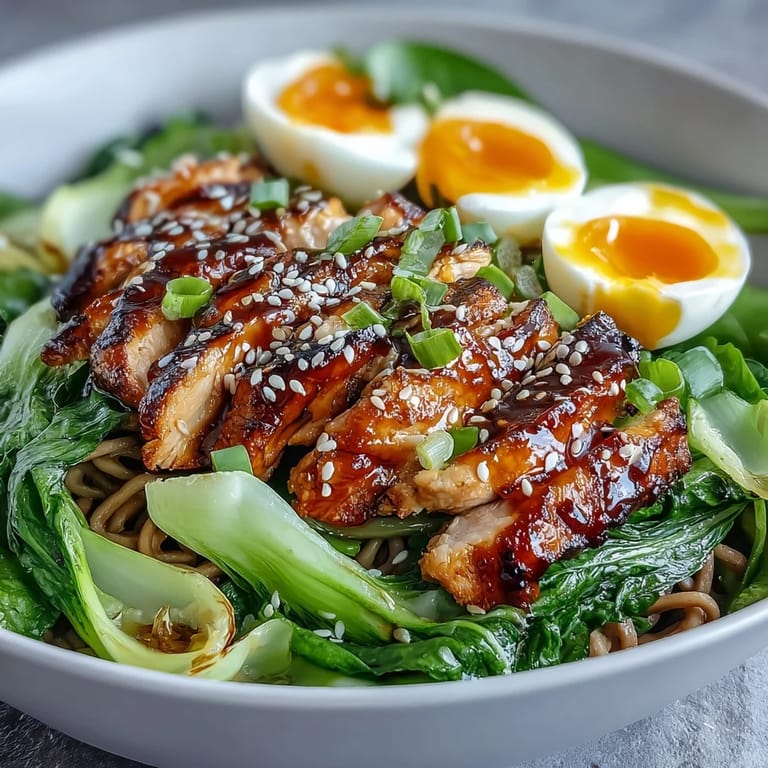
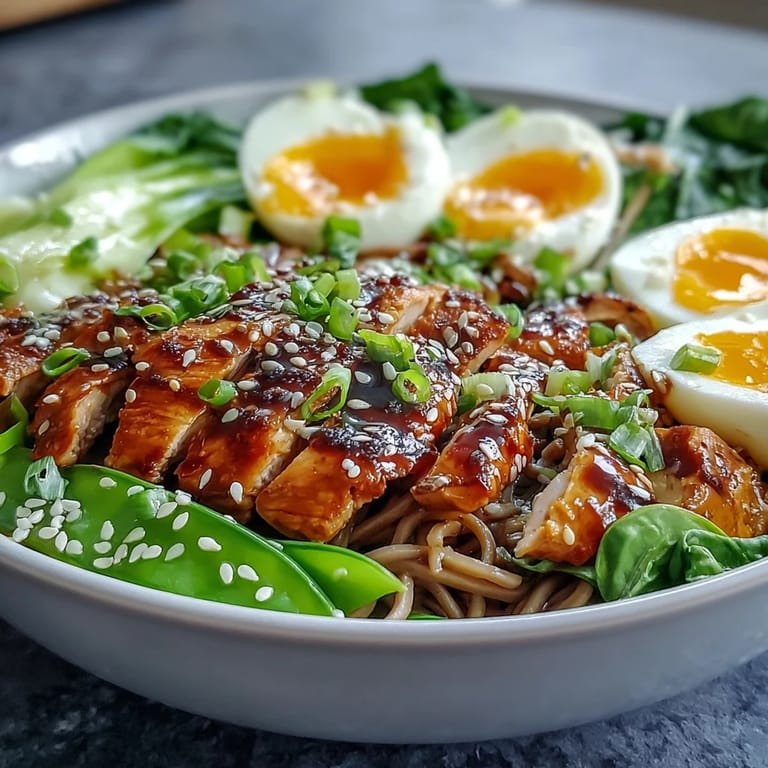
- Start with the noodles as your base, arrange the sliced chicken with pride, and then pour the vegetable-laden broth around it all. Each component deserves its moment in the spotlight.
- Crown with toppings:
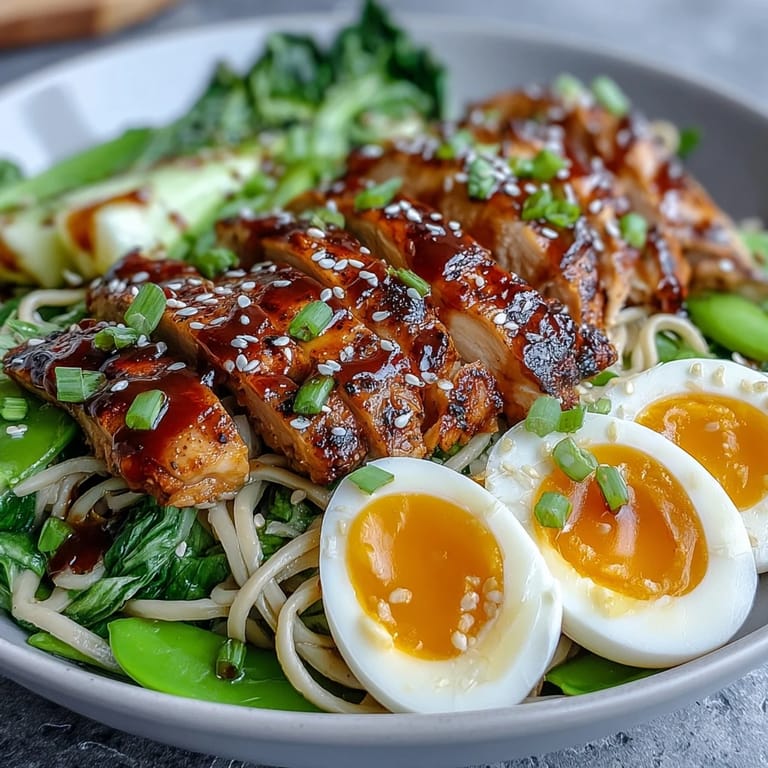
- The final garnishes aren't just pretty additions, they're crucial flavor and texture enhancers. The soft-boiled egg adds richness, the scallions provide a sharp bite, and the sesame seeds offer tiny pops of nutty crunch.
 Save to Pinterest
 One evening last autumn, I prepared these bowls for a small dinner gathering where two guests had never tried miso before. The table fell into that special kind of quiet that only happens when everyone is completely absorbed in their food. As conversations gradually resumed, they centered entirely around the layered flavors in their bowls, with questions about ingredients and techniques flying across the table. What began as just dinner transformed into a shared exploration of a new culinary territory, connecting us all in that uniquely intimate way that good food does.
Make-Ahead Options
I've learned through many busy weeknights that this recipe can be partly prepared in advance, making it perfect for those hectic evenings when cooking feels impossible but takeout isn't calling your name. The chicken can marinate for up to 8 hours, developing even deeper flavor while you're away at work. The vegetables can be prepped and stored in the refrigerator, and even the eggs can be soft-boiled and chilled a day ahead. When dinner time arrives, you'll only need about 20 minutes to bring everything together, a revelation that has saved my dinner plans countless times.
Customization Ideas
Over dozens of repetitions, this recipe has evolved into a flexible framework that adapts to whatever my refrigerator offers that day. Some nights I'll use thinly sliced beef instead of chicken, cooking it just until medium-rare so it finishes in the hot broth. During spring, I might swap the bok choy for tender asparagus tips and the snow peas for fresh snap peas from the farmers market. In autumn, diced kabocha squash adds a sweet, starchy element that makes the bowl even more satisfying. The constants remain the miso-infused broth and the careful layering of textures, but beyond that, the bowl becomes a seasonal snapshot of whatever ingredients are at their peak.
Troubleshooting Common Issues
After helping several friends replicate this recipe in their own kitchens, I've encountered a few common stumbling blocks worth mentioning. The first time I made this, my broth turned out cloudy and slightly gritty because I whisked the miso into boiling liquid, which causes it to separate rather than dissolve smoothly. Another mistake I've witnessed is overcooking the vegetables until they lose their vibrant color and distinctive textures, turning what should be a fresh-tasting bowl into something dull and lifeless.
- If your chicken is sticking badly to the pan, your heat is likely too high or the pan wasn't hot enough when you added the chicken, causing the marinade to burn rather than caramelize.
- Should your noodles clump together despite the oil coating, simply rinse them again under warm water just before serving to loosen them up perfectly.
- If the miso flavor seems too subtle in your finished broth, try stirring in a small additional amount of miso paste mixed with a tablespoon of the hot broth right before serving rather than cooking it longer.
 Save to Pinterest
 These noodle bowls have become more than just a recipe in my kitchen, they're a ritual of comfort and care that I return to whenever life feels overwhelming or when someone I love needs nourishment beyond mere calories. There's something profoundly healing about a properly made bowl of broth and noodles, something that speaks to a part of us that's far deeper than hunger.
Common Recipe Questions
- → Can I make this dish vegetarian?
Yes, simply swap the chicken for extra-firm tofu and substitute vegetable broth for the chicken broth. Marinate the tofu using the same miso mixture and pan-fry until golden before adding to bowls.
- → How long does the chicken need to marinate?
Marinate the chicken for at least 30 minutes, but for deeper flavor, you can marinate it overnight in the refrigerator. Bring to room temperature before cooking for even results.
- → What type of noodles work best?
Soba noodles made from buckwheat are traditional and provide a nutty flavor. Whole wheat spaghetti makes an excellent substitute. For gluten-free options, use 100% buckwheat soba or rice noodles.
- → Can I prepare components in advance?
Absolutely. You can marinate the chicken up to 8 hours ahead, slice vegetables in advance, and even prepare the broth a day early. Store components separately and assemble when ready to serve for optimal texture.
- → How should I store leftovers?
Store broth separately from noodles and toppings to prevent sogginess. Keep chicken, vegetables, and broth in one airtight container and noodles in another. Reheat broth and vegetables gently, then combine with freshly warmed noodles.
- → Is this dish spicy?
The base dish is mild with balanced umami flavors. Heat comes from optional chili oil or Sriracha added at serving, allowing you to customize the spice level to your preference.