 Save to Pinterest
 My daughter came home from school one afternoon complaining that fish fingers were boring, and I took it as a challenge. I grabbed some fresh haddock from the fishmonger, raided the Parmesan wedge in the fridge, and decided we'd make something that tasted grown-up but still fun to eat with your hands. The kitchen smelled like toasted cheese and butter within the hour. She ate four and declared me forgiven.
I made these for friends who claimed they didn't like peas, and I didn't tell them what the green sauce was until after they'd scraped their plates clean. One of them actually asked for the recipe, and I felt smug for days. It's become my go-to when I want to impress without spending the evening stuck at the stove. The goujons come out of the oven just as everyone's finishing their wine, and the timing always feels effortless even though I'm usually racing around behind the scenes.
Ingredients
- Skinless haddock fillets (500 g, cut into strips): Haddock holds its shape beautifully when baked and has a mild, sweet flavor that doesn't compete with the Parmesan, though cod or pollock work just as well if that's what you find fresh.
- Plain flour (60 g): This is your first layer of armor, helping the egg stick and creating a base that keeps the crust from sliding off in the oven.
- Large eggs (2, beaten): The glue that binds everything together, and I've learned the hard way that skipping this step or rushing it leads to patchy, sad looking goujons.
- Panko breadcrumbs (80 g): These Japanese breadcrumbs are lighter and crunchier than regular ones, and they toast up into something that shatters when you bite down.
- Finely grated Parmesan cheese (50 g for coating, 25 g for pesto): The salty, nutty backbone of the crust, and it caramelizes just slightly in the oven which is where the magic happens.
- Black pepper, sea salt, smoked paprika (½ tsp each): A small trio that adds warmth and depth without shouting, though the paprika is optional if you prefer things simple.
- Frozen peas (200 g): Don't overthink this, frozen peas are picked at their peak and they blend into the brightest, sweetest pesto you've ever tasted.
- Fresh basil leaves (30 g): The herbal lift that makes the pesto taste like spring even in the middle of February.
- Garlic clove (1 small): Just enough to remind you it's there without turning the pesto into something you'll regret before bed.
- Pine nuts (30 g, or sunflower seeds): They add a creamy richness when blended, though I've swapped in sunflower seeds plenty of times and no one's ever noticed.
- Extra-virgin olive oil (4 tbsp): This loosens the pesto into something silky and spoonable, and the fruitier the oil, the better it tastes.
- Lemon juice (from ½ lemon): Brightens everything and cuts through the richness, plus a little extra on the goujons at the table never hurts.
Tired of Takeout? 🥡
Get 10 meals you can make faster than delivery arrives. Seriously.
One email. No spam. Unsubscribe anytime.
Instructions
- Get the oven ready:
- Preheat your oven to 200°C (180°C fan) or 400°F and line a baking sheet with parchment paper so nothing sticks. This is the kind of step I used to skip and always regretted halfway through.
- Set up your coating station:
- Arrange three shallow bowls in a row: one with plain flour, one with beaten eggs, and one with panko, Parmesan, pepper, salt, and smoked paprika all mixed together. It feels like an assembly line, and honestly, that's half the fun.
- Coat the haddock strips:
- Take each strip of fish and dust it lightly in flour, shake off the excess, dip it into the egg until it's fully coated, then press it firmly into the Parmesan-panko mixture on both sides. Lay them out on your prepared baking sheet with a little space between each one so they crisp up evenly.
- Bake until golden:
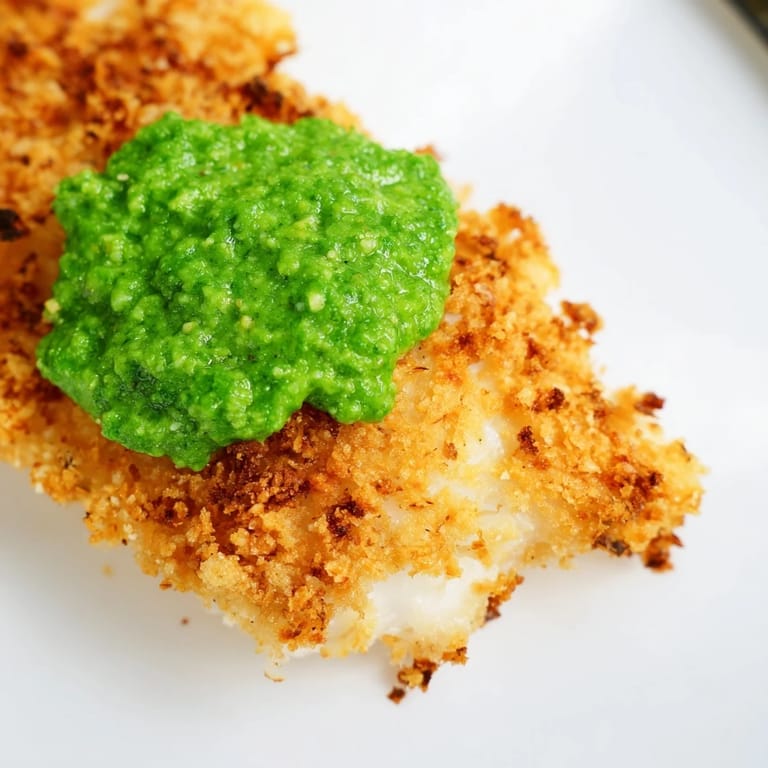
- Lightly spray or drizzle the goujons with olive oil, then slide the tray into the oven for 15 to 20 minutes, flipping them halfway through. You'll know they're done when they're golden brown and the edges look crisp enough to crackle.
- Blitz the pea pesto:
- While the fish bakes, blanch the peas in boiling water for 2 minutes, then drain and run them under cold water to keep them bright green. Throw them into a food processor with the basil, Parmesan, garlic, pine nuts, olive oil, and lemon juice, then pulse until it's mostly smooth but still has a bit of texture.
- Season and serve:
- Taste the pesto and add salt and pepper until it sings, then spoon it onto plates alongside the hot goujons, a few lemon wedges, and some salad leaves if you're feeling virtuous.
 Save to Pinterest
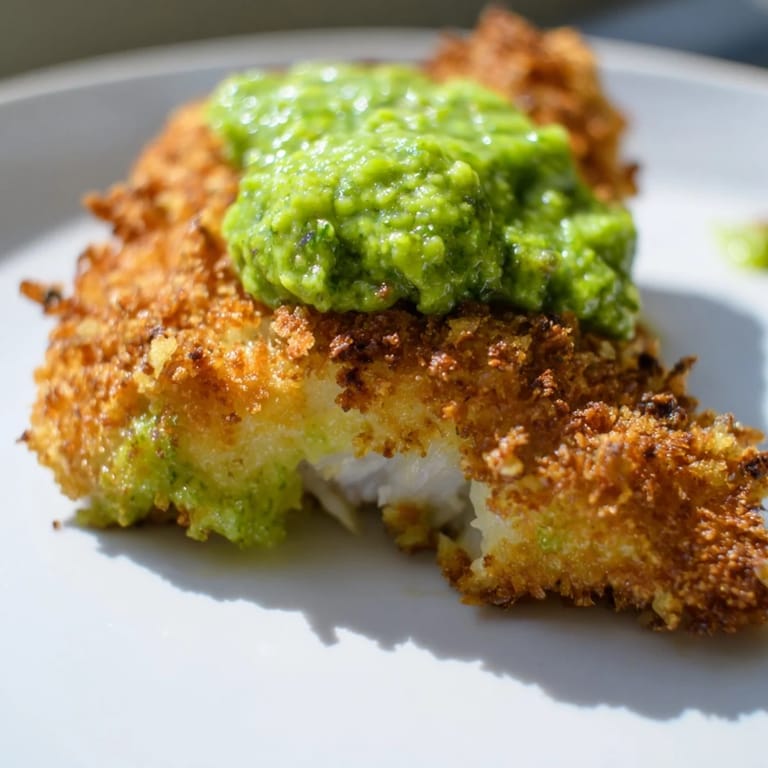
 There's something about tearing into a crispy, cheesy piece of fish with your fingers and dragging it through a pile of bright green pesto that makes dinner feel less serious and more joyful. I've served these at birthday dinners and quiet weeknight meals, and they always disappear faster than I expect. It's the kind of recipe that makes people lean back in their chairs and sigh happily, which is really all you can ask for.
Choosing Your Fish
Haddock is my first choice because it's firm enough to handle the coating and baking without falling apart, and it has a clean, slightly sweet flavor that doesn't need much fussing. That said, I've used cod when haddock wasn't available, and pollock works beautifully if you're watching your budget. Just make sure whatever you choose is skinless and relatively thick, because thin fillets tend to overcook before the crust gets properly golden. If you're near a good fishmonger, ask them to cut the strips for you and save yourself the hassle.
Making It Ahead
You can coat the goujons a few hours in advance and keep them covered in the fridge until you're ready to bake, which is a lifesaver if you're hosting. The pesto also keeps in the fridge for up to three days in a sealed container, though I like to press a piece of cling film directly onto the surface to stop it from browning. Just bring it back to room temperature before serving, or give it a quick stir with a splash of olive oil to loosen it up. I've even frozen leftover pesto in ice cube trays and popped a cube into pasta or soup weeks later.
Serving Suggestions
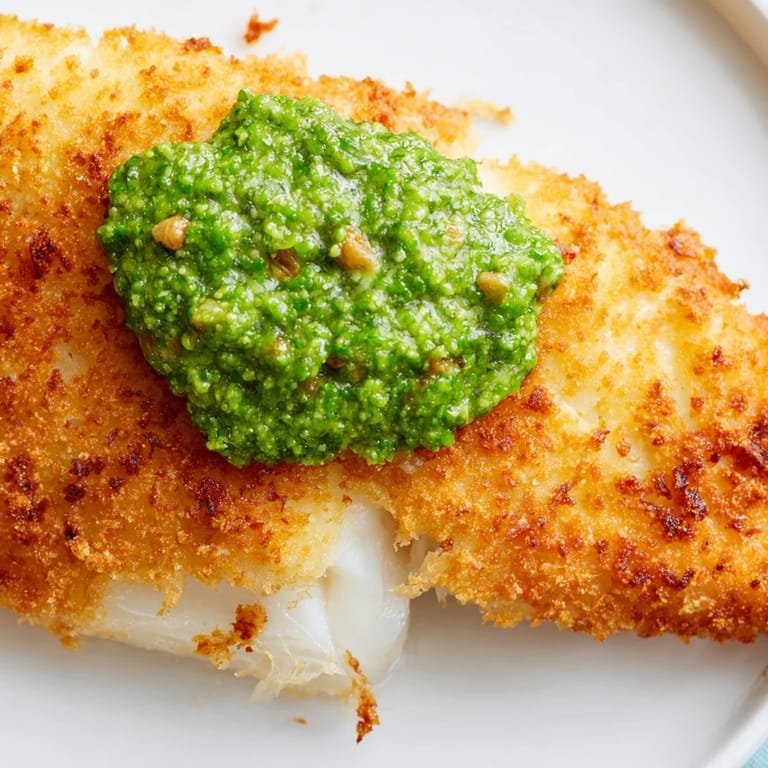
These goujons are rich enough to be the star of the plate, but they play nicely with a simple green salad dressed in lemon and olive oil, or a pile of oven-roasted new potatoes if you want something more substantial. I've also served them with chunky chips and watched grown adults dip them in the pesto like it was the best thing they'd ever tasted. A crisp Sauvignon Blanc or a dry sparkling wine cuts through the richness beautifully, though a cold lager works just as well if that's more your style.
- Serve with roasted vegetables or a lemony rocket salad for a lighter meal.
- Pair with thick-cut chips and extra pesto for a gastropub style plate.
- Offer lemon wedges on the side so everyone can squeeze as much or as little as they like.
 Save to Pinterest
 This recipe has earned a permanent spot in my weeknight rotation, and I hope it does the same for you. There's something deeply satisfying about pulling a tray of golden, crackling fish out of the oven and knowing dinner is already a success.
Common Recipe Questions
- → Can I use a different white fish instead of haddock?
Yes, cod and pollock are excellent alternatives with similar texture and mild flavour. Ensure fillets are skinless and cut consistently for even cooking.
- → How do I achieve the crispiest coating?
Use panko breadcrumbs for superior crunch, lightly spray with olive oil before baking, and turn the goujons halfway through cooking. A hot oven (200°C) ensures golden, crispy results.
- → Can I make the pea pesto ahead?
Yes, prepare it up to 24 hours in advance. Store in an airtight container in the refrigerator. Stir before serving, adding extra lemon juice if it's darkened.
- → Is this suitable for nut allergies?
Absolutely. Replace pine nuts with toasted sunflower seeds in the pesto. The flavour and texture remain excellent, and it's completely nut-free.
- → What wine pairs well with this dish?
A crisp Sauvignon Blanc or dry sparkling wine complements the delicate fish and herbaceous pesto beautifully, cutting through the richness of the Parmesan coating.
- → Can I fry the goujons instead of baking?
Yes, shallow fry in hot oil at 180°C for 3–4 minutes per side until golden. This creates an even crispier coating, though baking is a lighter option.