 Save to Pinterest
 I discovered farro salad on a humid afternoon in a tiny taverna near the Aegean, where a grandmother insisted I taste what she'd made that morning. The grains were still warm, glistening with olive oil, and I remember thinking how something so simple—just farro, tomatoes, and a squeeze of lemon—could feel like a complete meal. Years later, I recreate that moment in my kitchen, chasing that same sense of abundance in a bowl.
I made this for my neighbor last summer when she mentioned being tired of eating the same salads. She brought it to a potluck and came back asking for the recipe with this sheepish grin, saying it was the only thing that got finished. That's when I realized this wasn't just lunch—it was the kind of dish people actually ask about.
Ingredients
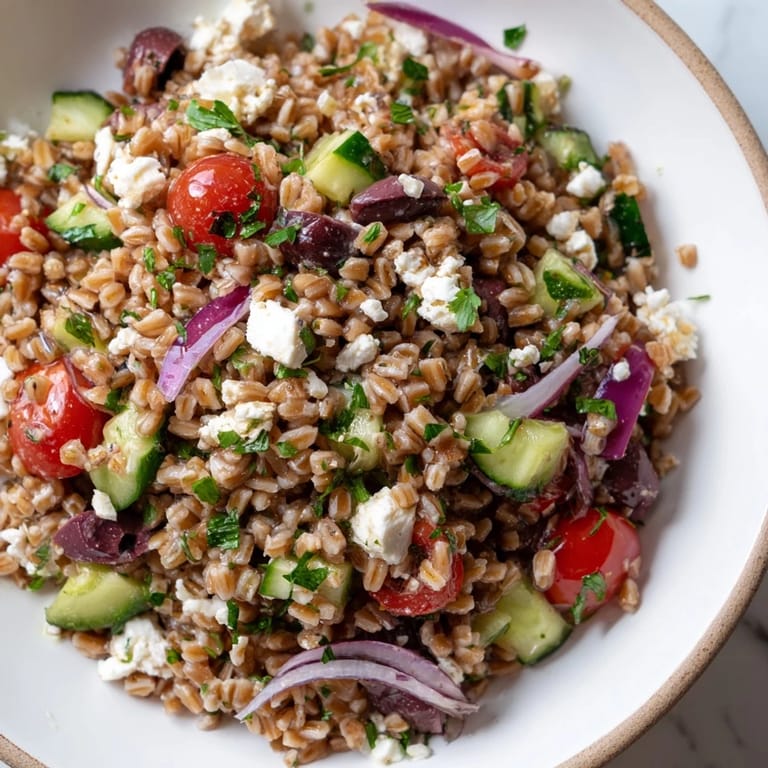
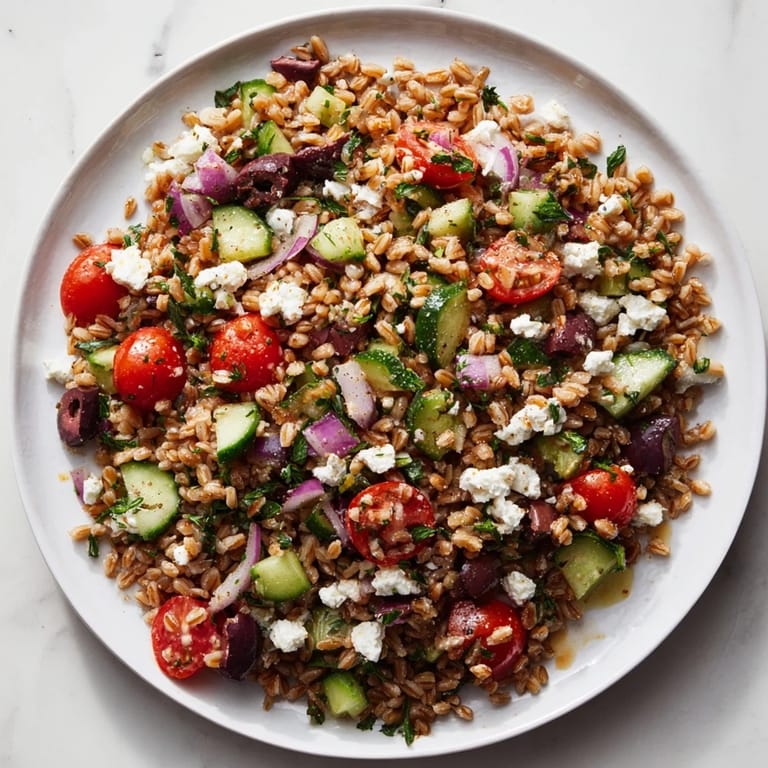
- Farro: Use pearled farro if you want it softer, or stick with whole grain for more chew and nuttiness.
- Cherry tomatoes: The smaller they are, the more juice they release into your salad, which is exactly what you want.
- Cucumber: English cucumbers have thinner skins and fewer seeds, so they disappear into the salad without overpowering it.
- Red onion: The finely chopped bits add a sharp bite that keeps everything from tasting too smooth.
- Fresh parsley and mint: These aren't optional if you want the salad to taste alive—dried herbs just won't carry the same brightness.
- Kalamata olives: Pit them yourself if you can find unpitted ones; the flavor is worth the extra five minutes.
- Feta cheese: Crumble it by hand right into the bowl, not before—it'll stay fresher and less dusty.
- Extra-virgin olive oil: This is where you splurge if you're going to splurge anywhere, because you taste it directly.
- Lemon juice: Always fresh, never bottled; the difference is audible when you whisk the dressing.
- Oregano: Dried oregano is perfect here because it doesn't need any coaxing to flavor the oil.
Tired of Takeout? 🥡
Get 10 meals you can make faster than delivery arrives. Seriously.
One email. No spam. Unsubscribe anytime.
Instructions
- Rinse and cook the farro:
- Rinsing gets rid of any dusty starch clinging to the grains. Bring the water and salt to a boil, add farro, then immediately turn it down to a gentle simmer under a lid—this way it stays tender without turning to mush.
- Assemble the bowl:
- Use a large bowl so you have room to move things around without squashing the tomatoes. Get the farro completely cool first, or it'll wilt everything else.
- Make the dressing:
- Mince the garlic as fine as you can—tiny pieces dissolve into the oil and coat every grain instead of leaving sharp little chunks. Whisk it all together until it looks emulsified and silky.
- Combine and coat:
- Pour slowly and toss with your hands or two wooden spoons, being gentle so the feta doesn't break into powder. You want the dressing to find every corner without crushing things.
- Rest and taste:
- Even 15 minutes makes a difference—the grains absorb the dressing and everything tastes more cohesive. Taste before serving and adjust the salt and lemon to your preference.
 Save to Pinterest
 My daughter once said this salad tasted like sunshine, which I know sounds theatrical, but she wasn't wrong. It's the kind of dish that reminds you why you started cooking in the first place—not to impress, but to make people feel like someone cared.
Why This Works as Both Lunch and Side
Farro sits somewhere between rice and pasta in how it behaves, which makes it weirdly versatile. It's substantial enough to be a meal on its own, but it never demands all the attention at a table. Serve it cold straight from the fridge, or let it come to room temperature if you want the flavors to feel less sharp.
The Mediterranean Pantry Trick
Every ingredient here keeps for weeks, which means once you've assembled these basics, you can throw this salad together without a grocery store run. That's not a small thing when you're hungry and tired and want something that doesn't taste like leftovers. The feta and olives are your flavor anchors, so don't skimp on quality if you can help it.
Making It Your Own
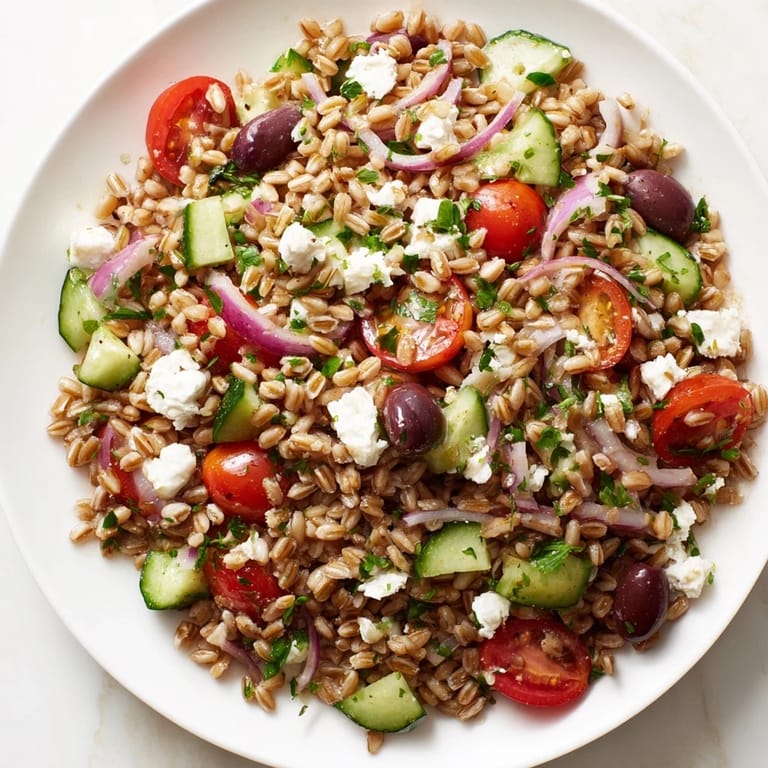
The beauty of this salad is how much room it leaves for improvisation. I've added roasted red peppers, artichoke hearts, white beans for extra protein, or even crumbled goat cheese when I had it. The core stays the same—grains, vegetables, acid, fat—and everything else is you experimenting.
- Try adding diced bell peppers, roasted artichokes, or white beans for variations that still feel Mediterranean.
- If you skip the feta, white beans add creaminess and make it filling enough for a main course.
- Taste the dressing before you mix it in; you might want more lemon or a pinch more garlic than you think.
 Save to Pinterest
 This salad has quietly become the thing I make when I want to feel connected to cooking again—nothing fancy, just good ingredients treated with respect. It's the kind of recipe that works because it listens to what it is.